 Blaine Siding
 Building Exteriors for a Waterfront Community
Semiahmoo sits right up against the water in the far northwest corner of Whatcom County, close enough to the Canadian border that the weather patterns blend Puget Sound moisture with open-water exposure off Semiahmoo Bay and the Strait of Georgia. Homes here don't face the same conditions as a house twenty minutes inland in Ferndale or Lynden. They face wind-driven rain coming straight off the water, salt-laden air, and a wet season that can stretch from October well into spring. Siding that would hold up fine in a more sheltered part of the county gets tested harder out here, and it shows over time in the form of premature paint failure, swelling, staining, and rot at the joints.
We've worked on homes throughout Blaine and the surrounding Whatcom County waterfront long enough to know that "coastal" isn't a marketing word out here — it's a real design constraint. When we talk about siding, roofing, windows, or decking for a Semiahmoo property, salt exposure and moisture are the first two things on our minds, not an afterthought.
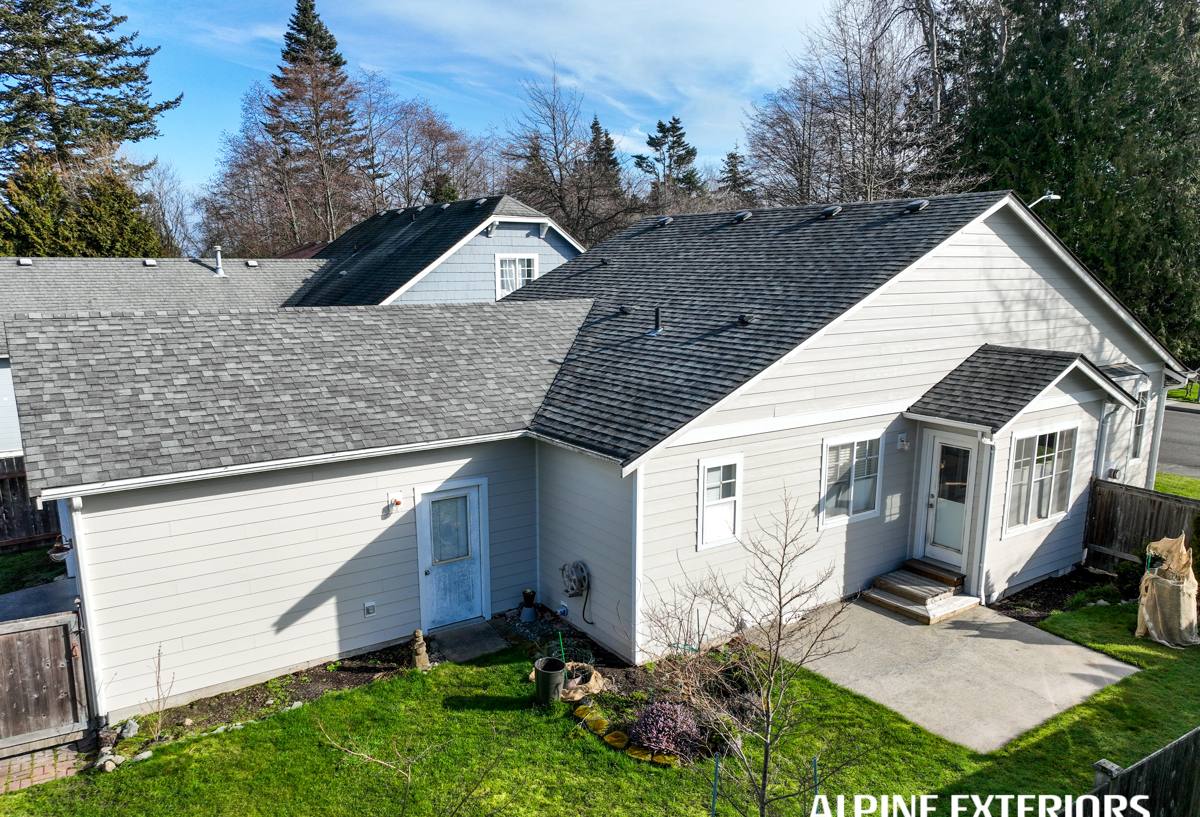
What the Semiahmoo Climate Actually Does to a House
Salt Air and Metal Fatigue
Airborne salt from the bay accelerates corrosion on anything metal — fasteners, flashing, trim, and hardware. Over years, corroding fasteners loosen siding panels and trim boards, which opens small gaps that let water behind the cladding. Once water gets behind siding, the damage almost always outpaces what's visible from the street.
Driving Rain and Wind Exposure
Waterfront lots catch wind differently than inland lots. Rain doesn't just fall here, it gets pushed sideways into wall assemblies, especially on the water-facing elevations. Siding materials and installation details that aren't built for that kind of lateral water pressure tend to fail first at seams, butt joints, and anywhere caulking is doing more work than it should.
A Long Moss and Mildew Season
Cool, damp, and shaded conditions for much of the year make Whatcom County prime territory for moss, algae, and mildew growth on roofs and siding. Materials that hold moisture at the surface, or that have wood fiber content, give moss and mildew more to grab onto. That's a maintenance burden as much as it is a durability issue — nobody wants to be pressure-washing siding every year to keep it looking presentable.
Why We Only Install James Hardie Fiber Cement Siding
We made a deliberate decision as a company to install James Hardie fiber cement exclusively. We don't install vinyl, LP SmartSide, Cemplank, Allura, primed spruce, or cedar. That's not us being rigid for no reason — it comes from watching how different materials actually perform on homes in this specific climate over years, not just how they look on installation day.
| Material | How It Handles This Climate |
|---|---|
| Vinyl siding | Lightweight and low-cost, but it can warp or become brittle in strong coastal wind and temperature swings, and it doesn't stand up structurally to wind-driven rain the way a fiber cement panel does. |
| LP SmartSide / engineered wood | Wood-strand core means any breach in the factory coating exposes wood fiber to moisture — a real risk in a rain-heavy, salt-air environment where edges and cut ends are hard to seal perfectly. |
| Cemplank / Allura fiber cement | Also a fiber cement product, but the factory finish, warranty structure, and engineered product lines don't match what James Hardie offers for this region. |
| Primed spruce or cedar | Natural wood siding needs the most ongoing maintenance of any option — repainting, caulking, and moisture monitoring — and in a moss-prone, salt-air climate that maintenance burden only grows. |
| James Hardie fiber cement | Non-combustible, engineered for moisture resistance, factory-baked ColorPlus finish, and climate-specific HZ5 product engineering built for exactly this kind of wet, coastal exposure. |
James Hardie's HZ5 product line is engineered specifically for climates with prolonged moisture exposure and temperature cycling — which describes Semiahmoo about as well as any product description could. The fiber cement composition doesn't swell, rot, or feed mold the way wood-based products can, and it holds paint and factory finish far longer than materials that flex and contract with temperature and humidity swings.
ColorPlus Finish: Less Maintenance in a High-Moss Environment
James Hardie's ColorPlus technology bakes the finish onto the board at the factory under controlled conditions, rather than relying on field-applied paint after installation. That matters here because a factory-cured finish resists fading, chipping, and moisture intrusion at the surface far better than site-applied paint, which is especially important given how much moss and mildew pressure Whatcom County siding deals with. Less surface degradation means less for moss and algae to latch onto, and a longer stretch of years before repainting even becomes a conversation.
Roofing Considerations for Waterfront Whatcom County Homes
Siding doesn't work in isolation — the roof is the first line of defense, and in a moss-heavy climate like this one, roofing material choice and maintenance schedule directly affect how long the whole exterior system lasts. Moss growth on a roof holds moisture against the roofing material and can work its way under shingle edges over time, and that same moisture load often finds its way to fascia, trim, and the top courses of siding. When we're on a property for siding work, we look at roof condition too, because the two systems are connected whether homeowners think about it that way or not.
Windows: Where a Lot of Coastal Leaks Actually Start
Window flashing and sealant are common failure points in wind-driven rain environments. A window that's been properly flashed and integrated with the siding water-management system will shed water outward; one that hasn't will slowly let moisture track down into the wall cavity, often for years before it shows up as a stain or soft spot inside. If we're already opening up a wall section for siding replacement, that's the right moment to also address window flashing rather than closing everything back up around a problem that will just resurface later.
Decks in a Wet, Salt-Exposed Environment
Outdoor living spaces on a waterfront lot take a beating from the same conditions as the siding — rain, salt air, and long stretches of shade and dampness that slow drying time. Decking material choice, proper fastener selection to resist corrosion, and drainage detailing underneath the deck all matter more here than they would on a dry, inland lot. We approach deck work with the same climate-first mindset we bring to siding.
Our Installation Standard
Fiber cement siding is only as good as its installation. Correct fastening patterns, proper flashing at every penetration and joint, correct clearance from grade and hard surfaces, and attention to caulking and sealant details are what actually determine whether a Hardie installation performs for decades or develops problems in year five. We follow manufacturer installation specifications closely because cutting corners on flashing or fastening is exactly the kind of thing that turns into a warranty dispute or a moisture problem down the line — and in a climate like Semiahmoo's, there's very little margin for installation shortcuts.
- Correct fastener spacing and embedment for wind and moisture exposure
- Rain-screen or proper drainage plane behind the siding where called for
- Flashing integrated at every window, door, and roof-to-wall intersection
- Minimum clearance maintained between siding and grade, decks, and hardscape
- Factory-cut and factory-primed edges used wherever possible to limit field cutting exposure
- Caulking and sealant used as a secondary defense, not the primary water barrier
Why a Local Crew Matters Out Here
A crew that mainly works inland projects may not have hands-on experience with how wind-driven rain behaves on a water-facing elevation, or how quickly salt air can compromise the wrong fastener choice. Working throughout Blaine and Whatcom County means we see how homes actually age in this specific environment — which details hold up and which ones don't — and we build that into every estimate and installation plan rather than applying a generic approach to a coastal property.
What to Expect From a Siding Project Here
Every Semiahmoo property is a little different depending on how exposed it is to the water, existing siding condition, and what's underneath the current cladding once it comes off. A proper estimate includes a look at current moisture damage, flashing condition, and roof interaction — not just a measurement of square footage. We'd rather flag an underlying issue before the project starts than have it surface as a surprise mid-installation.
If you're weighing a siding, roofing, window, or deck project on a Semiahmoo home, we're happy to walk the property with you and give you a straight, no-pressure estimate. Use the form below to get started.