 Blaine Siding
 Semiahmoo Siding Takes a Different Kind of Beating
Homes on the Semiahmoo peninsula sit closer to open water than almost anywhere else in Blaine, and that location shapes everything about how siding ages here. Wind comes straight off the bay carrying salt spray, driving rain arrives sideways instead of straight down, and the shaded, damp stretches of the year give moss and algae months to take hold before a good drying spell ever shows up. Siding that would hold up fine a few miles inland can show real damage on a Semiahmoo lot within a decade if it wasn't built or installed for this specific exposure.
We repair siding all over Whatcom County, but Semiahmoo calls come with a consistent pattern: salt-laden moisture finding its way into seams and fastener holes, moss holding water against the wall longer than the material was ever meant to tolerate, and wind-driven rain exploiting gaps in flashing and caulking that would never get tested on a more sheltered street. Understanding that pattern is the difference between a repair that lasts and one you're calling us back about in two years.
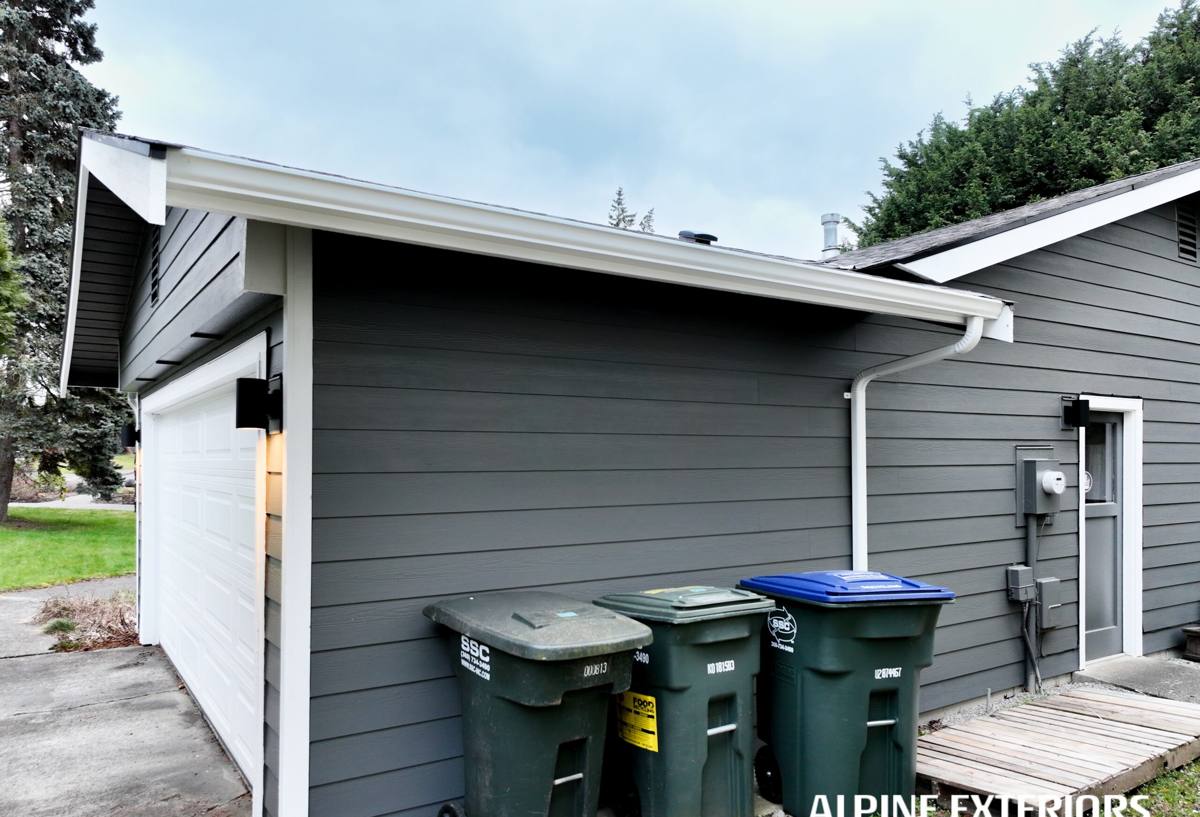
Signs Your Semiahmoo Home Needs Siding Repair
Moisture and Water Damage
Look for soft spots when you press on the siding near the bottom courses, corners, and anywhere two sections meet. Bubbling, peeling paint, or a chalky white residue can all point to moisture working its way in from behind rather than just weather on the surface. On older wood-based or composite siding, swelling and soft, spongy sections at butt joints are a common early sign — by the time you can see it, the damage has usually been building for a while underneath.
Cracking, Delamination, and Fastener Failure
Hairline cracks that follow the grain, edges that look like they're separating into layers, and nails or screws that have backed out or left rust streaks are all mechanical failures, not just cosmetic ones. Once a crack opens a path for water, salt-carrying wind rain will find it fast on a waterfront-facing wall.
Moss, Algae, and Persistent Staining
A little green tinge on north-facing siding is normal in this climate. What's worth addressing is moss that's thick enough to hold visible moisture against the wall, or streaking that keeps coming back within weeks of cleaning. That's usually a sign the siding surface or the drainage behind it isn't shedding water the way it should.
What a Correct Siding Repair Actually Involves
A repair that's done right starts with figuring out why the damage happened, not just patching what's visible. We check moisture content behind the affected boards where we can, trace water paths back to their source — often a flashing gap, a failed sealant joint, or a spot where the original installation left a seam exposed — and make sure the fix addresses the cause, not just the symptom.
- Confirm the extent of damage by removing enough siding to see what's happening underneath, not just what's visible from outside
- Check the water-resistive barrier and flashing at windows, corners, and butt joints for gaps or failures
- Match replacement material as closely as possible in profile, reveal, and finish so repairs don't stand out
- Re-flash and re-seal any point where water was getting behind the siding, not just at the damaged section
- Rehang or refasten with corrosion-resistant fasteners appropriate for a salt air environment
- Clean and treat any moss or algae growth on adjacent siding so it doesn't undermine the new work
Skipping the diagnostic step is the most common reason siding repairs fail early — a new board over a still-leaking flashing detail just hides the problem for another season.
Why We Only Repair With (and Recommend) James Hardie Fiber Cement
We install and repair exclusively with James Hardie fiber cement siding. We don't work with vinyl, LP SmartSide, Cemplank, Allura, or primed wood products like spruce or cedar, and on a site like Semiahmoo that decision matters more than it might elsewhere in Blaine.
Vinyl can warp and gap at the seams under sustained wind and temperature swings off the water, which opens the door for wind-driven rain to get behind it. Wood-based and engineered wood products depend on an intact factory coating and careful field sealing to resist moisture — once that coating is compromised by cracking, sanding, or age, salt-laden humidity and a long moss season give rot a real head start. Fiber cement doesn't share that vulnerability: it's non-combustible, dimensionally stable across our wet-to-dry swings, and doesn't feed moss and algae the way organic-based products can. James Hardie's ColorPlus factory finish also holds up to UV and salt exposure without the repeated repainting that wood siding demands in this environment, and its HZ5 product line is engineered specifically for the kind of freeze-thaw and moisture cycling the Pacific Northwest coast produces.
When we repair Hardie siding, we're also not guessing at compatibility — we know the product lines, the fastening specs, and the trim details cold, and repairs blend in rather than becoming a visible patch.
Repair vs. Replacement: How We Help You Decide
Not every damaged section needs a full re-side, and not every repair is worth doing instead of a broader replacement. We walk every Semiahmoo job through the same honest framework before recommending either option.
| Factor | Repair Is Usually Enough | Replacement Should Be Considered |
|---|---|---|
| Extent of damage | Isolated to one or two wall sections | Present on multiple elevations or throughout |
| Underlying cause | A single identifiable flashing or sealant failure | Systemic issue, like an original installation without proper water management |
| Siding age and material | Newer Hardie siding with a healthy warranty | Original wood, vinyl, or aging fiber cement near end of service life |
| Moisture readings | Localized, framing and sheathing unaffected | Elevated readings spreading into structural wood |
| Match quality | Discontinued or close-enough profile still available | No good match; patches would be visibly inconsistent |
We'll always tell you plainly which category your home falls into, including when a repair is genuinely the smarter and less expensive choice.
Our Process for Semiahmoo Siding Repair Calls
- Site visit and inspection. We look at the damage, check surrounding areas for related issues, and take moisture readings where accessible.
- Honest diagnosis. We explain what's causing the damage, whether it's isolated or systemic, and whether repair or replacement makes sense for your situation.
- Written estimate. You get a clear scope of work and price before anything is scheduled — no surprise add-ons once we open up a wall.
- Repair work. We remove damaged sections, correct the underlying water management issue, and install matched or replacement Hardie siding to spec.
- Final check. We confirm flashing, caulking, and fastening are all correct before we consider the job done, not just that the new siding looks right from the ground.
Keeping Semiahmoo Siding in Good Shape Between Service Visits
Fiber cement is low-maintenance compared to wood or vinyl, but no siding in this location is maintenance-free. A few habits go a long way toward avoiding another repair call down the road.
- Rinse salt residue and grime off exterior walls a couple of times a year, especially on sides facing open water
- Trim back vegetation and tree cover that keeps siding shaded and damp longer through moss season
- Clean moss and algae promptly with a gentle wash rather than a pressure washer, which can force water behind seams
- Walk the exterior after major windstorms and check for loose trim, cracked caulking, or shifted panels
- Repaint or refresh caulking at trim and penetrations on the schedule recommended for your siding, don't wait for visible failure
- Address small issues — a hairline crack, a loose fastener — as soon as you spot them rather than letting a wet season work on them
Why Hiring a Crew That Already Works Semiahmoo Matters
Repair work on a waterfront-exposed peninsula is a different job than repair work a few blocks inland. We already know how Semiahmoo's wind exposure and salt air behave against a wall, what a moss-driven failure looks like at this stage versus that one, and where builders in this area have historically cut corners on flashing details. That local pattern recognition means fewer exploratory cuts, a faster accurate diagnosis, and a repair that's built for the specific conditions your home actually faces rather than a generic fix. It also means we're a known, reachable crew if a repair ever needs a follow-up visit — not a name from out of the area that did one job and moved on.
If you're seeing damage, staining, or moisture issues on your Semiahmoo home's siding, we're happy to come take a look and give you a straight answer about what's going on and what it would take to fix it. Reach out for a free, no-pressure estimate using the form below.