 Blaine Siding
 Exterior Work in Sumas: A Border Valley With Its Own Weather Pattern
Sumas sits at the far eastern end of Whatcom County's line with Canada, out in the flat farmland of the Sumas Prairie where the county looks and behaves differently than it does along the coast. It's still Whatcom County weather — the same wet Pacific storm track, the same long stretch of gray months — but the low, flat valley setting changes how that weather actually lands on a house. We're based in Blaine, and Sumas, out at the eastern end of that same border, is regular territory for our crew. We've seen enough homes out there over the years to know that a house on the Sumas Prairie ages differently than one closer to the water, and the exterior work needs to account for that difference rather than treat every Whatcom County property the same.
We handle siding, roofing, windows, and decks, and we treat a home's exterior as one connected system rather than four separate jobs bid separately. On siding specifically, we install James Hardie fiber cement exclusively. That's not a marketing line — it's a professional standard we settled on after watching how different products actually perform on real homes across this county's range of conditions, from salt-exposed coastal towns to low-lying border valleys like Sumas.
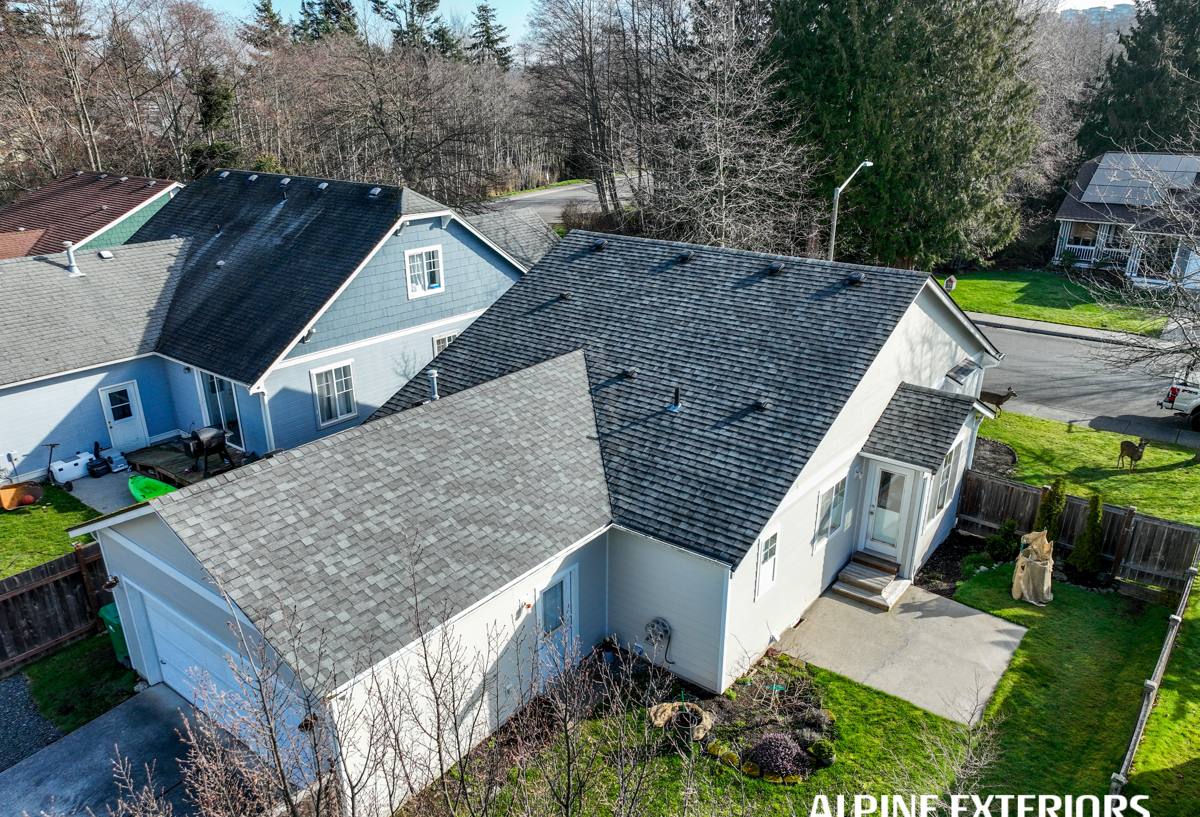
What the Sumas Climate Does to a Home's Exterior
Driving Rain on Flat, Low-Lying Ground
Storms crossing Whatcom County don't drop straight down — wind pushes rain sideways into walls, trim, and window flashing, and that sideways load is harder on a house than the same rainfall would be in a calm climate. On flat valley ground like the Sumas Prairie, water also doesn't drain away from a foundation and lower wall as quickly as it would on a sloped, well-drained lot closer to the water. Siding and trim that aren't detailed to shed wind-driven rain, and that sit against ground that stays damp longer, tend to show water damage first at seams, corners, and anywhere flashing is doing less than it should.
Cold Outflow Wind Off the Border
Sumas sits further inland and higher up the valley than towns like Blaine that face the water directly, which means it catches cold outflow wind events in winter that milder coastal spots see less often. Those events bring sharp temperature drops and real wind load, and they test siding, trim, and roof fastening in a way that calmer, more sheltered sites don't experience nearly as regularly. A detail that holds up fine under ordinary county weather can still get pushed harder here when a cold snap comes through with wind behind it.
A Long Moss and Mildew Season
Persistent regional dampness and mild temperatures add up to a moss and mildew season that runs long across most of Whatcom County, and Sumas is no exception. Shaded walls, north-facing surfaces, and roof planes that stay damp longest are the first places it takes hold, and it's more than a cosmetic issue — sustained organic growth holds moisture directly against a wall or roof assembly, which is exactly the condition that leads to hidden rot or shortened roofing life if it isn't addressed.
Freeze-Thaw Swings
Because it sits further from the moderating effect of the water, Sumas tends to see more frequent hard frosts than towns right on Semiahmoo Bay or Drayton Harbor. That matters once moisture is already inside a porous or poorly sealed material: water that's soaked in and then freezes expands, and that cycle accelerates cracking and material failure in a way a purely wet-but-mild climate wouldn't.
Why We Install Only James Hardie Fiber Cement Siding
We used to offer a wider range of siding products before narrowing to one system. That change came from years of tear-offs and service calls across Whatcom County, watching which materials actually held up under sustained regional moisture, wind, and freeze-thaw cycling, and which ones quietly turned into maintenance burdens for the homeowner a few years down the road.
- Non-combustible core: Fiber cement doesn't feed a fire the way wood-based or wood-derived siding can, which matters for both household safety and insurance underwriting.
- Factory-applied ColorPlus finish: The color is baked on under controlled factory conditions instead of brushed on in the field, so it resists fading, chalking, and moisture intrusion far longer than site-applied paint holds up.
- Climate-engineered HZ product lines: Hardie builds different formulations for different climate zones, including versions engineered for regions with sustained moisture exposure and freeze-thaw cycling — a real fit for a valley property like one in Sumas.
- Dimensional stability: Fiber cement doesn't swell, cup, or warp the way engineered wood siding can after repeated wet-season moisture cycles, which matters more here given how long the wet season runs.
- Strong transferable warranty: Hardie backs its products with a solid warranty structure when installed to spec, giving a homeowner real protection instead of a marketing claim.
We don't install LP SmartSide, vinyl siding, Cemplank, Allura, primed spruce, or cedar. Each has its place in the broader market, and plenty of homeowners elsewhere are satisfied with them. But we made a professional call that one system we trust completely, installed correctly, serves a Whatcom County homeowner better than a cheaper option that shifts maintenance risk onto them a few years down the road — especially in a border-valley climate that doesn't forgive shortcuts.
Beyond Siding: Roofing, Windows, and Decks for Sumas Properties
A house's exterior fails as a system, not one material at a time, so we look at the whole envelope rather than just the siding when we're out on a Sumas property.
Roofing
A roof with poor flashing or aging underlayment lets moisture in above the wall line, and that water often travels before it shows up as a stain — sometimes ending up behind siding that looks fine from the ground. Roof inspections and repairs matter as much as siding condition when we're assessing an older home out on the prairie.
Windows
Window flashing integration is one of the more common failure points we find on older homes, and it's easy to miss because the damage shows up in the wall cavity before it shows up on the interior sill. Full-frame replacement done correctly ties the new window into the surrounding weather barrier properly; a poorly integrated insert can quietly undo that protection.
Decks
A deck's ledger board connection and framing drainage matter more in a wet valley climate than the decking material on top. We build and repair decks with corrosion-resistant fasteners and drainage details suited to a property that sees standing moisture more than a well-drained hillside lot would.
What Drives Cost on a Sumas Exterior Project
| Project | What Drives Cost | Sumas Valley Consideration |
|---|---|---|
| Siding | Home size, tear-off vs. overlay, trim complexity | Substrate repair if moisture has already gotten behind existing siding near ground level |
| Roofing | Roof size, pitch, number of penetrations and valleys | Underlayment and flashing quality against sustained wet-season moisture and wind |
| Windows | Number of openings, frame material, full-frame vs. insert replacement | Flashing integration to resist driving rain on an exposed, low-lying lot |
| Decks | Size, framing material, railing style | Drainage design and ledger flashing on ground that holds moisture longer |
These are general cost drivers, not a quote. Every property on the Sumas Prairie sits a little differently in terms of drainage, tree cover, and sun exposure, so we walk the site before putting a real number on the work. Two homes on the same road can need very different scopes once old siding or roofing actually comes off, which is also why we're cautious about estimates given sight unseen.
Timing a Project Around the Valley's Seasons
Whatcom County's wettest, windiest stretch typically runs from late fall through winter, and out on the flat, exposed Sumas Prairie that stretch can feel a little sharper than it does in a more sheltered spot. Spring and summer generally offer the driest, most stable working conditions for siding, roofing, and deck installation, since fiber cement, underlayment, and framing materials all perform better when they're installed and allowed to set up under dry conditions rather than between storm systems. That said, active water intrusion doesn't wait for good weather, so a home already showing damage is worth addressing on its own timeline rather than holding out for the ideal season.
Signs a Sumas Home Needs Exterior Attention
- Moss or dark staining on siding or roof surfaces that returns quickly after cleaning
- Soft or spongy siding, especially low on the wall near ground level
- Standing water or slow drainage near the foundation after a storm
- Peeling paint or visible warping on shaded, north-facing walls
- Missing, curling, or granule-shedding shingles on the roof
- Drafts, fogging, or visible gaps around window frames
- Soft boards or spongy footing on an older deck
Why a Local Crew Based Nearby Matters
A crew that works across Whatcom County regularly, on siding, roofing, windows, and decks alike, sees how driving rain, outflow wind, and a long moss season actually behave on real Sumas homes over a full year — not just how a product performs on a spec sheet. That experience shapes practical decisions on install day: where extra flashing attention pays off on flat, slow-draining ground, which walls stay damp the longest, and which fastening details are worth the extra time so a homeowner isn't dealing with a callback after the next storm rolls through the valley. Sumas isn't identical to the coastal towns closer to Blaine, and a crew that knows the difference builds accordingly instead of applying one generic approach across the whole county.
Get a Free, No-Pressure Estimate
If your Sumas home needs new siding, a roof inspection or replacement, window work, or a deck built for this valley's weather rather than against it, we're glad to take a look and give you a straightforward, honest assessment. Reach out using the form below to schedule a free estimate — no pressure, no upsell script.
```