 Blaine Siding
 Exterior Work Built for Blaine Harbor's Marine Climate
Homes near Blaine Harbor sit close to open water, and that changes what a house needs from its exterior. Salt-laden air off the bay, wind-driven rain, and a shade-and-moisture combination that keeps things damp for much of the year all put steady pressure on siding, trim, roofing, and every seam where water can find a way in. A house built or sided the same way you'd side a place twenty miles inland tends to show its age faster here.
We work on homes throughout Whatcom County, and the harbor-adjacent properties are some of the toughest exterior environments in our service area. That's not a knock on the neighborhood — it's just physics. Salt accelerates corrosion of fasteners and metal flashing, wind pushes rain sideways into joints that would stay dry elsewhere, and the persistent dampness gives moss, algae, and mildew a long runway to take hold on anything that holds moisture.
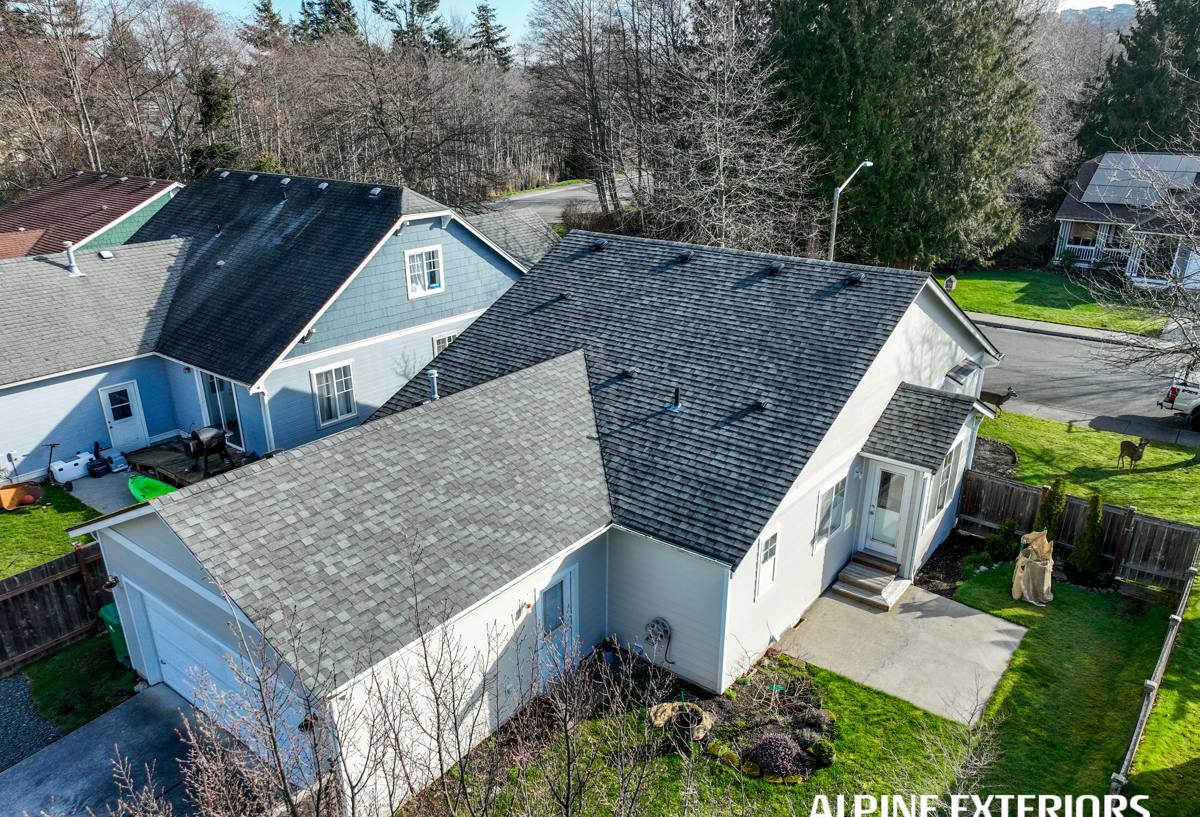
What Salt Air Actually Does to a House
Salt air isn't just an inconvenience — it's a chemical process working on your exterior around the clock. A few of the specific ways it shows up on harbor-area homes:
- Fastener and flashing corrosion — uncoated or lower-grade metal fasteners and flashing corrode faster near salt water, and once a fastener starts to fail, whatever it's holding is compromised too.
- Finish breakdown — paint and lower-grade factory finishes chalk, fade, and lose adhesion faster under repeated salt exposure combined with UV and moisture cycling.
- Accelerated wood decay — any wood-based siding, trim, or decking that takes on salt-laden moisture tends to soften and rot faster than the same material inland.
- Window and door seal wear — seals and gaskets around openings break down faster in salt air, which is why window quality and installation detail matter more here than in a lot of other areas we work.
None of this means a house near the harbor can't hold up well long-term. It means the materials and installation details have to be chosen with that environment in mind, not just picked for upfront cost.
Moss, Shade, and the Long Wet Season
Whatcom County's marine climate means a long stretch of the year where surfaces stay damp — overcast skies, frequent drizzle, and cooler temperatures that slow drying. Add tree cover or a north-facing wall, and you get conditions where moss and algae can establish themselves on siding, roofing, and decking and stay there.
Moss isn't just a cosmetic issue. It holds moisture directly against whatever it's growing on, which is exactly the wrong thing for wood-based products or any siding with a finish that isn't fully sealed against moisture intrusion. Over a long moss season, that trapped dampness is often what starts real deterioration underneath a surface that still looks intact from a distance.
Why Drainage and Ventilation Details Matter More Here
On harbor-area homes, we pay close attention to how water is meant to move off the wall assembly — proper flashing at every horizontal joint, correct overlaps, and a rainscreen or drainage gap where the assembly calls for one. In a drier climate, sloppy details might go unnoticed for years. In this climate, they get found out fast.
Why We Only Install James Hardie Fiber Cement Siding
We made a deliberate decision as a company to install James Hardie fiber cement siding exclusively — not vinyl, not LP SmartSide, not Cemplank or Allura, not primed spruce or cedar. That's not a marketing position; it's a practical one, built around what actually holds up in a climate like this one.
Fiber cement is non-combustible and dimensionally stable, meaning it doesn't expand and contract with moisture the way wood-based products do. That matters directly in a climate with this much sustained dampness: less swelling, less warping, less opportunity for water to work its way behind the surface over time. James Hardie's ColorPlus factory finish is baked on and warrantied against fading and peeling, which takes the guesswork out of how the color will hold up under years of UV and salt exposure — something a field-applied paint job can't promise in the same way.
Hardie also builds specific product lines engineered for wetter, harsher climates (their HZ5 designation covers areas like ours), and backs installations with a strong transferable warranty when the product goes on to spec. We'd rather stand behind one material system we trust completely than offer a menu of options and let cost be the deciding factor on a house that's going to take a beating from the weather here.
What We're Not Saying
We're not telling you the alternatives are junk. Vinyl, LP SmartSide, and cedar all have legitimate uses and loyal installers. Our position is narrower: for the maintenance burden, moisture behavior, and long-term performance we want to stand behind on homes in this specific climate, fiber cement is the material we're willing to warranty our work on. That's a standard we hold for every job, not just ones near the water.
Beyond Siding: Roofing, Windows, and Decks
Siding is only one piece of a home's exterior, and in a harbor-adjacent climate the other components are under the same kind of pressure.
Roofing
A roof near the water deals with the same wind-driven rain and moss growth as the walls below it. Flashing details at valleys, chimneys, and penetrations are where most roof leaks actually start, and those details deserve the same attention as the field of the roof itself.
Windows
Window performance in this climate comes down to two things: the quality of the unit and the quality of the flashing and sealant work around it. A good window installed poorly will leak; a modest window installed correctly often outperforms it. We treat window replacement as an integration job with the siding around it, not an isolated swap.
Decks
Decks near the harbor face direct weather exposure with no wall assembly to protect them. Fastener choice, board spacing for drainage, and ledger flashing where the deck meets the house are the details that determine whether a deck lasts or starts failing within a few seasons.
What Correct Installation Looks Like on a Harbor-Area Home
Material choice only gets you part of the way there — installation is where a lot of exterior work either earns its keep or falls short. On every siding job, especially in this environment, we pay attention to:
- Proper starter strips, flashing, and z-flashing at every horizontal joint and window/door head
- Correct fastener type and spacing per manufacturer spec, sized for the substrate
- Rainscreen or drainage gap behind the siding where the wall assembly calls for it
- Caulking only where the manufacturer's install guide specifies it — not as a substitute for proper flashing
- Careful attention to ground clearance so siding isn't sitting in a moisture trap at the base of the wall
These aren't exotic requirements. They're standard best practice that becomes non-negotiable once the climate stops giving you room for error.
Cost Factors on Harbor-Area Exterior Projects
Every house is different, and we won't quote a number without seeing the property, but a few factors consistently affect cost on homes near Blaine Harbor:
| Factor | Why It Affects Cost |
|---|---|
| Wind and salt exposure | May call for upgraded flashing, fastener grade, or added drainage detailing |
| Existing moisture damage | Rot or hidden water intrusion found during tear-off adds repair scope |
| House height and access | Multi-story or steep-lot homes near the water often require more setup and safety equipment |
| Trim and detail complexity | Dormers, bay windows, and multiple rooflines all add labor beyond a simple flat wall |
| Moss/algae remediation | Heavily affected surfaces may need cleaning or minor repair before new material goes on |
Why a Local Crew Matters Here
A crew that works this specific stretch of Whatcom County knows what to look for before a tear-off even starts — where moisture tends to hide on a harbor-facing wall, which details get skipped on lower-cost jobs, and what the wind actually does to a job site on a bad afternoon. That's the kind of judgment that doesn't come from a spec sheet.
When you're vetting a contractor for exterior work near the water, a short checklist helps:
- Ask what siding material they install and why — and whether they stand behind it with a real warranty
- Ask how they handle flashing and drainage detailing on wind-exposed walls
- Ask for references on homes in a similar setting, not just anywhere in the region
- Confirm they're licensed and insured, and get the scope of work in writing before anything starts
- Be wary of a bid that's dramatically lower than others — it's usually missing a detail, not saving you money
Get a Straight Answer for Your Home
If you're dealing with aging siding, moss buildup, water intrusion, or you're just planning ahead for a home near Blaine Harbor, we're happy to take a look and give you an honest read on what your house actually needs. There's no pressure and no sales script — just a straightforward estimate from a crew that works this climate every day. The form below gets you started.