 Blaine Siding
 Siding Failure Rarely Starts on the Surface
When a homeowner in Blaine calls us about siding trouble, the first thing they usually point to is something cosmetic — a bulge near a window, a soft spot by the deck ledger, paint that won't stop peeling no matter how many times it's redone. What they're describing is almost never the actual problem. It's the symptom showing up months or years after the real damage started, hidden behind the siding itself, in the sheathing and framing you can't see without opening the wall.
That gap between "when water gets in" and "when you can see the damage" is what makes siding failure so expensive to catch late and so much cheaper to catch early. This page walks through what's actually happening behind a failing wall assembly, why Whatcom County's climate accelerates it, and what separates a wall system that sheds water for 30-plus years from one that quietly rots for five.
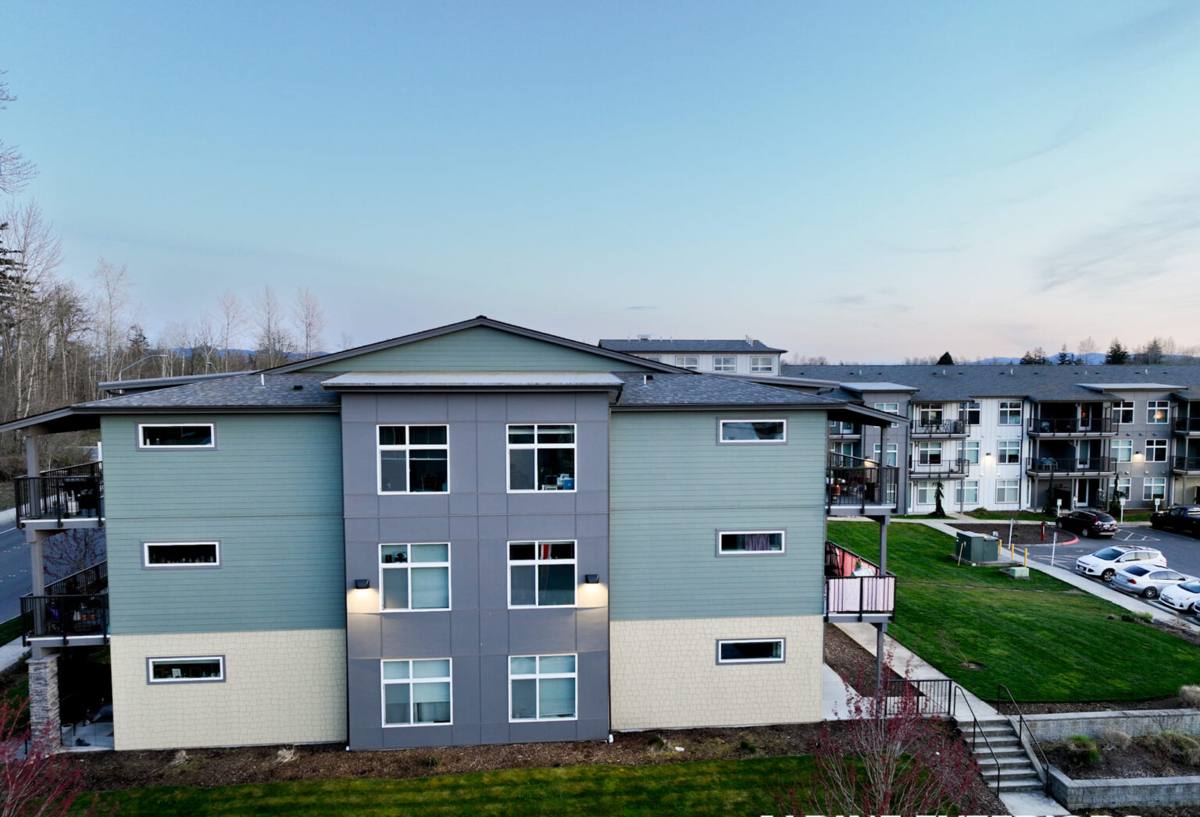
How Water Gets Behind Siding in the First Place
Siding is not, by itself, a waterproof barrier. No siding product — wood, vinyl, fiber cement, or engineered wood — is installed as a single impermeable layer and expected to stop 100% of water. Every legitimate wall assembly is designed as a system: siding sheds the bulk of the water, but a weather-resistant barrier (housewrap or building paper) behind it is the actual backstop, and flashing directs water that does get past the siding back out instead of into the wall.
Problems start when one or more of those layers is missing, damaged, or installed out of sequence. Common entry points we find on this side of the state:
- Caulk joints at trim, window returns, and butt seams that have dried, cracked, or were never meant to be a primary water seal in the first place
- Missing or reversed flashing at windows, doors, and horizontal trim boards, where water is directed into the wall instead of away from it
- Siding installed tight to window and door flanges with no drainage gap, trapping water against the barrier
- Fasteners driven through siding at the wrong depth or angle, creating a wick point straight into the substrate
- Deck ledgers, roof-to-wall intersections, and chimney penetrations without proper step or kickout flashing
- Siding installed too close to grade, decks, or roof lines, with no clearance for water to drain away
None of these are dramatic failures. They're small installation shortcuts, usually invisible from the ground, that let a trickle of water behind the cladding every time it rains. In Blaine, that's a lot of opportunities.
What's Actually Happening Behind the Wall
Once moisture gets past the siding and housewrap, it lands on OSB or plywood sheathing and the framing behind it. Wood-based sheathing absorbs water readily, and if it doesn't get a chance to dry out between rain events, it stays wet. Sustained moisture above roughly 20% wood moisture content is enough to support fungal growth, and the fungi responsible for wood rot — brown rot and white rot being the common types in Pacific Northwest framing — break down the wood's structural fibers from the inside.
This is a slow process by human standards but a fast one by building standards. A stud or sheathing panel that's been chronically wet for two or three winters can go from sound to structurally compromised without any visible change on the exterior. By the time paint is bubbling or siding feels spongy to the touch, the rot has usually been established for a while — what you're seeing is often the wall telling you it's already lost integrity, not warning you that damage is starting.
Why It Spreads Sideways, Not Just Down
People sometimes assume water damage stays localized to the leak point. In practice, sheathing and framing wick moisture laterally along the grain, and housewrap laps can carry water sideways before it finds a stud bay to pool in. That's why the visible damage — a stain, a soft spot, a bit of exterior trim rot — is often smaller than the hidden damage behind it. We've opened up walls where the exterior symptom was the size of a dinner plate and the compromised sheathing behind it was several feet across.
Signs You Can Actually See From the Outside
You don't need to open a wall to catch this early. A homeowner walking their own property twice a year can catch most of these before they become structural:
- Paint that bubbles, peels, or fails repeatedly in the same spot despite fresh coats
- Siding boards that feel soft, spongy, or flex when you press on them
- Visible gaps, cracked caulk, or separated joints at trim and window edges
- Dark streaking or staining running down from horizontal seams or trim
- A musty smell near an exterior wall on the interior side, especially in closets or behind furniture
- Baseboards, drywall, or interior trim that feel damp or show discoloration near an exterior wall
- Visible moss, algae, or persistent green growth holding moisture against the siding surface
- Siding that has visibly warped, cupped, or separated from the wall plane
Any one of these is worth a closer look. Several at once, especially on the same elevation, usually means there's an underlying flashing or drainage problem, not just a cosmetic issue.
Why This Moves Faster in Blaine Than It Would Inland
Whatcom County's coastal position puts Blaine homes through a moisture cycle that's harsher than what a house sees even 30 or 40 miles inland. Three things stack on top of each other here:
Salt air. Proximity to the Strait of Georgia and Semiahmoo Bay means airborne salt is a constant, low-level presence. Salt is hygroscopic — it draws and holds moisture — and it accelerates the breakdown of caulk, fasteners, and unprotected wood far faster than dry inland air would. Fasteners and trim details that would last decades elsewhere can start failing years sooner in a salt-exposed marine environment.
Driving rain. Blaine doesn't just get a lot of rain — it gets a lot of wind-driven rain off the water, which pushes moisture horizontally into wall assemblies rather than letting it run straight down and off. That horizontal pressure is exactly what exposes weak flashing details and undersized drainage gaps that would never get tested in a calmer climate.
A long moss season. Cool, damp, shaded conditions for much of the year mean moss and algae get a long runway to establish on north-facing and shaded walls. Beyond looking bad, moss holds water directly against the siding surface for extended periods, which keeps that section of wall wet long after the rest of the house has dried out.
Put together, a wall assembly with a marginal flashing detail might take a decade to show real damage in a drier climate. In Blaine, we regularly see that same marginal detail cause visible rot in five to seven years.
How Different Siding Materials Handle This Risk
Not all siding responds to moisture exposure the same way. This matters because the material itself either buys you a margin of error or removes it entirely.
| Material | How it behaves with trapped moisture | What that means over time |
|---|---|---|
| Solid wood / primed spruce | Absorbs water directly, swells, and is a food source for rot fungi once wet | Requires diligent repainting and caulk maintenance; rot risk rises quickly if maintenance lapses |
| Engineered wood (OSB-based products) | Wood-fiber core absorbs moisture at cut edges and joints, especially if edges aren't sealed and maintained | Can swell and deteriorate at exposed edges if moisture reaches the core |
| Vinyl siding | The siding itself doesn't rot, but it doesn't stop water either — it relies entirely on what's behind it | Trapped moisture behind vinyl can go unnoticed longer since the siding shows no visible damage |
| Fiber cement (James Hardie) | Cement-based composition doesn't feed rot fungi and holds dimensional stability when damp | Doesn't eliminate the need for correct flashing, but removes the material itself as a failure point |
This is the core of why we standardized on James Hardie fiber cement and don't install LP SmartSide, vinyl, Cemplank, Allura, primed spruce, or cedar. It's not that every one of those products fails — it's that each one asks something of the wall assembly, the maintenance schedule, or the homeowner that we've seen go wrong too often in a climate like this one. Fiber cement is non-combustible, doesn't provide a food source for rot fungi, and holds its shape and finish under the kind of chronic damp exposure Blaine sees for much of the year. James Hardie's HZ5 product line in particular is engineered for cold, wet climate zones like ours.
Why We Draw the Line Here
To be fair to the alternatives: engineered wood siding has genuinely improved its moisture resistance over the years, and vinyl is inexpensive and low-maintenance in a lot of climates. Cedar, installed and finished correctly, can perform well for a long time. Our position isn't that these products are inherently bad — it's that they each carry a maintenance burden or an installation sensitivity that raises the odds of exactly the failure mode described above, in a climate that doesn't forgive shortcuts. We'd rather install one product well, on every home, than manage the trade-offs of several.
What Correct Installation Actually Prevents
Good siding material doesn't fix a bad wall assembly, and a bad installation can undermine even the best product. The details that actually stop the failure cycle described above are largely invisible once the job is done:
- A continuous, properly lapped weather-resistant barrier behind the siding, installed shingle-style so every seam sheds water downward
- Correct head, sill, and jamb flashing at every window and door, tied into the barrier so water is directed out, not in
- A drainage gap (rainscreen) between the siding and the barrier so any water that does get through has somewhere to go and can dry out
- Kickout flashing at every roof-to-wall intersection, directing runoff away from the wall instead of behind it
- Proper clearance between siding and grade, decks, patios, and roof surfaces
- Fasteners at the manufacturer-specified depth, spacing, and location, avoiding both underdriven and overdriven placement
- Factory-finished panels and trim (like James Hardie's ColorPlus finish) that reduce the number of field-cut, unsealed edges exposed to weather
Most of these details take a few extra minutes per window, per seam, per penetration. None of them are visible in a finished photo. All of them are the difference between a wall that dries out after a storm and one that stays wet until the next inspection finds a problem.
What It Costs to Wait
We won't quote specific repair prices here, since every wall assembly and damage extent is different — but the cost curve on rot damage follows a predictable shape, and it's worth understanding before you decide whether to watch a soft spot for another season.
| Stage caught | Typical scope of repair | General cost trend |
|---|---|---|
| Early — surface signs only, sheathing sound | Localized flashing or caulk correction, possible small siding section replacement | Lowest — often addressed during routine maintenance |
| Moderate — sheathing softened, framing dry | Section of siding and sheathing removed and replaced, flashing corrected | Moderate — labor-driven, limited material scope |
| Advanced — framing compromised | Structural framing repair or sistering, full sheathing replacement, siding replacement | Highest — structural work plus full exterior scope |
The pattern holds regardless of which siding product is involved: the earlier the moisture source is found and corrected, the smaller and cheaper the fix. That's the practical argument for a periodic walk-around inspection, even on a home with siding that still looks fine from the street.
A Simple Homeowner Checklist
Twice a year — spring and fall work well for Blaine's rain pattern — walk the full perimeter of your home and check:
- Press gently on siding near ground level, deck ledgers, and window sills for softness
- Look at every horizontal trim board and window head for cracked caulk or gaps
- Check for moss or algae buildup on north- and west-facing walls
- Look up at roof-to-wall intersections for signs of staining or missing kickout flashing
- Walk the interior perimeter near exterior walls and check for musty odor or damp baseboards
- Note any spot where paint or finish keeps failing in the same location year after year
None of this requires special tools or training — it's the same walk a contractor does on a first visit, just done more often and earlier.
Getting an Honest Look at Your Siding
If you're seeing any of the warning signs above, or you just haven't had your siding looked at in a few years, we're happy to come take a look. We'll tell you honestly what we find — whether that's a minor flashing fix or a fuller replacement — and if replacement makes sense, we'll walk you through why James Hardie fiber cement is what we install on every home we work on in Blaine and across Whatcom County. The estimate is free, and there's no pressure either way.