 Blaine Siding
 An Unusual Piece of Whatcom County
Point Roberts sits at the end of a small peninsula that hangs off the bottom of British Columbia, cut off from the rest of Whatcom County by water and by an international border. Water surrounds the community on three sides — Boundary Bay to the east, the Strait of Georgia to the west. That geography is part of what makes the area special, and it's also exactly why the exterior of a home here takes a different kind of beating than a house twenty miles inland.
Salt-laden wind off the water, driving rain that comes in sideways during winter storms, and long stretches of damp, shaded weather that keep moss and algae growing for most of the year — all of it adds up. We've been doing siding, roofing, window, and deck work around Blaine and the rest of Whatcom County long enough to know that a product or installation detail that holds up fine in a drier, more sheltered spot can fail early out here. This page walks through what that exposure actually does to a house, and how we build and maintain exteriors to handle it.
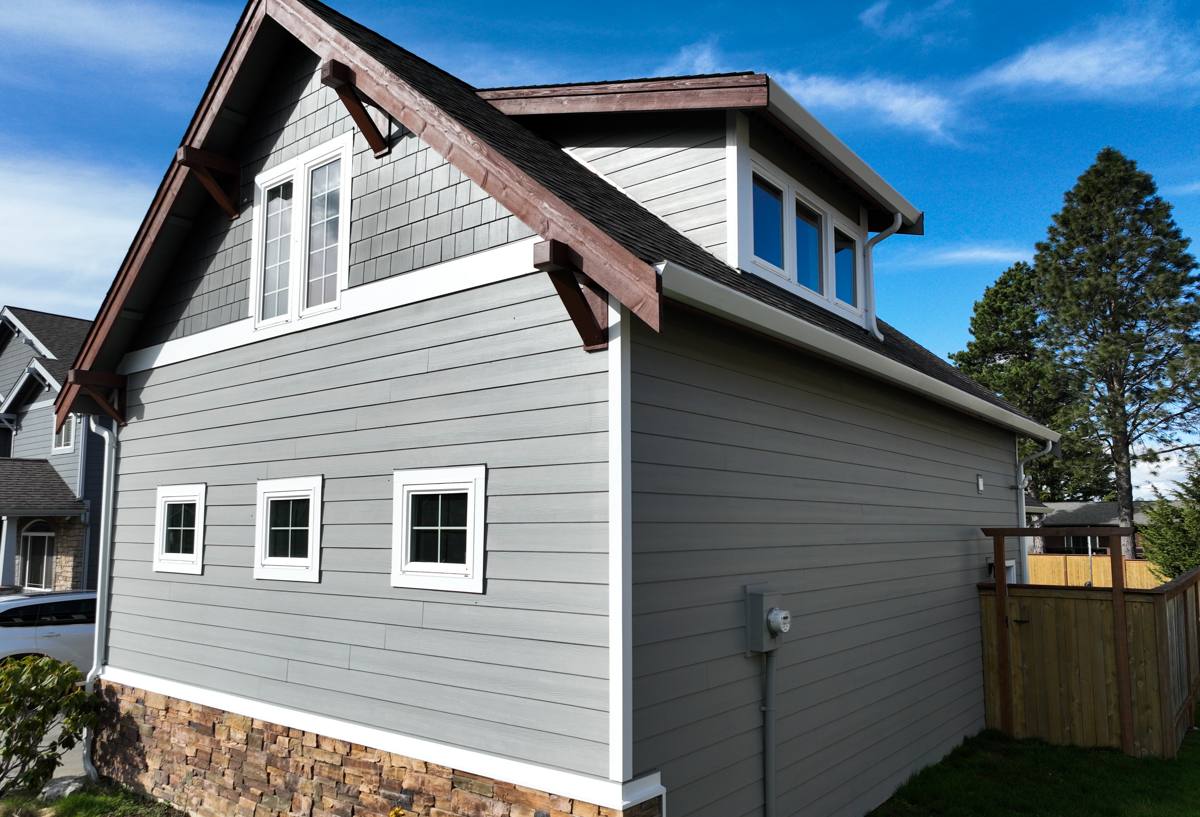
What Salt Air and Wind-Driven Rain Do to a House Over Time
Salt air isn't just a coastal cliché. Airborne salt settles on every exterior surface, and combined with near-constant moisture, it accelerates corrosion of anything metal — fasteners, flashing, hardware — and it works into porous or poorly sealed siding materials faster than people expect. Add wind-driven rain, which pushes water sideways into laps, seams, and trim joints that were only ever designed to shed water falling straight down, and you get a house that's fighting moisture intrusion from more directions than most siding products or installation details were built to handle.
Where the Damage Shows Up First
On most homes we look at in exposed, water-facing areas, the earliest signs of trouble aren't dramatic. They're subtle: paint that's chalking or peeling years ahead of schedule, caulk joints that have opened up, soft spots at the bottom of siding boards or trim, streaking and staining that won't wash off, and fastener heads bleeding rust through the finish. By the time any of that is visible from the ground, there's usually already moisture behind the material.
Siding Material Comparison for Marine, Salt-Exposed Climates
Not every siding product handles this environment the same way. This is the core of why we made the call to install only James Hardie fiber cement — we stopped installing materials that we'd have to explain away every few years on homes exposed to this much moisture and salt.
| Material | Salt Air / Corrosion Behavior | Moisture & Rot Risk | Moss/Algae Resistance | Typical Maintenance |
|---|---|---|---|---|
| Vinyl siding | Can become brittle and fade faster under sun and salt exposure; seams are a weak point for wind-driven rain | Doesn't rot itself, but traps moisture behind it if installation isn't ventilated correctly | Grows algae/moss like any surface; harder to clean without damaging the finish | Low, but limited lifespan on exposed elevations |
| Cedar / natural wood | No corrosion issue itself, but fasteners and flashing behind it corrode; wood absorbs salt-laden moisture | High — wood is the most vulnerable material to rot in a wet, shaded climate like this | High risk without frequent treatment | High — regular staining, sealing, and inspection |
| Engineered wood (LP-type) | Better than solid wood, but edges and cut ends remain moisture-sensitive | Moderate to high if flashing and caulking aren't kept up | Moderate | Moderate — needs consistent upkeep of seams and finish |
| James Hardie fiber cement | Non-combustible, dimensionally stable material that doesn't corrode or degrade from salt exposure | Engineered specifically for wet climates (HZ5 product line); resists moisture-driven warping and rot | Factory ColorPlus finish resists fading and holds up well to cleaning | Low — periodic washing, no repainting on a fixed schedule |
We're not going to tell you every home that's ever had vinyl or wood siding on it has failed — plenty of houses get by fine with regular upkeep. But on a peninsula this exposed, we'd rather put a material on your walls that's engineered for the climate than one that needs constant attention to keep up.
Moss, Algae, and Whatcom County's Long Wet Season
Point Roberts gets the same extended damp season as the rest of the Pacific Northwest coast, and shaded, tree-covered lots — common throughout the area — make it worse. North-facing walls and anything under overhanging trees can stay damp for weeks at a time, which is exactly what moss and algae need to take hold.
Why This Matters for Siding, Not Just Roofs
Most people think of moss as a roof problem, but it grows just as readily on siding, trim, and fascia in shaded, damp spots. Beyond looking bad, moss holds moisture against the surface underneath it, which is a slow but steady path toward the kind of hidden rot and fastener corrosion we mentioned above. A factory-applied finish that resists staining and holds its color, paired with siding installed with proper drainage behind it, makes a real difference in how much moss actually takes hold and how easy it is to clean off when it does.
Roofing Considerations for a Salt-Air, High-Moisture Climate
Roofs here deal with the same driving rain and moss pressure as siding, plus wind. A roof that isn't properly ventilated traps moisture in the attic space, which shortens the life of the roofing material from underneath while moss and algae work on it from above. Corrosion-resistant fasteners and flashing matter just as much on a roof as they do on siding — a rusted-out flashing detail at a chimney or valley is one of the most common sources of a leak we find on exposed coastal homes.
Windows: Keeping Wind-Driven Rain and Moisture Out
Window performance in this climate comes down to two things: how well the window itself is built, and how well it's integrated into the wall assembly around it. Wind-driven rain finds gaps at the window flange and trim faster than it finds gaps in the field of the siding, so flashing details around openings matter as much as the window unit itself. Poor integration between siding and window flashing is one of the more common causes of hidden water damage we run into on remodel and repair work — not because the window failed, but because the transition around it wasn't sealed and lapped correctly.
Decks Exposed to Salt Air
Decks take a different kind of abuse out here. Salt-laden air accelerates corrosion on any exposed fastener, bracket, or ledger connection, and that's the hardware holding your deck to your house. We use corrosion-resistant fasteners and hardware rated for coastal exposure, and we pay close attention to ledger board flashing, since a poorly flashed ledger connection is both a structural risk and a slow, hidden path for water into the house framing behind it. Whether you're building new or replacing decking on an existing structure, the substructure and connection hardware deserve as much attention as the decking material itself.
Why a Local Crew Matters for Work on the Point
The Logistics Are Different Here
Getting people and materials to Point Roberts isn't as simple as driving across town. Because the community is separated from the rest of Whatcom County by water and by the border, reaching it means crossing into Canada and back out again. That takes planning — proper documentation for crews, realistic scheduling around border crossing times, and material deliveries coordinated so a job doesn't stall out waiting on a truck that got held up. It's the kind of thing that only becomes second nature once you've done it repeatedly.
Permitting and Local Knowledge
As with the rest of unincorporated Whatcom County, exterior work here runs through the county's permitting process. A crew that's worked in the area knows what inspectors are looking for on flashing, drainage, and fire-rating details specific to homes exposed to this kind of weather, and that saves everyone time and rework.
What to Expect From an Exterior Project on the Point
Whether it's a full siding replacement, a roof, new windows, or deck work, the process starts with an honest look at what's actually happening behind the surface, not just what's visible from the curb. Here's what we're checking on most Point Roberts homes:
- Condition of existing siding, trim, and flashing on water- and wind-exposed elevations
- Signs of moss, algae, or staining on north-facing and shaded walls
- Corrosion on visible fasteners, hardware, and roof flashing
- Water staining or soft spots around window and door openings
- Ventilation at the roof and behind the siding assembly
- Condition of deck ledger connections and fastener hardware
- Drainage at the foundation and grade around the home
That inspection tells us where the real problems are, not just where the paint looks bad, and it shapes an honest recommendation — sometimes that's a full siding replacement, sometimes it's targeted repair and better flashing details, and sometimes it's simply a maintenance plan that buys a few more years before bigger work is needed.
Built for This Climate, Not Just Installed In It
Our decision to install only James Hardie fiber cement siding comes directly from years of seeing what salt air, driving rain, and a long moss season do to homes in this part of Whatcom County. Hardie's HZ product line is engineered specifically for wet, coastal conditions, the ColorPlus factory finish holds its color and resists the staining that shaded, damp walls are prone to, and the material itself doesn't rot, corrode, or feed moss the way some alternatives can. It's not the only siding product on the market, but it's the one we're willing to put our name behind on a peninsula this exposed.
If you're dealing with aging siding, a roof that's showing its age, windows that let in more draft or moisture than they should, or a deck that needs a closer look, we're happy to come out and take a straightforward look at what's going on. There's no pressure and no cost to get an honest assessment and a written estimate — just fill out the form below and we'll get in touch.