 Blaine Siding
 Board & Batten Siding for Point Roberts Homes
Point Roberts sits in a spot unlike almost anywhere else in Whatcom County: a small peninsula cut off from the rest of Washington State by water and by the Canadian border, surrounded on three sides by the Strait of Georgia and Boundary Bay. That geography gives homes there a lot of exposure to wind-driven marine weather, and it means the exterior of a house has to earn its keep. Board and batten siding, done right, is one of the best-looking and most durable claddings for that setting — but "done right" is doing a lot of work in that sentence, especially when the product underneath the boards is what actually determines how the wall performs over the next 30 years.
This page is about board and batten siding specifically for Point Roberts properties, installed with James Hardie fiber cement rather than wood, vinyl, or engineered wood products. We'll walk through what the local climate does to siding, what a correct installation actually involves, how our process works on Point Roberts jobs, and why a crew that already understands this stretch of coastline matters more than it would on a typical inland Whatcom County street.
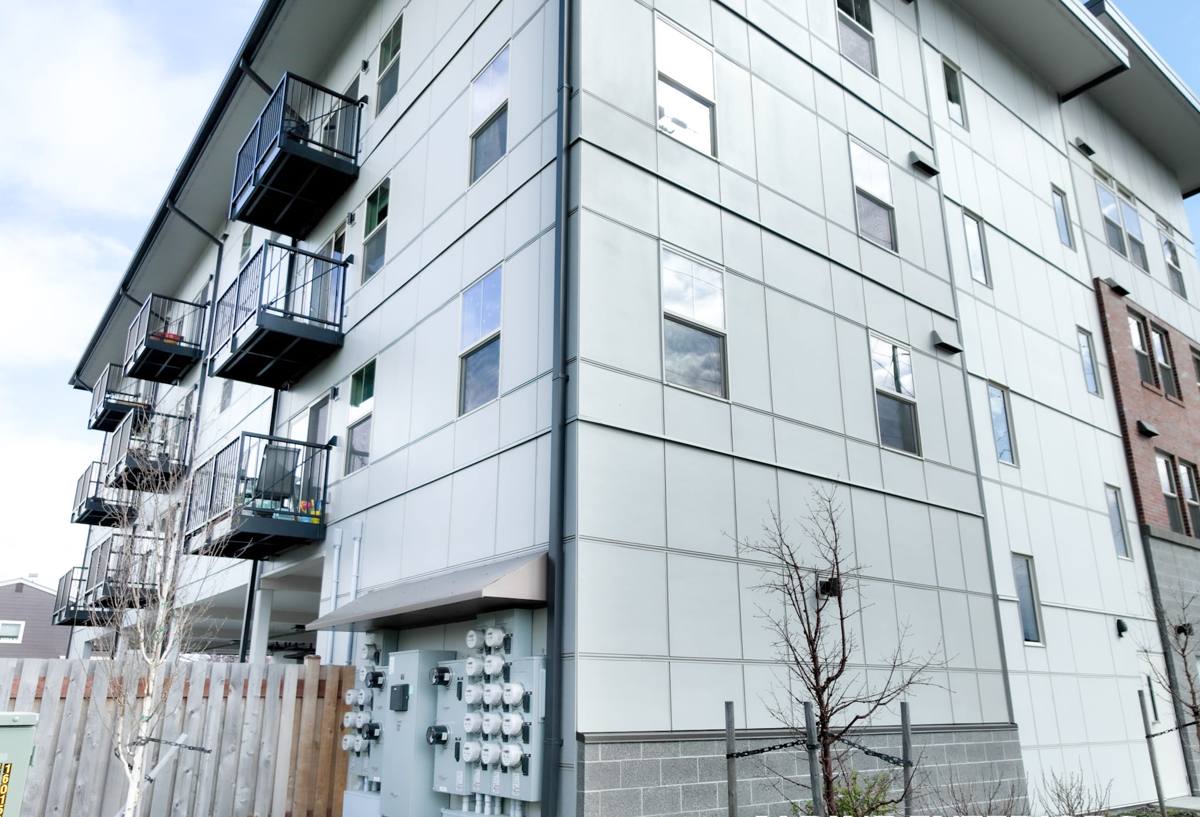
What Point Roberts' Climate Actually Does to Siding
Board and batten's vertical board-and-strip pattern creates strong shadow lines and a clean, modern-farmhouse or coastal look that fits Point Roberts' waterfront and near-waterfront architecture well. But that same vertical profile creates more seams, more edges, and more fastener points than a horizontal lap pattern — every one of which is a place water, salt, and moisture can find a way in if the material or the install is wrong for the setting.
Salt Air
Being surrounded by saltwater on three sides means airborne salt is a constant, low-level presence on Point Roberts, even on homes that aren't right on the water. Salt is corrosive to unprotected or poorly coated fasteners and trim, and it accelerates the breakdown of finishes that aren't formulated to resist it. Over years, a siding product with a weak factory finish will chalk, fade, and let moisture behind the surface faster in a salt-air environment than it would ten miles inland.
Driving Rain
Storms off the Strait of Georgia bring rain that doesn't just fall — it's pushed sideways into walls by wind, especially on west- and south-facing elevations. Board and batten's vertical joints are more exposed to that kind of wind-driven rain than a shingle-lap horizontal profile, which is exactly why the water-resistive barrier and flashing details behind the siding matter as much as the siding itself.
A Long Moss Season
Cool, wet, shaded conditions for a large part of the year create ideal moss and algae growth on north-facing walls, under eaves, and anywhere air doesn't move freely. Moss holds moisture against a wall surface far longer than open air would, which is a slow but steady threat to any siding material that can absorb water or swell when saturated.
Why James Hardie for Board & Batten in This Climate
We install James Hardie fiber cement exclusively — we don't install LP SmartSide, vinyl, Cemplank, Allura, primed spruce, or cedar board and batten. That's a deliberate standard, not a default. Fiber cement is non-combustible and dimensionally stable, meaning it doesn't swell, cup, or rot the way wood-based products can when they take on repeated moisture. For board and batten specifically, we use Hardie panel and trim products engineered as a system: flat panels for the field, batten strips at the joints, and a factory-applied ColorPlus finish baked on in controlled conditions rather than a job-site paint job.
That factory finish matters more here than in a drier climate. ColorPlus finishes are formulated to resist fading and are backed by a finish warranty separate from the substrate warranty — a meaningful difference from field-applied paint or stain, which starts breaking down the moment UV and salt air start working on it, and which needs re-coating on a maintenance schedule that most homeowners underestimate.
James Hardie also engineers regional product lines (HZ5 for harsher climates) specifically for moisture and freeze-thaw exposure. For a Point Roberts property taking salt air and driving rain more or less year-round, that engineering isn't a marketing detail — it's the difference between siding that's built for the job and siding that's merely tolerating it.
What a Correct Board & Batten Installation Involves
Board and batten looks simple from the curb, but it has more failure points than most homeowners expect. A correct install is really about everything you don't see once the boards go up.
Weather Barrier and Drainage Plane
Every wall gets a continuous water-resistive barrier behind the siding, lapped correctly from the bottom up so any water that does get past the cladding drains down and out rather than pooling behind it. On a driving-rain coastline, a gap or reversed lap in this layer is the single most common cause of hidden rot behind siding that looks perfectly fine from outside.
Rainscreen Considerations
Because board and batten has vertical seams running the full height of the wall, a rainscreen air gap behind the siding — even a modest one — gives any moisture that gets past the joints a way to drain and dry rather than sitting against the sheathing. This detail is especially worthwhile on Point Roberts' more exposed and north-facing elevations, where drying time between rain events is shortest.
Fastening and Joint Layout
Battens need consistent spacing and fastening into framing, not just into sheathing, and every panel joint needs to be backed and flashed so it isn't a direct path for wind-driven rain. Fastener corrosion resistance matters here too — in a salt-air environment, the wrong fastener can become the weak point in an otherwise sound wall years before the siding itself shows any wear.
Trim, Flashing, and Penetrations
Every window, door, vent, and light fixture is a place where the cladding gets interrupted, and each one needs proper flashing integrated with the weather barrier — installed in the correct order, not caulked over as an afterthought. Caulk is a maintenance item, not a waterproofing strategy, and it fails faster in salt air and constant damp than in a drier climate.
Board & Batten Cladding Comparison for This Climate
| Material | Behavior in Salt Air / Driving Rain | Maintenance Burden | Typical Longevity |
|---|---|---|---|
| James Hardie fiber cement | Non-combustible, dimensionally stable, factory ColorPlus finish resists salt and UV | Low — occasional wash, no re-coating on ColorPlus finish for many years | Decades when installed to spec |
| Cedar | Attractive but absorbs moisture; prone to cupping, checking, and moss growth in constant damp | High — regular re-staining or sealing, moss treatment | Shorter without diligent upkeep |
| Vinyl | Won't rot, but can warp or become brittle with temperature swings; seams can allow water intrusion | Low but limited repair options if damaged | Moderate; fades and chalks over time |
| Engineered wood (e.g. LP-type products) | Treated to resist moisture but still wood-based; edge and joint exposure is a known vulnerability | Moderate — joint sealing and inspection needed | Depends heavily on installation quality and moisture control |
Our Process on a Point Roberts Project
Every board and batten job we take on in Point Roberts follows the same sequence, adjusted for the specific exposure of the site.
1. Site and Exposure Assessment
We look at which elevations take the most wind-driven rain, which walls stay shaded and damp longest, and whether the existing wall assembly has any moisture history — soft trim, staining, or existing moss — before we ever talk about product.
2. Removal and Substrate Check
Old siding comes off and we inspect the sheathing and framing underneath for hidden rot or damage, which is common to find once the cladding comes off a home that's spent years in this kind of climate.
3. Weather Barrier and Flashing Installation
We install a continuous, correctly lapped water-resistive barrier and flash every penetration and transition before a single piece of Hardie product goes up.
4. Board & Batten Installation
Panels and battens go up per James Hardie's fastening and spacing specifications, with attention to consistent reveal, tight but not over-driven fasteners, and correctly integrated trim.
5. Final Inspection and Walkthrough
We walk the finished job with the homeowner, checking every elevation, joint, and trim detail before calling it complete.
Why Local Experience in Point Roberts Matters
Point Roberts is logistically its own animal. Materials, crews, and equipment typically travel through Canada to reach the peninsula, which means scheduling and delivery need to be planned with that border crossing in mind rather than assumed to work like a normal Whatcom County job site. A contractor unfamiliar with that reality can turn a straightforward siding job into a scheduling headache — or worse, cut corners on material planning to avoid the hassle.
Beyond logistics, a crew that has actually worked Point Roberts homes before understands which elevations on this peninsula take the worst of the weather, how quickly moss establishes on shaded walls here, and what the salt exposure does to fasteners and finishes over time. That's not something you can fully substitute with general siding experience from a drier or less exposed part of the county.
Maintenance Checklist for Board & Batten in This Climate
- Rinse siding annually, focusing on north-facing and shaded walls where moss and algae take hold first
- Trim back vegetation and tree limbs that keep walls shaded and slow to dry after rain
- Inspect caulking around windows, doors, and penetrations yearly and re-caulk as needed — caulk is maintenance, not a permanent seal
- Check gutters and downspouts before the wet season to keep water moving away from walls, not down them
- Look for early signs of moss or dark staining on shaded elevations and address it before it spreads
- Have fastener heads and trim checked periodically for early corrosion signs, especially on the most exposed walls
What Homeowners Often Get Wrong About Board & Batten Here
The most common mistake we see isn't choosing the wrong look — it's assuming that because board and batten is a "simple" pattern, the installation is simple too. The opposite is often true in an exposure like Point Roberts': more vertical seams mean more places for the weather barrier, flashing, and fastening to be done correctly or not. Homeowners also sometimes underestimate how much upkeep a field-painted or stained material will actually demand once salt air and shade are in the picture, which is a big part of why we standardized on a factory-finished fiber cement system instead.
If you're planning a board and batten project in Point Roberts, we're happy to walk your property, look at your specific exposure, and give you a straightforward, no-pressure estimate — just fill out the form below.