 Blaine Siding
 Why Roofs in Custer Wear Differently
Custer sits close enough to the water and open farmland that its roofs take a different kind of beating than homes further inland. The salt-tinged air off the Strait doesn't just fade paint and pit metal fixtures — it accelerates the breakdown of asphalt shingle granules and corrodes fasteners and flashing faster than a manufacturer's warranty chart assumes. Add in driving, wind-blown rain that hits siding and roof edges at an angle instead of straight down, and a moss season that can run from early fall through late spring, and you get a roof that's working harder than the same product would in a drier, calmer part of the state.
None of that means Custer homes need exotic materials or gimmicks. It means the installation details — underlayment, flashing, ventilation, and fastening — have to be done correctly and matched to what this specific stretch of Whatcom County actually deals with every year. A roof replacement done to a generic national standard will still function here, but it won't last as long or hold up as well between now and its next replacement.
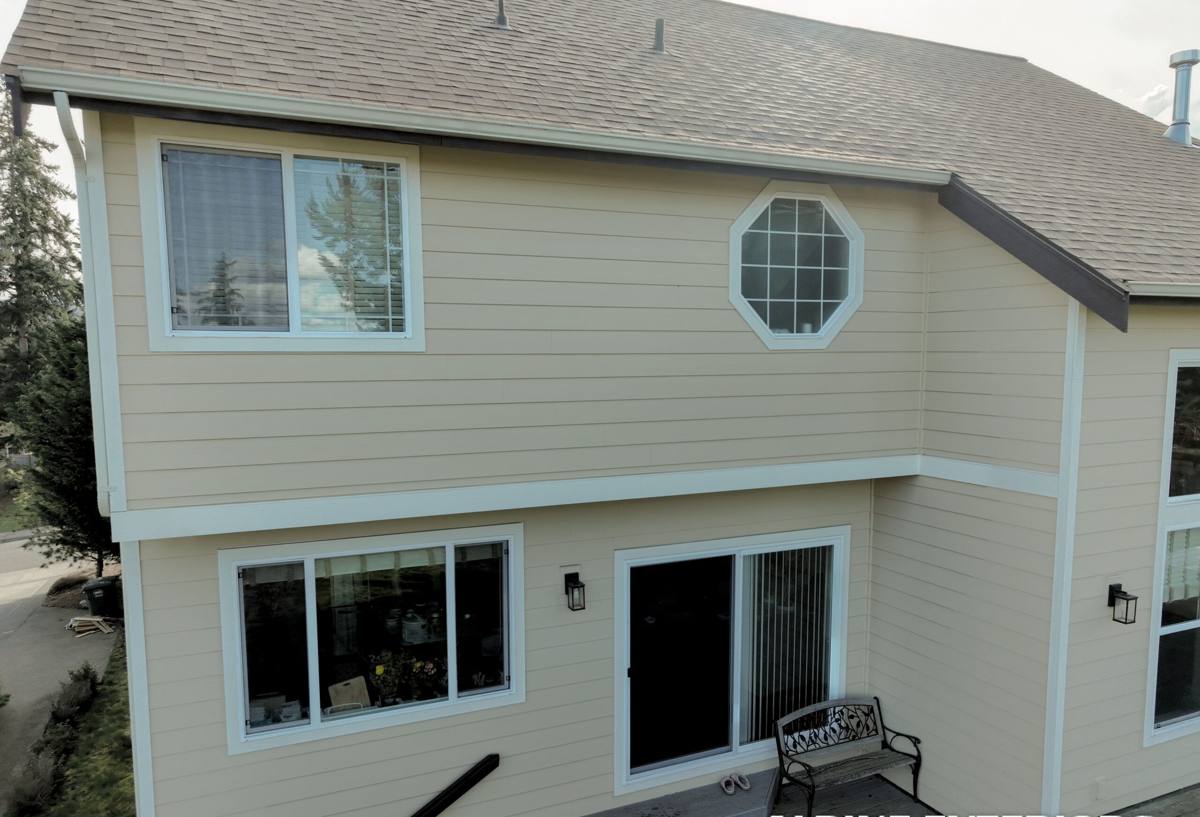
Signs a Custer Roof Is Due for Replacement
Most homeowners call us after noticing one obvious problem, but by the time a leak shows up inside the house, the roof has usually been failing for a while. Things we look for on Custer homes specifically:
- Moss buildup that keeps returning within a season or two of cleaning, especially on north-facing slopes and shaded valleys
- Granule loss showing up in gutters, a sign the shingles are past the point of protecting themselves
- Curling or lifting shingle edges, often worse on the sides of the roof that catch the prevailing wind and rain
- Rust streaking or corrosion around flashing, vent boots, and metal fasteners
- Soft spots or sagging in the decking, usually found once old shingles are pulled and the plywood underneath is exposed
- Daylight or water staining in the attic along the ridge, valleys, or chimney flashing
A roof showing two or three of these at once is usually past the point where patch repairs make financial sense. We'll always tell you honestly if a repair will hold for a few more years — replacement is a bigger investment and we don't push it before it's needed.
Moss Isn't Just Cosmetic
Moss holds moisture against the shingle surface long after the rest of the roof has dried out. Over a full moss season, that constant dampness works into the granule layer, softens the asphalt mat underneath, and can work its way under shingle tabs and lift them. On older roofs, moss is often the difference between a repair and a full tear-off, because once it's established in the shingle itself rather than just sitting on top, cleaning doesn't restore the material underneath.
What a Correct Roof Replacement Involves
A roof replacement is more than swapping old shingles for new ones. On a Custer home, we treat it as a full system:
- Full tear-off. We remove existing roofing down to the decking rather than layering over it, so we can actually inspect the wood and flashing underneath.
- Decking inspection and repair. Any soft, rotted, or delaminated plywood or OSB gets replaced before anything new goes down — covering bad decking just hides the problem.
- Ice and water shield at vulnerable points. Eaves, valleys, and around penetrations get self-adhering membrane, not just felt, because these are the spots wind-driven rain finds a way in.
- Synthetic underlayment across the field. A secondary water barrier that holds up better than old-style felt when a storm outpaces the shingles above it.
- New flashing at every transition. Chimneys, walls, skylights, and vent penetrations get new step, counter, and pipe flashing rather than reused metal.
- Proper fastening and shingle installation. Nailed to manufacturer spec, not gun-speed defaults, which matters more in a wind zone than most people realize.
- Ventilation check and correction. Intake and exhaust venting gets balanced so the attic can actually breathe — more on this below.
Ventilation and Moisture Control
An attic that can't ventilate properly is one of the most common reasons a roof underperforms in a wet, humid climate like this one. Warm, moist air from the living space rises into the attic; if it can't escape through a balanced system of intake vents (usually at the soffit) and exhaust vents (ridge or roof-mounted), that moisture condenses on the underside of the decking. Over a few seasons, that's rot, mold, and a shingle layer that's failing from underneath instead of above.
On older Custer homes we often find one without the other — a ridge vent installed with no matching soffit intake, or soffit vents painted over or blocked by insulation. Part of a proper roof replacement is correcting that balance, not just replacing the shingles and leaving the same airflow problem in place.
Material Choices for Salt Air and Moss Season
There's no single "best" roofing material for every home — it depends on the roof's pitch, the home's style, and your budget. Here's how the common options actually perform under local conditions:
| Material | How It Handles Salt Air & Rain | Moss Resistance | Typical Lifespan |
|---|---|---|---|
| Architectural asphalt shingle | Good with proper flashing; standard fasteners should be corrosion-resistant near the coast | Moderate — algae-resistant (copper/zinc granule) versions help | 25–30 years |
| 3-tab asphalt shingle | Adequate but thinner mat wears faster under repeated wetting | Lower — less granule reserve to lose | 15–20 years |
| Standing seam metal | Excellent when fasteners and flashing are marine-grade; sheds wind-driven rain well | High — little for moss to hold onto | 40–50+ years |
| Composite/synthetic shake or slate | Good, doesn't absorb moisture like wood | Moderate to high depending on product | 30–50 years |
We steer most Custer homeowners toward algae-resistant architectural shingles or metal roofing, not because other products fail outright, but because the maintenance burden and moisture behavior of thinner or older-style materials tends to show up sooner in this climate. Any manufacturer's roofing product can perform well here — the trade-offs are about upkeep, cost, and how forgiving the material is if a flashing detail is ever less than perfect.
How Our Process Works
We keep the process straightforward, and every step happens on-site so you can see the work, not just take our word for it.
- Inspection and estimate. We walk the roof, check the attic if accessible, and give you an honest read on whether it's repair or replacement.
- Written scope. You get a clear breakdown of materials, tear-off scope, flashing work, and ventilation changes — no vague line items.
- Scheduling around weather. We plan tear-off days for the driest stretch we can find and tarp exposed sections if conditions turn before decking is covered.
- Tear-off and decking repair. Old material comes off, decking gets inspected, and any bad sections are replaced and documented.
- Installation. Underlayment, flashing, ventilation, and roofing material go on to spec, with attention to every valley, penetration, and edge.
- Cleanup and magnetic sweep. Yard and driveway get cleared of debris and swept for stray nails before we consider the job done.
- Final walkthrough. We go over the finished roof with you and answer any questions before we leave.
Why a Crew That Already Works in Custer Matters
Roofing crews that mainly work in drier or more sheltered parts of the state sometimes underestimate what Whatcom County weather does to a roof year-round. A crew that regularly works Custer and the surrounding Blaine area already knows which details matter most here: corrosion-resistant fasteners near the water, extra attention to valley and eave protection where driving rain concentrates, and ventilation setups that can actually keep up with a long, damp moss season. That familiarity shows up in fewer callbacks and a roof that performs the way it's supposed to for its full lifespan, not just its first few winters.
It also matters for logistics. Local scheduling means we can work around actual weather windows instead of a generic forecast, and if something needs a follow-up look after the first hard storm of the season, we're not driving in from out of the area to handle it.
Maintaining Your Roof After Replacement
A correctly installed roof still benefits from basic upkeep, especially in a climate that grows moss on almost anything left alone long enough:
- Have gutters cleared at least twice a year so water isn't backing up under the shingle edge
- Keep overhanging tree limbs trimmed back to reduce shade and organic debris on the roof surface
- Do a visual check after major windstorms for lifted shingles or displaced flashing
- Address any moss regrowth early with proper cleaning methods rather than pressure washing, which can strip granules
- Schedule a professional look every few years, even without an obvious problem, to catch small issues before they become leaks
What Affects the Cost of a Roof Replacement
Every roof is different, so we don't quote sight-unseen, but these are the main factors that move the price up or down:
| Factor | How It Affects Cost |
|---|---|
| Roof size and number of facets | More squares and more valleys/hips mean more material and labor time |
| Decking condition | Rotted or soft plywood found during tear-off adds material and labor to replace |
| Material choice | Standing seam metal and premium shingles cost more upfront than standard architectural shingles |
| Roof pitch and access | Steep or hard-to-access roofs require more safety setup and slow the work |
| Ventilation upgrades | Adding or correcting soffit/ridge venting is worth doing during a replacement, not after |
| Flashing and penetrations | Chimneys, skylights, and multiple vent stacks each add flashing work |
We'll walk you through where your specific home falls on each of these before any number goes on paper, and we'll flag anything we find during tear-off before proceeding with extra work.
If your Custer home's roof is showing its age, or you just want an honest opinion on whether it's a repair or a replacement year, we're happy to take a look. Reach out below for a free, no-pressure estimate — we'll walk the roof, answer your questions, and give you a straight answer either way.