 Blaine Siding
 Siding in Dakota Creek: A Coastal Watershed With Its Own Set of Problems
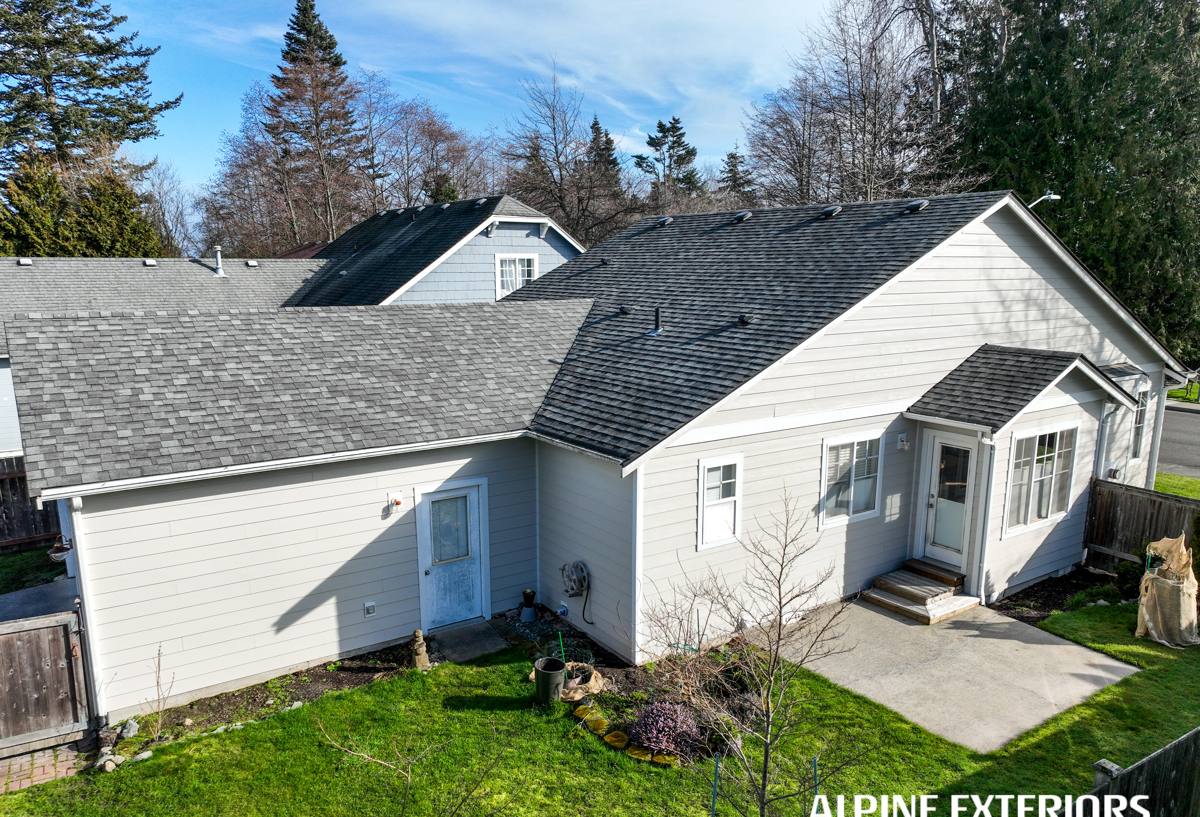
Dakota Creek runs through the northwest corner of Whatcom County on its way toward Drayton Harbor and Boundary Bay, and the homes scattered along and near that watershed sit in a genuinely tough spot for exterior materials. You're close enough to the water to get salt-laden marine air, low enough in elevation and tree cover in places to catch driving rain off the Strait, and shaded enough in other spots to grow moss on anything that holds moisture. It's not a dramatic climate — no hurricanes, no wildfire smoke season like east of the Cascades — but it is a relentless one. Siding here doesn't usually fail all at once. It fails slowly, one wet winter at a time, and most homeowners don't notice until paint is peeling, boards are soft at the bottom edge, or moss has worked its way into a seam.
We work this area regularly out of Blaine, and Dakota Creek homes tend to fall into a few predictable categories: older homes with original wood or early-generation composite siding that's finally reached the end of its service life, newer builds with vinyl or engineered wood siding that's showing problems earlier than expected, and a smaller number of well-maintained homes where the siding is holding up but the homeowner wants to get ahead of it before a full repaint or repair cycle comes due.
What the Local Climate Actually Does to Siding
Salt Air
Proximity to Boundary Bay and the Strait of Georgia means airborne salt is a real factor for homes anywhere near Dakota Creek and the surrounding Blaine shoreline. Salt accelerates corrosion on fasteners and metal trim, and it degrades certain paint and coating systems faster than inland exposure would. It's rarely dramatic — you won't watch siding dissolve — but over 10 to 15 years it shows up as chalking, fading, and fastener rust that a coastal-rated product and correct hardware are built to resist.
Driving Rain
Whatcom County gets a long, wet fall-through-spring stretch, and Dakota Creek's mix of open exposure and low-lying terrain near the water means wind-driven rain hits siding at an angle, not just straight down. That matters more than most homeowners realize — rain screens, flashing details, and butt-joint sealing all have to account for water being pushed sideways and up under laps, not just falling on a flat surface.
The Long Moss Season
Shaded north walls, tree-lined lots, and the region's mild, damp winters add up to a moss and algae season that runs a good chunk of the year. Moss holds moisture against the siding surface longer than the material would otherwise see, and on wood-based products that moisture exposure is what eventually leads to soft spots, rot, and paint failure. It's a slow, patient kind of damage, and it's the single biggest reason siding choice matters more here than in a drier climate.
Why We Install Only James Hardie Fiber Cement
We don't install vinyl siding, LP SmartSide or other engineered wood products, Cemplank or Allura fiber cement, or primed spruce and cedar. That's a deliberate standard, not a sales pitch, and it's worth explaining honestly rather than just stating it.
Vinyl is inexpensive and low-maintenance in dry climates, but in a coastal, high-rain environment like Dakota Creek it tends to warp with temperature swings, fade unevenly in sun-exposed areas, and trap moisture behind it if the water-resistive barrier underneath isn't detailed carefully — and repairs are often visually mismatched because vinyl color fades unevenly over time. Engineered wood products like LP SmartSide use strand-based wood cores that are more moisture-resistant than solid wood, but they're still wood at the core, and wood-based siding is the category most vulnerable to exactly the slow rot and edge-swelling problems that a long moss season and driving rain produce. Other fiber cement brands aren't a bad category of product — fiber cement as a material class is a strong choice for this climate — but we standardized on one brand and one factory finish system so we can guarantee a consistent result and back it with a warranty we fully understand, rather than juggling multiple manufacturers' specs and coating systems across our crews.
James Hardie fiber cement is non-combustible, doesn't rot because it isn't wood-based, and its ColorPlus factory-applied finish is baked on under controlled conditions rather than field-painted, which gives it better fade and color consistency than a job-site paint job — something that matters directly in a salt-air environment where lesser coatings chalk and fade faster. Hardie also engineers regional product lines (their HZ5 line is built for climates like ours) specifically around moisture and temperature exposure, which is a level of climate-specific engineering most competing products don't offer.
Hardie Product Lines We Work With
| Product | Best Use | What It's Good For |
|---|---|---|
| HardiePlank lap siding | Most common residential application | Classic lap look, wide color and texture range, HZ5 engineered for wet climates |
| HardiePanel | Modern vertical or board-and-batten looks | Clean contemporary appearance, strong moisture performance |
| HardieTrim | Corners, fascia, window and door trim | Matches siding durability so trim doesn't fail before the field siding does |
| HardieShingle | Accent areas, gables, dormers | Cedar-shingle appearance without the moisture vulnerability of real cedar |
Beyond Siding: Roofing, Windows, and Decks as One System
Siding doesn't work in isolation. A lot of the water intrusion problems we find on Dakota Creek homes actually start at a roof edge, a window flashing detail, or a deck ledger board — and if we only fixed the siding and ignored those connection points, the same moisture problem would just resurface somewhere else. We handle roofing, windows, and decks alongside siding so those transitions get treated as one water-management system rather than four separate contractors' worth of guesswork stacked on top of each other.
- Roofing: Roof-to-wall flashing is one of the most common failure points we see, especially where a roofline meets a wall in a shaded, moss-prone spot.
- Windows: Window flashing and the seal between window and siding is a frequent source of hidden moisture damage — often invisible until siding comes off.
- Decks: Deck ledger connections and any siding immediately behind or around a deck take heavier, more concentrated water exposure and need to be detailed accordingly.
What a Local Crew Means for a Job Like This
A siding contractor based in Blaine understands things about a Dakota Creek property that an out-of-area crew has to learn on the fly: which sides of a house typically take the worst wind-driven rain, how much moss pressure to expect on a shaded north elevation, what the practical weather windows look like for a fall or winter install, and how the county's permitting and inspection process actually works. That local knowledge doesn't replace good installation practice, but it does mean fewer surprises, faster problem-solving when something unexpected turns up behind old siding, and a crew that's still reachable down the road if a question comes up.
What Drives Cost on a Dakota Creek Siding Project
| Factor | Why It Matters Here |
|---|---|
| Home size and wall complexity | More corners, gables, and dormers mean more trim work and labor |
| Condition behind existing siding | Moss and driving rain can cause hidden sheathing damage that's only found on removal |
| Siding profile and texture | Lap width, smooth vs. woodgrain texture, and shingle accents affect material cost |
| Trim and accent scope | Full HardieTrim packages and shingle accents add cost over a basic lap-only job |
| Access and site conditions | Sloped lots, tree cover, and tight setbacks near the creek can affect staging and labor time |
What to Expect When You Work With Us
- A walk-around inspection that checks not just the siding surface but trim, flashing, and any moss or moisture staining
- An honest read on whether you need full replacement or targeted repair
- A written estimate specifying exact Hardie products, colors, and trim details — no vague material allowances
- Attention to water-resistive barrier and flashing details at every window, door, and roof line, not just the field siding
- A realistic install timeline that accounts for our wet-season weather windows
If you're noticing peeling paint, soft spots, persistent moss, or you're simply planning ahead for a home near Dakota Creek, we're happy to take a look and give you a straight answer — whether that's full siding replacement, a roofing or window fix that's actually the root cause, or just a maintenance recommendation. Reach out for a free, no-pressure estimate using the form below.