 Blaine Siding
 Bellingham's Exterior Sits Between Salt Water and Steady Rain
Homes in and around Bellingham deal with a specific combination of stresses that a lot of siding, roofing, and trim products simply weren't built to handle over the long run. The proximity to the Salish Sea means salt-laden air moving inland, especially on windier days, which accelerates corrosion on fasteners, trim, and any exterior material that isn't built to resist it. Add in Whatcom County's driving rain — the kind that comes in sideways off the water rather than falling straight down — and you get moisture pushed into seams, laps, and joints that would stay dry in a calmer climate.
Then there's the moss. Bellingham's combination of shade, moisture, and mild temperatures creates a moss season that runs far longer than most homeowners expect, sometimes close to year-round on north-facing walls and roof slopes that don't get much sun. Moss doesn't just look bad — it holds water against the surface it's growing on, and that constant dampness is exactly the condition that causes rot, paint failure, and material breakdown over time.
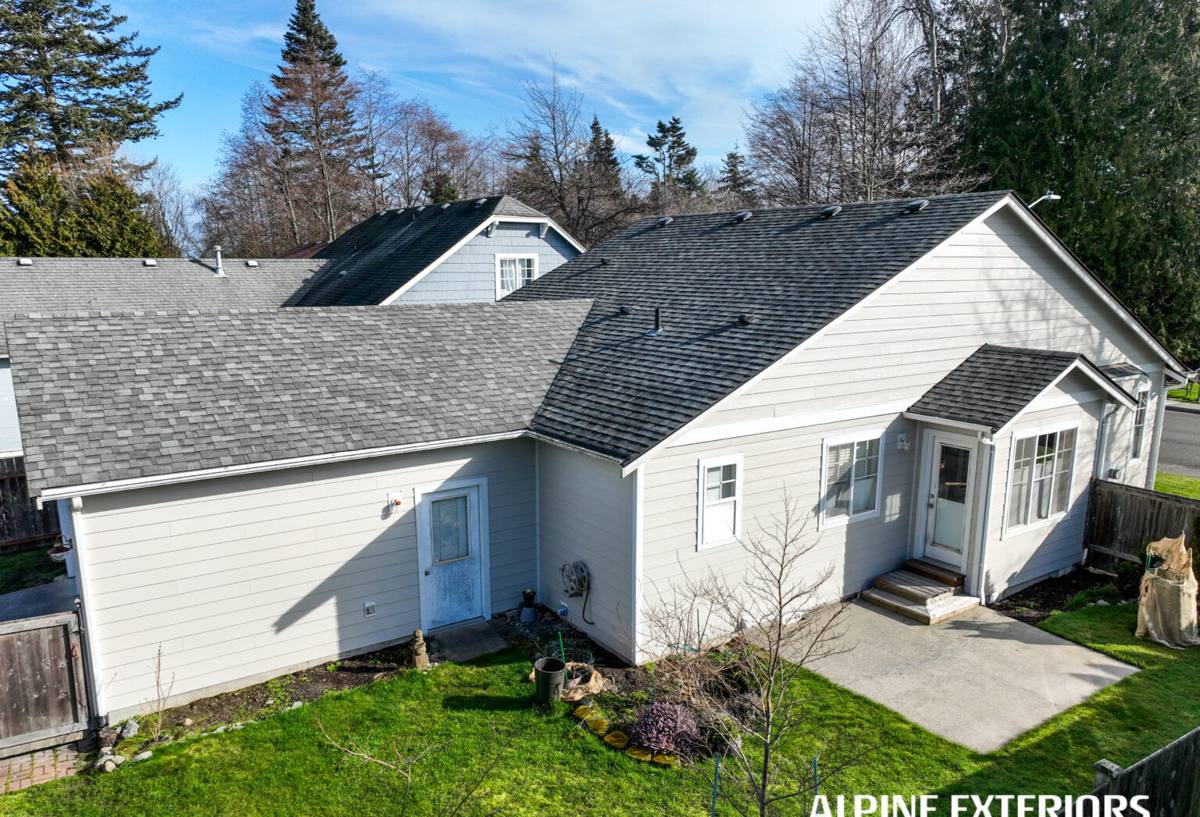
How This Plays Out on Different Parts of the House
Siding
Wall assemblies that don't drain and dry properly hold onto moisture through the wet months. Any siding product with weak moisture tolerance — or any installation with poor flashing and gapping — is more likely to show swelling, staining, or paint failure within the first several years in a climate like this.
Roofing
Roofs take the brunt of both the rain volume and the moss. Poor ventilation combined with moss growth shortens the effective life of roofing materials and can lead to hidden moisture damage in the decking below if it goes unaddressed.
Windows
Window flashing and seals are under near-constant pressure from wind-driven rain. A window that's a few years old with degraded caulking or flashing can let water track behind the trim long before there's a visible leak inside.
Decks
Decks see standing water, shaded moss growth, and repeated wet-dry cycling on fasteners and ledger connections. Ledger board attachment and proper drainage matter more here than in drier parts of the state.
Why We Install Only James Hardie Fiber Cement Siding
We get asked fairly often why we don't offer vinyl, LP SmartSide, or cedar as options. It's a fair question, and the honest answer is that we made a standard for ourselves based on what actually holds up in this climate, not on what's cheapest to install or easiest to sell.
Vinyl siding is affordable and low-maintenance in a lot of climates, but it's a thin material that expands and contracts significantly with temperature swings, and it isn't designed to stop moisture at the wall — it depends heavily on the water-resistive barrier behind it doing all the work. In a climate with as much driving rain as Bellingham gets, that's a bigger gamble than we're willing to make.
LP SmartSide and other engineered wood products have improved over the years and hold paint well, but they're still wood-based at the core. Any breach in the factory coating — a cut edge, a fastener hole, a scratch during installation — creates a path for moisture to reach wood fiber, and wood fiber that stays wet for long stretches is going to break down eventually. Given how long our moss and rain season runs, that's a real risk, not a theoretical one.
Cedar is a beautiful, traditional material, and we respect it. But it's also a maintenance commitment — regular refinishing, vulnerability to moisture and insects, and a real cost if that maintenance schedule slips even a year or two. In a wet, mossy climate, cedar needs more attention than most homeowners want to give it.
James Hardie fiber cement is not wood, and it's not vinyl. It's cement, sand, and cellulose fiber, engineered to resist moisture, hold paint, and stay dimensionally stable through wet winters and dry summers. It won't rot, and it's non-combustible, which matters more each year as wildfire smoke and fire risk become a bigger part of Pacific Northwest summers.
The HZ5 Product Line: Built for This Exact Climate
James Hardie engineers its siding differently depending on the climate zone it's headed to. The HZ5 line is formulated for cold, wet climates — including the marine and mixed-humid conditions found throughout Western Washington. It's built to resist moisture intrusion and to perform through freeze-thaw cycling, which is relevant here even though our winters are milder than inland Washington's.
On top of the base material, Hardie's ColorPlus factory-applied finish is baked on under controlled conditions, which gives more consistent, durable color than field-applied paint — a real advantage in a climate where a fresh paint job can face rain within days of being applied. The finish is backed by its own warranty, separate from the substrate warranty, and both are transferable to a new owner if the home is sold, which is worth knowing if you're weighing this as a long-term investment rather than a quick fix.
What Correct Installation Actually Involves
Fiber cement siding is only as good as the installation behind it. This is a material that's sensitive to how it's handled — proper fastener placement, correct gapping at joints and trim to allow for expansion, flashing integrated correctly with windows and doors, and a functioning drainage plane behind the siding are not optional details. Skipping any of them is how a good product ends up with a bad reputation.
- Correct nail placement and spacing per manufacturer specs, not "close enough"
- Proper clearance gaps at butt joints, trim, and penetrations for expansion and drainage
- A continuous, correctly lapped weather-resistive barrier behind the siding
- Flashing tied in properly at every window, door, and roof intersection
- Kick-out flashing where roof lines meet siding, to direct water away from the wall
- Ground clearance maintained so siding doesn't sit against soil, mulch, or standing water
We install to those specs on every job, not just the ones where someone's watching. It's the difference between siding that looks right for a year and siding that performs for decades.
Comparing Common Siding Options in a Wet Coastal Climate
| Material | Moisture Tolerance | Maintenance Needs | Fire Resistance | Typical Lifespan |
|---|---|---|---|---|
| Vinyl | Depends on barrier behind it; can warp with heat | Low, but cracks/fades over time | Poor — melts and can contribute to flame spread | 15–25 years |
| LP SmartSide (engineered wood) | Good if coating stays intact; vulnerable if breached | Moderate — coating and caulking need monitoring | Moderate | 20–30 years with upkeep |
| Cedar | Moderate; absorbs and releases moisture readily | High — regular refinishing required | Poor — combustible | 20–40 years with diligent care |
| James Hardie Fiber Cement (HZ5) | Excellent — engineered for wet, cold climates | Low — occasional wash, repaint on a longer cycle | Excellent — non-combustible | 30-50+ years when installed to spec |
A Seasonal Maintenance Checklist for Bellingham Homes
Whatever siding, roofing, or trim you have now, a few habits go a long way in this climate:
- Clean gutters before the fall rains ramp up, and check again mid-winter
- Look at north-facing and shaded walls and roof slopes for early moss growth each spring
- Check caulking around windows, doors, and trim for cracking or separation annually
- Keep plants, mulch, and soil pulled back from direct contact with siding
- Inspect deck ledger boards and fasteners for rust or movement once a year
- Walk the exterior after any major windstorm to check for loosened flashing or trim
Roofing, Windows, and Decks Alongside Your Siding
Because we work on siding, roofing, windows, and decks, we look at the whole exterior envelope rather than treating each piece in isolation. A siding replacement is a natural point to check flashing details at the roofline, evaluate whether older windows are still sealing properly, and take a look at deck framing that might be hidden behind or below new siding work. Addressing these together, when it makes sense, usually costs less than tackling them one at a time over several years — and it avoids water finding its way in through a gap between two contractors' work.
Why a Local Crew Matters Here
A crew that works throughout Whatcom County day in and day out has seen how these specific conditions — the salt air, the wind-driven rain, the moss — actually affect homes over time, not just in a brochure. That matters when it comes to flashing details, product selection, and knowing which parts of a house need extra attention based on its orientation and exposure. It also means someone is nearby if a question comes up after the job is done, not a crew that packed up and moved to the next region.
If you're weighing options for your Bellingham home's siding, roofing, windows, or decks, we're happy to take a look and talk through what we're seeing — no pressure, no obligation. A free estimate is a good way to get a clear, honest picture of what your home actually needs.