 Blaine Siding
 Why Bellingham Roofs Wear Differently Than Roofs Inland
A roof in Bellingham does a different job than a roof fifty miles east of the mountains. Between Bellingham Bay and the open water of the Strait of Georgia, homes here deal with salt-laden air that accelerates corrosion on metal fasteners, flashing, and vents. Add the long stretch of driving rain that comes off the Pacific through fall, winter, and spring, and a roofing system has to shed water fast and keep shedding it for months at a time without a real dry-out period. Then there's moss. Whatcom County's mild, wet climate gives moss and algae a season that runs far longer than in drier parts of the state, and once it gets a foothold on a shaded north slope, it holds moisture against the roofing material year-round. None of this means a roof here is doomed to fail early. It means the installation has to account for these conditions from the first layer down, not just the shingles on top.
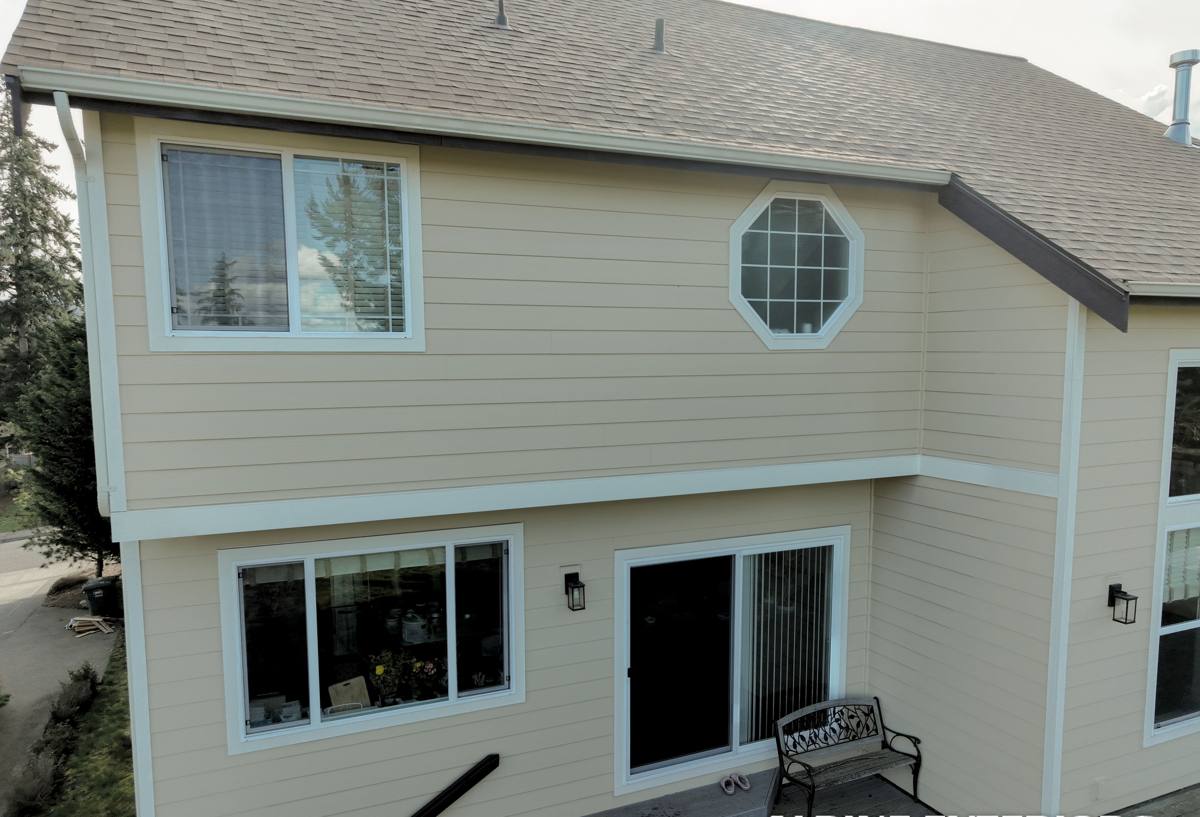
Signs a Bellingham Home Needs a New Roof, Not Just a Repair
Homeowners often call us thinking they need a patch, and sometimes that's true. But there's a point where repeated repairs cost more over a few years than one correct installation. Some signs it's time to talk about full replacement instead of another patch:
- Granule loss heavy enough that you're finding grit in gutters every season, not just after a storm
- Shingles that are cupping, curling, or cracking across multiple areas of the roof, not one isolated spot
- Soft or spongy decking felt underfoot in the attic, or daylight visible through the roof boards
- Moss that keeps returning within a season or two of cleaning, especially on north- and west-facing slopes
- Flashing around chimneys, vents, or valleys that's rusted, lifted, or was never properly stepped in the first place
- A roof that's approaching or past the manufacturer's rated lifespan for this climate, regardless of how it looks from the ground
If two or more of these apply, a licensed inspection is worth more than another round of caulk and patching.
Choosing Materials for Whatcom County Weather
There's no single "best" roofing material for every home — it depends on budget, roof pitch, how much shade the roof sits under, and how long you plan to own the house. What matters is picking a material and being honest about its trade-offs in this specific climate.
| Material | How It Handles Salt Air & Rain | Moss Resistance | Typical Lifespan Here |
|---|---|---|---|
| Architectural asphalt shingle | Good with proper flashing; standard fasteners should be corrosion-resistant near the bay | Moderate — needs periodic cleaning on shaded slopes | 20–30 years |
| Standing seam metal | Excellent water shedding; requires marine-grade or coated fasteners and trim near salt air | High — steep slick surface discourages growth | 40–50+ years |
| Synthetic/composite shake | Very good; doesn't absorb moisture the way wood does | Moderate to high | 30–50 years |
| Cedar shake | Requires diligent maintenance in wet climates; absorbs and releases moisture | Low without regular treatment | 20–30 years with upkeep |
We don't push cedar shake on Whatcom County roofs as a default choice — not because it's a bad product, but because the maintenance burden of keeping it treated and moss-free in a climate this wet is significant, and we'd rather set that expectation up front than sell a look that becomes a chore. For most Bellingham homes, a quality architectural shingle or a metal roof strikes the right balance of cost, durability, and low maintenance.
Fasteners and Trim Matter as Much as the Field Material
This is where a lot of installations quietly fail near the coast. Standard steel fasteners and unprotected flashing corrode faster in salt air than they would ten or fifteen miles inland. We spec corrosion-resistant fasteners and flashing on every install, not as an upsell, but because replacing rusted-through flashing five years in costs more than doing it right the first time.
What a Correct Installation Actually Involves
The shingles or panels are the part everyone sees, but they're maybe a third of what determines whether a roof performs well here. The rest is underneath.
Deck Inspection and Repair
Every old roof comes off down to the decking, and every square foot of that decking gets checked for soft spots, delamination, or rot — especially around valleys and any area that's had a slow leak. Installing new roofing over compromised decking just hides the problem for another season.
Ice and Water Protection at Vulnerable Points
Valleys, eaves, and roof-to-wall transitions get self-adhering waterproof membrane, not just felt. In a climate with sustained driving rain, wind-driven water can work its way up under shingles at these points, and this layer is what stops it before it reaches the deck.
Underlayment Across the Field
A synthetic underlayment across the rest of the roof gives a second line of defense and holds up to job-site foot traffic and weather exposure better than old-style felt, which matters when a project spans a few rainy days.
Flashing Done the Right Way
Step flashing at walls and chimneys, properly lapped and integrated with the underlayment — not just a bead of sealant over old flashing. Sealant fails; correctly layered flashing sheds water by design and doesn't depend on caulk holding for twenty years.
Ventilation and Moss Prevention: The Overlooked Half of the Job
A new roof without balanced intake and exhaust ventilation is set up to underperform, especially here. Poor attic ventilation traps moisture, which shortens the life of the decking and the roofing material from underneath, and it keeps shaded slopes damp longer than they need to be — exactly the condition moss thrives in. Correct installation means calculating intake at the eaves and exhaust at the ridge to move air through the attic space, not just adding a vent because there's a code minimum. Where a roof has consistent shade from trees on one side of the house, we'll also talk through zinc or copper strip options at the ridge, which release trace metals with rain to slow moss regrowth on that slope specifically, rather than relying on cleaning alone.
Our Installation Process, Start to Finish
- On-site inspection and honest assessment of whether you need a repair or a full replacement
- Written estimate covering material options, tear-off scope, and a realistic timeline
- Permit pull and scheduling around the weather window — we don't start a tear-off with rain forecast the same day
- Tear-off and deck inspection, with any rot or damage flagged before we cover it up, not after
- Ice-and-water membrane, underlayment, flashing, and ventilation installed in that order
- Field material installation and final detail work at ridges, valleys, and penetrations
- Cleanup, magnetic sweep for nails, and a walkthrough so you know exactly what was done
Permits, Timeline, and What to Expect During the Project
Most residential roof replacements in this area require a building permit, which we handle as part of the project rather than leaving it to the homeowner. A typical single-family roof takes one to three days depending on size, pitch, and material, though we build in flexibility for weather — a driving-rain day in Whatcom County isn't a day to be tearing off a roof, and we'd rather push the schedule than rush a step that affects how the roof performs for the next twenty years. Expect noise, some yard disruption near the house, and a cleanup pass at the end that includes checking for stray nails and debris.
Why a Crew That Already Works Bellingham Matters
Roofing crews that work across a wide, varied region tend to default to generic specs. A crew based out of Blaine and working Bellingham and the surrounding Whatcom County towns regularly sees the same patterns over and over — which slopes hold moss longest, which older neighborhoods have decking that needs extra attention, how the wind off the bay affects flashing choices on certain roof orientations. That local pattern recognition is what turns a roof install from generic to correctly matched to the house and its exposure. It also means when something needs a warranty check or a follow-up years down the line, you're calling a crew that's still local and still working in your area, not tracking down a company that moved on to the next region.
Before You Hire: A Practical Checklist
- Confirm the contractor is licensed and insured in Washington, and ask to see current proof
- Get the material, underlayment, and ventilation spec in writing, not just "new roof" on an estimate
- Ask how they handle rotted decking if it's found during tear-off, and how that's priced
- Ask specifically what fastener and flashing materials they use given the coastal air
- Ask about their moss-prevention approach for shaded slopes, not just cleaning after the fact
- Check that the manufacturer's warranty requires their specific installation practices to stay valid
If your roof is showing its age or you're just planning ahead, we're happy to take a look and give you a straight answer about what it needs — repair, replacement, or a few more years of life. Reach out below for a free, no-pressure estimate.