 Blaine Siding
 Fiber Cement Siding Built for Life at Blaine Harbor
Homes around Blaine Harbor sit about as close to the water as a Whatcom County property can get, and that proximity shows up in the siding faster than almost anywhere else in town. Salt air rolls off the harbor and up onto exterior walls day after day, driving rain comes in sideways during winter storms, and shaded, moisture-heavy lots keep moss and mildew active for most of the year. Siding that would hold up fine a few miles inland can start showing corrosion, soft spots, and finish failure years ahead of schedule this close to the harbor.
We install James Hardie fiber cement siding exclusively, and Blaine Harbor is exactly the kind of setting that shaped that decision. This page focuses specifically on fiber cement siding for harborside homes: what the climate demands of it, what a correct installation actually involves, and why a crew that already works this stretch of waterfront makes a real difference in how the job holds up.
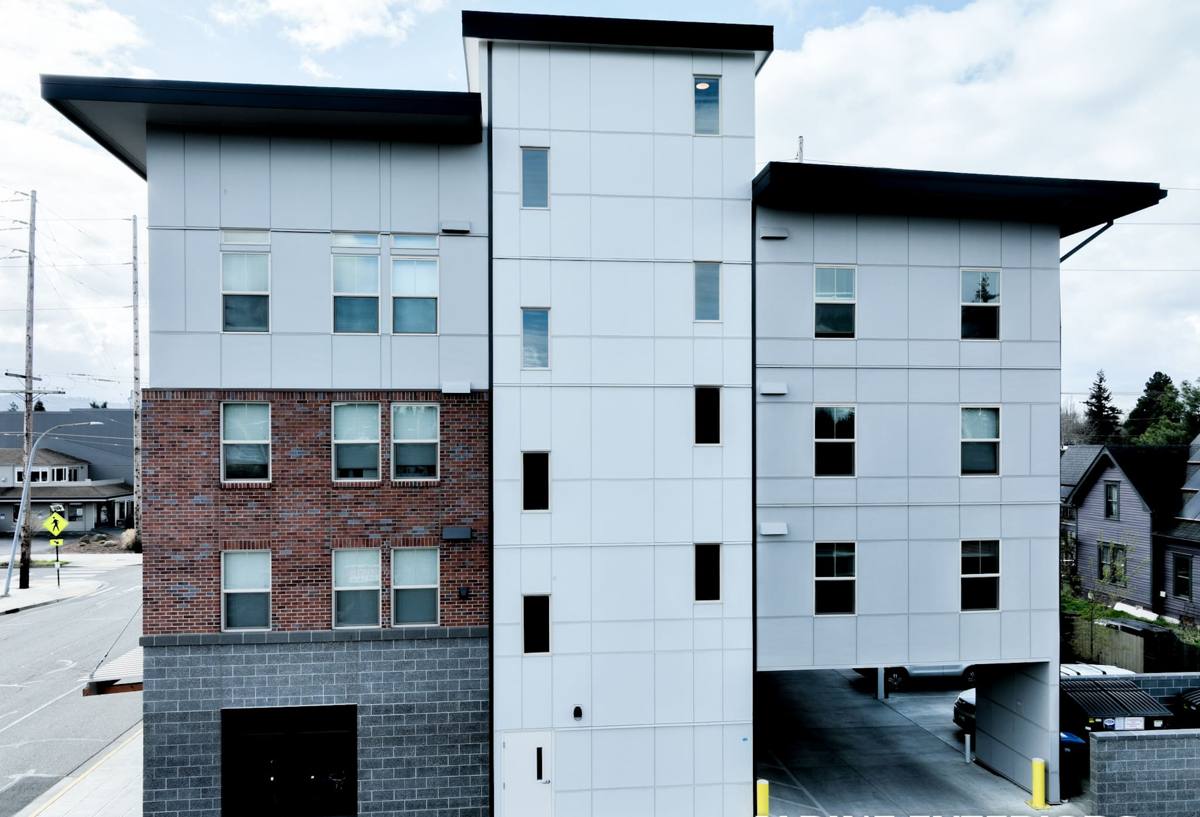
What Blaine Harbor's Climate Demands From Siding
Salt Air Off the Water
Harborside homes take a steady, near-constant dose of salt-laden air that inland Whatcom County properties simply don't see. Salt accelerates corrosion in fasteners, flashing, and any exposed metal trim, and it breaks down lower-grade paints and coatings faster than a drier climate would allow. Siding materials that depend on a field-applied finish tend to show that wear first — chalking, fading, and eventually the kind of coating breakdown that lets moisture start working on the substrate underneath.
Driving Rain Straight Off the Harbor
Winter storms off the water don't fall straight down on Blaine Harbor homes — wind pushes rain sideways into wall assemblies, window and door flashing, and every seam where siding panels meet trim. That wind-driven load puts more stress on a wall than the same rainfall total would in a sheltered inland setting, and it finds gaps in a rushed or undersized installation faster than a calm rain ever would. Homes facing the open harbor generally take the worst of it.
A Long, Active Moss Season
Mild temperatures combined with near-constant moisture off the harbor give moss and mildew a growing season that runs most of the year on shaded and north-facing walls. Any siding material with even slight surface porosity becomes a place for it to take hold, and once established, moss and mildew hold moisture directly against the wall rather than letting it shed. Tree-shaded lots close to the harbor tend to see this earliest and worst.
Why James Hardie Fiber Cement Is the Right Call Here
We used to install a broader range of siding products before we settled on James Hardie exclusively. That change came from what we kept seeing on service calls and tear-offs in exposed, high-moisture settings like Blaine Harbor — not from a supplier relationship or a marketing angle. A handful of specific reasons it matters this close to the water:
- Non-combustible fiber cement core: Unlike wood-based siding products, fiber cement doesn't feed a fire, which matters for both safety and insurance considerations on any home.
- Factory-applied ColorPlus finish: The color and topcoat are baked on under controlled factory conditions rather than brushed on at the job site, so it resists the fading and chalking that salt air and UV exposure cause faster on field-applied finishes.
- Climate-engineered HZ formulation: Hardie's HZ5 product line is engineered for regions with sustained moisture and freeze-thaw cycling, which describes coastal Whatcom County, and Blaine Harbor specifically, about as well as anywhere in the region.
- Dimensional stability: Fiber cement doesn't swell, cup, or warp the way engineered wood siding products can after repeated wetting near open water.
- Strong transferable warranty: Hardie backs the product with one of the more substantial warranty structures in the industry, contingent on installation following their published spec.
We don't install LP SmartSide, vinyl siding, Cemplank, Allura, primed spruce, or cedar. Those products all have a place in the broader market, and plenty of homeowners are satisfied with them in less demanding settings. But at Blaine Harbor, where salt air and driving rain are near-daily conditions rather than occasional weather, we made a professional decision to stand behind one system rather than offer a cheaper option that quietly shifts maintenance and repair risk onto the homeowner a few years down the road.
Choosing the Right Hardie Product for a Harborfront Home
James Hardie makes several siding profiles, and the right one for a Blaine Harbor property depends on the home's style, exposure, and existing trim details. We walk homeowners through the real trade-offs rather than defaulting to whatever is easiest to install.
| Hardie Product | Best Fit | Harbor Exposure Notes |
|---|---|---|
| HardiePlank lap siding | Traditional and most contemporary home styles | Most common choice at the harbor; pairs well with wider trim reveals that shed wind-driven rain |
| HardiePanel vertical siding | Modern builds, accent walls, gable ends | Fewer horizontal laps means fewer joints for wind-driven rain to test, useful on the most exposed elevations |
| HardieShingle siding | Cottage or craftsman-style harbor homes | More seams than lap siding, so correct fastening and lapping matter even more this close to the water |
| HardieTrim boards | Corners, window and door surrounds, fascia | Protects the transitions where most water intrusion actually starts on a harborfront wall |
For most Blaine Harbor homes, we recommend Hardie's HZ5 formulation regardless of which profile is chosen, since it's specifically engineered for the sustained moisture exposure this stretch of waterfront sees year-round.
What Correct Installation Involves This Close to the Water
Fiber cement only performs the way it's engineered to when the installation follows Hardie's published specification, and at Blaine Harbor the margin for a shortcut is thinner than it would be a few miles inland. The details we won't skip:
- Rain screen gap behind the siding: A drainage cavity lets any moisture that does get past the exterior surface drain and evaporate instead of sitting against the sheathing.
- Corrosion-resistant fasteners at correct spacing: Salt air accelerates fastener corrosion, and loose spacing or the wrong fastener type is one of the more common causes of early siding failure we find on harborside tear-offs.
- Properly lapped house wrap and flashing: Every seam, corner, and penetration needs to shed water downward and outward, especially on walls that face the open harbor directly.
- Sealed butt joints and trim transitions: Open or poorly caulked joints are the first place wind-driven, salt-laden rain finds its way behind the siding.
- Correct clearance from grade, decks, and roof lines: Siding installed too close to the ground or an adjoining roof stays wet longer and invites moisture and moss both.
None of this is exotic or optional — it's the manufacturer's own installation spec, followed consistently on the parts of the job that are hardest to see once the siding is up and the crew has moved on.
Cost Factors for a Blaine Harbor Siding Project
| Factor | Why It Matters | Harbor-Specific Consideration |
|---|---|---|
| Home size and elevation count | More square footage and more wall planes mean more material and labor | Harborfront homes often have larger, more exposed elevations facing the water |
| Tear-off vs. overlay | Removing old siding costs more upfront but reveals hidden problems | Homes near the harbor are more likely to have moisture damage hiding behind older siding |
| Trim and detail complexity | Corners, window surrounds, and transitions add labor time | More trim means more joints, and more joints means more places wind-driven rain can test the work |
| Product line selection | HZ5 and specific profiles vary in material cost | We generally recommend HZ5 for harbor exposure regardless of profile chosen |
| Substrate repair | Rotted or water-damaged sheathing needs replacement before new siding goes on | More common on harborfront homes that have gone years without a full tear-off |
These are general cost drivers, not a quote. Every home around the harbor sits at a slightly different distance from the water and under different tree cover, and we won't put a real number on a project until we've walked the property and, where old siding is coming off, seen what's actually behind it.
Signs Blaine Harbor Siding Needs Attention
Because of the salt air, wind-driven rain, and moss exposure right at the harbor, siding problems here tend to show up earlier and more visibly than they would inland. Worth checking for:
- Moss or dark staining that returns quickly after cleaning, especially on shaded or north-facing walls
- Soft or spongy siding, particularly low on the wall or around window and door trim
- Rust staining or visibly corroded fasteners and trim hardware
- Peeling, chalking, or fading paint that's noticeably worse than on inland homes of a similar age
- Warping, cupping, or bowing panels, which is common on engineered wood products near open water
- Gaps opening up at butt joints or trim transitions
Any one of these is worth a look before it turns into a larger repair. Moisture that gets behind siding at the harbor doesn't dry out as quickly as it would in a drier, more sheltered setting, so problems tend to compound rather than resolve on their own.
Why a Crew That Already Works Blaine Harbor Matters
A contractor who works this stretch of waterfront regularly sees how salt air, driving rain, and moss actually behave on real harborside homes over a full year, not just how a product performs on a spec sheet. That experience shapes practical decisions on install day: which elevations need extra flashing attention, which walls stay wet longest after a storm, and where the fastener and sealing details are worth the extra time so a homeowner isn't dealing with a callback after the next system off the water. Blaine Harbor's exposure isn't identical to more sheltered parts of town, let alone more sheltered parts of the county, and a crew that's actually seen the difference builds accordingly rather than applying a one-size-fits-all approach to every job.
A Quick Checklist Before Hiring for Harborside Siding Work
- Ask what siding product they're proposing and why, specifically for a harbor-exposed property
- Confirm they carry current Washington contractor licensing and insurance
- Ask how they handle hidden moisture or substrate damage discovered once old siding comes off
- Ask which Hardie formulation and fastener type they use for water-adjacent installations
- Get a written scope, not just a price, so you know exactly what's included
Get a Free, No-Pressure Estimate
If your Blaine Harbor home needs new siding, or you're seeing early signs of moisture, corrosion, or moss taking hold, we're glad to take a look and give you a straightforward read on what it actually needs. Reach out using the form below to schedule a free, no-pressure estimate.