 Blaine Siding
 Exterior Siding Serving the Nooksack Area
Nooksack sits inland from Blaine in Whatcom County, close enough to the water to catch the same salt-laden air that works on siding all along this stretch of the Washington coast, and far enough into the valley to pick up its own weather pattern: heavy river-basin humidity, long stretches of overcast drizzle, and a moss season that can run eight months out of the year in shaded, north-facing spots. Homes here take a slower, quieter kind of beating than homes right on the water, but it adds up just the same. We've built our business around fixing and preventing that damage with one product line, installed correctly, rather than juggling several products and hoping each holds up.
Blaine Siding Company works throughout the Nooksack service area doing siding, roofing, windows, and decks. Siding is our specialty and the reason the company exists, but we treat the exterior as one connected system — flashing, trim, roofline, and water management all have to work together, or the best siding in the world won't matter.
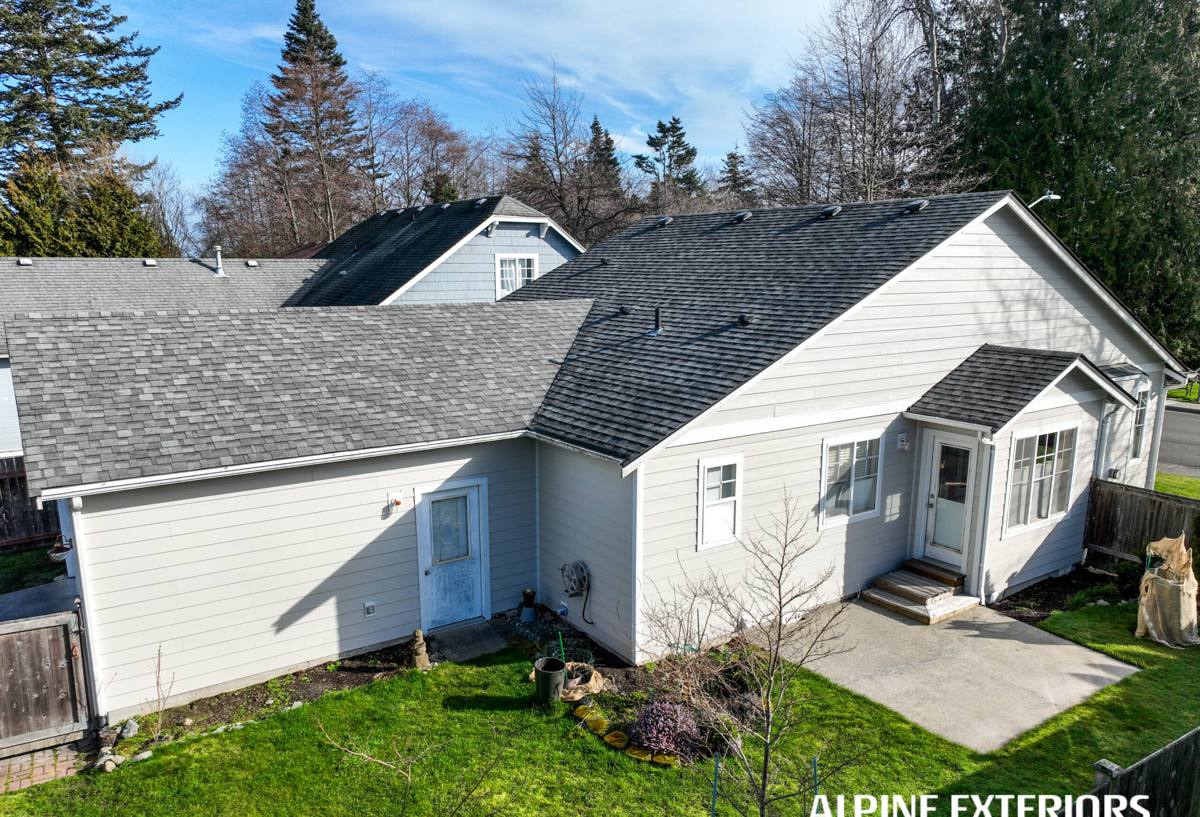
What the Local Climate Does to Siding
Moisture That Doesn't Let Up
Whatcom County doesn't get dramatic storms as often as it gets persistent, low-grade wet weather — weeks of drizzle, fog off the water, and damp mornings that never quite dry out before the next system rolls through. That kind of sustained moisture is harder on wood-based siding products than a single hard rain, because it never gives the material a real chance to dry between soakings. Over years, that's how rot gets started at butt joints, corner boards, and anywhere caulk has started to fail.
Salt Air, Even Inland
Nooksack isn't beachfront, but it's close enough to Semiahmoo Bay and the Strait of Georgia that salt-bearing air still reaches it on the region's prevailing winds. Salt air accelerates corrosion on fasteners and trim and speeds up the breakdown of lower-grade paint films on siding. It's a slower effect than what a home right on the water sees, but over a fifteen- or twenty-year span it's a real factor in how a home's exterior finish holds up.
Moss, Mildew, and Shade
The tree cover and river-valley humidity around Nooksack are ideal for moss and mildew growth on north-facing walls, under eaves, and anywhere direct sun doesn't reach for most of the day. Moss holds moisture against a wall surface far longer than the surface would otherwise stay wet, which is exactly the condition that lets rot take hold in wood-based siding. Non-combustible, moisture-resistant fiber cement doesn't feed mildew growth the way wood or wood-composite products can, though any siding still needs periodic washing to keep organic growth from building up on the surface.
Why We Install Only James Hardie Fiber Cement
Blaine Siding Company installs James Hardie fiber cement siding exclusively. We don't install vinyl, LP SmartSide, Cemplank, Allura, or primed wood species like spruce or cedar. That's a deliberate standard, not a lack of options — we've made a judgment call about what holds up best in this exact climate and stand behind it with one product line we know inside and out.
What Fiber Cement Gets Right for This Climate
- Non-combustible material — a genuine advantage during Washington's wildfire-smoke seasons, when embers can travel
- Engineered to resist moisture absorption, swelling, and the freeze-thaw cycling that damp valley winters bring
- Factory-applied ColorPlus finish resists fading and chipping better than field-applied paint on wood-based sidings
- Holds a crisp, straight profile over decades rather than warping, cupping, or splitting like wood-based products can
- Doesn't provide the cellulose food source that encourages moss and mildew to root into a wall surface
Being Honest About Trade-Offs
Fiber cement is heavier than vinyl or wood-composite siding and it has to be cut, fastened, and flashed to Hardie's published specifications — installer skill matters more with this product than with some lighter-weight alternatives. It also costs more upfront than vinyl. We think that's a fair trade for a product that's non-combustible, holds its finish for decades, and doesn't rot, and we'd rather explain that trade-off honestly than sell a cheaper product we don't believe will perform as well here.
The James Hardie Product Lines We Install
| Product | Best Use | Why It Fits Nooksack |
|---|---|---|
| HardiePlank lap siding | Most home exteriors | Traditional look, engineered HZ5 formulation for the Pacific Northwest's wet climate zone |
| HardiePanel vertical siding | Accent walls, gables, modern designs | Clean lines that pair well with board-and-batten trim details |
| HardieTrim boards | Corner boards, window and door trim | Won't rot or split the way wood trim can at butt joints exposed to constant damp |
| HardieSoffit panels | Eaves and overhangs | Resists the moisture and mildew buildup that shaded eaves are prone to here |
HZ5 is Hardie's formulation engineered for regions with freeze-thaw cycling and sustained moisture exposure — a good match for Whatcom County's winters, which see enough cold snaps combined with wet ground conditions to stress lesser siding materials over time.
What a Siding Job Looks Like Here
Inspection and Water Management First
Before we talk siding profiles or colors, we look at how water currently moves off the roof, through the gutters, and away from the foundation. A lot of the siding failures we see on older Nooksack-area homes didn't start with the siding — they started with a gutter that overflowed onto a wall for years, or flashing that was never properly lapped over a window head. Replacing siding without fixing that upstream problem just resets the clock on the same failure.
Removal and What We Find
Once old siding comes off, we can see the sheathing and framing underneath. This is where hidden rot, past water intrusion, or undersized flashing usually shows up. We document what we find and talk through repair options before covering anything back up — nothing gets hidden behind new siding.
Weather Barrier and Flashing
A correctly lapped weather-resistive barrier and properly integrated flashing at every window, door, and penetration matter as much as the siding itself. This is the step where installer discipline shows up years later, either as a dry wall or a rotted one.
Installation to Manufacturer Spec
James Hardie publishes specific fastening patterns, gaps, and clearances, and following them is what keeps the warranty valid and the finished wall performing as designed. Proper clearance from grade, from roof lines, and between courses gives the material room to shed water instead of trapping it.
Roofing, Windows, and Decks — The Rest of the Exterior
Siding doesn't work in isolation. A roof that's shedding granules or has failing flashing will eventually let water reach the wall assembly no matter how good the siding is. Windows with worn seals let moist air work into the wall cavity from the inside out. Decks attached to the house need their own flashing and ledger detailing so they don't become the entry point for rot at the band board. We handle all four so the whole exterior gets looked at together, not as four separate problems handed to four separate contractors who never talk to each other.
Maintenance for This Climate
- Rinse siding annually, more often on shaded north-facing walls where moss and algae take hold fastest
- Keep gutters clear so overflow doesn't run down wall surfaces during heavy rain events
- Trim back vegetation and tree cover that keeps walls shaded and slow to dry
- Inspect caulking at trim joints and penetrations every year or two and recaulk as needed
- Have flashing at deck ledgers, window heads, and roof-to-wall transitions checked periodically, since these are the spots that fail first
Why Hire a Local Crew
A crew that works Whatcom County regularly has already seen how homes in this specific valley-and-coastline mix of conditions age — where moss builds up fastest, which wall orientations take the worst weathering, and how local permitting and inspection processes actually run. That's different knowledge than a crew that mostly works dry, hot climates and treats every job the same way. We're not a national outfit passing through; we're the same crew that'll be here to answer the phone if something needs a look years after installation.
What Homeowners Ask Before Committing
Cost Factors Worth Understanding
| Factor | Why It Affects the Estimate |
|---|---|
| Existing wall condition | Hidden rot or sheathing damage found during removal adds repair scope |
| Home size and complexity | More corners, gables, and trim details mean more cutting and labor time |
| Siding profile chosen | Lap, panel, and shingle-style Hardie products carry different material and labor costs |
| Trim and accent work | Custom trim details add both material and installation time |
| Access and site conditions | Multi-story sections or tight lot access can affect staging and labor |
We walk every property in person and give a written estimate based on what we actually find, not a phone-quoted number — this climate creates too much variation in hidden wall condition to estimate any other way.
If you're weighing a siding, roofing, window, or deck project on a Nooksack-area home, we're happy to take a look and give you a straightforward, no-pressure estimate. Use the form below to get started.