 Blaine Siding
 What Primed Wood Siding Actually Is
Primed wood siding is solid wood — usually finger-jointed pine, spruce, or occasionally cedar — that arrives from the mill with a factory-applied primer coat. The idea is simple: the primer seals the wood and gives painters a head start, so the siding just needs a top coat of exterior paint once it's installed. It's been a staple of Pacific Northwest home construction for decades, and there's a reason it's still on the shelf at most lumberyards in Whatcom County. It's affordable, it's easy for crews to cut and nail, and it takes paint in almost any color a homeowner wants.
We get asked about it regularly, usually by homeowners doing a like-for-like replacement on an older Blaine home that already has painted wood siding. This page explains why, after years of working on homes along this stretch of coastline, we made the call to stop installing it — not because it's a bad product on paper, but because of how it actually holds up here.
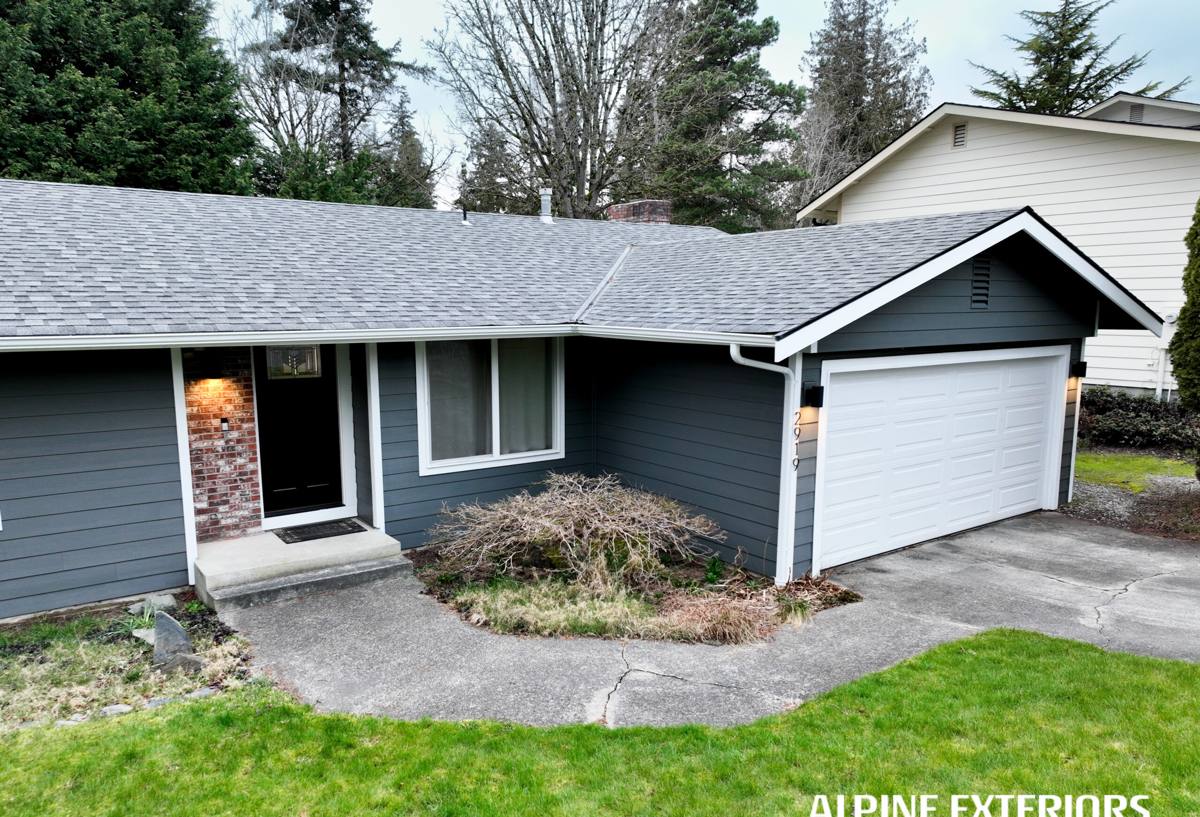
What Primed Wood Gets Right
To be fair to the product: primed wood siding has real advantages, and we're not going to pretend otherwise.
- Authentic look. Real wood grain and profile depth that fiber cement and vinyl only approximate.
- Repairable in place. A damaged board can be patched, sanded, and repainted by almost any painter.
- Lower upfront material cost. Primed wood is typically cheaper per square foot than fiber cement before you factor in long-term upkeep.
- Familiar to trades. Any carpenter can install it, and any paint crew can maintain it, without specialized training.
If a homeowner's priority is historical accuracy on a period home, and they're committed to a real maintenance schedule, wood siding isn't an unreasonable choice in the abstract. The problem is what happens to that plan once it meets Blaine's actual weather.
Where Blaine's Climate Works Against Wood
Salt Air and Coastal Exposure
Blaine sits right on Semiahmoo Bay and Boundary Bay, and that proximity to salt water matters more than most homeowners expect. Airborne salt settles on exterior surfaces, holds moisture against them longer, and accelerates the breakdown of paint films. Primed wood depends entirely on that paint film staying intact — once it chalks, cracks, or peels, salt-laden moisture gets straight to bare wood. On homes closer to the water, we routinely see paint failure well ahead of the repaint schedule a homeowner budgeted for.
Driving Rain and Wind-Driven Moisture
Whatcom County's storms don't just drop rain straight down — winter systems off the Strait of Georgia push rain sideways into exposed walls, especially on west- and south-facing elevations. Wood siding relies on lap joints, caulked seams, and paint to keep that water out. Any gap, any hairline crack in the finish, and wood does what wood does: it absorbs water, swells, and eventually splits or rots from the inside, often before it's visible from the ground.
The Long Moss and Algae Season
This region doesn't get a short, sharp wet season — it gets months of low sun angle, high humidity, and shaded, damp wall sections that rarely fully dry out. That's ideal growing conditions for moss and algae, and organic growth on wood siding isn't just cosmetic. It holds moisture against the surface and creates an acidic, damp microclimate right where the paint film is most vulnerable, speeding up the exact failure mode primed wood is most at risk from.
The Maintenance Burden Nobody Budgets For
Every primed wood siding job comes with an unspoken second contract: a repaint schedule. In a mild, dry climate that might mean repainting every 8-10 years. In Blaine's combination of salt air, driving rain, and extended moss season, we typically see meaningful paint degradation in the 4-7 year range on exposed elevations — sometimes sooner on south and west walls that catch the worst of the weather.
That's not a one-time cost. It's a recurring bill: scraping, priming bare spots, caulking open joints, and repainting the whole elevation — plus washing down moss and algae growth in between, because letting it sit accelerates the next failure. Homeowners who buy primed wood siding because it's cheaper upfront often end up spending more over 20 years than they would have with a lower-maintenance material, just spread out in a way that's easy to underestimate at the time of installation.
Primed Wood vs. Fiber Cement: A Side-by-Side Look
| Factor | Primed Wood Siding | James Hardie Fiber Cement |
|---|---|---|
| Finish | Factory primer only; owner must paint and repaint | Factory-baked ColorPlus finish, no repaint needed on schedule |
| Moisture behavior | Absorbs and swells if the paint film fails | Engineered to resist moisture absorption and swelling |
| Salt air resistance | Paint film degrades faster near the water | Finish formulated to hold up in coastal exposure |
| Moss/algae resistance | Organic growth holds moisture against bare wood once finish fails | Non-organic material, less hospitable to growth; still needs periodic washing |
| Repaint cycle in this climate | Often every 4-7 years on exposed walls | Not required under normal conditions |
| Combustibility | Combustible | Non-combustible core material |
| Warranty | Typically limited to material defects, not finish failure | Long-term, transferable product warranty |
Installation Sensitivity Cuts Both Ways
Part of our decision isn't just about the material — it's about how unforgiving wood siding is of installation shortcuts. Every cut end has to be field-primed and sealed before it goes up, every nail hole needs to be filled and painted, and every joint needs correct flashing and caulking. Skip any one of those steps and you've created a point of entry for water that won't show up as a problem for a year or two, by which time it's hidden behind a repainted wall.
Fiber cement isn't immune to installation errors either — it has its own rules around clearances, fastening, and joint treatment that we follow closely. But the failure mode is different: wood's tolerance for a missed detail is measured in a single wet season, while a properly installed Hardie board isn't depending on an unbroken paint film to keep it from rotting.
Why We Standardized on James Hardie
We made a decision as a company to install one siding system — James Hardie fiber cement — rather than offer primed wood, vinyl, or engineered wood products alongside it. That's not a marketing position, it's a practical one built from what actually holds up on homes in this part of Whatcom County.
Hardie's fiber cement core is non-combustible and dimensionally stable, so it doesn't swell and split the way wood can when a joint takes on water. The HZ5 product line is engineered for climates with sustained moisture exposure, which describes Blaine well. ColorPlus finishes are baked on at the factory and backed by their own finish warranty, so homeowners aren't signing up for a repaint cycle the way they are with primed wood. And because we install one system exclusively, our crews aren't splitting attention across multiple products with different installation rules — every job gets the same close attention to flashing, clearances, and joint detail that fiber cement depends on.
None of that means wood siding is a scam or that homeowners who have it made a mistake. It means that when we're asked to put new siding on a home in Blaine, we're not willing to install something we know will need a repaint within a handful of years and will be fighting salt air and moss the whole time.
A Checklist If You're Still Considering Wood Siding
If you're set on wood siding despite the trade-offs, or you're evaluating a quote from another contractor, here's what to ask before signing anything:
- Is the primer a true factory-applied coat, or just a thin dip coat meant to protect the wood in transit?
- Who is responsible for field-priming cut ends and nail heads before the finish coat goes on?
- What's the manufacturer's actual warranty language — does it cover the wood itself, the primer, or neither once it's painted?
- What repaint interval is the contractor recommending for your specific elevation and exposure?
- Is there a moisture barrier and flashing detail behind the siding, or is the paint film doing all the work?
- Has the contractor priced out 15-20 years of repainting alongside the install cost, or just the install?
If those answers feel thin, that's usually the tell.
Get an Honest Look at Your Siding Options
Every home on our schedule gets the same straight answer about what will actually hold up on it — whether that's a full re-side or a smaller repair. If you're weighing primed wood against fiber cement for a home in Blaine or elsewhere in Whatcom County, we're happy to walk the exterior with you and talk through what your specific exposure to sun, wind, and salt air means for either option. Reach out for a free, no-pressure estimate.