 Blaine Siding
 Exterior Work Built for Lynden's Climate
Lynden sits in the Nooksack River valley in northern Whatcom County, close enough to the Canadian border and the Fraser Valley that its weather patterns share a lot with the rest of the region: wet falls, gray winters, foggy mornings that hang low over the farmland, and a summer window that's shorter than people moving here from drier climates expect. It's a bit more inland than Blaine itself, so the salt air that eats at coastal homes along Semiahmoo Bay is less of a direct factor here — but the driving rain, the humidity trapped in the river bottom, and the long stretch of moss season are just as real in Lynden as anywhere else in the county, if not more so given the agricultural fog and standing moisture common to the valley floor.
We're a local exterior contractor working throughout Whatcom County — siding, roofing, windows, and decks — and Lynden is part of our regular service area, not an afterthought. That matters because exterior materials and installation details that work fine in a dry climate can fail here in a handful of years if they're not matched to what this region actually does to a house.
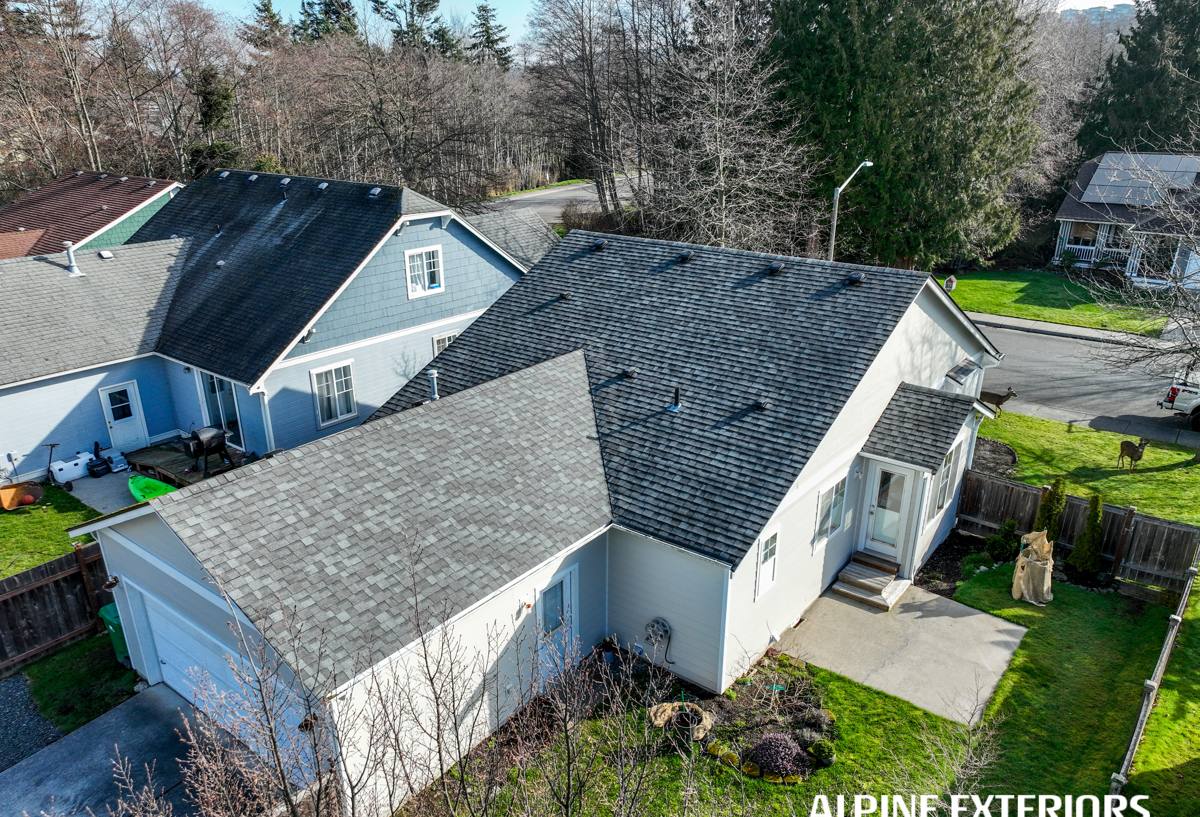
What a Wet Climate Does to a Home's Exterior
Most of the exterior problems we see on Lynden homes trace back to the same root cause: moisture that doesn't fully leave the building envelope between rain events. Whatcom County doesn't get the heaviest rainfall totals in the state, but it gets long stretches of low-intensity rain and fog, which means siding, trim, and roofing surfaces often stay damp for days at a time rather than drying out quickly after a single storm.
Siding
Wood-based and wood-composite siding products absorb moisture at cut edges, fastener penetrations, and butt joints. Over repeated wet-dry cycles, that absorption leads to swelling, delamination, or soft spots — especially on north-facing walls and areas shaded by trees or neighboring structures, which stay damp longest. Paint film on wood siding also breaks down faster under constant humidity, so repainting cycles shorten.
Roofing
Moss and algae growth is one of the most visible symptoms of the region's climate, and it's not just cosmetic. Moss holds moisture against roofing material, lifts shingle edges as it grows, and can work its way under flashing over time. North-facing roof slopes and areas under tree cover are the first places we see it establish.
Windows
Older or poorly sealed windows in this climate tend to show condensation between panes (a sign of failed seals), drafts around frames that have shifted or shrunk, and wood rot at sills where water sits after rain. Correct flashing and sealing at the window-to-siding transition is one of the most common trouble spots we find on older homes.
Decks
Freeze-thaw cycles are milder here than in colder inland climates, but they still happen, and combined with near-constant moisture they accelerate the breakdown of fasteners, ledger connections, and any wood that isn't properly sealed or spaced for drainage. Deck ledger flashing is a spot we check closely, since a poorly flashed ledger board is a slow, hidden path for water into the house structure.
Siding Materials — And Why We Only Install One of Them
Homeowners in Lynden are often choosing between vinyl, engineered wood siding (like LP SmartSide), fiber cement products from a few different manufacturers, or traditional wood. We install James Hardie fiber cement exclusively. That's a deliberate standard, not a lack of options, and it's worth explaining honestly rather than just asserting it.
Vinyl is inexpensive and low-maintenance in the sense that it doesn't need repainting, but it's a thin material that can crack in cold snaps, warp under direct heat reflection from windows, and it doesn't hold up visually the way a heavier material does over decades — plus it's not something we can install to the standard we want to put our name behind. Engineered wood products have improved their moisture engineering over the years, but they're still wood-based at the core, meaning any breach in the factory coating (a cut edge, a fastener hole, a scratch during installation) opens a path for the kind of swelling and edge damage that wet climates like this one are especially good at causing. Other fiber cement brands exist and are reasonable products, but we've standardized on Hardie specifically for its ColorPlus factory finish, its HZ5 product engineering for the Pacific Northwest, and the strength of its transferable warranty when the installation is done to spec.
None of this means other products are junk — it means we made a professional call about what we're willing to warranty our labor on, in this specific climate, and Hardie is where that call landed.
| Material | How it handles Whatcom County moisture | Maintenance over time |
|---|---|---|
| Vinyl | Won't rot, but can crack in cold and warp under reflected heat; seams are a weak point | Low, but limited repair options if damaged |
| Engineered wood (LP SmartSide, etc.) | Improved moisture resistance, but vulnerable at cut edges and fastener penetrations | Periodic caulking/paint touch-up at seams |
| Traditional wood/cedar | Absorbs moisture readily; needs a well-maintained finish to hold up in constant damp | Highest — regular refinishing required |
| James Hardie fiber cement | Non-combustible, engineered moisture resistance, factory ColorPlus finish | Low — occasional wash, no repainting cycle needed |
Roofing for a Moss-Prone Valley
Roofing in Lynden has to be evaluated with the specific microclimate of the river valley in mind — more shade, more standing fog on cool mornings, and more moss pressure than you'd see on an exposed hillside a few miles away. When we replace or repair a roof here, we're paying particular attention to underlayment quality, proper ventilation (a poorly ventilated attic traps moisture that accelerates moss and mildew from the inside out), and flashing details at valleys, chimneys, and roof-to-wall transitions, since those are the spots most likely to leak first.
We also talk homeowners through realistic moss management — physical removal and treatment rather than pressure-washing, which can strip granules and shorten shingle life. A roof that's properly ventilated and detailed will still get moss in this climate eventually; the goal is slowing it down and keeping it from causing structural damage, not pretending it won't happen.
Windows That Actually Seal in This Climate
Window replacement in a wet climate is as much about the installation as the product. A well-built window installed with poor flashing will leak; a mid-tier window installed correctly with proper weather barrier integration at the rough opening will usually outperform it. We integrate window flashing with the siding's weather-resistive barrier so water is directed out and down, not trapped behind the trim — which is the detail that most often gets skipped on lower-cost window replacements and shows up as rot or interior staining a few years later.
Energy performance matters here too. Lynden's winters aren't brutally cold, but the combination of damp air and steady wind off the valley makes drafty, single-pane, or seal-failed windows noticeably uncomfortable and costly to heat around.
Decks Built to Handle Rain and Freeze-Thaw
A deck in this climate needs to be built to shed water, not hold it. That starts with proper ledger flashing where the deck attaches to the house — the single most common source of hidden rot we find on older decks — and continues through joist spacing, board gapping for drainage and expansion, and fastener choice that won't corrode under constant moisture exposure. Composite decking has become popular for good reason in a climate like this, since it doesn't absorb water and swell the way untreated wood does, but even composite decking depends on correct substructure and drainage to perform well long-term.
What Working With a Local Crew Looks Like
A crew that works Whatcom County regularly knows which details actually matter here versus in a drier climate — where moss establishes first, which wall orientations take the worst weather, what inspectors in the county are looking for on flashing and weather barrier details, and how to sequence a project around a weather window that can close quickly in fall and spring. That local familiarity shows up in small decisions throughout a project: how a crew handles a surprise rain delay, where they source materials without adding weeks to a timeline, and whether they've already dealt with the county's permitting process before.
We give homeowners a clear, honest scope before work starts — what's being replaced, what the existing sheathing and framing look like once old siding or roofing comes off, and what that means for the estimate if we find hidden damage. We'd rather flag a problem early than surprise you with it mid-project.
Choosing a Contractor for Exterior Work in Lynden
Whatcom County has no shortage of contractors advertising siding, roofing, or window work, and the quality gap between them is real. A few things worth checking before hiring anyone for exterior work on your home:
- Washington State contractor license and current bonding/insurance, verifiable through the state's contractor lookup
- Manufacturer certification for the specific siding or roofing product being installed, not just general experience
- A written scope of work that specifies materials, flashing details, and what happens if hidden damage is found
- Local references or completed work in Whatcom County specifically, not just a regional service area claim
- A warranty that covers labor, not just the manufacturer's material warranty
- Clear communication about weather-dependent scheduling — anyone promising a fixed timeline regardless of weather in this climate is setting unrealistic expectations
Seasonal Maintenance for Lynden Homeowners
Whatever your current siding, roofing, and deck materials are, a few maintenance habits go a long way in this climate:
- Clear gutters before the fall rains start and again mid-winter if trees are nearby
- Check north-facing and shaded siding and roof areas for early moss growth each spring
- Inspect window and door flashing and caulking annually, especially after a hard windstorm
- Keep deck surfaces clear of standing leaves and debris that trap moisture against the boards
- Trim back vegetation that keeps exterior walls shaded and slow to dry
- Have any staining, soft spots, or bubbling paint on siding inspected promptly rather than waiting
If you're weighing a siding, roofing, window, or deck project on a Lynden home, we're happy to come take a look and give you a straightforward, no-pressure estimate — including an honest read on what your home's exterior is actually dealing with and what it would take to fix it right.