 Blaine Siding
 Deck Repair Built Around Whatcom County Weather
A deck in Everson doesn't fail the way a deck fails in a dry climate. Out here, the damage is slow and it's almost always moisture-driven. Long stretches of rain from fall through spring, tree cover that keeps decks shaded and damp longer than they should be, and a moss season that can run half the year all work against wood, fasteners, and even composite decking if it wasn't built or maintained correctly. We're a Blaine-based crew, and while Blaine itself sits right on the water and deals with driving rain and salt-laden marine air off the Salish Sea, that same weather pattern moves inland across Whatcom County and shapes what decks need here too — just with local variations, like more shade and humidity trapped by trees rather than direct salt exposure. Understanding that difference matters, because a repair plan that works for a fully exposed coastal deck isn't automatically right for a shaded, inland one.
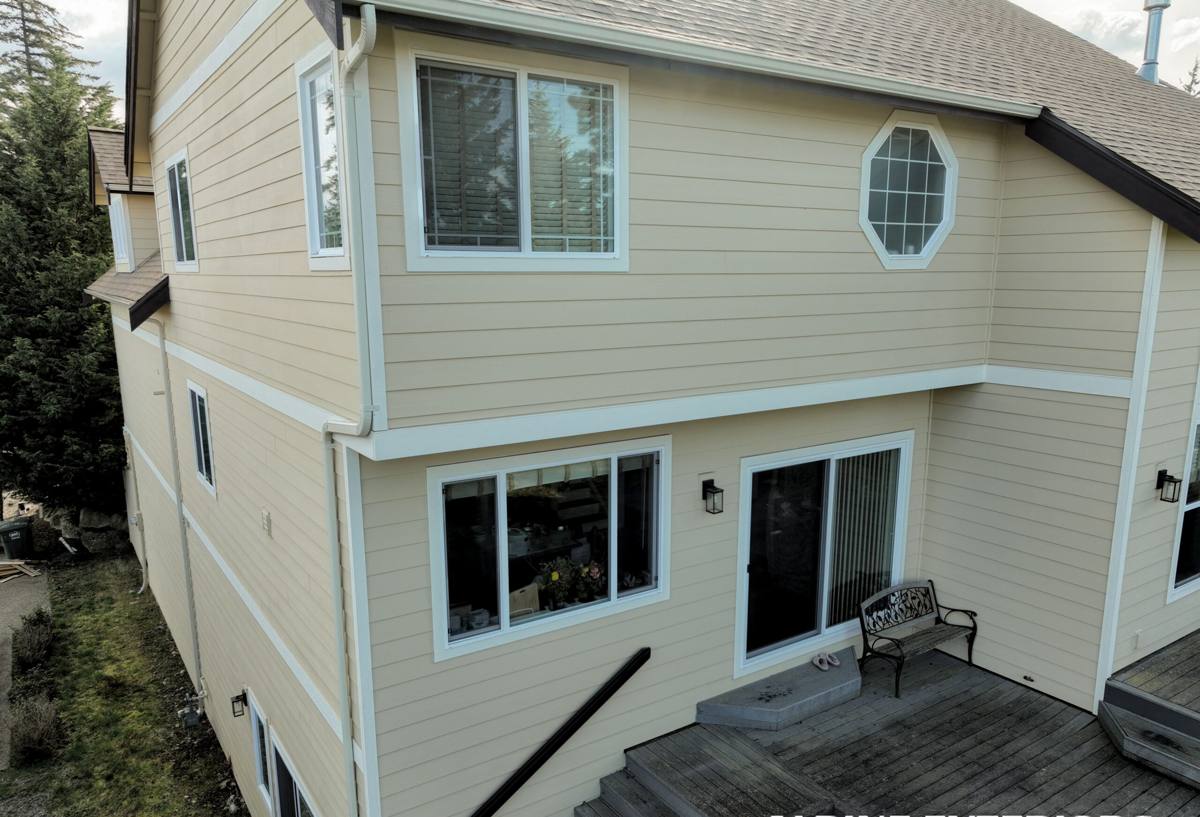
Where Everson Decks Actually Fail First
When we inspect a deck in this area, we're not guessing where the problems are — moisture damage shows up in predictable places.
Ledger Board and House Connection
This is the single most important structural point on any attached deck, and it's the one most often hidden from view. Flashing that was skipped, installed wrong, or has failed over time lets water track behind the ledger board and into the rim joist of the house. This is a slow, invisible failure — by the time you see staining or soft wood on the interior side, the damage has usually been building for years.
Joists and Framing Underneath
Framing that sits low, close to grade, or under heavy shade dries out slowly after every rain. Add a season of moss and organic debris collecting between boards and on top of joists, and you've got a setup for rot that starts from the inside of the structure, not the surface you can see.
Deck Boards and Fasteners
Surface-level cupping, splintering, or soft spots on the boards themselves are the most visible sign of trouble, but they're often the last thing to show, not the first. Rusted or popped fasteners are a common early warning sign that's easy to miss if you're not looking closely.
Stairs and Railings
Stair stringers and railing posts take on water at end grain and connection points. Because they're structural and load-bearing in a way that affects safety directly, we treat any softness or movement in stairs and rails as a priority repair, not a cosmetic one.
Signs It's Time to Call Someone
- Boards that feel spongy, springy, or noticeably different underfoot in one area
- Visible gaps, staining, or soft wood where the deck meets the house
- Railings or stair posts that wiggle or flex when you put weight on them
- Persistent moss or dark green-black growth that keeps coming back within weeks of cleaning
- Fasteners that are rusted, backed out, or leaving dark streaks down the boards
- A deck that was built more than 15-20 years ago and hasn't had a structural inspection
- Any visible daylight or gap between the ledger board and the house siding
If you're seeing even one of these, it doesn't necessarily mean the whole deck needs to be replaced — but it does mean it's worth having someone look at the structure, not just the surface.
Repair vs. Replace: How We Actually Decide
This is the question every homeowner asks, and the honest answer is that it depends on what's failing, not how old the deck looks. A deck with worn boards but a sound frame is a very different job than a deck with a compromised ledger connection.
| Factor | Usually a Repair | Usually a Replacement |
|---|---|---|
| Framing/joists | Isolated soft spots or a few damaged joists | Widespread rot across the frame |
| Ledger connection | Flashing issue caught early, structure sound | Long-term water intrusion into rim joist |
| Deck boards | Scattered cupped or split boards | Most boards failing or original material near end of life |
| Railings/stairs | Loose posts, worn treads | Structural movement or code non-compliance throughout |
| Age of structure | Under ~15 years, built to code | Older structure with outdated framing or spacing |
We'll always tell you honestly which side of that line your deck falls on. Repairing a deck that genuinely needs replacing just delays a bigger bill and, more importantly, can leave a safety issue in place.
What a Correct Repair Actually Involves
A lot of deck "repairs" in this region are surface-only — new boards laid over a frame that never got inspected. That's not a repair, it's a cosmetic patch, and in a climate like ours it tends to fail again within a few years because the underlying moisture problem was never addressed.
Our approach starts from the structure and works outward:
- Structural assessment — checking joists, beams, posts, and footings for soundness, not just checking the boards on top
- Ledger and flashing inspection — because this is where the most serious hidden damage originates
- Fastener and hardware review — replacing corroded or undersized hardware with material rated for exterior, wet-climate use
- Framing repair or reinforcement — sistering joists or replacing sections where rot has taken hold
- Surface repair — replacing boards, addressing railings and stairs, and correcting anything that traps water or debris
Skipping straight to step five without doing the first four is exactly how decks in this area end up needing the same repair again in three or four years.
Materials: What We Recommend and Why
There's no single "best" decking material for every situation — it comes down to your budget, how much maintenance you're willing to do, and how much shade and moisture the deck sits in.
Pressure-Treated Framing
For the structural frame — joists, beams, posts — pressure-treated lumber rated for ground contact where applicable is our standard. It's the most proven option for the wet conditions here, and cutting corners on framing grade is one of the most common mistakes we see in older decks.
Wood Decking Surfaces
Wood decking gives a natural look and is often the more affordable option upfront, but it does require regular maintenance — cleaning, sealing, and periodic refinishing — to hold up against our rain and moss season. If a deck is heavily shaded, wood surfaces need more frequent attention than one that gets good sun exposure and airflow.
Composite Decking
Composite boards reduce the maintenance burden significantly and resist rot in a way solid wood can't, which makes them appealing for shaded or hard-to-reach decks. The trade-offs are a higher upfront cost and the fact that composite still needs a properly built, well-ventilated frame underneath — composite decking laid over a poorly drained or under-ventilated structure will trap moisture just like wood does, so the framing work matters just as much either way.
We'll walk through what fits your deck's exposure, your maintenance preferences, and your budget honestly rather than pushing one product across the board.
Our Process, Start to Finish
We keep the process straightforward because homeowners deserve to know what's happening to their deck and why.
- Inspection: We look at the whole structure — framing, ledger, fasteners, and surface — and explain what we find in plain terms.
- Written plan: You get a clear scope of what needs repair, what's optional, and what it costs before any work starts.
- Repair work: We address structural issues first, then move to surface and cosmetic elements.
- Cleanup and walkthrough: We clear debris and walk the finished repair with you so you know what was done and what to watch for going forward.
Keeping a Repaired Deck in Good Shape
A properly repaired deck will hold up far longer if it gets a little seasonal attention. This matters more here than in drier climates, simply because moss and moisture have so much more time to work on a deck each year.
- Sweep leaves and debris off the deck surface regularly, especially in fall
- Keep gutters and downspouts near the deck clear so water isn't dumping directly onto it
- Clean moss and algae off the surface before it builds up thick enough to trap moisture
- Check railings and stair connections for looseness once or twice a year
- Reseal or refinish wood decking on the schedule appropriate for the product
- Keep vegetation trimmed back so air can move under and around the deck
Why It Matters That We Already Work This Area
Whatcom County covers a lot of ground, and the way a deck weathers in Everson isn't identical to how one weathers right on the water in Blaine. A crew that only shows up for one job doesn't necessarily know that difference — how much shade to expect, how long moss season really runs inland, or what framing details tend to fail first in this part of the county. We've built that knowledge from working decks across the region, and we bring it to every inspection instead of applying a generic checklist. That local familiarity is also why we can usually tell you fairly quickly, on-site, whether you're looking at a repair or something bigger, rather than needing multiple visits to figure it out.
Get a Straight Answer About Your Deck
If your deck has soft spots, loose railings, recurring moss, or you just haven't had it looked at in a while, it's worth getting an honest assessment before small problems turn into structural ones. We offer free, no-pressure estimates — use the form below to get one scheduled.