 Blaine Siding
 Why Windows Take More Punishment in Birch Bay
Birch Bay sits right on the water, and that changes what a window has to survive day to day. Salt-laden air off the bay works its way into hardware, hinges, and fasteners over time, especially on the west- and north-facing walls that catch the wind straight off the water. Add in the driving, wind-blown rain that's typical for this stretch of Whatcom County, and you've got moisture being pushed sideways into gaps that would never see water in a calmer inland setting. Then there's the long stretch of gray, damp months each year when moss and mildew get a foothold on anything that stays wet — window sills, trim, and the corners of frames included.
None of that is a reason to avoid big glass or lots of windows in a Birch Bay home — most people move here partly for the water views. It just means the windows and the installation have to be matched to the exposure, not treated like a generic swap-and-go job.
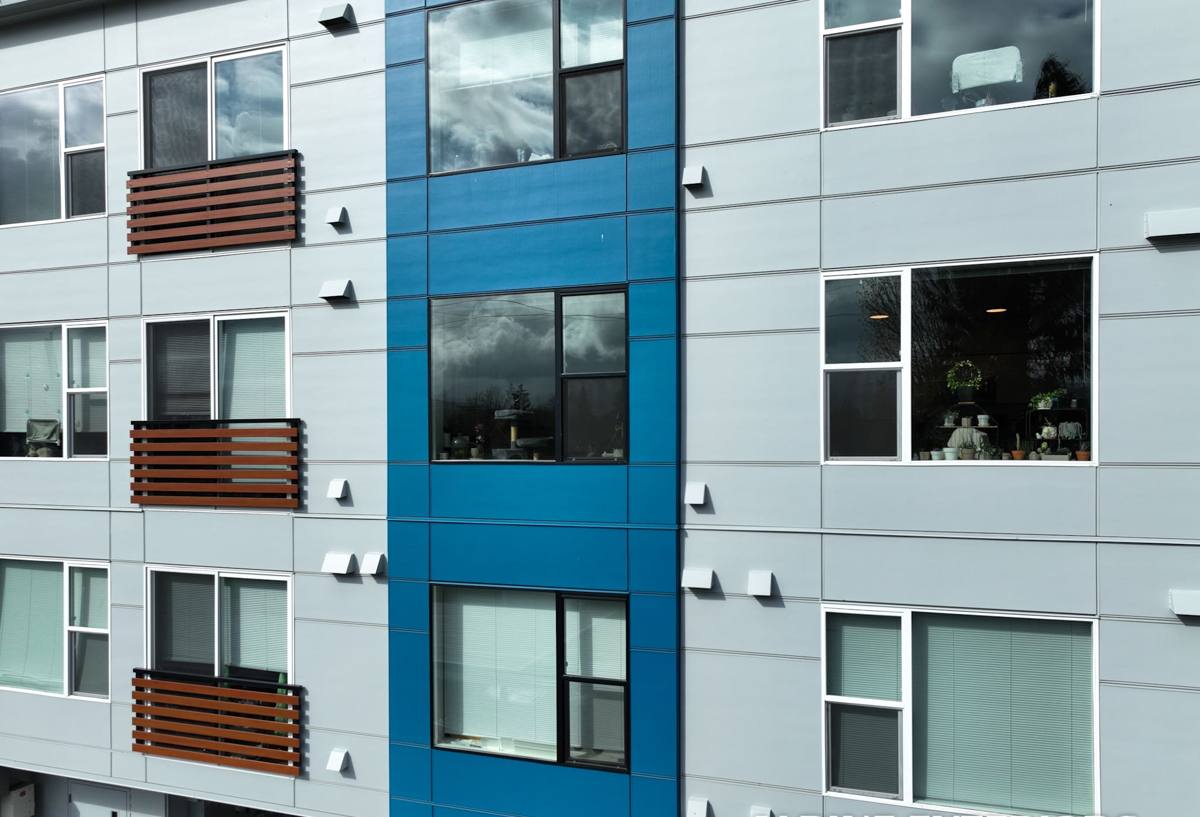
What "Energy-Efficient" Actually Means Here
Energy-efficient windows aren't just about a lower heating bill, though that matters in a Pacific Northwest winter. In a coastal, wind-exposed spot like Birch Bay, the same features that cut energy loss also reduce the moisture and drafts that cause bigger problems later.
The numbers that actually matter
- U-factor — measures heat loss through the window. Lower is better for our winters; look for U-factor in the 0.27–0.30 range or lower for most Birch Bay homes.
- SHGC (Solar Heat Gain Coefficient) — measures how much solar heat passes through. On south- and west-facing water-view glass, a moderate SHGC helps prevent overheating on the sunny days that do show up.
- Air infiltration rating — how much air leaks through the frame itself. This one matters more than most homeowners realize once wind is a regular factor, which it is anywhere near Semiahmoo Bay or Drayton Harbor.
A window can carry an ENERGY STAR label and still perform poorly here if it isn't installed with the right flashing and sealing details. The glass package is half the equation — the installation is the other half.
Signs Your Current Windows Are Costing You Money
Most homeowners don't replace windows because of one dramatic failure — it's a slow accumulation of small signs. Worth checking for before you decide whether it's a repair or a replacement situation:
- Condensation forming between the panes (a sign the seal has failed on a double- or triple-pane unit)
- A cold draft you can feel standing near the frame on a windy day
- Wood trim or sills that feel soft, discolored, or have visible moss/mildew growth
- Hardware — locks, cranks, hinges — that's stiff, corroded, or doesn't latch tight anymore
- Visible daylight or gaps around the frame from outside
- A noticeable jump in heating costs without an obvious cause
Corroded hardware and soft trim show up faster in Birch Bay than they would twenty miles inland — that's the salt air and moisture combination at work, not a sign the windows were poorly made.
Choosing the Right Frame Material for a Water-Exposed Home
Frame material choice matters more here than in most parts of the county, because corrosion resistance and moisture behavior are bigger factors than they'd be on a home set back from the water.
| Frame Material | How It Handles Salt Air & Moisture | Maintenance | Typical Fit |
|---|---|---|---|
| Vinyl | Won't corrode or rust; performs consistently in salt air | Low — occasional cleaning | Most Birch Bay homes, good value |
| Fiberglass | Excellent — very stable in temperature swings and coastal exposure | Low | Higher-exposure walls, larger openings |
| Aluminum-clad wood | Good exterior protection, but any breach in the cladding exposes wood underneath to moisture | Moderate to high — depends on cladding integrity | Homes prioritizing a wood interior look |
| Bare wood | Poor in this climate without diligent upkeep — prone to rot and moss near the water | High | We generally steer clients away from this on direct water exposure |
We're not knocking wood windows as a product — they have real appeal and work fine in sheltered, well-maintained applications. On a bay-facing wall in Birch Bay, though, the maintenance burden and moisture risk usually outweigh the look, which is why we lean toward vinyl or fiberglass for most homes out here and explain the trade-offs honestly before you decide.
Glass packages worth considering
Double-pane with low-E coating and argon fill is the standard energy-efficient baseline for this region. Triple-pane adds further insulation value and is worth discussing for homes with a lot of west-facing glass catching direct wind and weather, though it comes at a higher cost and added weight that the frame and installer need to account for.
What a Correct Installation Actually Involves
The window itself is only part of the job. In a climate with regular driving rain, the flashing and sealing details around the opening are what actually keep water out of the wall assembly over the next 20 years.
- Removing the old window and inspecting the rough opening, sill, and surrounding framing for hidden rot or moisture damage before anything new goes in
- Repairing or replacing any compromised framing or sheathing — this step gets skipped by rushed installers and it's where future leaks come from
- Installing proper flashing, including a sloped sill pan that directs any water that does get past the window back outside the wall
- Setting the window level, plumb, and square, then fastening per the manufacturer's specifications
- Sealing with the correct combination of housewrap integration, flashing tape, and exterior sealant — not caulk alone
- Insulating the gap between the frame and the rough opening without over-packing, which can bow the frame
- Finishing interior and exterior trim and doing a final operation and seal check
Skip the sill pan or use the wrong sequence of flashing layers, and a window can look fine for a year or two before water starts working into the wall — by the time it shows up as a stain or soft spot inside, the damage is already done. This is exactly the kind of detail that separates a correct job from one that just looks finished.
Our Process, Start to Finish
We keep this straightforward and try not to waste your time with a hard sell.
- Walkthrough and assessment — we look at your current windows, note exposure per wall, and check for any moisture or framing issues already present
- Honest recommendation — frame material, glass package, and installation approach based on that specific wall's exposure, not a one-size-fits-all pitch
- Written estimate — clear pricing, no vague allowances
- Scheduled installation — we work efficiently to minimize how long any opening is exposed to the weather, which matters given how often Birch Bay sees rain moving through
- Cleanup and walkthrough — you check the operation and finish on every window before we call it done
Keeping Energy-Efficient Windows Performing in This Climate
A well-installed window still needs a bit of upkeep in a salt air, moss-prone environment. None of this is complicated, but it makes a real difference over the years.
- Rinse exterior frames and glass periodically to clear salt residue, especially on water-facing walls
- Keep weep holes clear of debris, moss, and dirt so water can drain out as designed
- Check and lightly lubricate hardware — locks, cranks, hinges — once or twice a year to head off salt-air corrosion
- Inspect exterior caulking annually and touch up any cracked or shrunken sealant before the wet season sets in
- Watch for moss or dark staining at the sill or bottom corners, which usually signals standing moisture that needs attention
- Wipe down interior sills after heavy weather if condensation collects, especially in bathrooms and kitchens
Why Hire a Crew That Already Works in Birch Bay
Window installation done right depends on understanding the specific conditions a home faces, not just following a generic manual. A crew that regularly works Birch Bay and the greater Blaine area already knows which walls take the brunt of the wind off the water, how the local moss season affects long-term maintenance, and what flashing details actually hold up against wind-driven rain here rather than in a drier or more sheltered part of Whatcom County. That local pattern recognition is what catches a problem — a soft sill, a marginal flashing detail, hardware that's already showing early corrosion — before it becomes a bigger repair.
It also means we're familiar with local permitting expectations and the kind of exposure ratings that make sense for homes this close to the water, so you're not paying for a mismatch between the product and the site.
Get a Straightforward Estimate
If your windows are drafty, fogged, or just past their prime, we're happy to take a look and give you a clear, no-pressure estimate — no exaggerated claims, just an honest read on what your home needs and what it would cost to fix it right. Fill out the form below and we'll get back to you to schedule a time.