 Blaine Siding
 Roofing on a Peninsula Cut Off From the Rest of Washington
Point Roberts sits on its own small peninsula south of the 49th parallel, cut off from the rest of Whatcom County by water and border. That geography shapes everything about how a roof ages there. Wind comes off the Strait of Georgia loaded with salt. Rain arrives sideways more often than straight down. And the tree cover that makes the area beautiful also means shaded, damp roof sections that never fully dry out between storms. Asphalt shingle roofing can handle all of that when it's specified and installed correctly for this exposure — but a roof built to a generic spec, without those conditions in mind, will show its age faster here than it would twenty miles inland.
This page covers what asphalt shingle roofing actually needs to hold up in Point Roberts, what a correct installation or repair involves, and how our process works from first look to final inspection.
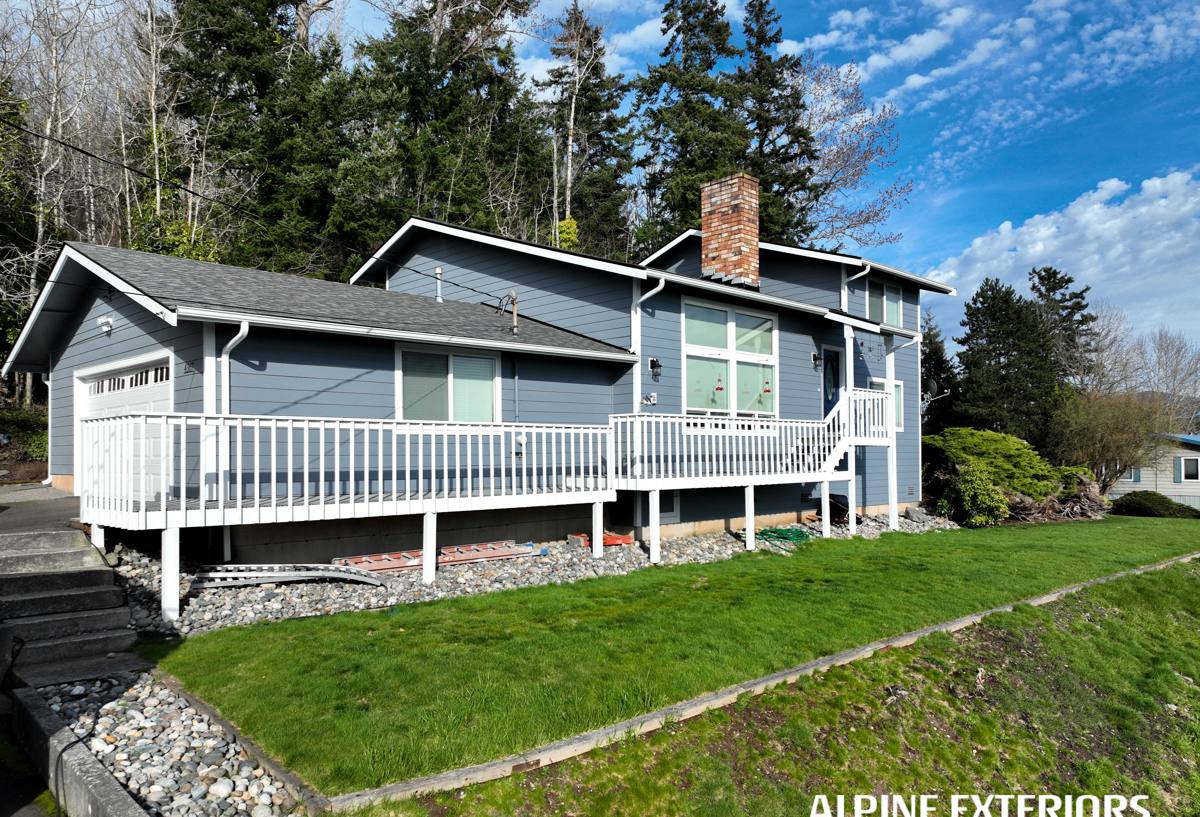
What Salt Air, Driving Rain, and Moss Do to a Shingle Roof
Salt Air
Airborne salt accelerates corrosion on every metal component of a roofing system — nail heads, flashing, valley metal, vent stacks, and gutter hardware. On a lot of roofs, the shingles themselves outlast the fasteners and flashing holding them down. That's why material choice for the metal components matters as much as the shingle brand.
Driving Rain
Wind-driven rain doesn't just fall on a roof, it gets pushed sideways and upward under shingle tabs, around chimneys, and along ridge lines. Roofs that rely only on standard nailing patterns and minimal underlayment coverage are more likely to see wind-driven moisture find its way to the sheathing over time, especially at edges, valleys, and penetrations.
Moss and Sustained Moisture
Whatcom County's long wet season gives moss and algae months to establish themselves, particularly on north-facing slopes and roof sections shaded by mature trees. Moss doesn't just look bad — its root structure lifts shingle edges and holds water against the roof surface, which shortens the life of the shingle mat underneath. Left unaddressed, a mossy roof degrades faster than a clean one of the same age and material.
What a Correct Asphalt Shingle Job Requires Here
A roof built for Point Roberts conditions isn't a different product line — it's the same asphalt shingle system installed with more attention to the details that matter in a marine, high-moisture climate.
- Corrosion-resistant fasteners and flashing — stainless or heavily coated materials at valleys, flashing, and exposed hardware instead of standard galvanized, which pits and rusts faster under salt exposure.
- Full synthetic underlayment coverage, not just a starter strip, so the deck has a secondary water barrier if wind-driven rain gets past the shingle surface.
- Ice-and-water shield at vulnerable zones — valleys, eaves, and around every penetration — even though this isn't a heavy-snow region, because the same membrane protects against wind-driven rain intrusion.
- Algae-resistant shingle granules where moss and algae pressure is high, particularly on shaded or north-facing roof sections.
- Proper attic and roof deck ventilation so moisture from inside the home doesn't add to what's already coming from outside — trapped humidity under the deck accelerates rot regardless of how good the shingles are.
- Correct nailing pattern and wind rating for coastal exposure, not just the manufacturer's minimum spec.
Signs a Point Roberts Roof Needs Attention
Because moss and salt-driven wear happen gradually, a lot of homeowners don't notice a problem until it shows up as an interior stain. Watch for these earlier signs instead:
- Moss or dark algae streaking on shaded slopes, especially anything thick enough to hold visible moisture
- Granules collecting in gutters or at downspout outlets — a sign the shingle surface is wearing down
- Lifted, curled, or cracked shingle tabs, particularly along ridges and edges exposed to prevailing wind
- Rust staining around vent stacks, flashing, or metal valleys
- Soft spots or discoloration on the underside of roof decking, visible from the attic
- Shingles that look "washed out" or unevenly colored compared to when they were installed
Repair, Recover, or Replace: How We Sort That Out
Not every roof problem in Point Roberts means a full tear-off. The right call depends on the roof's age, how much of it is affected, and what's happening underneath the shingles — not just what's visible from the ground.
| Situation | Typical Fix | Why |
|---|---|---|
| Isolated moss patch, roof under 10-15 years old, deck sound | Cleaning plus targeted shingle repair | Localized damage doesn't justify replacing a roof with plenty of service life left |
| Flashing or valley leak on an otherwise healthy roof | Flashing and valley repair | Metal components fail before the shingle field does in salt-air exposure |
| Widespread granule loss, curling, or roof nearing 20+ years | Full replacement | Patch repairs on an aged shingle system rarely hold and can mask deck damage |
| Soft or discolored decking found during inspection | Deck repair as part of replacement | New shingles over a compromised deck fail early regardless of shingle quality |
We tell homeowners honestly when a repair will genuinely extend the roof's life, and when it's a short-term patch on a system that's due. A roof near the end of its service life in this climate rarely benefits from another round of spot repairs.
Choosing the Right Shingle for a Coastal Whatcom County Home
| Shingle Type | Typical Lifespan | Fit for Point Roberts |
|---|---|---|
| 3-tab asphalt | 15-20 years | Budget option; less wind and impact resistance than architectural, so more exposed on windward roof sections |
| Standard architectural asphalt | 25-30 years | Better wind rating and thicker profile; solid general-purpose choice for most homes here |
| Algae-resistant architectural | 25-30 years | Same durability as standard architectural with copper-infused granules that slow moss and algae growth on shaded slopes |
| Premium/designer architectural | 30+ years | Heaviest profile and strongest wind resistance; worth considering on fully exposed roofs facing open water |
For most Point Roberts homes, we recommend at least a standard architectural shingle with algae-resistant granules on any north-facing or tree-shaded slope. The upcharge over basic 3-tab is modest relative to the extra years of service and reduced moss pressure.
Our Process, Start to Finish
1. On-Site Inspection
We walk the roof and attic, not just look from the driveway. That means checking decking condition, ventilation, flashing, and moss coverage before recommending repair or replacement.
2. Straightforward Scope and Pricing
You get a written scope that spells out materials, underlayment, flashing work, and any deck repair — no vague line items, no pressure to upgrade beyond what your roof actually needs.
3. Material Delivery and Scheduling
Because Point Roberts is only reachable by crossing the Canadian border or by water, material delivery and crew scheduling take more planning than a job across town in Blaine. We build that lead time into the schedule up front so it doesn't turn into a surprise delay mid-project.
4. Tear-Off and Deck Check
On replacements, we remove old material down to the deck and inspect it before anything new goes down. Any soft or damaged sheathing gets replaced, not covered over.
5. Installation to Coastal Spec
Full underlayment coverage, corrosion-resistant fasteners and flashing, proper ventilation, and correct nailing pattern for wind exposure — the details covered above, applied consistently rather than skipped to save time.
6. Final Walkthrough
We review the finished roof with you, including gutters, flashing, and any ventilation changes, so you know exactly what was done and what to expect going forward.
Why Hire a Crew That Already Works Point Roberts
Point Roberts' exclave geography isn't a minor detail — it changes how a roofing project actually gets scheduled and supplied. A contractor unfamiliar with the area may underestimate lead time for materials, border-crossing logistics for crew and equipment, or the permitting process specific to this part of Whatcom County. A crew that regularly works Point Roberts has already solved those logistics, which means fewer scheduling surprises and a project that runs on the timeline you were actually given.
Local familiarity also means we know which roof orientations in this specific microclimate tend to hold moss longest, which older homes in the area are more likely to have undersized attic ventilation, and what corrosion-resistant hardware actually holds up here versus what looks fine on paper. That's the kind of judgment that only comes from doing the work in this exact location, repeatedly.
Maintaining Your Roof Between Service Visits
- Clean gutters at least twice a year, more often if you're under conifers — clogged gutters back water up under the shingle edge
- Have moss professionally removed rather than pressure-washed, which can strip granules and shorten shingle life
- Trim back overhanging branches to reduce shade and debris buildup on north-facing slopes
- Check attic ventilation isn't blocked by insulation, especially after any insulation upgrades
- Have flashing and valleys inspected every few years, since metal components often fail before the shingles do in salt air
- Address small leaks immediately — in this climate, a slow leak has more months of moisture exposure to do damage before it dries out
Get a Straightforward Look at Your Roof
If you're dealing with moss buildup, a suspected leak, or a roof that's simply getting old, we're glad to take a look and give you an honest read on what it actually needs — repair, partial work, or full replacement. Reach out for a free, no-pressure estimate using the form below, and we'll walk you through what we find in plain terms.