 Blaine Siding
 New-Construction Windows Are a Different Job Than Replacement Windows
A lot of homeowners assume window installation is window installation. It isn't. New-construction windows go in during framing, before siding, house wrap, or interior finish are complete. That timing changes everything about how the job has to be sequenced and inspected. There's no existing siding to protect, no old flashing to work around — but there's also no room for error, because whatever gets built into the wall assembly at this stage is what the house lives with for the next 30-plus years.
In Bellingham and the rest of Whatcom County, that first-pass installation matters even more than it would in a drier inland climate. We're working with a lot of moisture exposure over the life of the building, and a window opening that's flashed correctly the first time is a lot cheaper than one that gets fixed after a leak shows up in a wall cavity years later.
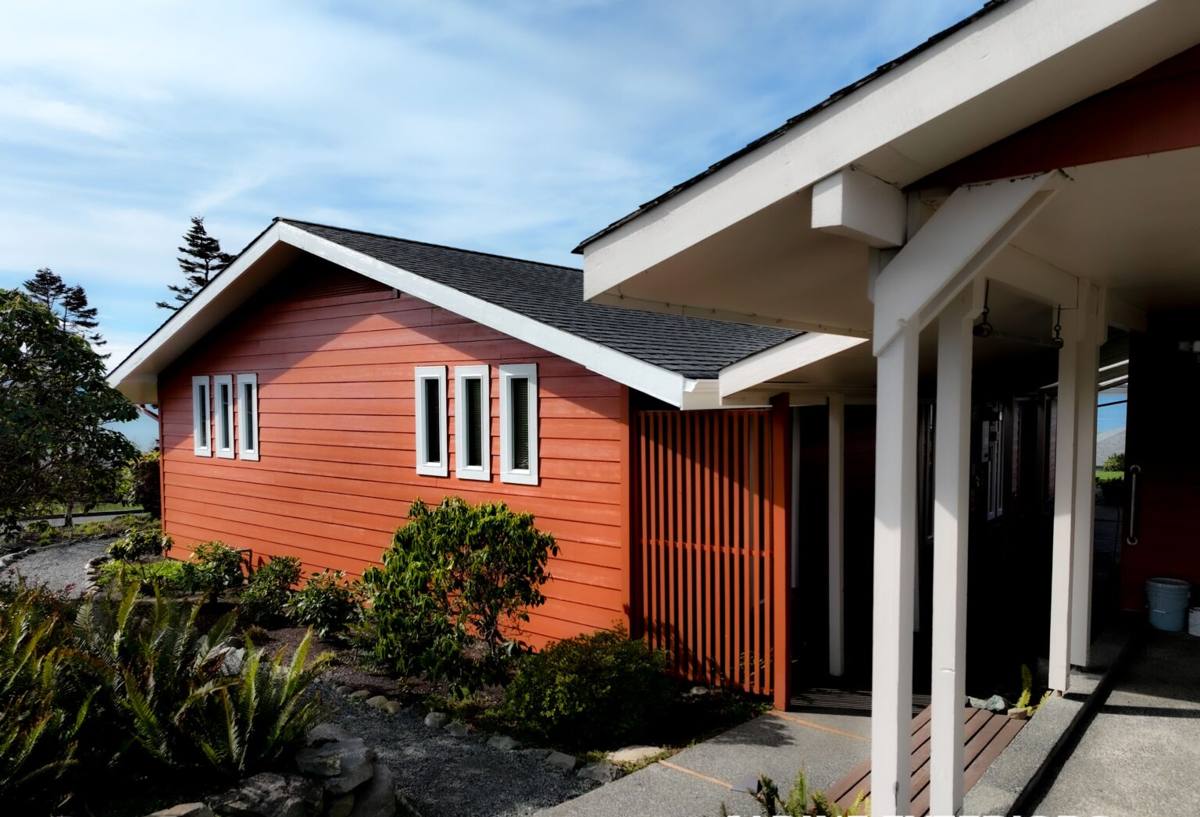
What Bellingham's Climate Actually Does to a Window Opening
Bellingham sits on the water, and that proximity brings a specific combination of stresses that new-construction windows need to be built and installed to handle:
- Salt air: Homes closer to Bellingham Bay and the surrounding shoreline see more airborne salt than an inland build. Over time this accelerates corrosion on lower-grade hardware, fasteners, and unprotected metal flashing.
- Driving rain: Whatcom County storms frequently come in sideways off the Strait, not straight down. That means water is being pushed into the wall assembly under pressure, not just falling on the sill. Flashing details that would be adequate in a calmer climate can fail here.
- A long moss and damp season: Extended stretches of shade, cool temperatures, and standing moisture keep window sills and lower tracks wet for months at a time, which is exactly the environment moss, algae, and wood rot need to get established.
None of this means new construction in Bellingham requires exotic materials. It means the installation details — flashing sequence, sealant selection, drainage planning — have to be done correctly and consistently, every opening, on every house.
The Installation Details That Actually Prevent Leaks
Sill Pan Flashing
Every rough opening should get a sloped sill pan before the window ever goes in. This gives any water that gets past the window — and eventually, some always does — a way to drain back out to the exterior instead of sitting on raw framing lumber. Skipping this step, or using a flat sill pan with no slope, is one of the most common shortcuts we see on new builds, and it's one of the most expensive to fix later.
Shingle-Lap Sequencing
Flashing tape and house wrap need to be layered so water sheds downward and outward, the same way roof shingles overlap. Get the sequence backward at the head flashing and you've built a funnel that channels driving rain straight into the wall — which, given how often storms here come in at an angle, is not a theoretical problem.
Integration With the Drainage Plane
The window's flashing has to tie into the house wrap or weather-resistant barrier as a continuous system, not as two separate layers taped together after the fact. Any gap in that plane is a spot water can find, especially over years of the kind of sustained damp weather this area gets.
Fastening and Shimming
Windows need to be set plumb, level, and square, then fastened per the manufacturer's schedule — not "close enough." An out-of-square frame stresses the sash, causes premature seal failure, and often shows up first as a window that's hard to operate rather than an obvious leak.
Choosing the Right Window Material for a Whatcom County New Build
Material choice affects how a window holds up to salt air, moisture, and years of PNW weather. There's no single right answer for every project — it depends on budget, the home's exposure, and how much upkeep the owner wants to take on.
| Material | How It Handles Coastal/Damp Conditions | Maintenance |
|---|---|---|
| Vinyl | Won't corrode or rot; performs well against salt air and moisture. Frame can flex slightly with big temperature swings, which matters less here than in hot inland climates. | Low — occasional cleaning |
| Fiberglass | Very stable dimensionally, strong resistance to moisture and corrosion, holds paint well if a custom color is wanted. Higher upfront cost. | Low |
| Wood-clad (exterior clad, wood interior) | Good look and insulating value, but the exterior cladding's seams and corners are the most sensitive point on the whole window — any breach lets moisture into the wood core. Needs correct install and periodic inspection. | Moderate — depends on cladding integrity |
| Aluminum | Strong and slim-profile, but standard aluminum conducts cold and can condense heavily in a marine climate unless it's thermally broken. We don't recommend non-thermally-broken aluminum for Whatcom County homes. | Moderate |
For most new construction in and around Bellingham, we lean toward vinyl or fiberglass for their combined moisture resistance and lower long-term maintenance. Wood-clad is a fine choice for homeowners who want that look and are willing to keep an eye on the cladding seams, but we're upfront that it carries more risk in this climate if any detail is off.
Energy Code and Performance Requirements
Washington's energy code sets minimum performance standards for new-construction windows, and Whatcom County falls in a marine climate zone where condensation resistance matters as much as raw insulating value. In practice this means:
- U-factor targets that keep heat loss low through the glass and frame
- Low-E glass coatings appropriate for a marine, low-direct-sun climate rather than a hot, high-UV one
- Tempered safety glass required near doors, low to the floor, and in other code-defined hazard locations
- Egress-sized windows required in bedrooms per building code, which needs to be planned into the framing, not adjusted after the fact
Builders and homeowners sometimes find these requirements out during a plan review or inspection. We'd rather work from final specs up front so the openings are framed right the first time and nobody's re-cutting a rough opening mid-build.
How We Handle New-Construction Window Installs
- Plan review and takeoff: We work from the builder's or architect's window schedule to confirm sizes, egress requirements, and glazing specs before anything is ordered.
- Rough opening prep: We check that framed openings are square and correctly sized before windows arrive, so there's no scrambling on install day.
- Sill pan and flashing installation: Every opening gets a sloped sill pan and a full flashing sequence tied into the WRB, regardless of how "minor" the window is.
- Window setting: Units are shimmed plumb, level, and square, then fastened per manufacturer spec.
- Pre-siding inspection: Before siding closes the wall up, we walk the flashing and sealant details one more time — this is the last point anyone can see this work without cutting into finished walls.
- Final walkthrough: Operation, sealant lines, and hardware get checked once the house is buttoned up.
Because siding is often part of the same new build, we're also thinking ahead to how the window trim and siding will meet — a detail that's easy to get wrong if the window contractor and the siding crew aren't coordinating.
Mistakes We Watch For on New Builds
These aren't defects tied to any particular product — they're installation shortcuts we hold our own crews to a higher standard against, because in this climate they show up as leaks:
- Flat or missing sill pans instead of sloped ones
- Flashing tape applied out of shingle-lap order
- Caulk used as a substitute for proper flashing, rather than as a secondary seal
- Windows set out of square and forced to fit with excess shimming
- Gaps left between the window flange and the WRB instead of a continuous, taped connection
A Pre-Siding Checklist for Homeowners and Builders
- Sill pan flashing installed and sloped to drain outward
- Head, jamb, and sill flashing tape applied in correct shingle-lap order
- Flashing fully integrated with the house wrap, no gaps
- Window plumb, level, square, and fastened per spec
- Egress and tempered-glass locations match the approved plan
- Sealant applied as a secondary barrier, not the only barrier
Cost Factors for New-Construction Window Installation
| Factor | How It Affects Cost |
|---|---|
| Window material | Vinyl is generally the most budget-friendly; fiberglass and wood-clad cost more upfront |
| Number and size of openings | More openings and larger units (bays, sliders) increase labor and material |
| Glazing package | Tempered glass, upgraded Low-E coatings, and impact considerations add cost per unit |
| Flashing complexity | Openings near rooflines, decks, or unusual framing take more time to flash correctly |
| Coordination with builder schedule | Tight-sequenced builds where framing, wrap, and windows have to line up on schedule can affect labor efficiency |
We're not going to quote a number here that doesn't apply to your specific plans — window counts, sizes, and material choices swing the total too much for a broad figure to mean anything. What we can say honestly is that paying for correct flashing and sill pan work up front is far cheaper than paying to open a wall later.
Why It Matters That We Already Work in Bellingham
A crew that already works Whatcom County builds knows what this climate does to a wall assembly over time, not just on paper. We've seen what a rushed flashing job looks like five years later, and we build every opening assuming it will face the same driving rain, salt air, and long damp stretches that the rest of the neighborhood does. That's a different mindset than a crew passing through on a one-off job.
We also know how local building departments in this area review window and egress details, which cuts down on back-and-forth during inspection. For a builder or homeowner, that means fewer surprises mid-project and a wall assembly that's built to actually hold up here — not just to pass a walkthrough on a sunny day.
If you're planning a new build in Bellingham or elsewhere in Whatcom County, we're happy to walk through your window schedule and give you a straightforward, no-pressure estimate. Use the form below to get started.