 Blaine Siding
 Windows on Birch Point Take a Different Kind of Beating
Birch Point sits close enough to the water that its houses live with a different set of conditions than homes even a few miles inland in Blaine. Salt-laden air moves through window hardware and frame seams year-round. Wind-driven rain hits west- and southwest-facing walls at an angle that flat, uphill installations rarely see. And the long stretch of gray, wet months that Whatcom County is known for keeps moss and algae established on north-facing trim and sills for most of the year. None of this means Birch Point homes need exotic products — it means the installation details that get glossed over elsewhere can't be skipped here.
This page covers what window installation actually requires in this specific setting: what the coastal exposure does to windows over time, what a correctly installed window looks like underneath the trim, and how we approach the job differently because we already work in this neighborhood.
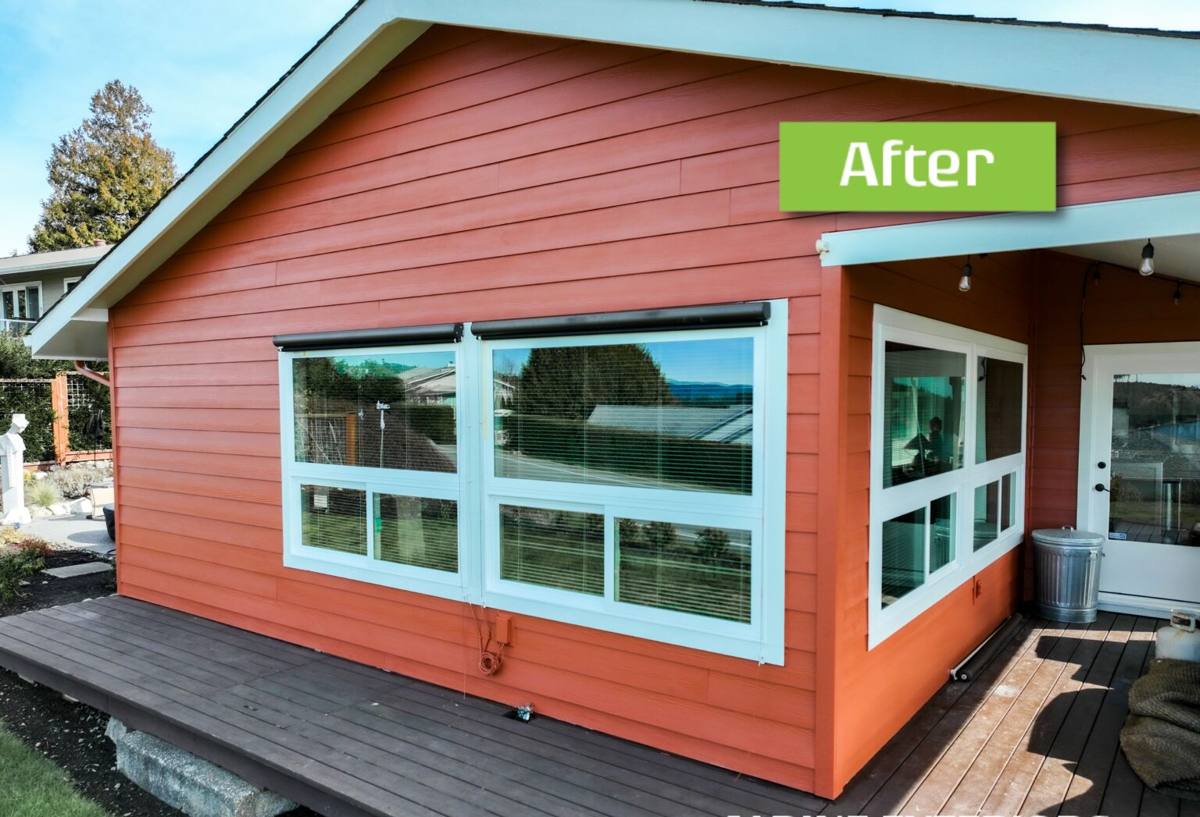
What Coastal Exposure Does to Windows Over Time
Salt Air and Hardware
Salt in the air settles on everything, including window hardware, screen frames, and any exposed metal fasteners. Over years, that accelerates corrosion on lower-grade hinges, locks, and cranks, and it can pit unprotected aluminum trim. It's a slow process, not a dramatic one — most homeowners notice it as hardware that starts sticking or a lock that gets harder to turn, years before anything looks visibly damaged.
Wind-Driven Rain and Water Intrusion
Standard rainfall lands mostly straight down and sheds off a wall easily. Wind-driven rain off the water gets pushed sideways and upward under trim, into gaps around the frame, and behind poorly lapped flashing. A window that would perform fine in a sheltered inland yard can leak within a few seasons in a more exposed Birch Point location if the flashing and sealant details weren't built for that kind of pressure.
Moss, Algae, and Trapped Moisture
Whatcom County's wet season runs long, and shaded or north-facing walls near the water stay damp for extended stretches. Moss and algae take hold on sills, trim, and anywhere water sits instead of draining. That's cosmetic at first, but trapped moisture under moss-covered trim is what eventually works its way into wood substrate and rots it from the inside, often well before the moss itself looks like a serious problem.
Signs a Birch Point Home Needs New Windows
Some of these show up gradually, which is why homeowners often live with a failing window for a year or two before addressing it. Worth checking for:
- Fogging or a permanent haze between panes of double-glazed glass — the seal has failed and can't be repaired, only replaced
- Soft or discolored wood at the sill or bottom corners of the frame
- Visible daylight or a draft around the frame when the window is closed and locked
- Paint that keeps failing in the same spot no matter how often it's touched up
- Windows that are difficult to open, close, or lock, especially after damp weather
- Moss or dark staining that returns quickly after cleaning, concentrated at the sill or lower corners
- A noticeable rise in heating costs with no other explanation
What a Correct Installation Actually Involves
The window unit itself is only part of the job. Most window failures we get called out to fix in this area trace back to installation shortcuts, not a bad product.
Flashing and Water Management
Flashing has to be layered correctly — sill pan first, then side flashing, then head flashing — so water is always directed outward and down, never trapped behind the siding. On a home exposed to wind-driven rain, this sequence matters more than the brand of window going in. We treat every opening as a system: sill pan, backer rod and sealant where appropriate, and flashing tape integrated with the home's existing water-resistive barrier, not just caulked over the surface.
Air Sealing and Insulation
The gap between the window frame and the rough opening needs to be sealed and insulated correctly — not overpacked with expanding foam, which can bow the frame, and not left with gaps that create drafts and cold spots. Done right, this step is invisible once trim goes back on, but it's a big part of why a properly installed window performs for decades and a poorly installed one doesn't.
Fastening for Wind Exposure
Homes with more open exposure toward the water see higher wind loads on their walls than sheltered inland lots. Fastening schedules and shimming need to account for that so the frame stays square and doesn't rack over time, which is what eventually causes seals to fail early and windows to become hard to operate.
Choosing the Right Window for a Birch Point Property
There's no single "best" frame material — the right choice depends on the home's exposure, budget, and how much maintenance the owner wants to take on. Here's how the common options compare for a coastal Whatcom County setting:
| Frame Material | Moisture & Salt Air Performance | Maintenance | Typical Trade-Off |
|---|---|---|---|
| Vinyl | Good — won't rot or corrode, handles moisture well | Low — occasional cleaning | Frame color/style options are more limited than wood or fiberglass |
| Fiberglass | Very good — dimensionally stable, resists moisture and salt exposure well | Low | Higher upfront cost than vinyl |
| Wood-clad (wood interior, clad exterior) | Good on the exterior-facing clad surface; interior wood needs to stay protected from any leaks | Moderate — relies on the installation staying watertight | Best appearance option for many buyers, but more installation-sensitive in a wet, salt-air climate |
| Aluminum | Weaker here — prone to corrosion and conducts cold, which shows up as condensation | Moderate to high | We steer most Birch Point clients away from bare aluminum frames for this reason |
For most homes this close to the water, we lean toward vinyl or fiberglass for their moisture and salt-air tolerance, and reserve wood-clad for owners who want that look and understand it depends on a tight, well-flashed installation to hold up long-term. That's a maintenance and moisture-behavior conversation, not a statement that any of these products is bad — it's about matching the frame to the exposure.
Our Installation Process
- On-site assessment — we look at each opening's exposure, existing flashing condition, and any sill or framing damage before quoting anything.
- Removal and inspection — old windows come out carefully so we can check the rough opening and sheathing underneath for rot or moisture damage that needs to be addressed before a new window goes in.
- Flashing and sealing — sill pan, side and head flashing, integrated with the existing water-resistive barrier.
- Setting and shimming — the unit is leveled, plumbed, and squared, with fastening adjusted for the wall's wind exposure.
- Insulation and air sealing — the gap around the frame is filled correctly, not over- or under-filled.
- Trim and finish — exterior trim is reinstalled or replaced and sealed to shed water, not trap it.
- Final walkthrough — every window is opened, closed, and locked to confirm smooth operation before we consider the job done.
Why Local Experience in Birch Point Matters
A crew that mostly works dry, sheltered inland jobs can install a window correctly by the book and still miss details that matter specifically here — like which walls take the worst of the wind-driven rain, how fast moss reestablishes on shaded trim in this pocket of Whatcom County, or how much wind load a given exposure actually sees. We work this stretch of the Blaine area regularly, so those details aren't guesswork on our end. It also means we're not learning the neighborhood's quirks on your project.
What Affects the Cost
Window installation pricing varies by project, and we'd rather give you a real number after seeing the home than a generic figure that doesn't apply. In general, cost is driven by:
- Frame material chosen (vinyl, fiberglass, or wood-clad)
- Window size and whether it's a standard or custom opening
- Condition of the existing rough opening and sill — rot repair adds cost but shouldn't be skipped
- Number of windows done at once (per-window cost typically drops on larger jobs)
- Access — second-story or hard-to-reach openings take more time
Every quote we give breaks these out so you know what you're paying for and why, rather than a single lump number.
If you're dealing with drafty, foggy, or hard-to-operate windows on a Birch Point property, we're happy to come take a look and put together a straightforward, no-pressure estimate. There's a form below to get that started.