 Blaine Siding
 Why Sumas Homes Ask for James Hardie Specifically
Sumas sits at the far edge of our Whatcom County service area, close enough to the border that homeowners here deal with a slightly different mix of weather stress than folks closer to the water in Blaine — but the underlying problem is the same. Wood-based and foam-backed siding products in this part of Washington spend most of the year damp. Rain doesn't just fall here, it lingers, soaking into siding seams and staying there under low fall and winter sun. Add a long moss and algae season that starts earlier and ends later than most homeowners expect, and you get a climate that is genuinely hard on exterior materials that aren't built for constant moisture cycling.
We install James Hardie fiber cement exclusively, and Sumas is a good example of why. Fiber cement doesn't absorb water the way wood fiber composite or wood-based products do, it doesn't provide the organic surface that moss and algae feed on the way cedar and some engineered wood products do, and it holds paint and factory finish without the swelling and cracking that drives most siding failures we see in this region. That's not a sales pitch — it's the reason we stopped installing other products years ago and why we're comfortable standing behind Hardie on every job we do out this way.
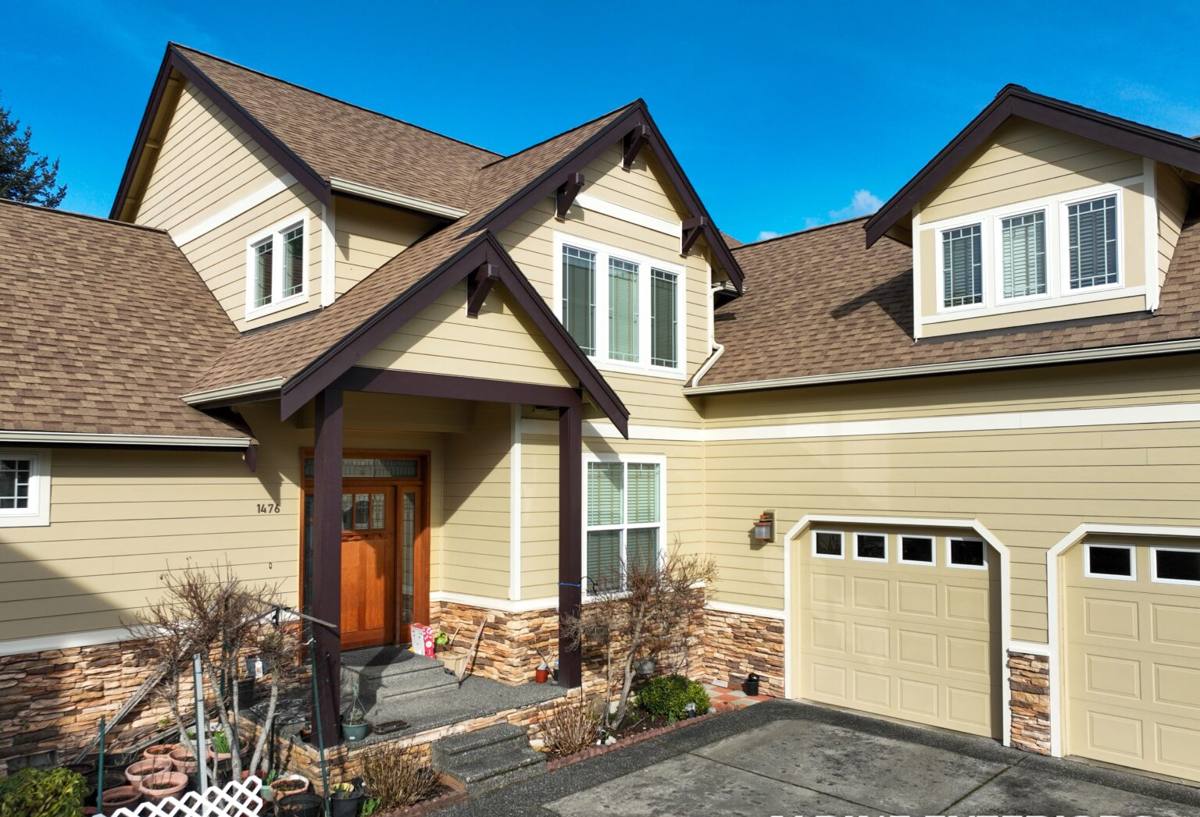
What This Climate Actually Does to Siding
Before talking about the product, it's worth being specific about what's actually happening to a house over time in this part of Whatcom County:
- Driving rain pushed by wind finds gaps at butt joints, corners, and trim intersections that look fine from the ground but aren't actually sealed.
- Extended damp periods mean siding rarely gets a full dry-out cycle between rain events, especially on north- and west-facing walls and anything shaded by trees or neighboring structures.
- Moss and algae growth takes hold fastest on porous or textured surfaces that stay damp, and once established it holds moisture against the wall even longer, compounding the problem.
- Freeze-thaw cycling, while milder here than in the mountains, still happens enough winters to stress any siding material that has already absorbed moisture.
None of this is unique to Sumas — it's a regional pattern across Whatcom County and the broader Pacific Northwest — but it's real, it's cumulative, and it's the reason siding choice matters more here than in a drier climate where a mediocre installation might get away with another decade of service life.
What a Correct James Hardie Installation Involves
James Hardie siding fails prematurely almost exclusively because of installation mistakes, not product defects. The material itself is engineered to handle this climate; the workmanship around it is what determines whether that engineering actually gets put to use. A correct install includes:
Weather barrier and flashing details
Every penetration, window, door, and horizontal transition gets flashed and integrated with the weather-resistive barrier so water is directed out and down, never trapped behind the panel. This is the single most common corner cut on rushed jobs, and it's invisible until a wall starts showing damage years later.
Correct fastening and clearances
Hardie specifies fastener spacing, type, and placement, plus minimum clearances from grade, roofing, and decks. Skipping these clearances is a common shortcut that traps moisture at the base of a wall — exactly where Sumas homes see the most sustained dampness.
Proper joint treatment
Butt joints and seams need to be treated according to Hardie's specifications, whether that's a factory-finished joint system or field-applied sealant rated for the product. Gaps here are where driving rain gets in first.
Ventilation behind the cladding
A drainage plane behind the siding lets any moisture that does get past the outer layer escape rather than sit against the sheathing. This is a detail that doesn't show in a finished photo but matters enormously over a 20- and 30-year timeline.
HZ5 vs. Standard Product Lines
James Hardie makes region-specific product lines engineered for different climate zones. For Whatcom County, including Sumas, that generally means the HZ5 line, engineered for areas with more moisture exposure and freeze-thaw cycling than the mildest climate zones see.
| Feature | HZ5 (our region) | Standard/other zone lines |
|---|---|---|
| Moisture resistance engineering | Formulated for wetter, more variable climates | Formulated for milder, drier conditions |
| Freeze-thaw performance | Rated for regional freeze-thaw cycling | Not optimized for freeze-thaw stress |
| Warranty fit | Matches manufacturer's climate-zone requirements for full warranty coverage | May not meet zone requirements if used outside intended region |
| Availability | Standard stock for our installers in this area | Not typically stocked or recommended locally |
Using the correct climate-zone product isn't optional if you want the manufacturer's warranty to actually apply. It's one of the first things we confirm on a Sumas estimate.
ColorPlus Factory Finish in a Wet, Mossy Climate
We spec ColorPlus factory-applied finish on the large majority of our jobs, and in this climate the reasoning is straightforward. Field-applied paint on fiber cement can perform well, but factory-baked finish is more consistent, resists fading and moisture intrusion at the surface better, and comes with its own finish warranty separate from the product warranty. In a climate where siding stays damp for extended stretches, a finish that sheds water cleanly rather than absorbing it at the surface makes a real difference in how the wall looks after the fifth or tenth wet season, not just the first.
It also matters for moss and algae: a smooth, consistent factory finish gives organic growth less to grip onto than a rougher field-painted or unfinished surface, which means less staining and a longer stretch between exterior washings.
Our Process for a Sumas Project
- On-site assessment. We look at existing siding condition, moisture damage at trim and penetrations, current flashing details, and anything hidden behind the current cladding that needs addressing before new siding goes on.
- Product and color selection. We walk through HZ5 profile options, ColorPlus color families, and trim coordination based on the home's style and exposure.
- Written scope and estimate. A clear breakdown of materials, labor, and what's included — flashing, house wrap or drainage plane work, trim, and cleanup — so there's no ambiguity before work starts.
- Installation to manufacturer spec. Fastening, clearances, flashing, and joint treatment done to Hardie's published installation requirements, not shortcuts that happen to look fine on day one.
- Final walkthrough. We go over the finished job with the homeowner, confirm details, and make sure warranty registration paperwork is handled.
Cost Factors on a Sumas James Hardie Job
Every house is different, but the variables that actually move the price on a Sumas project tend to be the same handful of things:
| Factor | Why it affects cost |
|---|---|
| Existing siding removal and disposal | Tear-off, hidden water damage repair, and hauling add labor beyond the new install itself |
| Home size and wall complexity | More corners, gables, and trim details mean more cutting, flashing, and labor time |
| Panel profile and finish choice | Lap width, shingle-style panels, and ColorPlus color all carry different material costs |
| Trim and accessory scope | Window and door trim, fascia, and soffit work done alongside siding changes the total project size |
| Access and site conditions | Steep grades, tight lot lines, or difficult equipment access add time |
We don't quote a number without seeing the house — anyone who does is guessing. What we can say honestly is that fiber cement generally costs more upfront than vinyl and comparable or less than high-end wood siding over the life of the product, once you factor in the maintenance the alternatives require in this climate.
Maintenance Checklist for Sumas Homeowners
Correctly installed James Hardie siding is low-maintenance, not no-maintenance. A short annual routine keeps it performing the way it's designed to:
- Rinse siding annually to keep moss, algae, and organic buildup from getting a foothold, especially on shaded or north-facing walls
- Check caulking at trim, window, and door joints yearly and re-caulk if it's cracked or pulling away
- Keep gutters clear so overflow doesn't run down the wall face repeatedly
- Trim back vegetation and tree limbs that keep sections of the wall shaded and damp
- Look at the base of the siding near grade for signs of soil or mulch buildup that's closed up the manufacturer's required clearance
- Address any visible caulking gaps or impact damage promptly rather than letting moisture get behind the panel over a wet season
Why Hiring a Crew That Already Works This Area Matters
Sumas isn't a huge market on its own, and that's exactly why local installation experience matters — a crew that regularly works Whatcom County has already seen how this specific climate treats siding over years, not just how a product looks on install day. That shows up in small decisions: where extra flashing attention goes, which orientations need the most joint care, and how aggressively to spec drainage details given how long walls here stay damp between dry stretches. It also means straightforward warranty support if something needs attention down the road, from a company that's still local and still doing this work in the area.
If you're weighing siding options for a home in Sumas, we're glad to walk the exterior with you, point out anything specific to your house, and put together a clear, no-pressure estimate for a correctly installed James Hardie system built for this climate.