 Blaine Siding
 Why Window Replacement Looks Different in Bellingham
Bellingham sits close enough to the water and to Whatcom County's marine weather pattern that windows here take a different kind of beating than windows in a dry inland climate. It's not one big storm that causes trouble — it's the daily grind of salt-tinged air off the bay, long stretches of driving rain that comes in sideways off the water, and a moss and mildew season that can run most of the year on north-facing walls. Old windows don't usually fail with a dramatic leak. They fail slowly: seals go soft, wood sashes swell and stick, frames stay damp long enough for rot to set in behind the trim, and single-pane or early dual-pane glass fogs up because the seal between the panes has already given out.
When we replace windows on a Bellingham home, we're not just swapping glass. We're re-solving the water management problem at that opening — flashing, sealant, drainage, and the window unit itself all have to work together, because in this climate any one weak link eventually shows up as a stain on the drywall.
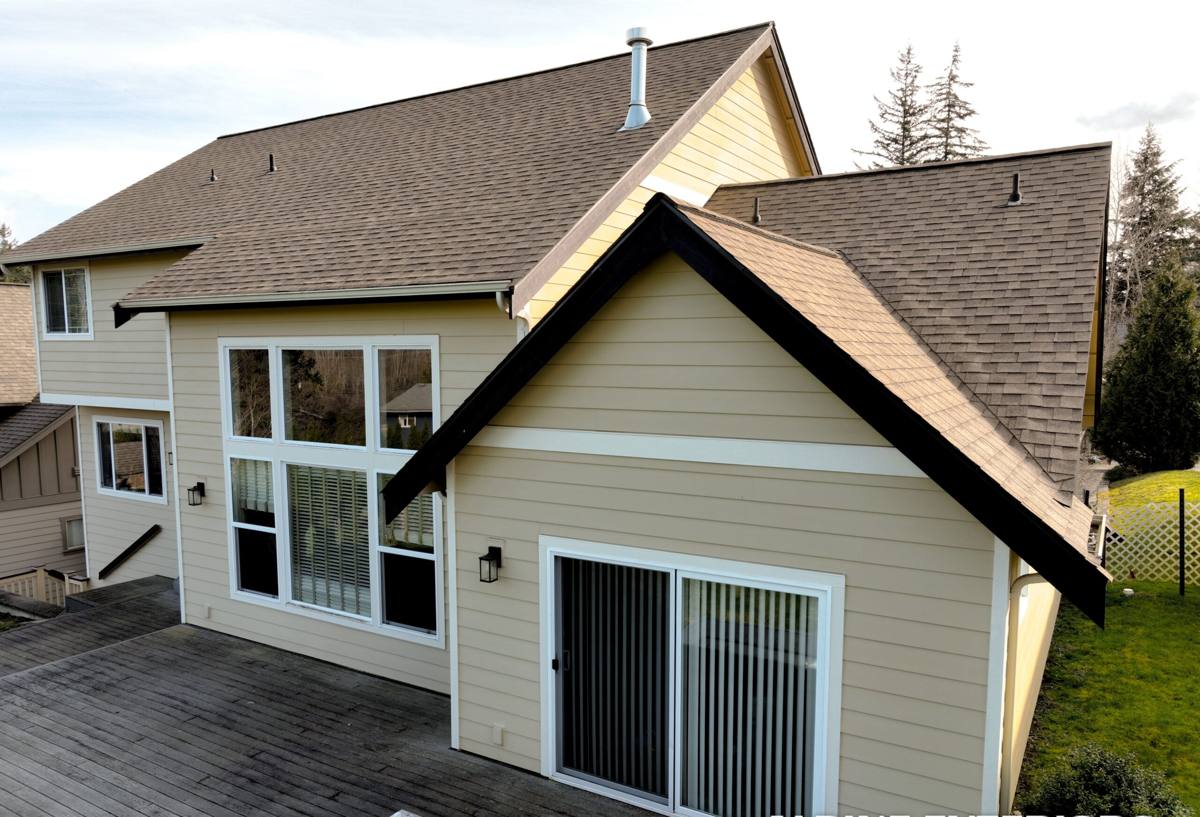
What Whatcom County's Climate Actually Does to Windows
Salt Air and Metal Fatigue
Homes within a few miles of the water deal with airborne salt that accelerates corrosion on window hardware — hinges, locks, balance mechanisms, and uncoated aluminum components. Cheaper hardware finishes wear through faster here than they would twenty miles inland. It's a real factor when we're comparing window lines for a coastal Bellingham property.
Driving Rain and Wind-Driven Water
Wind off the water doesn't just fall as rain — it pushes rain sideways and up under trim, sills, and poorly lapped flashing. A window that would be fine in a calm climate can leak here if the flashing isn't lapped correctly or if the sill pan doesn't shed water forward and down. This is the single most common cause of hidden rot we find when we pull old trim off a Bellingham window.
Moss, Mildew, and Prolonged Dampness
Shaded and north-facing walls in this area can stay damp for days after a storm, which is exactly the environment moss and mildew need. On wood-frame windows, that moisture cycling — wet, dry, wet again — is what breaks down paint and eventually the wood itself. Vinyl and fiberglass frames don't rot, but grime and mildew still build up in corners and tracks if there's no airflow or sun to dry things out.
Signs a Bellingham Home Needs Window Replacement
- Fogging or a permanent haze between panes of dual-pane glass — the seal has failed and can't be repaired
- Soft or spongy wood at the sill, corners, or exterior trim when you press on it
- Windows that are hard to open, close, or lock, especially after rain
- Visible daylight or a draft you can feel around the frame on a windy day
- Paint that keeps failing on the same window every year or two, even after repainting
- A musty smell near a window that doesn't go away with cleaning
- Noticeably higher heating bills compared to similar-sized homes nearby
What a Correct Window Replacement Job Involves Here
Full-Frame vs. Insert Replacement
An insert (or "pocket") replacement drops a new window into the existing frame and is faster and less expensive, but it only makes sense if the existing frame and sill are still solid and dry. Given how often we find moisture damage behind Bellingham window trim, we don't recommend insert replacement sight unseen — we check the condition of the framing first. If there's any rot or soft wood, a full-frame replacement is the honest answer, because an insert installed over a compromised frame just traps the problem behind new trim.
Flashing and Water Management
This is where most of our attention goes on the exterior side. Correct flashing means a sloped sill pan that drains water outward instead of pooling it, house wrap or building paper lapped correctly over the flashing (not under it, which is a common mistake), and sealant used as a backup, not the primary defense. Sealant alone will not hold up long-term against Whatcom County's rain load — it has to be paired with proper flashing behind it.
Interior Finish and Air Sealing
Inside, we air-seal the gap between the new frame and the rough opening with low-expansion foam or backer rod and sealant, then finish trim to match the rest of the room. A window that's watertight outside but leaks air around the frame inside still costs you on heating bills and can let condensation form inside the wall cavity.
Choosing Window Materials and Glass for This Climate
| Material | How It Holds Up Locally | Trade-Offs |
|---|---|---|
| Vinyl | Good moisture resistance, no rot risk, low maintenance | Frame can flex on very large openings; color choices are more limited |
| Fiberglass | Very stable in temperature and moisture swings, holds paint well | Higher upfront cost than vinyl |
| Wood (with exterior cladding) | Warm appearance, works well if the exterior face is fully clad and protected | Any exposed exterior wood is a maintenance commitment in this rain |
| Bare wood, uncladded | Requires the most upkeep in a wet marine climate | We recommend cladding or a different material for exposed elevations |
| Aluminum | Strong and slim sightlines | Conducts cold and can corrode faster in salt air without a marine-grade finish |
On glass, we typically point Bellingham homeowners toward dual-pane units with a low-E coating and argon fill as the practical baseline — the energy performance pays for itself over years of heating a home through a long, wet, mild-but-chilly winter. For homes closer to the water, we also flag hardware finish quality: a window can have great glass and still develop a stuck lock or corroded hinge within a few years if the hardware wasn't built for salt exposure.
Our Process for a Bellingham Window Replacement
- On-site assessment — we inspect existing frames, sills, and trim from both inside and outside, checking for hidden moisture with a moisture meter where needed
- Honest scope — we tell you plainly whether each opening needs an insert replacement or a full-frame replacement, and why
- Material selection — we walk through frame material, glass package, and hardware options suited to the home's exposure (waterfront-facing walls get different recommendations than sheltered ones)
- Removal and inspection — once the old window is out, we check the rough opening and framing before anything new goes in; any rot gets cut out and replaced, not covered over
- Flashing and installation — sill pan, flashing, window unit, shimming and leveling, then air sealing
- Exterior and interior finish — trim, caulking, and paint or stain to match
- Final walkthrough — every window opens, closes, and locks smoothly before we call the job done
Cost Factors Homeowners Should Expect to Discuss
| Factor | Why It Affects Price |
|---|---|
| Insert vs. full-frame | Full-frame requires more labor and trim/siding work around the opening |
| Frame material | Vinyl, fiberglass, and clad-wood carry different material costs |
| Hidden rot or water damage | Discovered damage adds framing repair before the new window can go in |
| Number and size of openings | Larger or custom-sized windows cost more than standard sizes |
| Access and height | Second-story or hard-to-reach windows take more time and equipment |
Rather than quote a single number that won't match your actual home, we prefer to look at the specific windows in question and give you a real range based on what we find — including telling you upfront if we think a repair, not a full replacement, is the more honest answer for a particular window.
Why Local Experience with Bellingham Homes Matters
A crew that only occasionally works this area can miss things that are obvious to someone who deals with Whatcom County's weather pattern every week — where wind-driven rain tends to concentrate on a given elevation, how moss buildup signals a drainage problem rather than just a cleaning issue, or why a window that looks fine from the curb has been quietly rotting the framing behind the trim for two winters. We work on homes throughout the Blaine and Bellingham area, so decisions about flashing details, material choice, and hardware aren't guesswork — they're based on what actually holds up here versus what looks fine on a spec sheet but struggles against real coastal weather.
We also stand behind the work with clear warranty terms on both materials and installation, explained plainly before you sign anything — no fine print you have to hunt for later.
Maintaining New Windows in a Wet Climate
- Clean weep holes and tracks a couple of times a year so water can actually drain out
- Rinse salt residue off frames and glass periodically if the home is close to the water
- Check exterior caulking annually and touch up any cracked or separated beads before winter rains start
- Keep gutters and downspouts clear so roof runoff isn't dumping extra water onto window heads
- Trim back vegetation that keeps a wall shaded and damp longer than it needs to be
If you're noticing drafts, fogged glass, or sticking sashes on your Bellingham home, we're happy to take a look and give you a straight, no-pressure assessment of what's actually going on and what it would take to fix it right. Fill out the form below for a free estimate.