 Blaine Siding
 Bellingham's Climate Puts Real Demands on Siding
Homes in the Bellingham area sit close to the Salish Sea, tucked under heavy tree cover, and squarely in the path of Pacific storm systems that roll through Whatcom County most of the year. That combination is harder on exterior siding than most homeowners realize. Salt-laden air corrodes unprotected fasteners and trim. Wind-driven rain doesn't just fall straight down — it gets pushed sideways into seams, laps, and trim joints that a calmer climate would never test. And because so many Bellingham lots have shade, moisture, and mature tree canopy, moss and algae growth isn't a seasonal nuisance here — it's close to a year-round condition on north-facing walls and anywhere sun doesn't reach.
Siding installation done for a drier, sunnier market simply doesn't hold up the same way here. A siding job that's "installed correctly" in Bellingham has to account for constant moisture exposure, not occasional rain. That's the lens we use for every Bellingham-area installation, and it's why the details below matter more here than they would in most other parts of the country.
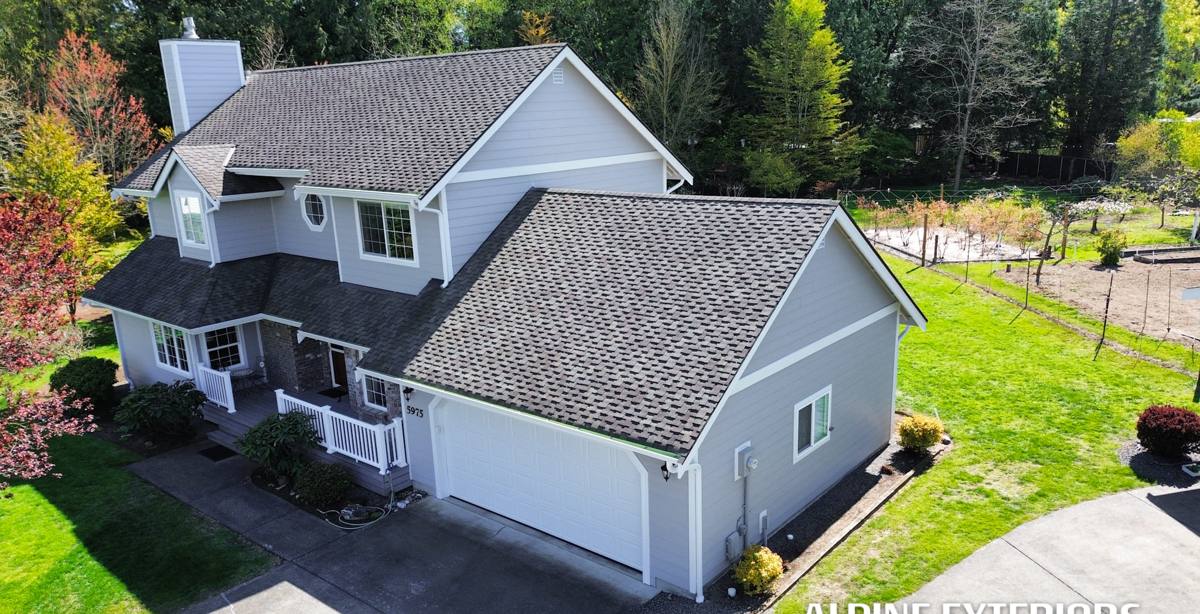
What Bellingham Homes Actually Need From a Siding Installation
Moisture Management, Not Just Weather Resistance
Any siding sheds rain when it's new. The real question is what happens over years of nearly constant dampness: does water that gets behind the cladding have a way out, or does it sit against the sheathing? In a climate like Bellingham's, the water-resistive barrier, flashing details, and drainage path behind the siding matter as much as the siding material itself.
Resistance to Wind-Driven Rain
Storms coming off the Salish Sea frequently drive rain at an angle rather than straight down. That means lap joints, butt joints, and trim intersections need to be detailed to shed water even when it's hitting them sideways — not just draining off a flat, vertical surface.
Resistance to Moss, Algae, and Organic Growth
Shaded, moisture-heavy sites in and around Bellingham grow moss and algae on almost any surface that stays damp long enough, including siding. Materials with organic wood content give that growth something to feed on over time. Materials without organic fiber don't.
Corrosion Resistance for Salt Air
Proximity to the Salish Sea means airborne salt is a real factor, even a few miles inland. Fasteners, flashing, and trim hardware need to be specified for that exposure, not just whatever's standard elsewhere.
Why We Install Only James Hardie Fiber Cement Here
We made a deliberate decision to install James Hardie fiber cement siding exclusively — not vinyl, not LP SmartSide, not primed wood products. That's not a brand preference; it's a response to what this specific climate does to a house over 15, 20, or 30 years.
Non-Combustible, Dimensionally Stable Material
Fiber cement is cement-based, not wood-based, so it doesn't feed rot or provide a food source for moss and algae the way wood-fiber products can. It also doesn't expand and contract with moisture the way wood-based sidings do, which means caulked joints and painted surfaces stay intact longer under constant damp-dry cycling.
Climate-Engineered HZ Product Line
James Hardie engineers its siding in different formulations for different climate zones. The HZ5 line is built specifically for regions with prolonged moisture exposure and freeze-thaw cycling — which describes Whatcom County well. We install the HZ product matched to this region, not a generic formulation.
Factory-Applied ColorPlus Finish
Rather than relying on field-applied paint, Hardie's ColorPlus finish is baked on at the factory under controlled conditions, with a finish designed to resist fading and moisture intrusion at the surface. In a climate where field-painted surfaces are fighting rain for most of the year, a factory-cured finish is a meaningful advantage.
A Warranty Backed by the Manufacturer
James Hardie backs its products with a transferable, non-prorated limited warranty on the siding itself, plus a separate finish warranty on ColorPlus products. That's a different structure than what most vinyl or wood-based alternatives offer, and it matters more in a climate that stresses siding harder than average.
How Fiber Cement Compares for Bellingham's Climate
| Factor | James Hardie Fiber Cement | Vinyl Siding | Wood / Engineered Wood |
|---|---|---|---|
| Moisture behavior | Dimensionally stable, non-organic, engineered for wet climates (HZ5) | Sheds water but can warp/buckle; seams can allow water intrusion | Absorbs moisture; prone to swelling and rot without perfect upkeep |
| Moss / algae resistance | No organic wood fiber to feed growth | Growth sits on surface, can trap moisture at seams | Organic material is a food source for moss and fungal growth |
| Wind-driven rain performance | Rigid, holds tight lap lines under wind loading | Can flex and gap under strong wind loads | Depends heavily on paint/seal maintenance |
| Salt air / corrosion | Material itself doesn't corrode; use corrosion-resistant fasteners | Material doesn't corrode; hardware still a factor | Fasteners and fittings need ongoing corrosion protection |
| Finish longevity | Factory-applied ColorPlus finish, long fade/moisture warranty | Color is through-body but can fade/chalk over time | Requires repainting or resealing on a recurring cycle |
| Fire performance | Non-combustible material | Combustible plastic material | Combustible material |
None of this means the alternatives are without merit elsewhere — vinyl and wood products have their place. But for the specific combination of salt air, driving rain, and long moss seasons that Bellingham-area homes deal with, fiber cement is the product we're willing to put our name behind.
What a Correct Installation Actually Involves
The siding material is only part of the story. Most siding failures we see in this climate trace back to installation details, not the product itself. A correct Hardie installation in the Bellingham area includes:
Inspection and Sheathing Repair
Before new siding goes on, the existing wall assembly needs to be checked for hidden moisture damage — soft sheathing, rotted framing, or failed old flashing. Installing new siding over a compromised wall just hides the problem instead of solving it.
Water-Resistive Barrier and Flashing
A properly lapped water-resistive barrier, with correctly integrated flashing at every window, door, and penetration, is what actually keeps water out of the wall assembly. This is the step that matters most in a climate with year-round rain exposure, and it's also the easiest step to shortcut if a crew is rushing.
Drainage Behind the Cladding
Giving incidental moisture a path to drain and dry out — rather than trapping it directly against the sheathing — is especially important on a site with as much sustained dampness as a typical Whatcom County lot sees.
Manufacturer-Spec Fastening and Clearances
Fastener type, spacing, and penetration depth all need to follow Hardie's published installation instructions — and in a salt-air environment, that means corrosion-resistant fasteners, not whatever's cheapest. Proper clearance from grade, roof lines, and decks also keeps splashback and standing moisture away from the siding's bottom edge.
Trim, Caulking, and Joint Detailing
Butt joints, corners, and trim intersections are where wind-driven rain finds its way in if they're not detailed correctly. Hardie's installation guidance is specific about where caulking is required and where it isn't — following that spec instead of over-caulking or under-caulking is part of doing the job right.
Our Installation Process
- Assessment — We inspect existing siding, trim, and where accessible, the sheathing beneath it, and walk the property with you to talk through what we find.
- Removal and prep — Old siding comes off, damaged sheathing or framing gets repaired, and the wall is prepped for a proper barrier system.
- Water-resistive barrier and flashing — We install and integrate the barrier and flashing at every opening and penetration before any siding goes up.
- Hardie installation to spec — Panels or planks go on per James Hardie's published fastening, clearance, and joint requirements for this climate zone.
- Trim and detail work — Corners, trim boards, and joints are finished according to manufacturer guidance, not shortcuts.
- Final walkthrough — We go over the completed work with you before we consider the job done.
Signs Your Current Siding Is Already Struggling
A lot of Bellingham-area siding calls start with a homeowner noticing one of these:
- Persistent moss or algae streaking that comes back shortly after cleaning
- Soft or spongy spots when you press on siding, especially near the bottom courses
- Visible warping, buckling, or gapping at seams and corners
- Peeling or bubbling paint that keeps returning after repainting
- Water stains or discoloration on interior walls near exterior corners
- Rusted or corroded fasteners and trim hardware showing through the finish
Any of these are worth a professional look before they turn into sheathing or framing repairs, which cost considerably more than siding alone.
Why It Matters to Hire a Crew That Already Works This Area
Installation quality depends on judgment calls that generic training doesn't cover — how much drainage detail a north-facing, tree-shaded wall in Bellingham actually needs versus a south-facing wall with more sun exposure, which fastener spec makes sense this close to the water, and how to sequence a job around a rainy stretch without compromising the barrier system. A crew that already works Whatcom County homes has seen how this specific climate ages siding and installations over time, and builds accordingly instead of guessing.
What to Look for When Vetting a Siding Contractor
- Do they install to the manufacturer's published specifications, not a generalized approach?
- Will they inspect and repair sheathing before installing new siding, not just cover it up?
- Do they detail flashing and drainage for a wet climate, not a dry one?
- Can they explain why they use the products they use, in plain language?
- Do they stand behind the installation with a clear warranty, separate from the manufacturer's material warranty?
If your Bellingham-area home is due for new siding, or you're seeing early signs of moisture or moss damage, we're glad to take a look and walk you through what we'd recommend — no pressure, no obligation. Use the form below to request a free estimate.