 Blaine Siding
 Building Decks for Peace Arch's Marine Climate
Peace Arch sits right up against the water and the border, which means homes here take a different kind of weather beating than decks built ten miles inland. Salt-laden air moves in off Semiahmoo Bay and Drayton Harbor, driving rain comes in sideways during winter storms, and the shoulder seasons stay damp long enough for moss and algae to take hold on anything that doesn't shed water well. A deck built to a generic spec sheet will show its age fast out here — loose fasteners, soft ledger boards, slick green boards by February. A deck built for this specific stretch of Whatcom County holds up because every material and connection decision accounts for what the air and rain actually do to it.
This page focuses on one thing: what it takes to build a deck that lasts in Peace Arch, not decks in general. If you're comparing options for a new deck or wondering why your current one is failing early, the details below are the ones that actually matter here.
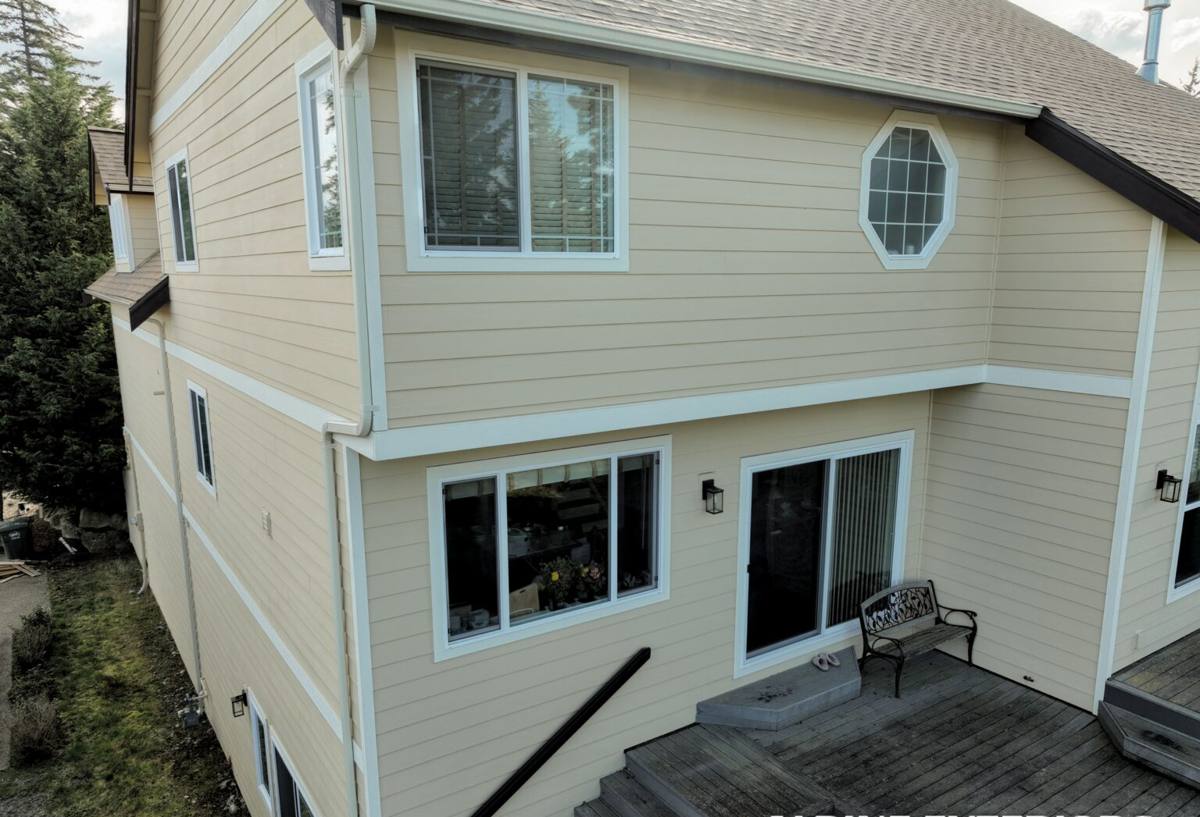
What Salt Air Does to a Deck
Salt air doesn't just affect waterfront properties — moist, salt-carrying air drifts well inland on windy days, and Peace Arch's proximity to the bay means most homes in the area get some exposure year-round. The damage shows up first in metal, not wood:
- Fasteners — standard coated deck screws can start showing rust streaks and losing holding strength within a few seasons in a salt-exposed setting.
- Joist hangers and structural hardware — corrosion here is more serious than a cosmetic issue, since these connectors carry structural load.
- Railing hardware and post bases — exposed metal at railings takes the most direct hit since it's rarely shielded by decking above it.
The fix isn't complicated, but it does cost more up front: stainless steel or high-grade coated fasteners and connectors rated for coastal or high-corrosion exposure, used everywhere, not just on the visible top surface. Cutting corners here is the single most common reason we see decks in this area failing hardware long before the wood or decking itself is worn out.
Driving Rain and the Ledger Connection
Most attached deck failures don't start in the decking boards — they start where the deck meets the house. The ledger board (the framing member bolted to the house that carries much of the deck's weight) is also the single most common point of water intrusion, and driving rain off the water makes that worse in Peace Arch than in more sheltered parts of the county.
A correct ledger installation includes flashing that directs water away from the house wall, not just a bead of caulk over the top. That means:
- Proper metal or membrane flashing integrated with the house's existing weather-resistive barrier, not just applied over the siding.
- A gap or drainage plane behind the ledger board so water that does get behind it can escape instead of pooling against the wall sheathing.
- Lag bolts or through-bolts sized and spaced for the actual load, not just whatever was on hand — this is a structural connection, not a decorative one.
We've opened up enough old ledger connections in this area to know that a poorly flashed ledger is a slow-motion problem — it can take years to show up as rot in the rim joist or sheathing, by which point the repair is much bigger than the deck itself.
Sloped Framing for Runoff
Beyond the ledger, the whole deck frame should have a slight slope away from the house — usually built into the joist layout rather than relying on the decking surface alone. In a climate with as much driving rain as Blaine sees, water that sits instead of running off is what starts moss growth and eventually rot in the framing underneath.
Moss Season and Choosing the Right Decking Material
Whatcom County's wet season runs long, and a deck surface that holds moisture — through tight board spacing, poor airflow underneath, or a material that absorbs water — will grow moss well before summer. Beyond looking bad, mossy decking is genuinely slippery and a fall hazard on stairs and landings.
Material choice matters more here than in a drier climate. Here's how the common options actually perform under Peace Arch conditions:
| Material | Moss/Moisture Resistance | Maintenance Needed | Typical Lifespan |
|---|---|---|---|
| Pressure-treated wood | Fair — absorbs moisture, needs gaps and airflow to shed it | Annual cleaning and re-sealing recommended | 10–15 years with upkeep |
| Cedar | Good natural resistance, but still needs airflow underneath | Periodic cleaning and finish renewal | 15–20 years with upkeep |
| Capped composite | Very good — sheds water, resists moss better than wood | Occasional washing, no sealing or staining | 25–30+ years |
| PVC decking | Excellent — non-porous, sheds water fully | Occasional washing only | 25–30+ years |
Wood generally costs less to install than composite or PVC, but it asks for more of your time and money over the years to keep it from becoming a moss farm. Composite and PVC cost more up front but shed water and resist moss far better with much less upkeep — which matters in a spot where the wet season doesn't leave much of a window to stay on top of maintenance. We'll walk through the honest trade-offs for your specific deck rather than push one material — the right call depends on your budget, how much upkeep you want to do, and how exposed the deck is to wind-driven rain and shade.
Board Spacing and Airflow
Whatever material you choose, proper gapping between boards and adequate clearance underneath the deck are what actually let it dry out between storms. A deck built too low to the ground or without enough gap spacing will stay damp longer no matter what the boards are made of, and that's where moss gets a foothold regardless of material grade.
Footings, Framing, and Local Ground Conditions
Footings need to be dug to the frost depth required by local code, set on solid, well-draining ground, and sized for the actual load of the deck — including any hot tub, built-in seating, or roof structure you're planning. In a wet climate like this one, we also pay close attention to drainage around footings so water doesn't pool and repeatedly freeze and thaw against the concrete, which over years can work a footing loose.
Framing lumber should be rated for ground contact where it's close to grade, and any cut ends or drilled holes need to be treated in the field — a factory-treated board that gets cut on site has exposed, untreated wood right at the cut unless it's sealed afterward. It's a small step that's easy to skip and one of the first things that rots when skipped.
Permitting in Blaine and Whatcom County
Most attached decks above a certain height or size require a building permit, and the exact thresholds and setback rules depend on your specific jurisdiction — the City of Blaine and unincorporated Whatcom County don't always apply identical rules, and Peace Arch's location near park land and the border crossing can bring additional considerations into a project depending on the exact lot. We check the specifics for your property before we design anything, rather than assuming a standard set of rules applies everywhere in the area.
Skipping a required permit isn't just a legal risk — it can also cause problems later when you sell the house, since unpermitted structural work often has to be disclosed or brought up to code. We handle the permit process as part of the job rather than leaving it for the homeowner to sort out.
How Our Process Works
- Site visit — we look at sun and wind exposure, existing drainage, soil conditions, and how the deck will tie into the house before recommending anything.
- Design and material selection — we walk through the honest trade-offs between wood, composite, and PVC for your specific site and budget.
- Permitting — we handle the application and coordinate any required inspections with the local jurisdiction.
- Framing and ledger work — built and flashed to shed water away from the house, with corrosion-resistant hardware throughout.
- Decking and railing installation — proper spacing and fastening for airflow and long-term stability.
- Final walkthrough — we go over care and maintenance specific to the material you chose before we consider the job finished.
Keeping a Peace Arch Deck in Good Shape
Even a well-built deck needs some seasonal attention in this climate. A short annual routine goes a long way toward avoiding the early failures we see most often out here:
- Sweep debris out from between boards before fall rains start, so leaves and needles don't trap moisture against the surface.
- Rinse off surface moss or algae as soon as it appears rather than waiting until it's established — it's much easier to remove early.
- Check railing posts and stair connections for movement once a year; loose hardware is often the first sign of corrosion underneath.
- Keep gutters and downspouts near the deck clear so roof runoff isn't dumping extra water onto or under the deck.
- Reseal or re-stain wood decking on the manufacturer's recommended schedule — don't wait until it's visibly graying.
- Look underneath the deck once a year for standing water, sagging framing, or rot near the ledger board.
Why a Crew That Already Works Peace Arch Matters
A contractor who builds decks all over the region in mixed conditions isn't the same as one who already knows how Peace Arch's specific mix of salt exposure, wind direction, and border-area lot conditions behaves. We know which corner of a lot tends to catch the worst of the driving rain, which permit questions come up for this specific stretch of Blaine, and which hardware actually holds up here versus what looks fine on paper. That local track record is what keeps a deck's ledger, footings, and hardware from becoming a callback in three years instead of a project we stand behind for decades.
If you're planning a new deck in Peace Arch or want an honest look at why an existing one is struggling, we're happy to come take a look. Fill out the form below for a free, no-pressure estimate — we'll walk the site with you and give you a straight answer on what your deck actually needs.