 Blaine Siding
 Composite Decking Built for California Creek's Marine Climate
California Creek sits close enough to the water that homes here deal with a different set of conditions than decks built further inland in Whatcom County. Salt air moves through year-round, rain comes in sideways more often than not, and the moss season here runs long — sometimes most of the year in shaded yards. A deck built without those three things in mind will show it within a few seasons: soft spots, green film underfoot, corroded hardware, boards that cup or fade unevenly. Composite decking, installed correctly for this specific location, holds up to all of it far better than dimensional lumber — but composite is not a single product, and not every installation approach is suited to a coastal Blaine, WA lot.
This page covers what composite decking actually needs to survive in California Creek, what a correct installation looks like, and how our process works for homeowners in this part of Whatcom County.
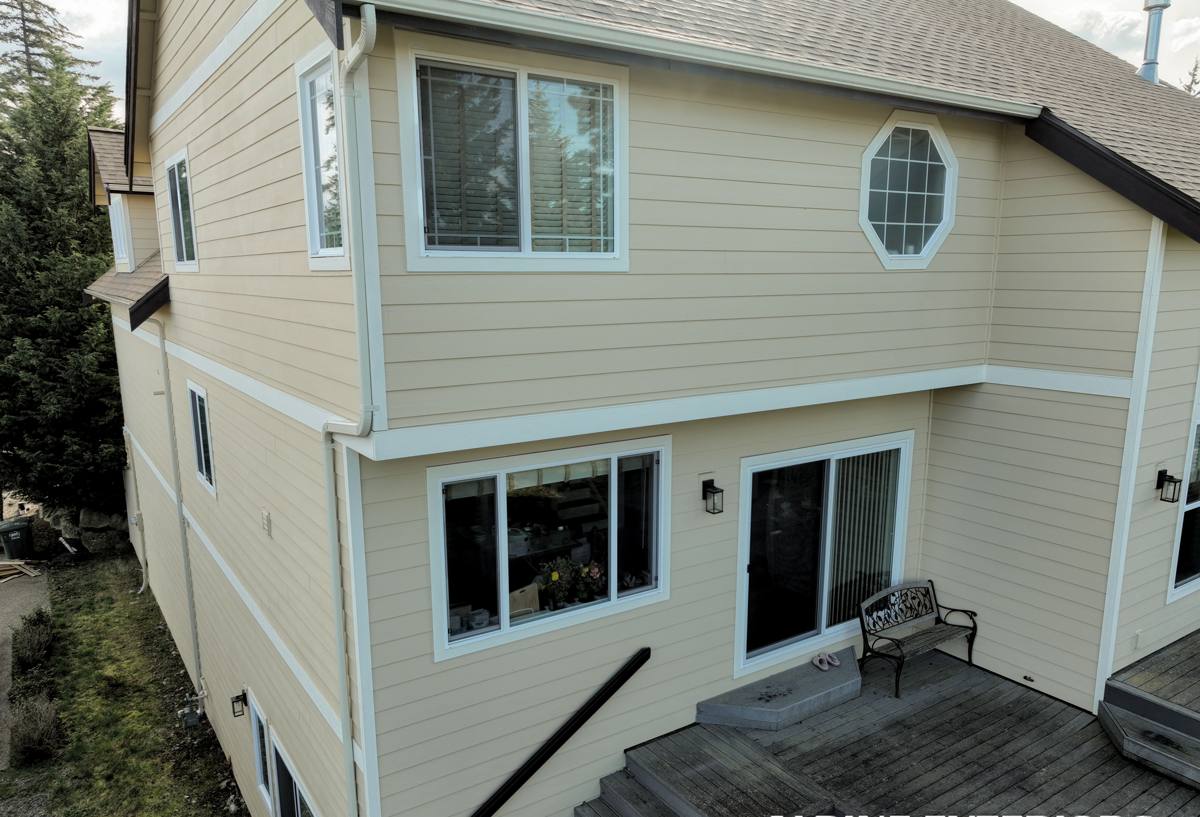
What This Stretch of Whatcom County Does to a Deck
Salt Air and Hardware
Airborne salt doesn't just affect siding and window frames — it works on every exposed metal fastener, bracket, and ledger connection on a deck. Standard galvanized hardware can start showing surface corrosion within a few years this close to the water. Anything below or inside the decking, including joist hangers, structural screws, and ledger bolts, needs to be rated for coastal exposure, not just treated lumber compatibility.
Driving Rain and Standing Water
Storms here tend to come in at an angle, which pushes water into gaps and seams that a calmer climate would leave dry. Decks that don't shed water cleanly — flat boards with poor slope, tight board spacing, blocked drainage at the ledger — end up holding moisture against the structure long after the rain stops. That trapped moisture is what actually causes rot and hardware failure, not the rain itself.
A Moss Season That Doesn't Really End
In shaded or north-facing yards around California Creek, moss and algae can establish themselves nearly year-round, not just in the wet months. On wood decking that means regular scrubbing and re-staining to keep the surface from turning into a slip hazard. On composite, the risk shifts to board texture and drainage — some surface profiles hold moisture and organic debris in the grain pattern more than others, which matters when you're choosing a product for a shaded lot.
Why Composite Makes Sense for This Location
Composite decking doesn't rot, doesn't need annual sanding and staining, and resists the kind of moisture absorption that lets moss and algae take hold on wood. For a property dealing with salt air and long wet stretches, that's a real maintenance advantage over cedar or pressure-treated fir. But composite is not maintenance-free, and it is not immune to bad installation. A composite deck built on an undersized or poorly ventilated substructure, or fastened with the wrong hardware, will develop its own problems — just more slowly than wood does. The material buys you time and reduces upkeep; it doesn't replace correct building practice.
Composite Isn't One Product — What Matters Here
Composite boards vary by construction, and the differences matter more in a marine climate than they do inland. The table below compares the main decking categories against the conditions California Creek homes actually deal with.
| Material | Moisture / Rot Resistance | Moss & Algae Resistance | Maintenance | Typical Lifespan Here |
|---|---|---|---|---|
| Pressure-treated wood | Moderate — absorbs water, needs sealing | Low — grain holds moisture and organics | Annual cleaning, periodic staining/sealing | 10-15 years with upkeep |
| Capless / traditional composite | Good, but exposed core can wick moisture at cut ends | Moderate — smoother surface than wood, still needs cleaning | Occasional washing, no staining | 15-25 years |
| Capped composite / PVC | Very good — sealed shell resists water absorption | Good — least likely to hold organic growth long-term | Occasional washing | 25+ years |
For a shaded, damp lot near the water, the extra cost of a fully capped board is usually worth it. On sunnier, more exposed sections of a property, a capless composite can be a reasonable way to control cost without giving up much durability.
What a Correct Installation Involves
Substructure and Drainage First
The decking itself is the least important part of a deck's long-term performance. Joist spacing, beam sizing, and slope away from the house matter more — composite boards are heavier than wood, and some products require tighter joist spacing than a standard framing plan allows. We check, and when needed correct, the substructure before a single composite board goes down.
Fasteners and Flashing Rated for the Coast
Ledger flashing, joist hangers, and structural screws all need to be corrosion-rated for coastal salt exposure, not just standard exterior-grade. This is one of the most common shortcuts on lower-bid deck jobs, and it's the one that causes structural problems years down the road, well after the composite decking on top still looks fine.
Ventilation and Ground Clearance
Low decks without adequate airflow underneath trap moisture against the framing regardless of what's on top. Around California Creek, where shaded yards stay damp longer, ground clearance and cross-ventilation under the deck are part of what keeps the structure — not just the boards — from failing early.
A correct composite deck build in this area should include:
- Structural review of existing framing for replacement decks, or new framing sized for composite board weight and local load requirements
- Coastal-rated fasteners, hangers, and ledger flashing throughout
- Proper slope and gapping for water drainage across the deck surface
- Adequate ground clearance and under-deck ventilation
- Board layout and fastening per the manufacturer's spec, to keep any product warranty valid
- Edge and picture-frame trim detailing that seals cut ends from moisture intrusion
Our Process for California Creek Decks
- Site assessment — we look at sun and shade exposure, drainage patterns, existing structure condition, and how close the deck sits to salt air and prevailing wind and rain direction.
- Substructure evaluation — for replacement projects, we inspect ledger attachment, framing, and footings before recommending a tear-off versus a rebuild.
- Product selection — we walk through capped versus capless options, board profiles, and color choices based on how much sun and moss exposure the specific area of the deck will see.
- Permitting and scheduling — we handle the paperwork and plan the build around Whatcom County's weather windows rather than fighting through the wettest stretches of the year.
- Installation — framing correction if needed, coastal-rated hardware throughout, and manufacturer-spec fastening.
- Final walkthrough — we go over drainage, care basics, and warranty registration before we consider the job done.
Cost Factors for a Composite Deck in California Creek
Composite decking costs vary a lot based on size, structure condition, and board tier — anyone quoting a firm number without seeing the site is guessing. In general, fully installed composite deck projects in this area run somewhere in the broad range of $35-$60 per square foot, with capped premium boards, railing systems, and structural rebuilds pushing toward the higher end. The factors below move that number more than anything else.
| Factor | Why It Matters Here |
|---|---|
| Existing structure condition | Salt-air corrosion or rot on an older deck's framing often means rebuilding the substructure, not just replacing boards |
| Board tier (capless vs. capped/PVC) | Capped boards cost more up front but need less long-term attention in a wet, mossy climate |
| Site exposure and shade | Shaded, damp sections may call for a different board profile or additional drainage detailing |
| Railing and fastening system | Hidden-fastener systems and coastal-rated railing hardware add cost but reduce visible wear |
| Access and tear-off | Removing and hauling away an old wood deck adds labor, especially on tighter lots |
Maintenance Through a Long Moss Season
Composite decking cuts down on maintenance considerably compared to wood, but low-maintenance isn't no-maintenance — especially with the moss and algae pressure a shaded California Creek lot can see for most of the year. A simple seasonal routine keeps a composite deck looking and draining the way it should:
- Sweep debris and organic buildup out of board grooves and gaps regularly through fall and winter
- Rinse the deck surface periodically to clear early moss and algae growth before it establishes
- Clean gently with soap and water or a manufacturer-approved deck cleaner — avoid pressure washing at close range, which can damage the board surface
- Check that drainage gaps and under-deck ventilation haven't been blocked by leaves, planters, or storage
- Inspect visible fasteners, railing hardware, and ledger flashing once a year for early corrosion
- Keep planters and rugs from sitting directly on the surface for extended periods, which traps moisture underneath
Why Hiring a Crew That Already Works This Area Matters
A lot of what determines whether a composite deck lasts fifteen years or thirty in this climate isn't the brand of board — it's whether the crew building it understands what salt air, driving rain, and a long moss season actually do to hardware, framing, and drainage over time. That's not something every contractor thinks through if most of their work is inland. Working regularly around Blaine and California Creek means we spec hardware, slope, and ventilation for this specific environment as a default, not an upsell.
If you're weighing composite decking for a home in California Creek, we're happy to take a look at your site, talk through board options honestly — including where a lower-tier product is genuinely fine and where it isn't — and put together a free, no-pressure estimate. There's a short form below to get started.