 Blaine Siding
 Why Bellingham Roofs Take a Different Kind of Beating
Bellingham sits on Bellingham Bay, wrapped in the marine air that comes off the Salish Sea and shaded by the fir and cedar cover that gives so many Whatcom County neighborhoods their character. That combination is hard on a roof in ways a drier inland climate never tests. Salt-laden air accelerates corrosion on exposed fasteners, flashing, and vent housings. Driving rain off Pacific storm systems comes in at an angle rather than straight down, which means it finds every undersized flashing detail, worn seam, or nail pop that a roof in a calmer climate could get away with for years. And the tree canopy that makes so many Bellingham lots shady and private also keeps sections of roof damp and cool long after the rest of the neighborhood has dried out — exactly the environment moss needs to take hold and spread.
None of that means a Bellingham roof is destined to fail early. It means the materials, ventilation, and installation details matter more here than they do elsewhere, and a roof that's installed correctly the first time will outlast a roof that wasn't by a decade or more.
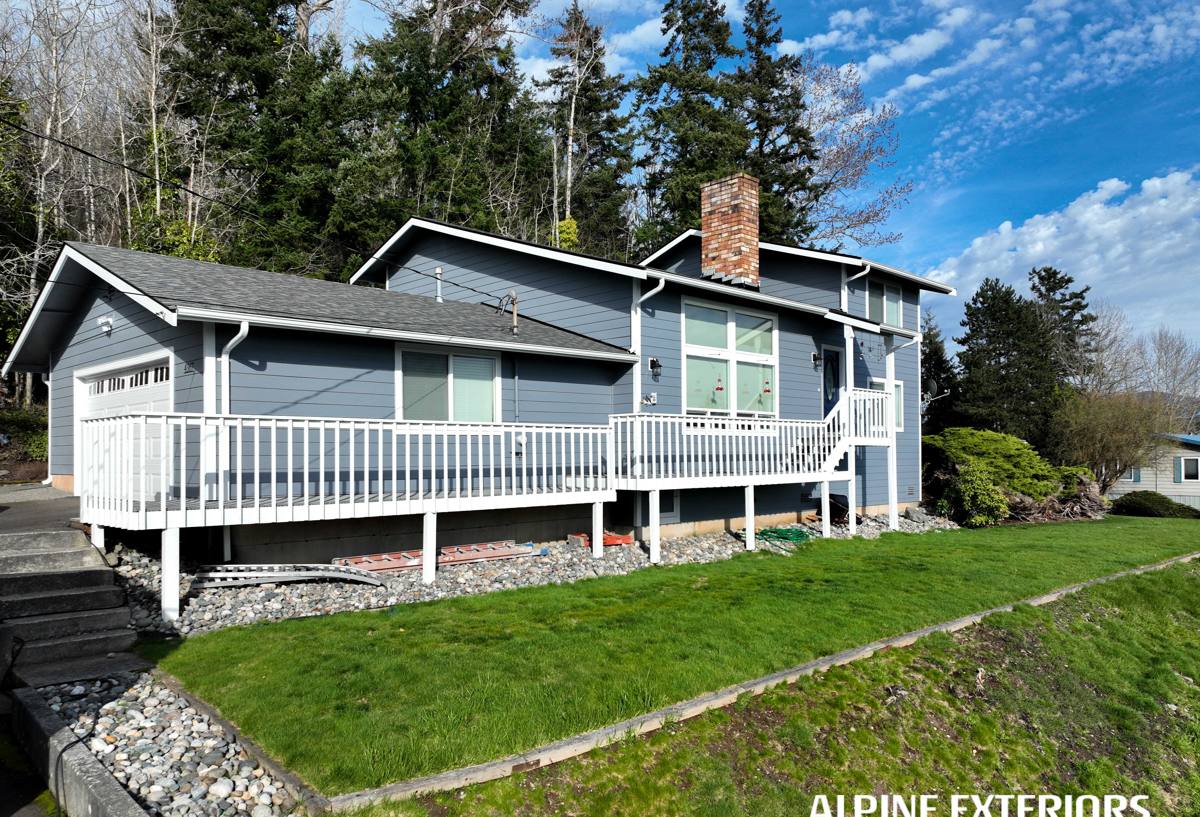
Repair or Replace? Reading the Signs
Not every roof problem calls for a full replacement, and a contractor who's honest with you will tell you when a repair is the right call. A localized leak around a single flashing detail, a handful of cracked shingles from wind, or a clogged valley causing water to back up are all things worth fixing rather than replacing around.
When It's Time to Talk Replacement
- The roof is nearing or past the expected service life of its material, and shingles are curling, cupping, or losing granules across large areas rather than in one spot
- You're seeing daylight through the attic decking, or insulation shows signs of past moisture
- Moss and moss staining cover more than isolated patches, especially on north-facing or shaded slopes
- Multiple past repairs haven't resolved recurring leaks in different spots
- Decking feels soft or spongy underfoot when a roofer walks it, which usually means water has already gotten past the surface layer
- You're planning to sell, and a roof near the end of its life is going to come up in inspection regardless
If two or more of these apply, a replacement is usually the more cost-effective path than chasing repairs on a roof that's already past its useful window.
What a Correct Roof Replacement Actually Involves
A roof replacement is more than swapping old shingles for new ones on top of the same deck. Done right, it starts with a full tear-off down to the decking, because there's no reliable way to inspect or repair what's underneath old roofing without removing it. Once the deck is exposed, any soft, delaminated, or water-damaged sheathing gets identified and replaced — skipping this step is the single most common shortcut that leads to a roof failing years before it should.
From there, the underlayment goes down: a synthetic water-resistant barrier across the field of the roof, with self-adhering ice-and-water membrane at the eaves, valleys, and any other spot where water concentrates or wind-driven rain is likely to push moisture under the shingle line. Flashing at chimneys, skylights, sidewalls, and roof-to-wall transitions gets replaced, not just caulked over — caulk is a maintenance item, not a permanent fix. Then comes the roofing material itself, installed to the manufacturer's nailing pattern and exposure specs, followed by ridge caps, vents, and a final check of every penetration on the roof.
Every one of these steps matters more in a climate like Bellingham's, where driving rain will exploit a shortcut that might never show itself in a drier region.
Roofing Material Options for a Bellingham Home
There's no single "best" roofing material — the right choice depends on your home's exposure, roof pitch, budget, and how much shade and moss pressure the roof deals with. Here's how the common options compare for a coastal Whatcom County home.
| Material | Typical Lifespan | Moss & Moisture Resistance | Relative Cost |
|---|---|---|---|
| Asphalt composition shingle (standard) | 20-25 years | Moderate — benefits from algae-resistant granules | Lowest |
| Asphalt composition shingle (algae-resistant, architectural) | 25-30 years | Good — copper/zinc granules slow moss and algae growth | Moderate |
| Standing seam metal | 40-50+ years | Excellent — sheds moisture fast, little surface for moss to grip | Highest |
| Synthetic/composite shake or slate | 30-50 years | Good — engineered to resist moisture absorption | High |
For most Bellingham homes, an algae-resistant architectural shingle offers the best balance of upfront cost and long-term performance in a moss-prone, shaded climate. Metal earns its higher price tag on steeper roofs, homes closer to the water, or owners planning to stay long enough that the lifespan difference pays for itself.
Ventilation and Moisture: The Part Homeowners Don't See
A new roof surface can only do half the job. The other half happens in the attic, where balanced intake and exhaust ventilation — typically soffit vents pulling air in and ridge vents letting it out — keeps warm, moist air from condensing against the underside of the decking. In a climate as damp as Bellingham's, poor attic ventilation shows up as premature shingle aging from the inside, rot in the decking that a homeowner never sees until it's advanced, and condensation that can look like a roof leak even when the roofing itself is sound.
Ventilation also affects how much moss pressure the outside of the roof faces. A properly ventilated attic keeps the roof deck closer to outdoor temperature, so snow and frost melt more evenly and shaded sections don't stay wet as long. Any roof replacement worth doing includes a real look at existing attic ventilation, not just a shingle swap on top of whatever venting was there before.
Our Process, Start to Finish
- Roof inspection and honest assessment — decking condition, ventilation, flashing, and whether repair or replacement actually makes sense
- Written estimate that breaks out material, labor, and any decking repair allowances, so there are no surprises mid-project
- Full tear-off to the deck, with damaged sheathing replaced before anything new goes down
- Underlayment and ice-and-water membrane installed at eaves, valleys, and penetrations
- New flashing, vents, and roofing material installed to manufacturer spec
- Final walk-through with the homeowner and full site cleanup, including a magnetic sweep for stray nails
We keep the homeowner informed at each stage rather than disappearing until the invoice, and we don't consider a job finished until the yard and driveway look the way they did before we arrived.
Why a Local Blaine Crew That Works Bellingham Regularly Matters
We're based in Blaine, up near the Canadian border, and we work Bellingham and the rest of Whatcom County on a regular basis — not as an occasional out-of-town job. That matters for a few practical reasons. We're familiar with the county's permitting process for reroofing, so paperwork doesn't slow a project down. We see the same climate patterns on Bellingham roofs that we see on our own — the salt exposure off the bay, the shaded, moss-prone slopes under mature trees, the driving rain off the Salish Sea — because it's the same weather we build for at home, just a short drive south.
Being local also means we're not disappearing after the check clears. If something needs a look after a storm, or a warranty question comes up down the road, we're still in the area and easy to reach — not a crew that rolled through from three counties away for one job.
Protecting Your New Roof From Moss and Salt Air
A correctly installed roof still benefits from basic maintenance in this climate. Keeping gutters clear so water doesn't back up under the shingle edge, trimming back branches that keep a section of roof shaded and damp, and having moss growth addressed before it spreads rather than after are the three things that do the most to protect a roof's lifespan here. Pressure washing shingles is generally not recommended — it can strip protective granules and shorten the roof's life faster than the moss it removes. A gentle, low-pressure treatment and manual removal is the safer approach when moss does establish itself.
An annual or twice-yearly visual check, especially after major windstorms, catches small issues — a lifted shingle tab, a gap in flashing sealant — while they're still small.
If your Bellingham roof is showing its age or you just want an honest read on where it stands, we're glad to come take a look. The estimate is free, there's no pressure attached to it, and you'll get a straight answer about whether you need a repair, a replacement, or just a little maintenance — you can request one using the form below.