 Blaine Siding
 Why Bellingham Decks Wear Out Faster Than You'd Expect
A deck in Bellingham lives a harder life than the same deck would in a dry inland climate. Whatcom County sits close enough to Puget Sound and the Strait of Georgia that salt-laden air reaches yards well back from the water, and that salt air accelerates corrosion on fasteners, hardware, and metal connectors long before the wood itself shows obvious damage. Layer on driving rain that comes in sideways during fall and winter storms, plus a moss season that can stretch from October through May in shaded or north-facing yards, and you end up with decks that need real attention every few years, not just a coat of stain when they start looking tired.
Most of the deck failures we see in this area aren't dramatic. They're slow: a ledger board that's been absorbing water for two seasons, joist hangers rusting quietly under a deck that still looks fine from the top, or decking boards holding moisture under a moss mat nobody thought to check. Repair work here is as much about catching what's hidden as fixing what's visible.
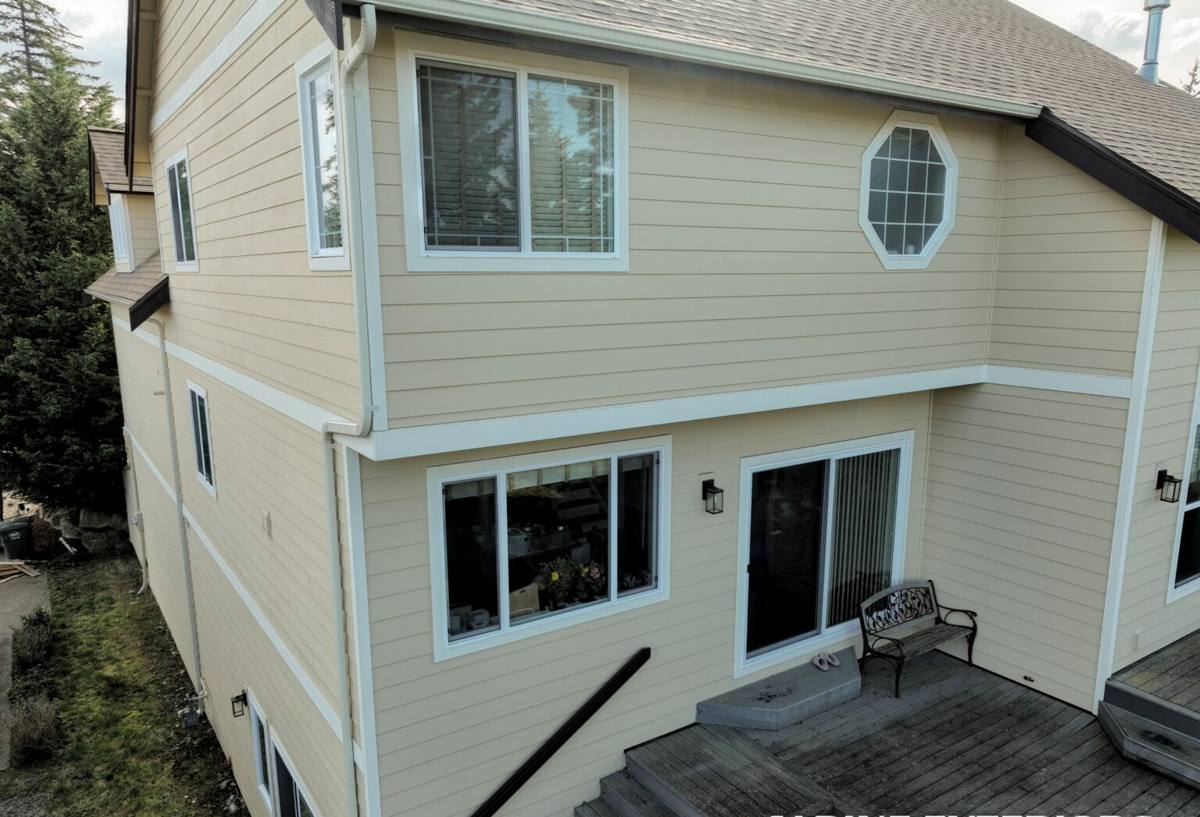
Signs Your Deck Needs Repair Now, Not Later
Deck problems in this climate rarely announce themselves loudly. A little attention a few times a year catches most issues while they're still cheap to fix. Watch for these:
- Soft or spongy spots when you walk across the decking, especially near the house or stair landings
- Green or black film building up on boards that stay shaded most of the day
- Rust streaks running down from screws, joist hangers, or post bases
- Railings or posts that wiggle more than they did last year
- Gaps opening up where the deck meets the house, or a ledger board that looks separated from the siding
- Standing water that doesn't drain within an hour or two after rain stops
- Wood that sounds hollow or feels crumbly when you press a screwdriver into it
Any one of these on its own might be minor. Several together, or anything involving the ledger board or main support posts, is worth a professional look before someone gets hurt.
What a Correct Deck Repair Actually Involves
Deck repair gets treated as a cosmetic job more often than it should be. Swapping a few gray boards for new ones without checking what's underneath is common, and it's how decks end up looking fine on top while quietly failing underneath. A repair done right starts below the surface.
Framing and Structural Work
The ledger board, the beam that attaches the deck to the house, takes the brunt of Whatcom County's rain because it sits directly against the siding where water tends to collect. We check the ledger connection, the flashing behind it, and the joists it supports before touching anything cosmetic. If water has been getting behind the ledger, that's a structural repair, not a paint-and-patch job, and it needs to be fixed correctly to keep the deck safely attached to the house.
Decking Board Replacement
When individual boards are cracked, cupped, or rotted, we replace them board by board rather than resurfacing over problems. Matching existing wood decking takes some care since lumber weathers and shrinks unevenly over time; composite decking is more forgiving on color match but still needs the right fastening approach to avoid the mushrooming or discoloration that comes from using the wrong screws.
Railings and Guards
Loose railings are one of the most common repair calls we get, and one of the more dangerous problems to ignore. Posts often loosen at the base where they're bolted to the rim joist, an area that holds moisture and corrodes fasteners faster than people expect. We re-secure or rebuild the connection with hardware rated for exterior, coastal-adjacent use.
Fasteners and Hardware
This is where a lot of budget repairs cut corners, and it's the part homeowners can't see once the job is done. Standard zinc-coated screws and joist hangers corrode noticeably faster in this region's salt air and moisture than they would inland. We use stainless steel or heavy hot-dip galvanized hardware rated for coastal exposure on every structural connection, because replacing rusted-out hardware in five years costs more than doing it right the first time.
Repair or Replace? How We Help You Decide
Not every deck problem calls for a full rebuild, and not every deck is worth patching indefinitely. The honest answer depends on how much of the structure is still sound.
| Factor | Repair Usually Makes Sense | Replacement Usually Makes Sense |
|---|---|---|
| Framing condition | Ledger, beams, and joists are structurally sound | Multiple framing members are soft, rotted, or undersized for current code |
| Extent of damage | Isolated boards, railings, or hardware | Damage spread across most of the deck surface or structure |
| Age of the deck | Under 15-20 years, built to a reasonable standard | Older deck nearing the end of its service life, or built without proper flashing |
| Code compliance | Meets current railing height and spacing requirements | Older railings, spacing, or footings don't meet current code |
| Cost comparison | Repair cost is a small fraction of full replacement | Repairs would need to be repeated across most of the deck within a few years |
We'll walk the whole structure with you, show you what we find, and give you a straight answer about which category your deck falls into. We're not going to sell a repair on a deck that needs to come down, and we're not going to push a rebuild when a targeted repair will hold up fine.
Material Choices That Hold Up in This Climate
Whether we're repairing an existing deck or replacing sections of it, material choice matters more here than in drier parts of the state. Traditional wood decking, cedar or pressure-treated fir, looks great and is easier to spot-repair board by board, but it needs regular cleaning and sealing to keep moss and moisture from working into the grain during the wet months. Composite decking resists moss and rot better and needs less maintenance, but it comes at a higher upfront cost, and not every composite product handles our freeze-thaw and constant-damp cycle equally well. We'll talk through what you already have, what it would cost to match versus upgrade, and the honest maintenance tradeoffs of each option rather than steering you toward whatever's easiest for us to install.
Managing Moss and Moisture Long-Term
Whatcom County's moss season is long, and a deck that gets shade for a good part of the day will grow moss almost every winter no matter what it's made of. Moss holds moisture against the wood surface, which is exactly the condition that causes rot, and it makes boards genuinely slippery and dangerous underfoot. As part of most repairs we'll clean built-up growth off the structure and talk through a simple seasonal maintenance routine, a periodic wash and inspection, that keeps moss from taking hold again and lets you catch new problems before they become expensive ones.
How Our Repair Process Works
- Full inspection. We check the ledger connection, framing, posts, footings, railings, and decking surface, not just the boards that look obviously bad.
- Honest assessment. We show you what we found, explain what's structural versus cosmetic, and give you options rather than a single take-it-or-leave-it quote.
- Written estimate. Clear scope of work, materials, and pricing before anything is scheduled, no surprise add-ons partway through.
- Permit check. If the repair involves structural framing, footings, or significant railing changes, we handle checking what local permitting requires before work starts.
- The repair. Structural fixes first, then decking, then railings and hardware, using fasteners and materials rated for coastal exposure.
- Final walkthrough. We check the work with you and point out anything worth watching or maintaining going forward.
Why It Matters to Hire a Crew That Already Works in Bellingham
Deck repair advice that works in Spokane or Sacramento doesn't always hold up here. A crew that already works throughout the Bellingham area knows which fastener grades actually last through a Whatcom County winter, understands how quickly moss reclaims a north-facing deck, and has seen firsthand what happens when a ledger board is flashed incorrectly against local siding types. That familiarity means fewer surprises during the inspection and a repair plan built around how this specific climate treats a deck over time, not a generic checklist. It also means we're not guessing at local permitting expectations or driving in from out of the area if a warranty question comes up down the road.
Get a Straight Answer About Your Deck
If your deck has soft spots, rusting hardware, a persistent moss problem, or you just haven't had it looked at in a few years, it's worth getting an honest inspection before small issues turn into structural ones. We offer free, no-pressure estimates for deck repair throughout the Bellingham area, and we'll tell you plainly what needs fixing, what can wait, and what it will cost. Use the form below to get started.