 Blaine Siding
 Windows Near Blaine Harbor Take a Different Kind of Beating
A house two blocks off the water in Blaine deals with conditions that a home twenty miles inland in Whatcom County never sees. Windows around Blaine Harbor face salt-laden air off Semiahmoo Bay and the Strait, wind-driven rain that comes in sideways during winter storms, and long stretches of gray, damp weather that keep wood and vinyl surfaces wet for days at a time. None of that is a problem you can fix by picking a nicer-looking window. It's a problem you fix with the right materials, the right flashing details, and installation that respects how water actually moves around a window opening in this climate.
This page is about one job in one place: window installation for homes in and around Blaine Harbor. Not a general window pitch — the specific things that matter here, what we actually do differently because of the salt air and the rain, and what a homeowner should expect from a crew that installs windows in this exact environment on a regular basis.
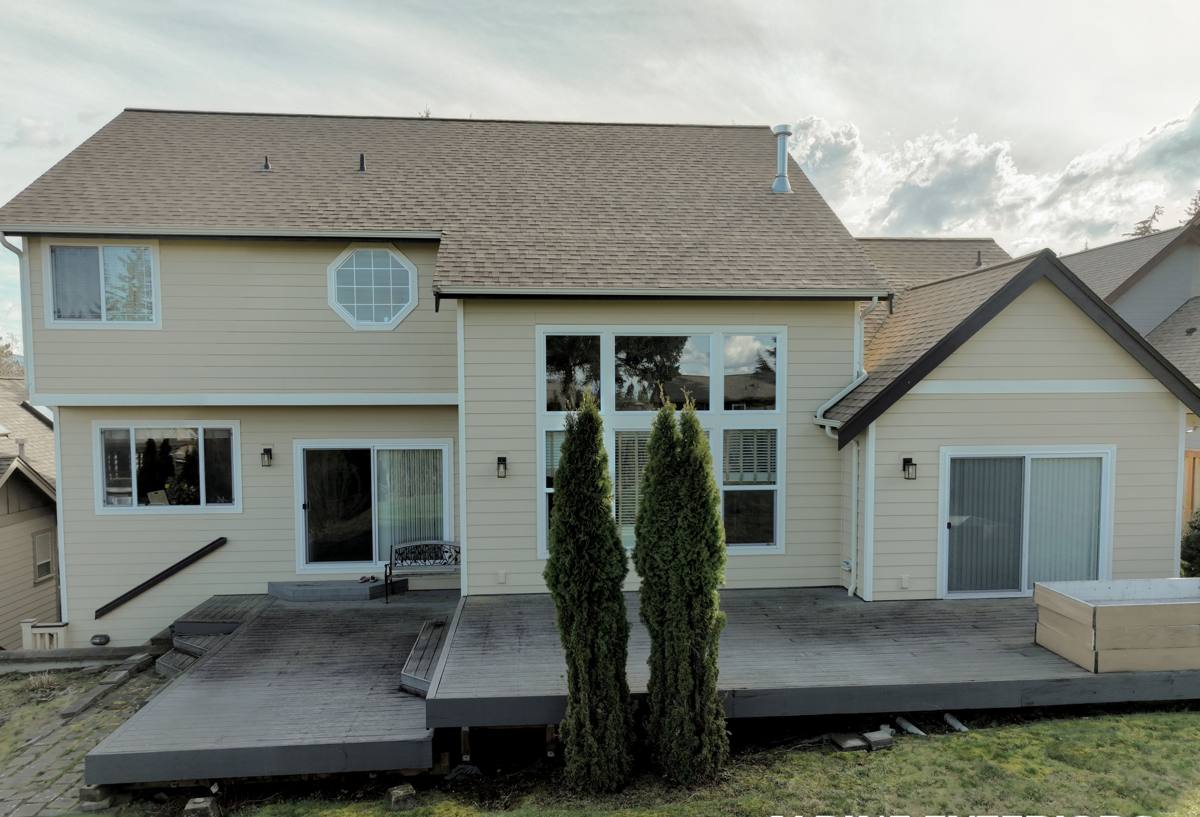
What Salt Air, Driving Rain, and Moss Season Actually Do to Windows
Salt Air and Hardware Corrosion
Airborne salt is corrosive to exposed metal — hinges, cranks, locking hardware, and screws. On a harbor-adjacent home, that corrosion shows up faster than manufacturers' generic warranty language accounts for. Cheaper hardware finishes pit and seize years before the glass or frame gives out. This is one of the first things we check when we're quoting a replacement near the harbor: what's actually holding the sash shut, and will it still work in five years.
Wind-Driven Rain and Water Intrusion
Rain that falls straight down is a much easier problem than rain being pushed sideways by wind off the water. Wind-driven rain finds gaps that vertical rain never would — around the nailing flange, behind trim, at the sill pan. A window that's watertight in a calm rain test can still leak during a real Blaine winter storm if the flashing sequence underneath wasn't done correctly. The window itself is often not the point of failure; the flashing and sealing around it is.
Moss, Moisture, and Wood Trim
Whatcom County's long wet season keeps north-facing and shaded surfaces damp for extended periods, which is exactly what moss and mildew need to take hold. On window trim, that means paint failure, soft spots, and eventually rot if it's not caught early. Homes near the harbor with mature landscaping or tree cover tend to see this on their windows before homes in more open, sunnier parts of Blaine do.
What a Correct Window Installation Involves
A window installation is really two jobs layered together: the window unit itself, and the water management system built into the rough opening around it. Skipping or rushing the second job is the single most common cause of window-related problems in this climate — not the window brand, the installation method.
- Removing the old window and inspecting the rough opening framing for rot, soft wood, or prior water damage before anything new goes in
- Installing a sloped sill pan so any water that gets past the window drains back outside instead of sitting on the sill
- Applying flashing tape in the correct shingle-lapped order — sill, sides, then head — so water is always directed downward and outward
- Setting the window level, plumb, and square, then securing it per the manufacturer's fastening schedule
- Insulating the gap between the window frame and the rough opening without overpacking it, which can bow the frame
- Sealing the exterior with a compatible sealant rated for the siding material, and finishing interior trim and paint
Any one of these steps done wrong can lead to a leak that doesn't show up for a year or two — by which time the water damage is inside the wall, not just at the window.
Choosing Materials for a Salt Air, High-Rain Climate
There's no single "best" window material for every home — it depends on sun exposure, how close the home sits to the water, and how much maintenance a homeowner wants to take on. Here's how the common options actually hold up in Blaine Harbor conditions.
| Frame Material | Salt Air / Corrosion Behavior | Moisture Behavior | Maintenance |
|---|---|---|---|
| Vinyl | Doesn't corrode; hardware quality still matters | Won't rot; seams need periodic sealant checks | Low — occasional cleaning |
| Fiberglass | Very stable, minimal expansion/contraction near water | Excellent moisture resistance | Low |
| Aluminum | Can corrode faster in salt air without marine-grade coatings | Conducts cold and can condense in damp weather | Moderate |
| Wood / Wood-clad | Not directly affected, but nearby trim and sills are moss/rot risks | Needs consistent paint or finish upkeep in wet climates | High |
We're honest about the trade-off with wood: it looks great and plenty of Blaine homes have it, but in a climate with this much sustained moisture, it only performs as well as its maintenance schedule. If a homeowner wants the wood look without the upkeep, wood-clad or fiberglass options split that difference reasonably well.
How We Approach a Blaine Harbor Window Job
- On-site assessment — we look at exposure (how much wind and rain the wall actually takes), existing window condition, and any signs of past water intrusion around the openings.
- Honest scope — some homes need every window replaced; others just have a few problem openings on the weather side. We quote what the house needs, not a package.
- Opening prep — any soft framing or old, failed flashing gets addressed before a new window ever goes in. This is where most of the long-term performance is decided.
- Installation — sill pan, flashing sequence, fastening, insulation, and sealing done in the order that actually sheds water in a wind-driven rain event.
- Finish work — interior and exterior trim, caulking, and paint or finish matched to the rest of the home.
- Walkthrough — we show the homeowner what was done and why, especially anything related to flashing or framing that isn't visible once trim is back on.
Signs Your Windows Need Attention
Most window failures near the harbor give warning signs well before a full leak. Worth checking for:
- Fogging or condensation between the panes (seal failure in a double- or triple-pane unit)
- Hardware — cranks, locks, hinges — that's stiff, corroded, or won't fully latch
- Soft or discolored trim at the sill or corners, especially on shaded or north-facing walls
- Visible moss or dark staining developing on window trim or the wall just below a window
- Drafts or a noticeable temperature difference near the window on windy days
- Paint that's peeling or bubbling specifically around the window opening rather than the whole wall
Any one of these on its own isn't an emergency. Several at once, or any sign of soft wood, is worth having looked at before the next storm season.
Why It Matters That We Already Work This Neighborhood
A crew that installs windows all over Whatcom County knows windows in general. A crew that regularly works Blaine Harbor specifically knows what this particular stretch of coastline does to a home — which walls take the worst of the wind-driven rain, how fast salt air chews through cheap hardware, and where moss tends to establish itself first on local trim profiles. That's not something you can fully account for from a spec sheet. It comes from having done the work here, seen what fails and why, and adjusted the installation details accordingly.
It also means fewer surprises during the job itself. Older homes near the harbor sometimes have non-standard framing, prior repairs, or hidden water damage from years back — the kind of thing that's much less alarming to run into when you've seen it before in a house three streets over.
Cost Factors Worth Understanding Up Front
| Factor | Why It Affects Cost |
|---|---|
| Number of openings | More windows means more material and labor, but per-window pricing usually drops slightly at volume |
| Frame material | Fiberglass and higher-end vinyl cost more up front than basic vinyl, but need less long-term upkeep |
| Rough opening condition | Rot or framing repair discovered during removal adds time and material before the new window even goes in |
| Access and exposure | Upper-story or hard-to-access windows on the weather side take longer to flash and seal correctly |
| Trim and finish work | Matching existing interior trim or exterior paint adds labor beyond the window unit itself |
We'd rather walk a homeowner through these factors on-site than quote a number over the phone that doesn't hold up once we see the actual openings.
If you're dealing with drafty, foggy, or corroded windows on a Blaine Harbor home, we're happy to take a look and give you a straight, no-pressure estimate — use the form below to get started.