 Blaine Siding
 Bellingham's Climate Is Harder on Siding Than It Looks
Bellingham sits on the water in Whatcom County, and that location shapes everything about how exterior siding performs here. Homes close to Bellingham Bay deal with salt-laden air that accelerates corrosion on fasteners, trim, and any siding material that isn't built to resist it. Add in the region's long, wet winters — driving rain that comes in sideways off the water, months of overcast humidity, and a moss and algae season that can run from fall through spring — and you have a climate that punishes weak siding systems faster than most parts of the country.
We install siding on homes throughout the Blaine and Bellingham area, and the failure patterns we see are consistent: swollen seams on wood-based products, moss colonies gaining a foothold in north-facing shade, paint that gives up years before it should, and trim details that were never sealed correctly to begin with. None of that is inevitable. It's a product and installation problem, and it's exactly why we standardized on one system instead of offering a menu of options.
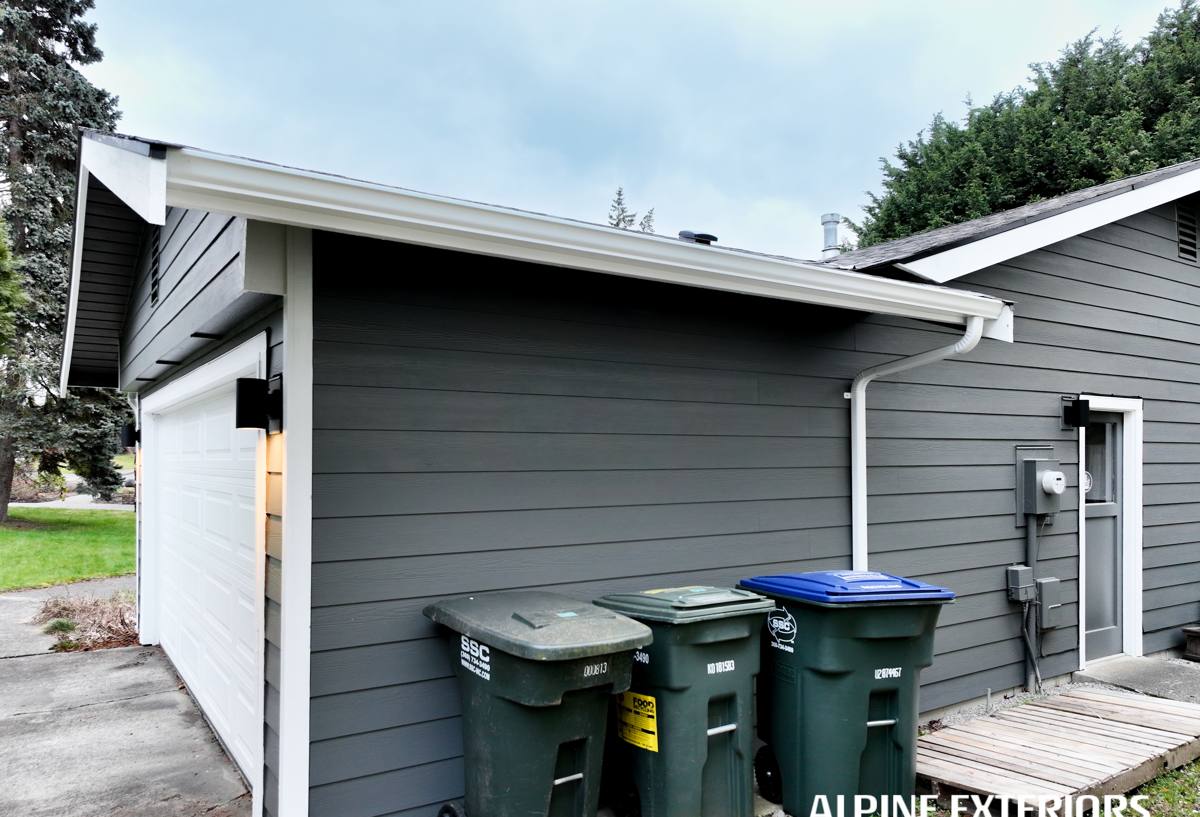
Why James Hardie Fits This Specific Environment
James Hardie fiber cement siding is manufactured from cement, sand, and cellulose fibers — there's no wood content for moisture to swell, delaminate, or feed rot into. That matters enormously in a climate where siding stays damp for days at a stretch during a typical Bellingham winter. Fiber cement doesn't absorb water the way engineered wood products do, so it isn't cycling through swell-and-shrink stress every time a system rolls through.
Hardie's ColorPlus factory-applied finish is baked on under controlled conditions, which gives it better adhesion and UV resistance than field-applied paint. In a marine climate with strong coastal light in summer and constant damp in winter, that finish holds color and resists the chalking and fading that field-painted siding tends to show first. The material is also non-combustible, which matters regionally given the wildfire smoke and dry-season risk that has become more common across the Pacific Northwest even in wetter coastal counties.
HZ5 and Climate-Engineered Product Lines
James Hardie engineers its products by climate zone rather than shipping one formulation everywhere. The HZ5 line is formulated for the wetter, harsher exposure conditions found in the Pacific Northwest, including moisture cycling and cooler, damper install windows. Using the zone-matched product isn't a marketing detail — it affects how the material performs over the next twenty-plus years on a home that sits a short drive from open water.
What a Correct Installation Involves Here
Fiber cement siding is only as good as the installation behind it, and that's especially true in a wet coastal climate where any gap in the water-management plan gets tested constantly. A correct install on a Bellingham-area home includes:
- A properly lapped weather-resistive barrier behind the siding, with all penetrations and seams sealed before a single board goes up
- Correct fastener spacing and fastener material — stainless or coated fasteners rated for coastal exposure, driven to Hardie's specified depth, not overdriven or underdriven
- Rainscreen or furring strategy where the wall assembly calls for it, so moisture that does get behind the cladding has somewhere to drain and dry
- Factory-cut and factory-primed edges wherever possible, with field cuts properly sealed to protect the exposed core
- Correct caulking and flashing details at windows, doors, and trim intersections — the single most common source of moisture intrusion on any siding job
- Proper clearance from grade, decks, and roof lines so siding isn't sitting in standing water or constant splash-back
Skip any one of these steps and you can install the best siding material available and still end up with moisture problems in a few years. This is where a lot of siding failures actually start — not with the product, but with shortcuts taken during install that don't show up until the first wet winter or two has had time to work on them.
Signs Older Siding in This Area Is Starting to Fail
If you're evaluating whether it's time to replace siding on a Bellingham-area home, look for these signs, particularly on north- and west-facing walls that see the most driving rain and the least direct sun:
- Persistent moss or algae growth that returns within weeks of cleaning
- Soft spots, bubbling paint, or visible swelling at seams and butt joints
- Caulk that has cracked, shrunk, or pulled away from trim and window edges
- Staining or dark streaking below fastener heads, which often signals corrosion or moisture tracking behind the board
- Visible gaps where boards have shifted, warped, or cupped
Any one of these on its own isn't necessarily an emergency. Several of them together, especially on a home more than fifteen or twenty years old, usually means the siding system as a whole is past the point where spot repairs make sense.
Hardie Compared to Other Siding Materials in a Marine Climate
We get asked regularly why we don't offer vinyl, engineered wood, or other fiber cement alternatives alongside Hardie. The honest answer is that in a climate like Bellingham's, the trade-offs on those products are real enough that we'd rather not put our name on the install.
| Material | Behavior in Coastal/Wet Climate | Long-Term Maintenance |
|---|---|---|
| James Hardie fiber cement | No wood content to swell or rot; factory finish holds up under constant damp and UV cycling | Periodic cleaning; factory finish typically outlasts field-painted alternatives |
| Vinyl siding | Can warp or distort under heat and cold cycling; seams are a common moisture entry point | Low upkeep but limited repairability and shorter realistic service life |
| LP SmartSide / engineered wood | Wood-strand core is more vulnerable to swelling and edge deterioration in sustained moisture | Requires diligent caulk and paint maintenance to keep water out of cut edges |
| Cedar / primed spruce | Natural wood movement, rot risk, and moss/algae susceptibility are highest in this group | Frequent refinishing and moisture monitoring needed to get a reasonable lifespan |
This isn't a claim that other products are unusable everywhere — they're common choices in drier climates for good reasons. It's that a marine, moss-prone, high-rainfall environment like Whatcom County's coastline exposes exactly the weaknesses those materials have, and we'd rather install one product correctly than several products with varying risk profiles.
Cost Factors on a Bellingham-Area Job
Every home is different, and we don't post fixed pricing because wall complexity, siding condition underneath, and access all move the number. That said, the main cost drivers we see on jobs in this area are consistent:
| Factor | Why It Matters |
|---|---|
| Condition of the wall assembly underneath | Rot or moisture damage found during tear-off adds repair scope before new siding can go up |
| Home size and wall complexity | Dormers, multiple gables, and trim-heavy elevations take more labor per square foot |
| Siding profile and finish choice | Lap width, shingle-style panels, and color selections affect material cost |
| Access and site conditions | Tight lots, second-story work, and staging needs affect labor time |
How We Approach a Bellingham or Blaine Project
Because we work this stretch of Whatcom County regularly, we already know what the coastal exposure does to homes here and we plan around it rather than treating every job as a blank slate. Our process on a typical siding replacement:
- On-site evaluation of the existing siding and wall assembly, including a look for hidden moisture damage before we quote scope
- A written estimate that specifies the Hardie product line, profile, and finish — no vague allowances
- Tear-off and inspection of sheathing, with any rot or damage addressed before new weather-resistive barrier goes on
- Installation to Hardie's fastening and clearance specifications, with attention to the flashing and sealing details that matter most in this climate
- Final walkthrough so you know exactly what was done and what maintenance, if any, to expect going forward
Why a Crew That Already Works This Area Matters
Siding installation isn't just following a manufacturer's manual — it's applying that manual correctly to the specific conditions a wall assembly will face. A crew that installs siding across a range of climates might get the basics right and still miss the details that matter most in a place like Bellingham: how far to hold siding off grade given the rainfall here, where moss pressure is worst on a given lot, or how much rainscreen gap makes sense on a wall that rarely gets a chance to fully dry out. Working this area consistently means those judgment calls are informed by what actually happens to siding here over time, not just what a spec sheet says in general.
It also means we're a known, reachable local operation if a warranty question or a maintenance question comes up years down the road — not a crew that moved on to a different region after the job wrapped.
If you're considering new siding for a home in Bellingham, Blaine, or elsewhere in Whatcom County, we're happy to take a look and give you a straightforward, no-pressure estimate using the form below.