 Blaine Siding
 Decking Near the Peace Arch: A Different Set of Problems
Homes in the Peace Arch area sit close to the water and close to the border, which means they take weather from two directions: salt-laden air moving in off Semiahmoo Bay and Boundary Bay, and the steady, driving rain that Whatcom County sees for a good chunk of the year. Add a shaded lot or a stand of mature trees, and you get a long moss season on top of that. None of this is unusual for Blaine, but it's harder on a deck than most homeowners realize until boards start cupping, fasteners start bleeding rust, or a "low-maintenance" deck turns green by February.
This page is specifically about composite decking for Peace Arch-area properties — what the climate actually does to a deck here, what a correctly built one looks like, and why the install matters as much as the material.
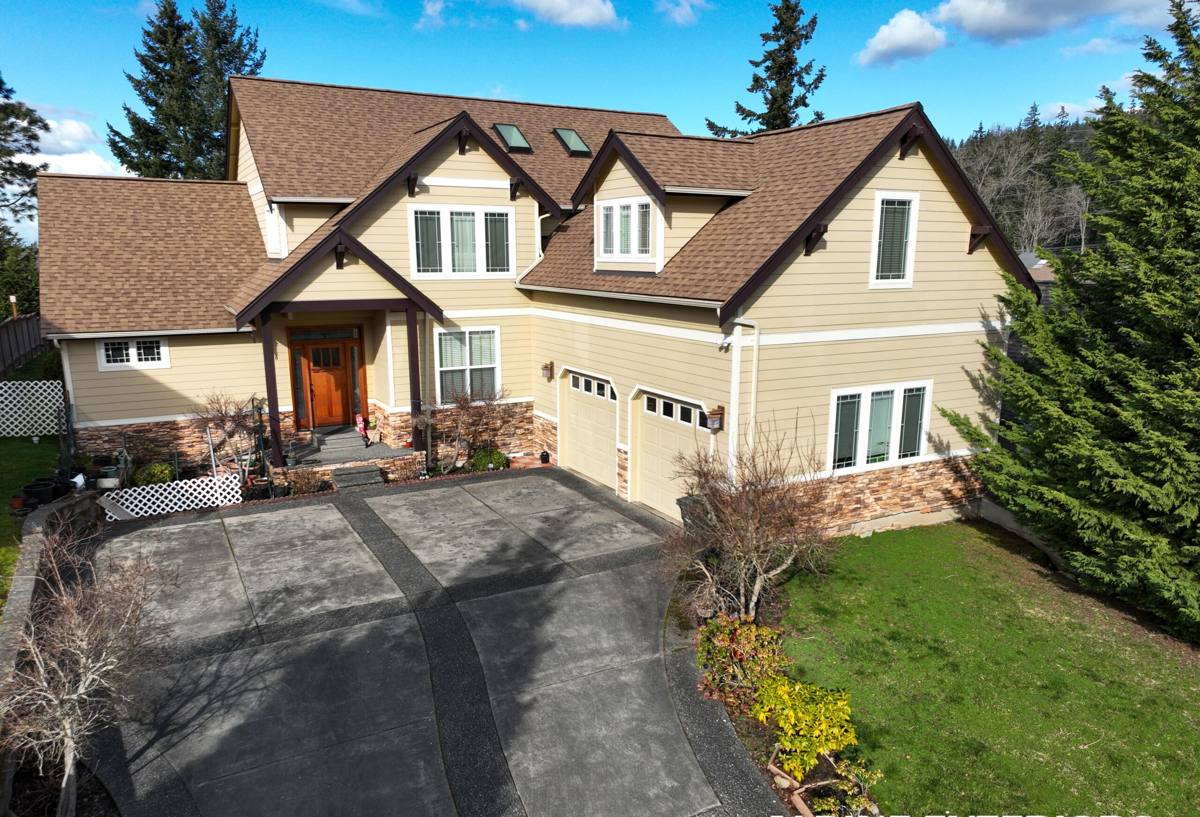
What Salt Air, Rain, and Moss Actually Do to a Deck
Salt Air
Airborne salt doesn't just affect waterfront lots — it travels inland on wind and settles on any exposed surface. On decking, it accelerates corrosion of exposed metal fasteners, hinges, and railing hardware, and it can dull or discolor lower-grade composite boards over time. It's a slow, cumulative problem, which is exactly why it gets ignored until the hardware is visibly failing.
Driving Rain
Rain that comes in sideways gets under railings, into end-grain cuts, and behind ledger boards in ways vertical rain never would. If flashing, gaps, and drainage weren't planned for at the framing stage, water finds its way into the substructure regardless of what decking material sits on top.
Moss and Mildew
Shaded, damp decks in this part of Washington grow moss and mildew almost as a default state, not an exception. On wood, that moisture gets held against the fibers. On composite, moss and algae mostly grow on the surface rather than into the material — but only if the board has enough cap protection and the deck is built with drainage and airflow in mind. A composite deck laid flat on a poorly ventilated frame will still hold moisture and grow moss just the same.
Why Composite Makes Sense Here — With Honest Caveats
Composite decking is a reasonable fit for this climate because it doesn't absorb water and rot the way untreated wood does, and it doesn't need annual staining or sealing to hold up. That said, "composite" covers a wide range of quality, and not every board handles this environment equally well.
| Decking Type | How It Handles Salt Air & Rain | Moss/Mildew Behavior | Ongoing Maintenance |
|---|---|---|---|
| Pressure-treated wood | Absorbs moisture, prone to warping and fastener corrosion near salt air | Moss and mold penetrate the grain, harder to fully clean | Annual staining/sealing, board replacement over time |
| Uncapped composite | Better than wood, but the exposed composite surface can absorb some moisture and stain | Surface growth is common in shaded, damp spots | Periodic cleaning, more prone to visible weathering |
| Capped composite (cap-stock) | Fully sealed shell resists moisture and salt exposure well | Growth stays on the surface, cleans off without damaging the board | Occasional washing, no staining or sealing required |
| PVC decking | Excellent moisture resistance, handles salt air well | Similar to capped composite, easy surface cleaning | Low, but can show more flex/expansion in temperature swings |
For most Peace Arch-area homes, fully capped composite is our default recommendation — it holds up to salt and rain without the upkeep wood demands, and it resists the moss staining that uncapped or lower-grade boards struggle with. We'll talk through PVC as an option too, but the trade-offs (movement, feel underfoot, price) are worth discussing case-by-case rather than assuming one product wins every time.
What a Correctly Built Deck Actually Involves
The decking material gets all the attention, but the framing and details underneath it determine whether the deck performs for 20+ years or starts having problems in five. In this climate, we pay particular attention to:
- Ledger flashing: Where the deck attaches to the house, proper flashing keeps driving rain from working its way behind the ledger board and into the wall structure.
- Joist protection: Joist tape or an equivalent moisture barrier over the framing keeps water from sitting on top of the joists, which is where hidden rot usually starts on any deck, composite or not.
- Fastener selection: Corrosion-resistant, coated fasteners rated for coastal exposure — not standard hardware that will streak and weaken faster in salt air.
- Board spacing and drainage: Correct gapping between boards so water actually sheds instead of pooling, especially on decks with limited slope.
- Airflow underneath: Adequate clearance and skirting design so the underside of the deck can dry out between rain events instead of staying damp, which is what feeds moss and mildew growth.
- Railing hardware: Stainless or coated hardware at connection points, since railings take the most direct salt-air exposure on the whole structure.
Skip any of these, and it doesn't matter how good the decking boards are — the deck will have problems that show up as squeaking, soft spots, or staining within a few years.
How We Approach a Peace Arch Composite Deck
1. On-Site Assessment
We look at sun and shade exposure, wind direction relative to the water, existing drainage on the lot, and the condition of any existing structure if this is a replacement. That assessment shapes the framing plan and board choice, not just the layout.
2. Design and Material Selection
We walk through composite board options, color and grain choices, and railing systems, with straight talk about which options are worth the upgrade in this specific environment and which are cosmetic preferences with no real performance difference.
3. Permitting
Most new decks and many deck replacements in Blaine and unincorporated Whatcom County require a permit, particularly for structures attached to the house or above a certain height. We handle that process as part of the job rather than leaving it for the homeowner to sort out.
4. Framing and Substructure
This is where the climate-specific details above get built in — flashing, joist protection, fastener grade, and drainage slope — before a single composite board goes down.
5. Decking Installation
Hidden fastener systems where the product supports them, correct board spacing, and attention to end-grain cuts and edge treatment where boards are cut on site.
6. Final Walkthrough
We go over basic care for the specific product installed — what it needs and, just as importantly, what it doesn't — before we consider the job done.
Living With a Composite Deck in This Climate
Composite decking is genuinely lower-maintenance than wood, but "low-maintenance" isn't "no-maintenance," especially with a long moss season working against you. A few habits go a long way:
- Sweep off leaves, needles, and organic debris regularly — that's what moss and algae feed on and root into.
- Rinse the deck with a hose periodically, and use a soft-bristle brush with mild soap on any spots developing surface growth.
- Avoid pressure washing at close range or high pressure on composite boards — it can damage the cap surface and void some manufacturer warranties.
- Keep planters, mats, and furniture legs from sitting in one spot for long stretches, since trapped moisture underneath is exactly what encourages moss to take hold.
- Check railing hardware and fasteners once a year for early signs of corrosion, especially on decks with direct water views.
What Drives the Cost
| Factor | Why It Matters Here |
|---|---|
| Board tier (uncapped vs. fully capped composite vs. PVC) | Capped and PVC products cost more up front but resist salt air and moss staining far better |
| Substructure condition | Replacing or reinforcing an old frame to current standards adds cost but is where long-term performance is decided |
| Deck size and height | Elevated decks need additional structural work and often railings, both of which affect labor and material |
| Railing system | Cable, glass, and composite rail systems vary widely in price and in how they hold up to salt exposure |
| Site access and demolition | Removing an old deck, especially one with hidden rot, can add unplanned labor once we're into it |
We give a written, itemized estimate before any work starts, so you know what you're paying for and why — not just a single bottom-line number.
Why a Crew That Already Works Peace Arch Matters
Decking looks like a straightforward product install, but the right call on framing details, fastener grade, and drainage depends on understanding how a specific lot sits relative to wind, water, and shade — not on a generic checklist. A crew that already works in and around Peace Arch and greater Blaine has seen how salt air and moss actually behave on decks in this specific stretch of coastline, knows the local permitting process for Whatcom County and the City of Blaine, and isn't guessing at how a product will hold up here versus how it performs in a manufacturer's brochure written for a different climate. That local track record is worth as much as the warranty paperwork on the boards themselves.
Get a Straight Answer on Your Deck
If you're planning a new composite deck, replacing an aging wood deck, or just want an honest read on whether your current deck is holding up the way it should in this climate, we're happy to take a look. Use the form below to request a free, no-pressure estimate — we'll walk the site, answer your questions directly, and give you a clear picture of what a correctly built deck looks like for your specific property.