 Blaine Siding
 Deck Building in Blaine's Marine Climate
Dakota Creek sits close enough to the water that every outdoor structure in the neighborhood answers to the same set of conditions: salt-laden air rolling in off Semiahmoo Bay and the Strait of Georgia, driving rain that comes in sideways more often than straight down, and a long, damp moss season that can stretch from fall through spring. A deck built without those three things in mind will look fine for a year or two and then start showing problems — soft spots, rusted fasteners, slick boards, framing that stays wet longer than it should. A deck built for this specific climate holds up the way it's supposed to.
This page is about deck building specifically for homes in and around Dakota Creek — not a general overview of decks everywhere. The construction principles are the same ones that apply to any deck in Blaine and greater Whatcom County, but the material choices, hardware, and detailing decisions matter more here because the marine exposure is more constant.
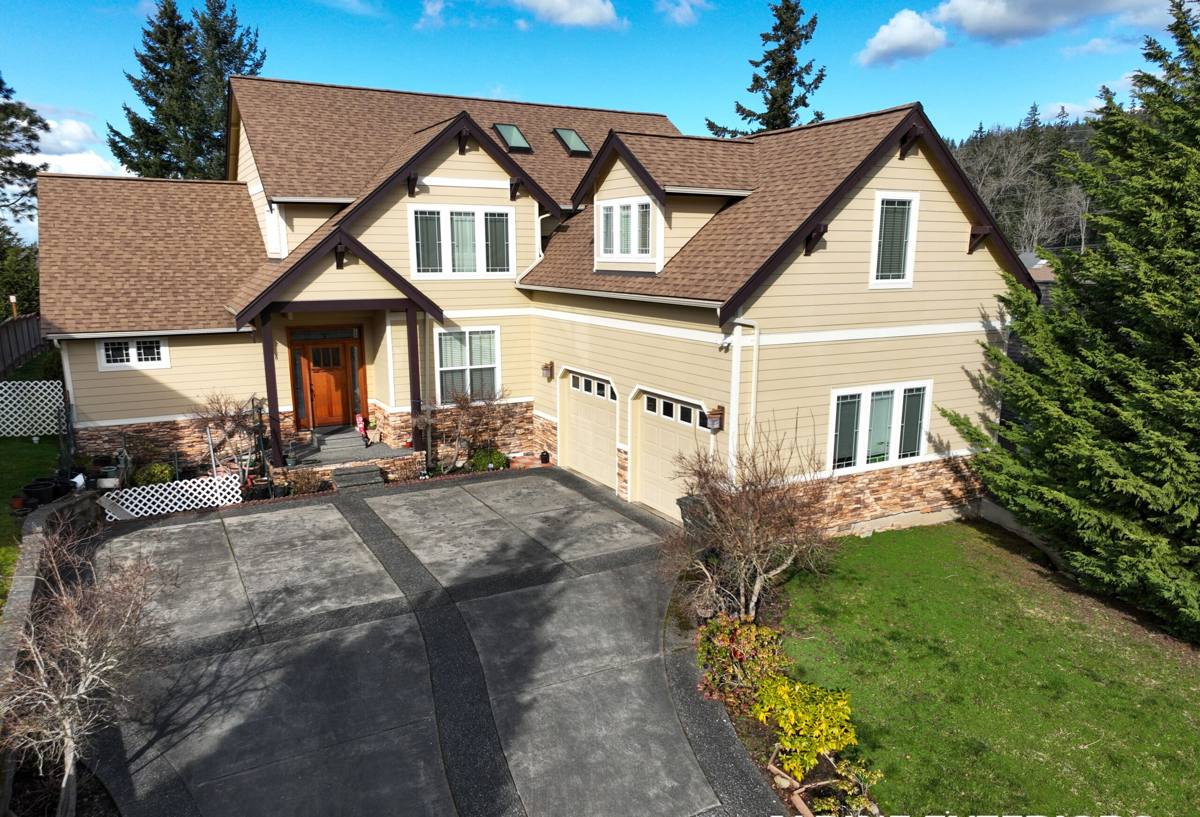
What the Climate Demands From a Dakota Creek Deck
Salt Air and Corrosion
Airborne salt accelerates corrosion on anything metal — fasteners, joist hangers, post bases, railing hardware. Standard interior-rated screws and nails will rust prematurely in this environment, and once a fastener starts to corrode, it loses holding strength long before it looks obviously bad. That's a structural issue hiding behind a cosmetic one. Decks near Dakota Creek need hardware rated for coastal or exterior exposure from the first screw driven, not a cheaper option that gets "upgraded" later.
Driving Rain and Water Management
Rain that comes in at an angle finds its way into places vertical rain never would — under ledger boards, behind fascia, into end-grain cuts that weren't sealed. Water management on a deck isn't one thing; it's a series of small details done correctly: flashing where the deck meets the house, proper slope so water sheds instead of pooling, gaps between boards sized to let water and debris pass through instead of collecting. Skip any one of these and moisture finds a way to sit against wood or framing longer than it should.
Moss, Algae, and Surface Traction
A long wet season means moss and algae growth on any horizontal surface that doesn't get much sun or airflow — which describes a lot of decks under trees or on the shaded side of a house. Beyond the maintenance headache, a mossy deck surface gets slippery, which is a real safety issue on stairs and landings. Surface material, board spacing, and even deck orientation all affect how much moss becomes a problem later.
Decking Material Comparison for This Area
There's no single "best" decking material — there's a best fit for how much maintenance you want to do and how the deck will be used. Here's how the common options stack up specifically against Dakota Creek's conditions.
| Material | Moisture & Rot Resistance | Moss/Algae Tendency | Maintenance | Typical Lifespan |
|---|---|---|---|---|
| Pressure-treated fir/hem-fir | Good if sealed and maintained | Higher in shaded, damp spots | Annual cleaning, periodic sealing | 15-20 years with upkeep |
| Cedar | Naturally decay-resistant, but softer | Moderate; needs airflow | Regular cleaning, occasional staining | 15-25 years with upkeep |
| Composite decking | Excellent, won't rot | Can grow film in shaded areas; cleans off easily | Periodic washing, no sealing/staining | 25-30+ years |
| PVC/capped decking | Excellent, fully moisture-sealed | Low; smooth cap resists buildup | Occasional washing | 25-30+ years |
We install real wood decks and composite/PVC decks alike — the right call depends on your budget, how much yearly upkeep you want to take on, and how shaded the deck's location is. What we won't do is cut corners on the framing or hardware underneath, regardless of which surface material sits on top. The surface is what you see; the framing, fasteners, and flashing are what determine whether the deck is still solid in fifteen years.
What a Correctly Built Deck Involves
A deck that's going to hold up near Dakota Creek isn't just boards screwed to a frame. Every stage matters:
- Footings sized and set below frost depth, on stable soil, not just poured on grade
- Ledger board attached to the house with proper flashing so water can't get behind it and into the rim joist
- Joist hangers, structural screws, and post hardware rated for exterior/coastal exposure — not interior-grade fasteners
- Joist spacing and beam sizing matched to the actual span and load, not just "what's been done before"
- Guardrails and baluster spacing built to current code, especially on any deck with a meaningful drop-off
- Stair stringers sized correctly with consistent rise and run — an easy thing to get wrong and a common source of falls
- Board spacing and airflow underneath the deck considered from the start, not fixed after the fact
Any one of these done poorly can undermine an otherwise good-looking deck. The framing and fasteners are the part homeowners don't see once the decking boards go down — which is exactly why they're the part worth asking a contractor about directly.
Our Deck Building Process
We keep the process straightforward and in order:
- On-site assessment — we look at the site, the grade, sun/shade exposure, drainage, and how the deck will attach to the house.
- Design and material selection — we talk through decking material, layout, railing style, and stairs based on how you'll use the space and how much maintenance you want going forward.
- Permitting — where a permit applies, we handle the paperwork and inspections so you don't have to chase it down.
- Construction — footings, framing, flashing, decking, and railings, built in that order with proper sequencing so nothing gets covered up before it should be checked.
- Final walkthrough — we go over the finished deck with you before we call the job done.
No surprises added mid-project, no skipped steps to save a day of labor. If something on your existing deck or the site conditions changes the plan, we tell you before we proceed, not after.
Permits and Local Code in Whatcom County
Most attached decks, and many freestanding ones above a certain height, require a building permit in Blaine and unincorporated Whatcom County. Requirements can vary depending on the deck's size, height, and whether it's attached to the house, so it's worth confirming with the local building department before work starts rather than assuming. As part of our process, we handle permit applications and coordinate inspections on projects that need them, so the deck is built to code from the footings up — not just brought up to code if someone eventually asks.
Keeping a Dakota Creek Deck Sound Year After Year
A well-built deck still needs some seasonal attention in this climate. A little regular maintenance goes a long way toward avoiding bigger repairs later:
- Sweep leaves and debris off the deck surface and out from between boards regularly, especially in fall
- Clean moss and algae off the surface before it builds up, particularly on shaded sections and stairs
- Check fastener heads and hardware periodically for early signs of corrosion or loosening
- Inspect the ledger board flashing where the deck meets the house for any signs of water intrusion
- Re-seal or re-stain wood decking on the schedule recommended for the product you have installed
- Keep gutters and downspouts near the deck clear so runoff isn't draining directly onto or under it
- Walk the deck each spring and check for soft spots, wobble in railings, or stair movement
None of this takes long, and it's far cheaper than replacing framing that sat wet for a couple of seasons unnoticed.
Why a Crew That Already Works Dakota Creek Matters
General deck-building knowledge gets you a deck. Local knowledge gets you a deck that's actually suited to where it sits. A crew that regularly works Dakota Creek and the surrounding Blaine area already knows which fastener specs hold up against this particular salt exposure, how much slope and airflow a deck needs to fight off moss given the shade patterns common to this area, and how the local soil and drainage tend to behave when footings go in. That's the kind of thing you learn by building here repeatedly, not by reading a spec sheet.
It also means fewer surprises during permitting and inspection — familiarity with how Whatcom County and the City of Blaine handle deck permits keeps the project moving instead of stalling on paperwork. And if a question comes up two or three years after the build, you're calling a crew that's still working in the neighborhood, not tracking down someone who did one job here and moved on.
Get a Free, No-Pressure Estimate
If you're planning a new deck or need to replace one that's showing its age near Dakota Creek, we're glad to take a look and walk you through your options honestly — materials, cost factors, and what your specific site needs. Fill out the form below for a free estimate, no pressure and no obligation.