 Blaine Siding
 Windows Built for the Cherry Point Stretch of Blaine
Cherry Point sits right up against the water, which means homes here take a different kind of beating than houses even a few miles inland. Salt-laden air off the Strait of Georgia works on window frames and hardware year-round, driving rain finds every weak seal during winter storms, and the long, damp moss season in Whatcom County keeps humidity pressed against exterior walls for months at a time. Custom windows installed here need to be selected and installed with all of that in mind, not treated like a generic Pacific Northwest job.
We're a Blaine-based crew, and Cherry Point is part of our regular service area — not a once-in-a-while trip. That matters more than it sounds. Knowing how a specific stretch of coastline behaves, which exposures take the worst weather, and what tends to fail first on older homes out here changes how we approach a window replacement or new install from the first walkthrough.
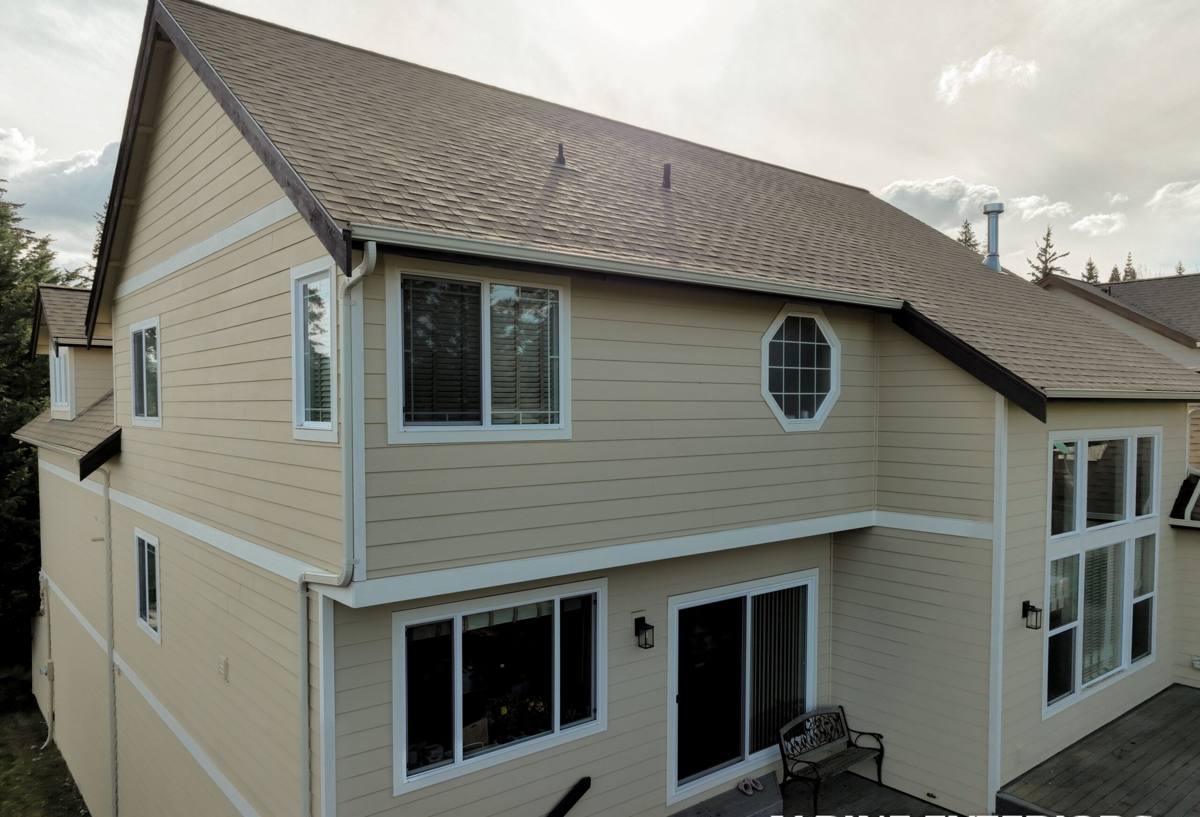
What Salt Air and Coastal Exposure Do to Windows
Homes near Cherry Point sit close enough to salt water that airborne salt is a real factor in material selection, not a minor detail. Salt accelerates corrosion on hardware — hinges, locks, balances, and screws — and it can degrade certain finishes and seals faster than manufacturers' standard warranty testing accounts for. Over years, that shows up as stiff or failing hardware, pitted or discolored metal components, and seals that give out earlier than they should.
This is why we're selective about hardware finishes and frame materials on jobs this close to the water. Vinyl and fiberglass frames generally hold up well against salt exposure because they don't corrode the way bare or poorly coated metal components can. Where a window design calls for metal hardware, we look for components rated for coastal or marine-grade use rather than standard interior-grade hardware, since the cost difference is small relative to how much longer it lasts out here.
Driving Rain and Wind-Driven Water
Winter storms off the Strait push rain sideways, not straight down, and that changes what "weatherproof" actually needs to mean for a window installed on an exposed wall. A window that would perform fine in a sheltered inland location can leak at Cherry Point if the flashing details and sealant work weren't built for wind-driven water. Correct installation — proper flashing integration with the wall's water-resistive barrier, correctly lapped house wrap, and sealant used only where it belongs rather than as a substitute for good flashing — is what actually keeps water out, not the window unit alone.
Moss Season and Prolonged Moisture
Whatcom County's moss season runs long, and it's really shorthand for extended periods of damp, low-sun conditions that keep exterior surfaces wet longer than in drier climates. Around windows, that prolonged moisture exposure is hardest on wood trim, sills, and any gaps where water can sit instead of draining. Sills need real slope to shed water, and any wood components benefit from being primed on all sides — not just the visible face — before installation, since the unseen surfaces are often where rot starts first.
What a Correct Custom Window Installation Involves
"Custom windows" covers a lot of ground — replacement windows sized for openings that don't match stock dimensions, matched sets across additions or remodels, and made-to-order shapes or configurations. What doesn't change from job to job is the installation discipline underneath it. A window is only as good as the opening it's set into and the flashing work around it.
- Removing the old unit and inspecting the rough opening for hidden rot, soft framing, or prior water damage before anything new goes in
- Confirming the opening is square, level, and properly sized for the new window rather than forcing a fit
- Installing or repairing flashing so it integrates correctly with the existing water-resistive barrier — lapped so water sheds outward and down, never trapped behind the siding
- Setting the window plumb, level, and square, then securing it per the manufacturer's fastening schedule
- Insulating the gap between frame and rough opening properly, without over-compressing insulation or leaving voids that create cold spots
- Sealing the exterior with the correct sealant at the correct joints — not as a blanket fix for gaps that should have been solved structurally
- Finishing sills and trim with proper slope and drainage so water doesn't sit against wood or frame
Skip or rush any one of these steps and the window itself becomes almost irrelevant — most window failures we're called out to fix started as an installation problem, not a product defect.
Choosing Materials That Make Sense for Cherry Point
There's no single "best" window material for every home — the right choice depends on the home's exposure, its architectural style, and what the homeowner wants long-term. What we can offer is a straightforward read on how common options actually perform in a salt-air, high-rain coastal setting like this one.
| Frame Material | Coastal Performance | Maintenance |
|---|---|---|
| Vinyl | Strong resistance to salt corrosion and moisture; won't rot | Low — occasional cleaning, no repainting |
| Fiberglass | Excellent dimensional stability and corrosion resistance in coastal exposure | Low — durable finish, minimal upkeep |
| Wood (clad exterior) | Good if exterior cladding is fully intact; any breach exposes wood to rot risk | Higher — cladding and seals need periodic inspection |
| Bare aluminum | Prone to corrosion and pitting in salt air over time unless marine-rated | Moderate to high — finish and hardware need monitoring |
We'll walk through these trade-offs with you directly rather than steering you toward one option — the right call often comes down to your home's specific exposure and what you're trying to match architecturally.
Our Process for a Cherry Point Window Job
1. On-Site Assessment
We start by looking at each opening individually — sun and wind exposure, condition of the existing framing and sill, any signs of past water intrusion, and how the home's siding and trim details tie into the window. Cherry Point homes on more exposed lots often need different flashing and sealant approaches than a similar home a few blocks inland.
2. Product Selection
Based on that assessment, we talk through frame material, glass packages, and hardware options that fit both the home's exposure and your budget. We'll flag where a lower-cost option carries a real maintenance or longevity trade-off in this climate, so you're deciding with full information.
3. Installation
Old units come out, openings get inspected and repaired as needed, and the new windows go in following the flashing and fastening sequence outlined above. We don't shortcut flashing work to save time — it's the single biggest factor in whether a window stays dry for the next twenty years.
4. Final Check and Cleanup
Every installed window gets checked for proper operation, a clean seal, and correct exterior finish work before we consider the job done. We clean up the site and walk you through anything you should know about care going forward.
What to Check Before Hiring a Window Contractor Here
Not every contractor who installs windows understands coastal Whatcom County conditions, and that gap tends to show up years later as leaks or premature hardware failure — long after the original installer has moved on. A few things worth confirming before you hire anyone for a Cherry Point job:
- Do they have experience specifically with homes in salt-air, high-wind-driven-rain locations, not just general PNW rain exposure?
- Will they inspect and repair the rough opening and flashing, or just swap the window unit itself?
- Are they licensed and insured to work in Washington, and can they provide proof without hesitation?
- Do they explain material trade-offs honestly, including where a cheaper option costs more in maintenance later?
- Do they stand behind their installation work specifically, separate from the manufacturer's product warranty?
Signs Your Current Windows Are Struggling With the Climate
Homeowners often live with early warning signs for a while before calling anyone, partly because they're easy to write off as normal. In a climate like this one, a few symptoms are worth taking seriously sooner rather than later: fogging or condensation between double-pane glass (a sign the seal has failed), stiff or corroded hardware that's harder to lock or operate than it used to be, visible gaps or drafts around the frame, soft or discolored sill wood, and paint or finish that's bubbling or peeling near the window edges. Catching these early usually means a more contained repair or replacement instead of dealing with hidden water damage in the surrounding wall framing.
Why Local Experience on This Stretch Matters
A window install that would hold up fine in a drier or more sheltered part of Whatcom County can fail here within a few years if it wasn't built for Cherry Point's specific exposure to salt air, wind-driven rain, and a long stretch of damp moss season. We work this area regularly, which means our material recommendations and installation details are shaped by what actually holds up on homes like yours — not a one-size-fits-all approach carried over from a different climate zone.
If you're considering new or replacement windows for a Cherry Point home, we're happy to take a look and give you an honest read on what your home needs. Reach out for a free, no-pressure estimate using the form below.