 Blaine Siding
 Asphalt Shingle Roofing for Bellingham Homes
Bellingham sits right on the water in Whatcom County, and that location shapes everything about how a roof ages here. Salt-laden air off Bellingham Bay, long stretches of driving rain through fall and winter, and shaded, damp yards that never fully dry out in summer all combine to put more stress on asphalt shingles than most manufacturers' warranty language accounts for. A shingle roof that's installed correctly for this climate can last two to three decades. One that's installed to a generic spec, or by a crew that doesn't work this area regularly, tends to show problems years ahead of schedule.
This page is about doing asphalt shingle roofing right for Bellingham specifically — not a general overview of shingles, but what actually matters when your roof has to hold up against Pacific Northwest coastal weather year after year.
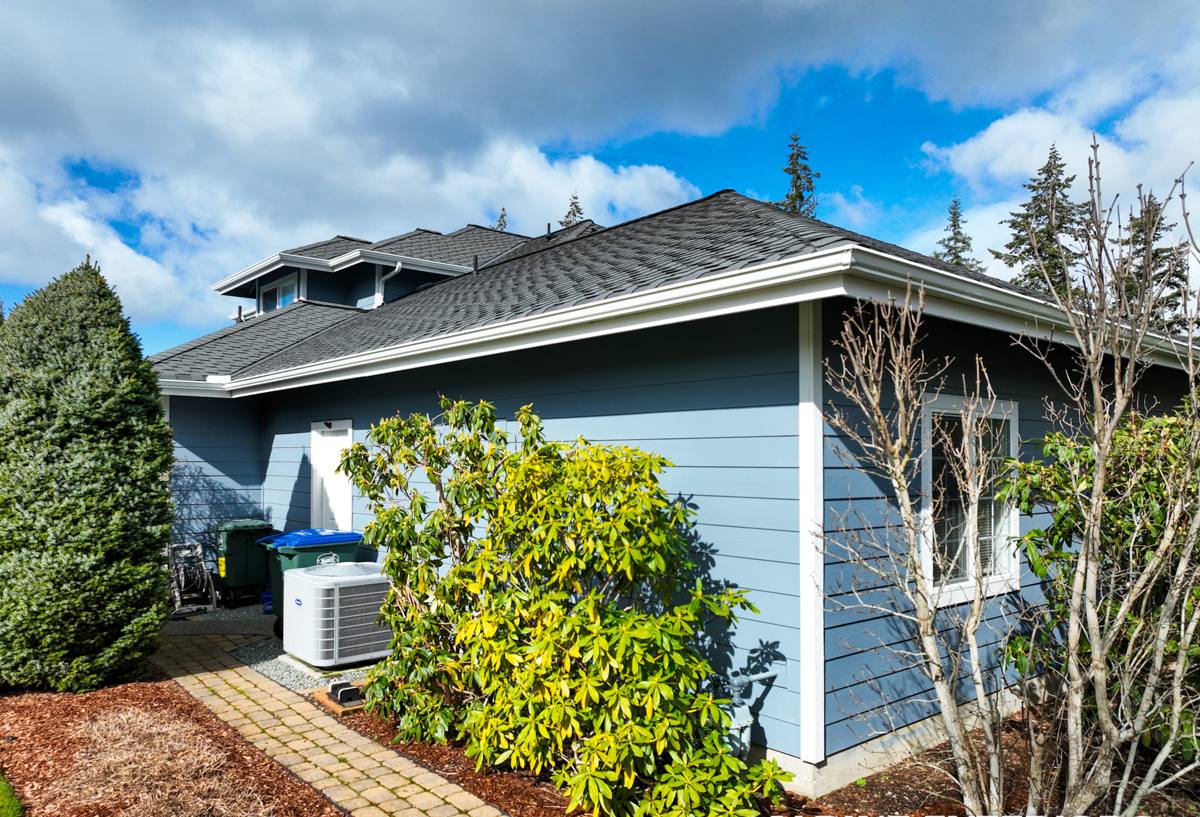
Why Bellingham's Climate Is Tougher on Shingles Than It Looks
Salt Air and Moisture
Homes closer to Bellingham Bay and the surrounding shoreline deal with airborne salt that settles on roofing materials and accelerates the breakdown of granules and adhesives over time. It's a slower process than what you'd see storm-side on the open coast, but it's real, and it's one reason we pay attention to fastener and flashing material — not just the shingle itself — on homes near the water.
Driving Rain
Whatcom County doesn't just get a lot of rain — it gets wind-driven rain that comes in at an angle instead of falling straight down. That matters because it pushes water sideways under shingle edges, into valleys, and around anything that penetrates the roof deck (vents, chimneys, skylights). A roof that would perform fine in a drier climate can leak here if the underlayment, valley work, and flashing details aren't built for sideways water.
Moss Season
Between the moisture and the shade from mature trees common in this area, moss and algae have a long growing season on north-facing and shaded roof slopes. Moss isn't just cosmetic — it holds moisture against the shingle surface, lifts shingle edges as it grows, and shortens the life of the roof underneath it if it's left unmanaged.
What a Correctly Installed Shingle Roof Actually Involves
A lot of roofing problems we get called out for aren't shingle failures — they're installation shortcuts that don't show up until year five or six. For a Bellingham home, a correct job includes:
- A synthetic or self-adhering underlayment rated for high-moisture climates, not just builder-grade felt
- Ice-and-water shield membrane at eaves, valleys, and around every roof penetration — the places wind-driven rain actually gets in
- Properly lapped step flashing at walls and chimneys, not just caulk-and-hope patch flashing
- Balanced intake and exhaust ventilation so the attic can actually dry out between rain events
- Starter strip and hip/ridge shingles matched to the field shingle's wind rating, not a generic substitute
- Fasteners placed in the manufacturer's nail line, at the correct count per shingle — under-nailing is one of the most common causes of early wind and rain damage we see
None of this is exotic. It's standard practice done consistently, on every roof, instead of skipped on the parts that are harder to reach or slower to do correctly.
Choosing the Right Shingle for This Area
Not every asphalt shingle product is built the same way, and for a coastal Whatcom County home, the differences matter more than they would somewhere drier. Here's how the common tiers compare:
| Shingle Type | Wind Rating | Algae Resistance | Typical Lifespan Here | Best Fit |
|---|---|---|---|---|
| 3-tab (economy) | Lower | Often none or minimal | 12–18 years | Budget-driven projects, secondary structures |
| Architectural / laminate | Moderate to high | Available with algae-resistant granules | 20–28 years | Most Bellingham homes — best balance of cost and durability |
| Premium / designer laminate | High | Standard on most lines | 25–35 years | Homes prioritizing longevity, curb appeal, or higher wind exposure |
For most homes in and around Bellingham, we steer people toward architectural shingles with algae-resistant (copper- or zinc-infused) granules as the baseline, not an upgrade. Given the moss and algae exposure here, that feature earns its keep — it's a professional standard for this climate, not an add-on.
A Word on Manufacturer Warranties
Shingle warranties look generous on paper, but most are prorated after the first several years and rarely cover labor for a full replacement. We walk homeowners through what's actually covered versus what's marketing, so there are no surprises if a warranty claim ever comes up.
Our Process for a Bellingham Roof Replacement
- On-site inspection: We check the deck, existing ventilation, flashing condition, and moss/moisture patterns specific to your roof's slopes and shade exposure.
- Honest scope and estimate: You get a clear breakdown of what's being replaced and why, including whether deck repair is likely — not a vague lump-sum number.
- Deck assessment during tear-off: Soft or water-damaged sheathing gets identified and replaced before anything new goes down, not covered over.
- Underlayment and flashing first: This is where most of a roof's actual weather resistance comes from, and it's the stage we don't rush.
- Shingle installation to spec: Correct nailing pattern, exposure, and starter/ridge detail for the wind rating you're paying for.
- Ventilation check: We confirm intake and exhaust are balanced so the new roof can actually dry properly between the region's wet stretches.
- Final walkthrough: We show you what was done and what to watch for going forward.
Signs Your Bellingham Roof Needs Attention
Because of the moisture and moss factors specific to this area, roof problems here often show up differently than in drier climates. Watch for:
- Moss growth thickening on north-facing or shaded slopes, especially near roof edges
- Granules collecting in gutters or at downspout outlets
- Shingle edges curling or lifting, particularly after a windy rain event
- Dark streaking that doesn't wash away with rain (algae, not just dirt)
- Soft spots or sagging when walked on or viewed from a ladder
- Daylight visible through the attic roof deck, or damp insulation after storms
- Interior ceiling stains, especially near chimneys, skylights, or valleys
Catching these early is almost always cheaper than waiting — a moss problem left alone for a few seasons can turn into deck damage that a simple cleaning wouldn't have prevented.
Maintenance That Actually Helps in This Climate
A shingle roof here isn't maintenance-free, even a good one. A few habits go a long way between professional inspections:
- Keep gutters clear so water isn't backing up under the shingle edge during heavy rain
- Have moss physically removed (not just chemically killed) before it builds up thick enough to hold water against the shingles
- Trim back overhanging branches where practical to reduce shade and debris buildup on north-facing slopes
- Schedule a roof check after major windstorms, not just on a fixed yearly schedule
Why Local Experience on This Coastline Matters
A shingle roof spec that works in a drier inland climate doesn't automatically hold up on Bellingham Bay. Crews who don't regularly work this coastline can underestimate how much wind-driven rain and long moss seasons demand from underlayment, flashing, and ventilation choices — and that gap doesn't show up on installation day. It shows up two, five, or ten years later, usually as a leak or premature shingle failure that could have been avoided with the right details up front.
Working in Whatcom County day in and day out means we're not guessing at what this climate does to a roof — we're building for the salt air, the rain angle, and the moss exposure every homeowner here is already dealing with.
What Affects the Cost of a Shingle Roof in This Area
| Factor | Why It Matters Here |
|---|---|
| Roof pitch and complexity | Steeper or multi-valley roofs need more careful flashing and water-diversion work |
| Deck condition | Long-term moisture exposure can mean hidden sheathing repair once old shingles come off |
| Shingle tier chosen | Algae-resistant, higher wind-rated products cost more upfront but hold up longer against local conditions |
| Ventilation upgrades | Older homes often need intake/exhaust corrections to keep moisture from building up in the attic |
| Access and site conditions | Tree cover, tight lot lines, or steep terrain common in this area can affect labor and staging |
We don't quote a number without seeing the roof — too many of these factors are specific to your home and its exposure to weather off the bay.
If your Bellingham home's roof is showing moss, granule loss, or you're just planning ahead, we're glad to take a look and put together a free, no-pressure estimate. Fill out the form below and we'll get you a straightforward assessment of what your roof actually needs.