 Blaine Siding
 Bellingham Roofs Take a Different Kind of Beating
Bellingham sits close enough to the water and open enough to Pacific weather systems that its roofs deal with a combination most inland towns don't see together: salt-laden air off Bellingham Bay, wind-driven rain that comes in sideways off the Strait, and a moss season that can run eight or nine months out of the year in shaded, north-facing sections of a roof. None of those three things is dramatic on its own. Together, over a few winters, they find every weak point a roof has.
We're based in Blaine and work Whatcom County roofs regularly, so Bellingham's specific mix of exposure is familiar territory — not a one-off job we have to figure out on the fly. That matters when you're trying to decide whether a leak after a storm is a five-minute patch or the first sign of something bigger underneath.
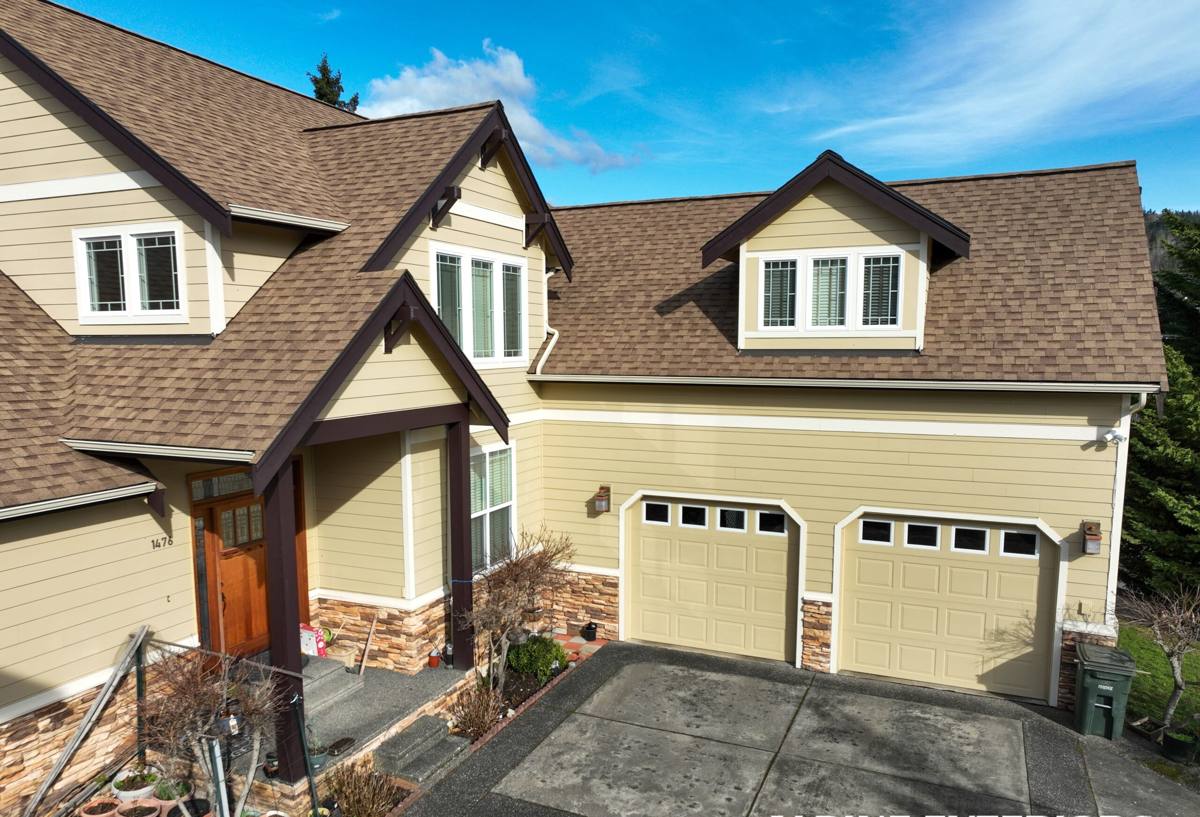
What "Storm Damage" Actually Looks Like Here
Storm damage doesn't always announce itself as a hole in the roof. In this part of Washington it's usually quieter than that, and it shows up in a handful of recognizable patterns.
Wind and Uplift
Sustained wind off the water can lift shingle tabs at the edges and ridge line without tearing them off completely. The shingle looks intact from the ground but the seal is broken, and the next rain finds its way underneath. Gusts also drive loose branches and debris across the roof surface, which can crack shingles or gouge granule coating without leaving an obvious hole.
Driving Rain
Rain that's moving horizontally instead of falling straight down gets pushed under flashing, up under shingle laps, and into any gap around a vent pipe or chimney that a calm-weather roof would shed without issue. This is the most common cause of a "mystery leak" that only shows up during or right after a storm and seems to disappear the rest of the time.
Falling Limbs and Debris
Mature trees are part of what makes a lot of Bellingham properties attractive, but they're also a liability during wind events. A limb doesn't have to be large to crack a shingle, dent a gutter, or knock flashing loose — and the damage from a smaller strike is often the kind that gets missed until it's already leaked into the attic.
Moss-Related Deterioration
Moss isn't storm damage by itself, but it sets a roof up to fail during one. Moss holds moisture against the shingle surface, lifts tabs as it grows under the edges, and clogs valleys and gutters so that storm runoff backs up instead of draining. A roof with heavy moss going into a windstorm is far more likely to leak than a clean one.
Why This Matters More on the Coast Than Inland
Salt air accelerates corrosion on exposed metal — flashing, fasteners, gutter hardware, vent caps. A fastener that would last decades in a dry inland climate can start showing rust streaks and losing grip years earlier this close to Bellingham Bay. That's not a reason to panic about every roof in town, but it is a reason we pay closer attention to metal condition during a storm damage inspection here than we might elsewhere in Whatcom County. Rust-weakened flashing is often the actual point of failure, even when the shingles around it look fine.
What a Correct Storm Damage Repair Involves
A repair that just replaces the shingles you can see and stops there is a temporary fix, not a real one. A correct repair works from the deck outward.
Full Inspection Before Any Work Starts
We look past the obvious damage point to check the surrounding field of the roof, the flashing at penetrations and valleys, the ridge and hip lines, and the attic side if it's accessible. Wind and water damage is rarely limited to exactly where it first became visible.
Deck Condition
If water has been getting in for any length of time, the plywood or OSB decking underneath can be soft, delaminated, or stained. Shingles installed over compromised decking won't hold a seal properly and will fail again. Any soft or damaged decking gets cut out and replaced before new roofing goes down.
Flashing and Underlayment
Given the salt air and rain exposure here, we treat flashing as a full check item, not an afterthought — corroded or improperly lapped flashing around chimneys, skylights, and valleys is one of the most common repeat-leak causes we run into. Underlayment gets inspected and replaced in the repair area so the new shingles have a proper water barrier underneath them, not just a cosmetic surface layer.
Matching and Tie-In
Repairs get tied into the surrounding roofing correctly — proper shingle lap, nailing pattern, and, where possible, a reasonable material and color match so the repair doesn't stand out as an obvious patch.
Our Process, Start to Finish
- Contact and initial questions. We ask what happened, when, and what you're seeing — a leak, missing shingles, visible debris damage — so we show up prepared.
- On-site inspection. We walk the roof and check the attic if accessible, documenting what we find with photos.
- Temporary protection if needed. If there's active water intrusion, we'll tarp or otherwise secure the affected area before doing anything else, so more rain doesn't make the damage worse while a full repair is scheduled.
- Written scope and estimate. You get a clear explanation of what's damaged, what needs to be done, and an honest cost range before we start any repair work.
- Repair. Deck, flashing, underlayment, and shingle work completed in that order, not skipped for speed.
- Final walk-through. We confirm the repair area, check for any additional issues spotted during the work, and answer questions before we consider the job done.
Repair or Replace? What Actually Drives That Decision
Not every storm-damaged roof needs a full replacement, and not every roof that "just needs a patch" is actually a good repair candidate. The honest answer depends on a few factors.
| Factor | Leans Toward Repair | Leans Toward Replacement |
|---|---|---|
| Roof age | Under roughly 12–15 years, otherwise sound | Nearing or past expected shingle lifespan |
| Extent of damage | Localized to one section or a few spots | Widespread across multiple slopes |
| Decking condition | Solid, no rot or delamination found | Soft spots or water staining in multiple areas |
| Moss/algae history | Minimal, easily cleared | Heavy, long-term moss with lifted shingle edges throughout |
| Prior repair history | First storm-related repair on this roof | Repeated patches in the same areas over past years |
We'll tell you plainly which side of that table your roof falls on. A repair that's likely to fail again within a year or two isn't a good use of your money, and we'd rather say that up front than let you find out the hard way.
Insurance Claims: What's Worth Knowing
Many storm damage repairs in this area do get covered under homeowners' insurance, particularly wind and impact damage from a documented storm event. A few things help that process go smoother:
- Document damage with photos as soon as it's safe to do so, before any temporary repairs change how the area looks.
- Keep any tarping or emergency mitigation receipts — insurers generally expect reasonable steps to prevent further damage.
- Get a written inspection report and estimate that clearly separates storm-caused damage from pre-existing wear, since insurers only cover the former.
- Know your policy's wind and water damage terms before the adjuster visit — coverage details vary more than people expect.
We can provide documentation to support a claim, but we're not a public adjuster and won't promise a specific claim outcome — that's between you and your insurer.
Preventing the Next Storm From Doing the Same Damage
Once a repair is done, a little seasonal attention goes a long way toward keeping it from happening again.
- Clear moss and debris from the roof surface and valleys before the wet season sets in, not after.
- Keep gutters clear so storm runoff has somewhere to go instead of backing up under shingle edges.
- Trim back tree limbs that overhang the roof, especially ones that could reach it in high wind.
- Have flashing and fasteners checked periodically given how salt air accelerates corrosion this close to the water.
- Address small leaks or lifted shingles promptly — they're far cheaper to fix before the next storm than after.
Why It Matters to Hire a Crew That Already Works Bellingham
A repair crew that mainly works drier, inland climates doesn't always think to check flashing corrosion first or recognize how much moss has already compromised a shingle seal before the storm even hit. Working Whatcom County roofs regularly, including Bellingham's mix of coastal exposure and tree cover, means we're not guessing at what usually turns out to be the real cause of a leak here — we've seen the pattern before. That translates into faster, more accurate diagnosis and a repair that's built for what this climate will keep doing to it, not just what happened in the last storm.
If a recent storm left you with a leak, missing shingles, or damage from a fallen limb, we're happy to take a look and give you a straight answer on what it needs. Reach out for a free, no-pressure estimate using the form below.