 Blaine Siding
 Why Everson Homes Wear Out Siding Differently
Everson sits inland from the coast in the Nooksack River valley, but "inland" doesn't mean dry. Whatcom County's marine climate pushes moisture-heavy weather systems across the whole region, and Everson gets its share of long, gray stretches of driving rain, heavy morning dew, and the kind of persistent damp that keeps north-facing walls and shaded eaves wet for days at a time. Add in valley fog and the tree cover that lines many Everson properties, and you get ideal conditions for moss, algae, and mildew to take hold on siding that isn't built to shed water fast.
This matters because siding failure in this area rarely starts as a dramatic problem. It starts small: a hairline crack that lets water behind a panel, a caulk joint that dries out and splits, a shaded corner where moss gets a foothold and holds moisture against the wall. Over a few seasons, that small problem becomes soft trim, bubbling paint, or rot in the sheathing underneath. By the time it's visible from the street, the damage has usually been building for a while.
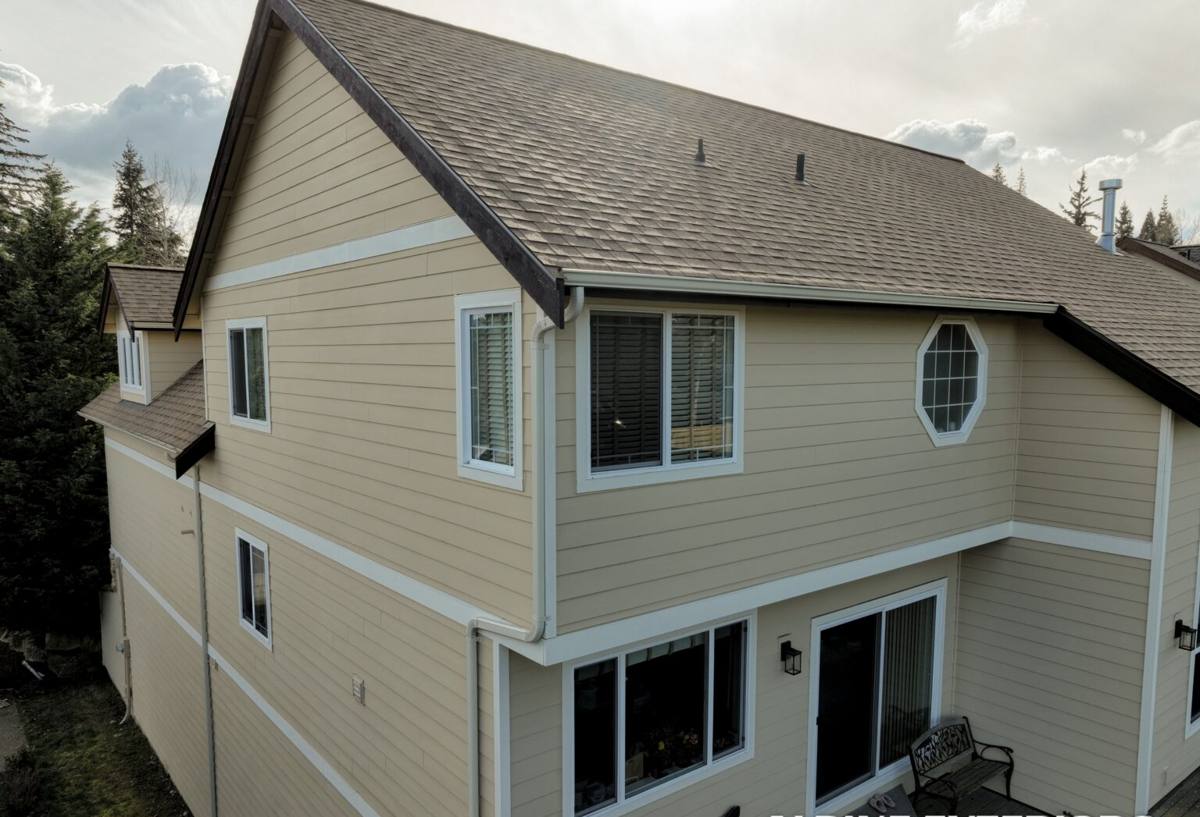
Signs an Everson Home Needs Siding Replacement, Not Just Repair
Not every siding problem calls for a full tear-off. But there's a point where patching stops making sense and replacement becomes the honest recommendation. Here's what we look for:
- Soft or spongy spots when you press on the siding, especially near the bottom courses and around windows
- Paint that's peeling, bubbling, or won't hold a fresh coat no matter how well it's prepped
- Persistent moss or algae growth that comes back within a season of cleaning
- Visible warping, cupping, or panels pulling away from the wall
- Cracked or crumbling caulk at seams, corners, and trim that keeps failing after re-caulking
- A musty smell or visible staining on interior walls that share an exterior wall with damaged siding
- Siding that's original to a home built more than 20-25 years ago, particularly if it's wood-based or an older composite product
One or two of these on their own might just need a repair. Several together, especially on the same wall, usually mean water has been getting behind the siding for a while and the smarter money is on replacement.
What Correct Siding Replacement Actually Involves
Siding replacement done right is not just swapping old panels for new ones. The siding itself is the visible layer of a system, and every layer underneath it has to work for the whole wall to hold up in this climate.
Tear-Off and Wall Inspection
Old siding comes off down to the sheathing, and that's the point where problems that were hidden for years finally show up — soft sheathing, rot around window openings, missing or degraded house wrap. Any of that gets repaired before a single new panel goes up. Covering damaged sheathing with new siding just locks the problem in.
Weather-Resistive Barrier
A properly lapped, sealed weather-resistive barrier goes on before siding. Its job is to stop bulk water that gets past the siding from reaching the sheathing, while still letting incidental moisture escape. In a climate that sees as much sustained rain as Whatcom County does, this layer isn't optional — it's the backup plan for the water that inevitably finds its way past the surface.
Flashing at Every Penetration
Windows, doors, vents, hose bibs, light fixtures — every place something interrupts the wall plane is a place water can get in if flashing isn't installed correctly. This is one of the most common places we find corner-cutting on older installs, and it's usually the source of the rot we find when we tear off old siding.
Proper Fastening and Clearances
Fiber cement siding has specific fastening patterns, nail placement, and gap requirements at trim, corners, and the bottom of the wall. Getting these wrong doesn't usually cause a problem in year one — it shows up three, five, or ten years later as cracking, buckling, or water intrusion at the joints.
Why We Install Only James Hardie Fiber Cement
We stopped installing vinyl, LP SmartSide, and other composite or wood-based siding products years ago, and Everson's climate is a big part of why. Vinyl expands and contracts with temperature swings and can crack in cold snaps; it also doesn't hold paint if you ever want to change the color. Wood-based composites and primed wood trim are vulnerable at cut edges and fastener points — exactly the spots where this region's rain finds a way in — and they need more ongoing maintenance to stay ahead of moisture damage.
James Hardie fiber cement is a different material entirely. It's cement-based rather than wood-based, so it doesn't feed rot or absorb water the way wood products can, and it holds up to years of damp, mossy conditions without the swelling or delaminating that plagues composite products in wet climates. It's also non-combustible, which matters more every year as wildfire smoke seasons stretch longer across the Pacific Northwest.
HZ5 Engineering for This Climate
Hardie's HZ5 product line is engineered specifically for climates like ours, with freeze-thaw cycling and moisture exposure. That's a meaningful difference from siding built to a generic national spec.
ColorPlus Factory Finish
Rather than field-painted siding that starts weathering the day it goes up, ColorPlus is baked on at the factory in multiple coats, backed by its own finish warranty, and holds color and sheen far longer than a job-site paint job — which matters when your painting season here is short and unpredictable.
Our Replacement Process
- On-site assessment — we walk the exterior, check problem areas you've flagged, and look for moisture damage you might not have noticed yet, especially on shaded or north-facing walls
- Written scope and estimate — what's being removed, what's being repaired underneath, which Hardie products and colors, and a clear price before anything starts
- Tear-off and sheathing repair — old siding and trim come off, damaged sheathing gets replaced, and we don't cover up anything we find
- Weather barrier and flashing — installed and sealed at every window, door, and penetration before new siding goes on
- Hardie installation — fastened, gapped, and finished to manufacturer spec so the warranty is actually valid
- Final walkthrough — we go over the finished work with you before we call the job done
What Drives Cost on an Everson Siding Job
| Factor | Why It Matters |
|---|---|
| Home size and wall complexity | More square footage and more corners, gables, and trim details mean more material and labor |
| Condition of the sheathing underneath | Hidden rot or water damage found at tear-off adds repair scope before new siding can go up |
| Siding profile chosen | Lap siding, board-and-batten, and shingle-style Hardie products differ in material and install time |
| Trim and accessory work | Window trim, corner boards, fascia, and soffit repairs are often bundled into a siding project |
| Access and site conditions | Tree cover, tight lot lines, or multi-story walls affect scaffolding and staging time |
We give a firm, itemized number after the on-site assessment rather than a rough phone estimate — the only way to price this accurately is to see the actual walls.
Why Local Experience in Everson Matters
A crew that regularly works Whatcom County knows what to expect before the tear-off even starts. That means checking known trouble spots first, understanding how sun exposure and shade patterns on a given lot affect moss growth and drying time, and knowing how to sequence a job around the region's weather instead of getting caught mid-project by a wet spell. It also means we're not learning the local permitting and inspection process on your project — we already know it.
Just as important is being reachable afterward. Warranty questions, a question about a caulk line a few years down the road, storm damage — a company that's local and easy to find beats one that did one job in the area and moved on.
Questions Worth Asking Any Siding Contractor
- Are you inspecting and repairing the sheathing underneath, or just covering what's there?
- What weather-resistive barrier and flashing details are included in the scope?
- Is the manufacturer's fastening and clearance spec being followed, and does that keep the material warranty intact?
- What's actually in writing — product, color, scope, and price — before work starts?
- Who do I call if something needs attention two or five years from now?
If your Everson home's siding is showing its age or you're just not sure whether it's a repair or a replacement situation, we're happy to take a look. The estimate is free, there's no pressure, and you'll get a straight answer either way — just fill out the form below to get started.