 Blaine Siding
 Why Bellingham's Climate Is Hard on Roofs
Bellingham sits close enough to Bellingham Bay and the Salish Sea that salt-laden air is a real factor for anything on your roof, not just boats at the marina. Add Whatcom County's long, wet winters and the shade from mature Pacific Northwest tree cover, and you get a combination that wears out roofing materials faster than drier inland climates ever would. Homeowners here deal with three compounding problems: airborne salt that accelerates corrosion on unprotected metal, driving rain that finds every weak seam and fastener, and a moss season that can run eight months or longer on shaded, north-facing slopes.
None of these problems are dealbreakers for a roof — but they do mean the roof has to be chosen and installed with this specific climate in mind, not a generic install pulled from a catalog. That's the difference between a metal roof that looks sharp for 40+ years and one that starts showing rust streaks, lifted panels, or moss-choked valleys within a decade.
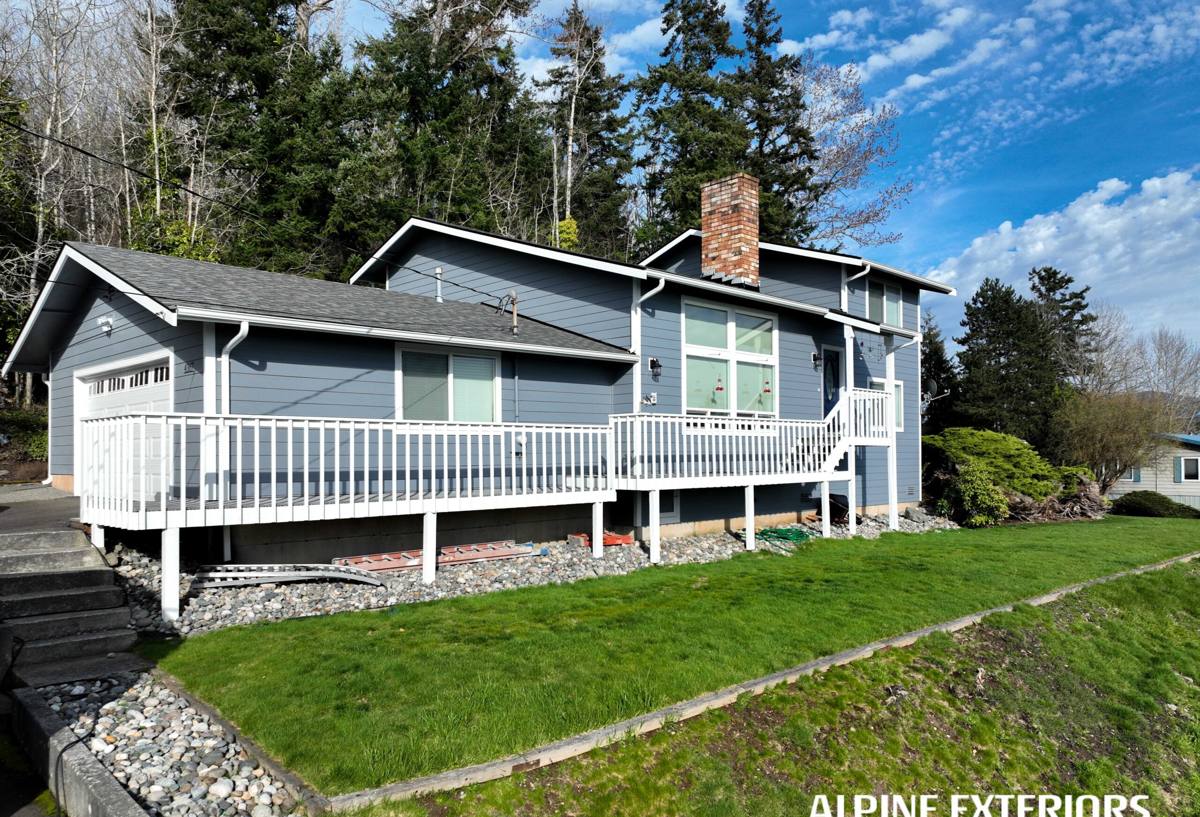
Why Metal Roofing Holds Up Well in Bellingham
Metal roofing is a strong fit for this area for a few concrete reasons, not just curb appeal:
- Steep, slick panel surfaces shed rain fast instead of letting it pool the way some shingle systems do on lower-pitch sections.
- Properly coated metal resists moss and algae growth far better than asphalt shingles, which have a granulated surface that gives spores something to grip.
- Correctly installed metal roofing has a realistic service life measured in decades, which matters when you're weighing the upfront cost against how many times you'd otherwise re-roof with shingles.
- Metal handles wind-driven rain better than many roofing types when the fastening and underlayment details are done right — and wind-driven rain off the Strait is a normal weather event here, not a rare storm.
That said, "metal roofing" isn't one product. The panel type, coating, and fastening system all matter, and picking the wrong combination for a coastal Whatcom County home can undo most of these advantages.
Standing Seam vs. Exposed Fastener Panels
The two most common metal roofing systems homeowners in this area consider are standing seam and exposed-fastener (sometimes called screw-down) panels. Both can be legitimate choices, but they behave differently over time in a wet, salty climate.
| Factor | Standing Seam | Exposed Fastener |
|---|---|---|
| How panels attach | Hidden clips, no exposed screws through the panel face | Screws driven through the panel face into the roof deck |
| Long-term weather sealing | No exposed fastener heads to fail; seams interlock | Fastener seals (rubber washers) degrade over time and need eventual replacement |
| Upfront cost | Higher material and labor cost | Lower upfront cost |
| Best fit | Long-term coastal or high-exposure homes, standing water areas | Budget-conscious projects, outbuildings, shorter ownership horizon |
We install both, but for full-time residences close to the water or under heavy tree cover, we generally steer homeowners toward standing seam once they understand the maintenance difference — replacing failed fastener washers on an exposed-fastener roof every so often is a real, recurring cost that standing seam avoids.
What a Correct Metal Roof Installation Actually Involves
A metal roof is only as good as what's underneath it. The panels get the attention, but the underlayment, flashing, and ventilation details are what actually keep water out over 30 or 40 years.
Underlayment and Ice/Water Protection
In our rain-heavy climate, a synthetic underlayment rated for metal roofing — not a leftover felt product meant for shingles — is the baseline. Valleys, eaves, and any low-slope transitions get self-adhering ice-and-water membrane, because those are the spots where wind-driven rain backs up under panels during a heavy storm.
Flashing and Penetrations
Every chimney, vent pipe, and skylight is a place water wants to get in. Flashing has to be formed to match the specific panel profile being installed, not bent generically and caulked into place. Caulk is a backup, not a primary seal — a roof that depends on caulk to stay dry will eventually leak.
Coastal-Grade Materials and Fasteners
This is the detail that gets skipped most often, and it's the one that matters most near Bellingham Bay. Salt air corrodes bare steel and low-grade fasteners faster than most homeowners expect. We use fasteners and trim rated for coastal exposure, and we pay attention to galvanic compatibility — mixing incompatible metals (say, the wrong fastener in an aluminum panel) sets up corrosion that can eat through metal from the inside of the connection point, long before the panel itself would ever fail on its own.
Panel coatings matter here too. A quality PVDF (often sold under names like Kynar) finish holds its color and resists chalking far longer than a basic painted finish, which is worth the difference in a climate that gets this much sun-and-rain cycling.
Moss, Algae, and Debris in a Long Wet Season
Moss doesn't grow because a roof is old — it grows because a roof stays damp and shaded long enough for spores to establish. Bellingham's tree canopy and extended wet season make this a near-guarantee on north-facing or shaded slopes, regardless of roofing material.
Metal roofing doesn't give moss the same foothold that a granulated shingle surface does, but it isn't moss-proof if debris is allowed to sit in valleys or against ridge caps. Two things make the real difference on a metal roof here:
- Panel profile and slope that actually shed water and debris instead of collecting it in flat or low-pitch sections.
- Zinc or copper accent strips near the ridge on shaded roofs, which release trace metal ions in rainwater that inhibit moss and algae growth downslope.
We also make sure valleys and gutters are sized and pitched to handle heavy rain events without backing up — a clogged valley on a metal roof causes the same water intrusion problems as on any other roof type.
Our Process, Start to Finish
We keep the process straightforward because homeowners deserve to know what's happening on their roof and when.
- On-site inspection and measurement, including a look at your attic ventilation and current roof deck condition.
- A written estimate that spells out panel type, gauge, coating, underlayment, and flashing details — not a vague lump-sum number.
- Permit handling with the City of Bellingham or Whatcom County, depending on your property's jurisdiction.
- Tear-off (when needed) and deck inspection, with any soft or damaged decking replaced before new material goes down.
- Full underlayment, flashing, and panel installation following manufacturer specs for coastal exposure.
- Final walk-through and cleanup, including a magnetic sweep for stray fasteners.
What Affects the Cost of a Metal Roof in This Area
Every roof is different, so exact numbers require a site visit, but the main cost drivers on Bellingham-area homes are consistent enough to lay out honestly:
| Factor | Why It Matters |
|---|---|
| Panel system (standing seam vs. exposed fastener) | Standing seam runs higher due to material and labor, but reduces long-term maintenance |
| Roof pitch and complexity | Steep or cut-up roofs with many valleys and penetrations take longer to flash correctly |
| Tear-off vs. install over existing roof | Removing old roofing adds labor but lets us inspect and fix the deck underneath |
| Coating quality | Higher-grade PVDF/Kynar coatings cost more upfront but resist coastal weathering longer |
| Access and site conditions | Steep lots, mature trees, or limited driveway access can affect staging and labor time |
As a general industry range, metal roofing installations typically fall somewhere in the mid-to-high end compared to asphalt shingles per square foot, with the gap narrowing over time once you factor in how much less often a metal roof needs replacing. We'll walk through the real numbers for your specific roof during the estimate — no guessing games.
Why It Matters That We Already Work in Bellingham
A crew that only occasionally works this far into Whatcom County has to relearn the same lessons every job: which panel systems actually hold up against Bellingham Bay's salt air, how local permitting works with the City of Bellingham versus the county, and how much moss protection a given slope and tree cover actually needs. A crew that works here regularly already knows the answers.
That local familiarity shows up in small decisions that add up — choosing the right fastener coating without being told, sizing gutters for the rain volume this area actually gets, and knowing which roof orientations on Bellingham homes need extra attention to moss and shade. It's the difference between a roof that's technically installed correctly and one that's installed correctly for this specific place.
Maintaining a Metal Roof in a Marine Climate
Metal roofing is low-maintenance, not no-maintenance, especially this close to salt water. A simple annual routine keeps a well-installed metal roof performing for decades:
- Rinse accumulated salt spray and debris off the roof surface, especially on sides facing the water or prevailing wind.
- Clear gutters and valleys of needles and leaf litter before the fall rains start.
- Check exposed fastener washers (if you have a screw-down system) for early signs of wear every few years.
- Look for any lifted flashing after major windstorms.
None of this requires a specialist visit every time — but knowing what to look for prevents small issues from becoming roof deck damage.
Get a Straight Answer on Your Roof
If you're weighing metal roofing for a home in the Bellingham area, we're happy to take a look and give you a straightforward assessment — what your roof actually needs, what it doesn't, and what a correct installation would look like for your specific slope, shade, and exposure. Fill out the form below for a free, no-pressure estimate.