 Blaine Siding
 Windows Built for This Corner of Washington
A window that performs well in a dry climate can still fail in a few years out here. Homes in and around Bellingham sit close enough to the water that salt-laden air, wind-driven rain, and long stretches of damp, shaded weather all work on a window at once — not just the glass, but the frame, the seals, and everything tucked behind the trim. Energy efficiency and durability aren't separate problems in this part of Whatcom County; a window that leaks air usually isn't sealing out moisture either, and a window that's rotting at the sill is also the one spiking your heating bill. We treat them as one job.
This page covers what actually matters when you're replacing or upgrading windows on a Bellingham-area home: what "energy efficient" should mean here specifically, what a correct installation looks like given our weather, and why the difference between a good install and a bad one usually doesn't show up for two or three winters.
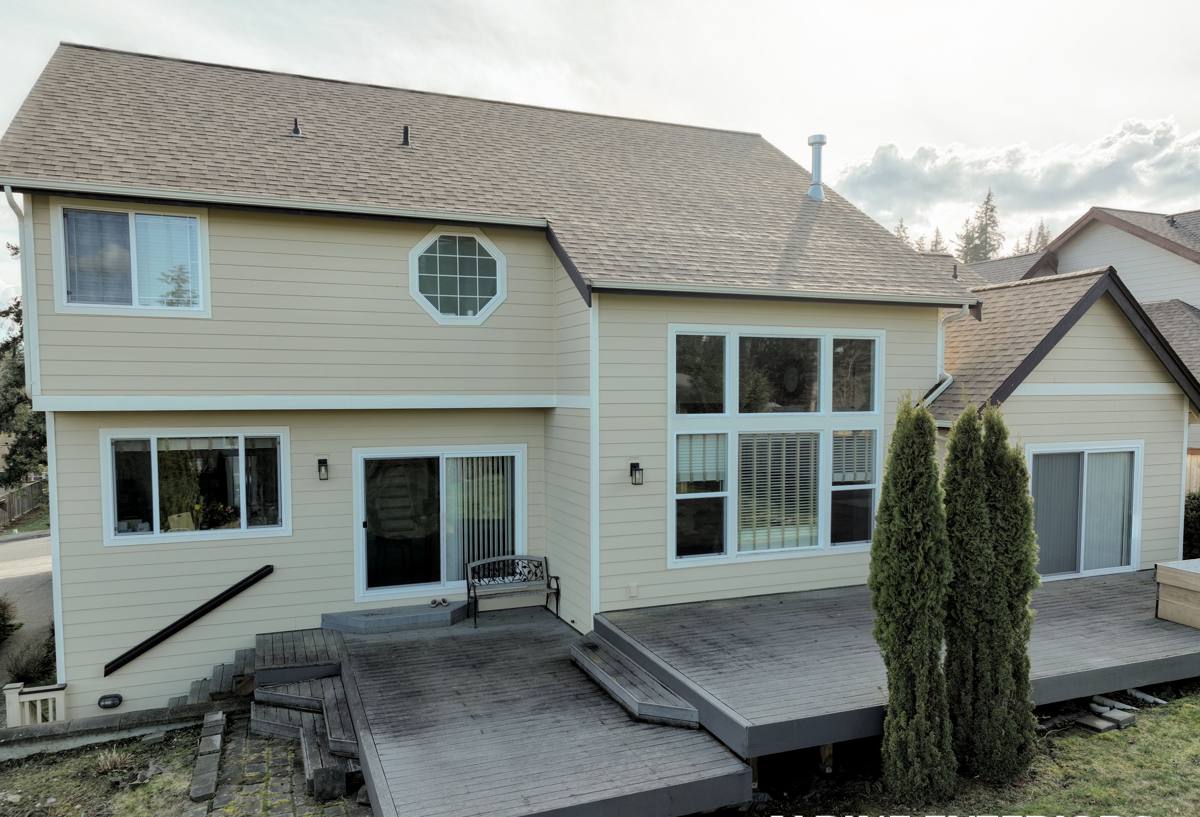
What "Energy-Efficient" Should Mean in This Climate
Energy-efficient windows are usually sold on two numbers: U-factor (how well the window resists heat loss — lower is better) and Solar Heat Gain Coefficient, or SHGC (how much solar heat passes through — lower keeps a room cooler in the rare hot stretch, higher helps on grey winter days). For our region, U-factor matters more than SHGC most of the year, because the bigger cost driver isn't summer heat gain, it's heat loss during the long cool, wet season.
But the label on the glass only tells part of the story. A window with a great U-factor installed with a poor air seal will still leak conditioned air around the frame, and in a marine climate that gap doesn't just cost you money — it's also where moist air finds a path into the wall cavity. So when we talk about "energy-efficient windows" for a Bellingham home, we mean the whole assembly: glass package, frame material, and installation detail, working together.
The Three Things That Actually Drive Performance
- Glass package — double- or triple-pane, low-E coatings, gas fill between panes (typically argon).
- Frame material and construction — how well it resists warping, swelling, and thermal transfer over years of wet-dry cycling.
- Installation quality — flashing, sealant, insulation around the rough opening, and drainage detailing. This is where most underperforming "energy-efficient" windows actually fail.
The Three Climate Factors Working Against Your Windows
Salt Air
Proximity to the water means airborne salt settles on exterior surfaces year-round, not just during storms. It accelerates corrosion on window hardware — hinges, locks, balance mechanisms — and on any exposed fasteners or metal trim components. This is one of the reasons frame material and hardware quality matter more here than in an inland climate; components rated for general residential use can corrode faster near the coast than their warranty terms assume.
Driving Rain
Wind-driven rain doesn't just fall on a window, it gets pushed sideways and upward into any gap the installation left behind. A window can be perfectly sealed on a calm day and still leak during a real storm if the flashing and drainage plane weren't built correctly around it. This is almost always an installation issue, not a product issue — even a premium window will leak if it's set into the opening without proper head flashing and a way for incidental water to drain back out.
Moss and Prolonged Dampness
Long stretches of overcast, humid weather keep exterior surfaces damp for extended periods, which is exactly the condition moss and mildew need to establish. On windows, this shows up as green growth or black staining in corners, sills, and anywhere water sits instead of shedding. It's mostly a cosmetic and maintenance issue on the window itself, but it's also a useful warning sign — if moss is thriving on your sills, that same dampness is sitting against your wood trim and sheathing longer than it should.
Frame Material Comparison for a Coastal Whatcom County Home
| Frame Material | How It Handles This Climate | Maintenance |
|---|---|---|
| Vinyl | Won't rot or corrode; good air seal when installed correctly; can be prone to expansion/contraction with big temperature swings, less of a factor here than in extreme climates | Low — occasional cleaning |
| Fiberglass | Very stable dimensionally, resists moisture and salt exposure well, holds paint/finish longer than vinyl | Low to moderate |
| Wood (unclad) | Best appearance option for some homes, but bare wood in this rain/moss climate needs consistent upkeep to avoid rot at joints and sills | High — regular inspection and refinishing |
| Wood-clad (aluminum or vinyl exterior) | Wood interior look with a weather-resistant exterior shell; performs well if the cladding and flashing details are done right | Moderate |
We don't push one material as universally "best" — it depends on your home's exposure, your budget, and how much upkeep you want to take on. What we will say plainly: bare wood frames on a wall that takes direct wind-driven rain are a higher-maintenance choice here than they'd be twenty miles inland, and that's worth knowing before you commit, not after.
What a Correct Installation Actually Involves
This is the part that gets skipped when a job is rushed, and it's the part that determines whether your new windows actually deliver the efficiency they're rated for.
- Remove and inspect. Old windows come out and we check the rough opening for hidden rot, soft framing, or prior water intrusion before anything new goes in. Installing a new window over a compromised opening just hides the problem.
- Repair the opening. Any damaged framing or sheathing gets addressed before the new window is set — not patched around.
- Flash correctly. Proper head flashing, side flashing, and a sill pan that directs any incidental water back outside, not into the wall.
- Set and shim. The window is leveled, plumbed, and squared, with shims placed to support the frame without distorting it — a warped frame won't seal or operate correctly even if the window itself is high quality.
- Insulate the gap. Low-expansion foam or backer rod and sealant around the frame, sized correctly so it insulates without bowing the frame inward.
- Seal the exterior. Weather-resistant sealant at all exterior joints, compatible with your siding material and rated for sustained moisture exposure.
- Trim and finish. Interior and exterior trim reinstalled or replaced, with attention to any transition points where water could otherwise collect.
Signs It's Time to Look at Your Windows
- Visible condensation or fogging between panes — the seal has failed and the insulating gas is gone
- Drafts you can feel near the frame on a windy day, even with the window fully closed
- Rooms near windows that are noticeably harder to heat than the rest of the house
- Wood trim or sills that feel soft, or show staining consistent with water intrusion
- Moss, algae, or persistent black staining on sills and corners that comes back after cleaning
- Windows that are difficult to open, close, or lock — often a sign the frame has shifted or swelled
- A noticeable jump in heating costs without any other explanation
Cost Factors Homeowners Should Understand Upfront
| Factor | Why It Affects Price |
|---|---|
| Number of windows and sizes | Larger and custom-sized openings cost more than standard sizes |
| Frame material chosen | Vinyl is generally the most budget-friendly; fiberglass and wood-clad cost more upfront but may cost less in long-term upkeep |
| Glass package | Triple-pane and specialty low-E coatings add cost but improve performance, especially on north- and west-facing walls that take the brunt of weather |
| Condition of the rough opening | Hidden rot or framing damage found during removal adds repair time — this is impossible to quote sight-unseen and is why we inspect before finalizing a number |
| Full-frame vs. insert replacement | Insert (pocket) replacement is faster and cheaper but only makes sense if the existing frame is sound; full-frame replacement costs more but is the right call when there's rot or you want to correct old flashing mistakes |
Our Process
We start with a walkthrough of the windows in question, inside and out, and we're honest about what we find — including if a window doesn't need full replacement and a repair or resealing would solve the problem for less money. If replacement makes sense, we talk through frame and glass options against your budget and how exposed that particular wall is to wind and rain, since not every window on a house faces the same conditions. You get a written estimate before any work starts, with no pressure to decide on the spot. Once scheduled, we do the removal, opening inspection, and installation as outlined above, and we clean up thoroughly before we consider the job done.
Why a Crew That Already Works This Area Matters
Installation quality is the single biggest variable in whether energy-efficient windows perform the way they're rated to. A crew that's done this work up and down the Whatcom County coastline already knows which walls on a typical home take the worst of the driving rain, what moss buildup on a sill usually indicates once you pull the trim off, and how salt exposure changes maintenance expectations over time. That's not something you get from a national installer working off a generic checklist — it comes from doing the work here, repeatedly, in this weather. When you're comparing quotes, ask specifically how a contractor handles flashing and drainage detailing around the frame, not just what brand of window they sell. That answer tells you more about long-term performance than the spec sheet does.
If your windows are drafty, fogged, hard to operate, or just older than they should be for this climate, we're glad to take a look and give you a straight assessment — no pressure, no hard sell. Fill out the form below to request a free estimate for your Bellingham-area home.