 Blaine Siding
 Point Roberts Sits in a Tougher Climate Than Most Roofs Are Built For
Point Roberts is a small peninsula community surrounded on three sides by the Salish Sea, which means every roof out here deals with conditions that inland Whatcom County homes simply don't see as often. Salt-laden air off the water accelerates corrosion on fasteners, flashing, and any exposed metal. Wind-driven rain off the strait doesn't just fall straight down — it gets pushed sideways under shingle tabs and around poorly sealed penetrations. And the long, wet Pacific Northwest fall-through-spring stretch gives moss and algae months to establish themselves on north-facing slopes and shaded valleys.
None of this means a Point Roberts roof needs anything exotic. It means the details that get skipped on an easier job — fastener choice, underlayment coverage, flashing quality, ventilation balance — matter more here and cost more if they're done wrong. A roof replacement done to a lower standard might look fine for a season or two before the marine climate finds every shortcut.
Signs a Point Roberts Roof Needs Replacement, Not Another Repair
Roof repairs make sense when the damage is isolated and the roof underneath is still sound. Replacement becomes the honest recommendation once the roofing system as a whole is compromised, not just a section of it. Common signs we look for on older Point Roberts homes include:
- Granule loss heavy enough to expose the asphalt mat on multiple slopes, not just one weathered patch
- Moss and algae growth that keeps returning within a season or two of cleaning, especially on shaded or north-facing sections
- Shingles that are cupping, curling, or cracking across the roof rather than in one localized area
- Soft spots or visible sagging in the decking, usually a sign moisture has been getting underneath for a while
- Staining or moisture marks on interior ceilings that track back to roof penetrations, valleys, or flashing
- A roof that's simply reached the end of its material's realistic service life for a marine environment, even if it "looks okay" from the ground
If only one or two of these apply and the decking is solid, a targeted repair is usually the right call — we'll say so. Replacement gets recommended when the underlying system, not just the surface, has been compromised.
What a Correct Roof Replacement Actually Involves
A roof replacement is more than swapping old shingles for new ones. On a coastal, moss-prone property like a Point Roberts home, the work that happens underneath the new roofing material is what determines whether it lasts.
Full Tear-Off and Deck Inspection
We remove the old roofing down to the deck rather than layering over it. That's the only way to actually see the plywood or sheathing underneath, find any soft or water-damaged sections, and replace them before they're covered up again for another 20-plus years.
Underlayment and Ice-and-Water Protection
A synthetic underlayment goes down as the roof's secondary moisture barrier, with self-adhering ice-and-water shield reinforcing the vulnerable spots — eaves, valleys, and any area prone to wind-driven rain intrusion. This layer is what keeps a roof dry even if wind ever pushes water past the shingles themselves.
Flashing at Every Penetration
Chimneys, vent pipes, skylights, and wall intersections all need properly formed and sealed flashing, not just caulk. Flashing failures are one of the most common causes of hidden leaks, and they're far cheaper to get right during replacement than to chase down later.
Balanced Ventilation
Intake and exhaust ventilation need to work together so moist air can actually escape the attic space. Unbalanced ventilation traps humidity, which shortens the life of the decking from underneath and can encourage the same moss and algae growth we're trying to prevent on top.
Choosing the Right Roofing Material for a Marine Climate
There's no single "correct" material for every home — it depends on budget, roof pitch, architectural style, and how much long-term maintenance you want to take on. Here's an honest comparison of the options most Point Roberts homeowners weigh:
| Material | Moss & Algae Resistance | Salt Air Durability | Maintenance | Typical Lifespan |
|---|---|---|---|---|
| Architectural asphalt shingles | Good with algae-resistant granules; still needs periodic cleaning | Solid when fasteners and flashing are corrosion-resistant | Low to moderate | 25-30 years |
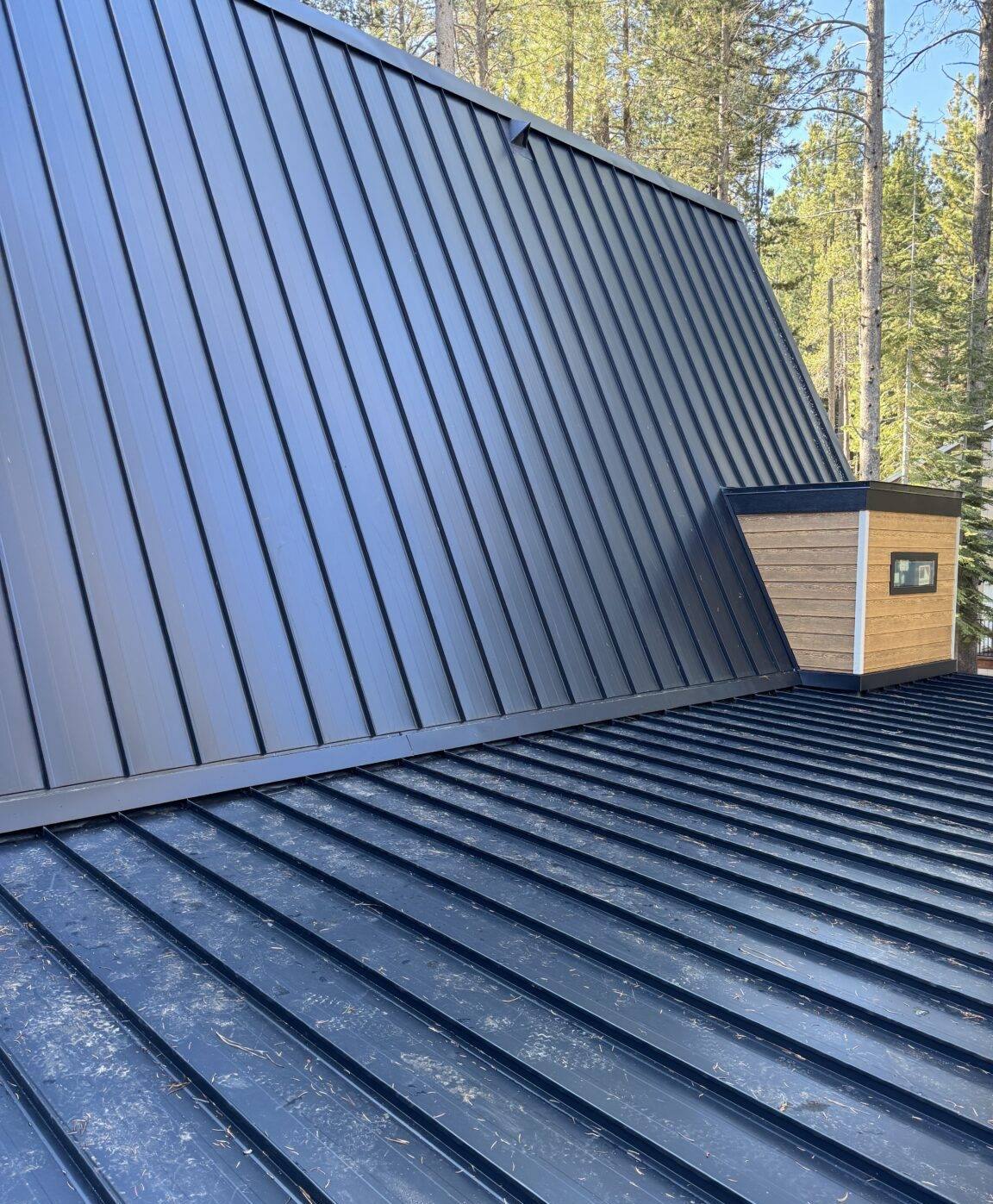
| Metal (standing seam or panel) | Excellent — sheds moss and debris well due to smooth surface | Very good with coated, marine-rated fasteners and finishes | Low | 40-50+ years |
| Cedar shake or shingle | Poor without diligent upkeep — moisture-retentive texture favors moss | Fair; needs regular treatment near salt air | High | 20-25 years with upkeep |
| Synthetic composite shingle | Good, similar to asphalt with treated products | Good | Low | 30-40 years |
We're upfront when a material isn't a great fit for a specific roof. Cedar, for example, can look excellent, but on a shaded, low-slope Point Roberts roof it demands a maintenance commitment most homeowners underestimate — that's a trade-off we'll walk through honestly rather than talk anyone out of a look they want.
Our Roof Replacement Process, Start to Finish
- On-site inspection and estimate. We assess the current roof, attic ventilation, and any visible trouble spots, then give you a clear, itemized estimate — no pressure, no vague allowances.
- Material selection. We walk through options based on your budget, the home's exposure, and how much upkeep you want going forward.
- Scheduling around weather. Given the region's rain patterns, we plan tear-off and dry-in for stretches with the best realistic weather window so your home isn't exposed longer than necessary.
- Full tear-off and deck repair. Old roofing comes off completely; any compromised decking is replaced before anything new goes down.
- Underlayment, flashing, and ventilation installed correctly. This is the stage that actually determines how the roof performs in wind-driven rain and salt air, not just how it looks.
- New roofing installed to manufacturer specification. Proper nailing patterns, exposure, and sealing — the details that protect the material warranty.
- Final walkthrough and cleanup. We review the finished roof with you, clear the site of debris and fasteners, and answer any questions before we consider the job done.
Why Hiring a Crew That Already Works in Point Roberts Matters
Point Roberts is a U.S. exclave — the only land route in and out runs through Canada. That single fact changes how roofing logistics actually work here. Scheduling crews, coordinating material deliveries, and timing a multi-day tear-off all take border-crossing logistics into account in a way that doesn't apply to a typical mainland Whatcom County job. A contractor who hasn't worked the area before can underestimate this and let a project stretch out, which is the last thing you want with an open roof deck.
There's also the climate knowledge itself. A crew that's replaced roofs across Blaine and Point Roberts knows which slopes on this peninsula tend to hold moisture longest, where wind-driven rain actually gets in, and which flashing and fastener choices hold up to years of salt air rather than just looking fine on installation day. That's the kind of judgment that only comes from doing the work here repeatedly, not from a general roofing background applied to an unfamiliar property.
Protecting Your New Roof From Moss and Salt Air Going Forward
A correctly installed roof still benefits from some basic upkeep in this climate. A little attention keeps you from facing premature repairs on a roof that should otherwise last decades.
- Keep gutters clear so water isn't sitting against the roof edge, especially heading into the wet season
- Trim back overhanging branches to cut down on shade and debris buildup, both of which feed moss growth
- Have moss or algae growth treated gently as soon as it appears rather than letting it establish and spread
- Avoid pressure-washing shingles directly — it can strip protective granules and shorten the roof's life
- Schedule a periodic roof check, particularly after major windstorms off the water, to catch lifted shingles or flashing issues early
- Check attic ventilation isn't blocked by insulation or debris, since trapped moisture undoes a lot of the roof's own protection
What Drives the Cost of a Point Roberts Roof Replacement
Every roof is priced individually, but the same handful of factors move the number up or down on most Point Roberts homes:
| Cost Factor | Why It Matters |
|---|---|
| Roof size and pitch | Steeper or larger roofs take more material, more time, and more safety setup |
| Number of existing layers | Removing multiple old layers takes longer than a single tear-off |
| Decking condition | Hidden water damage found during tear-off means replacing sections of sheathing |
| Material choice | Asphalt, metal, and composite options carry different upfront costs and lifespans |
| Roof complexity | Valleys, dormers, skylights, and chimneys all add flashing work and labor time |
| Access and logistics | Site access and delivery scheduling on the peninsula can affect project timing |
We break all of this down in writing before any work starts, so you know exactly what you're paying for and why — not a flat number with no explanation behind it.
If your Point Roberts roof is showing its age or you're just not sure whether it needs repair or full replacement, we're happy to take a look. Reach out for a free, no-pressure estimate using the form below.