 Blaine Siding
 Storm Damage Roof Repair for Point Roberts Homes
Point Roberts sits on its own peninsula, exposed to open water on three sides, which means storms hit differently here than they do a few miles inland. A roof that would hold up fine in a sheltered neighborhood can take real damage in a single wind event out here. If you've had a storm roll through and you're seeing missing shingles, a new leak, or water staining on a ceiling, this page covers what storm damage repair actually involves for a Point Roberts home, what a correct repair looks like, and why it matters that the crew doing the work already knows the area.
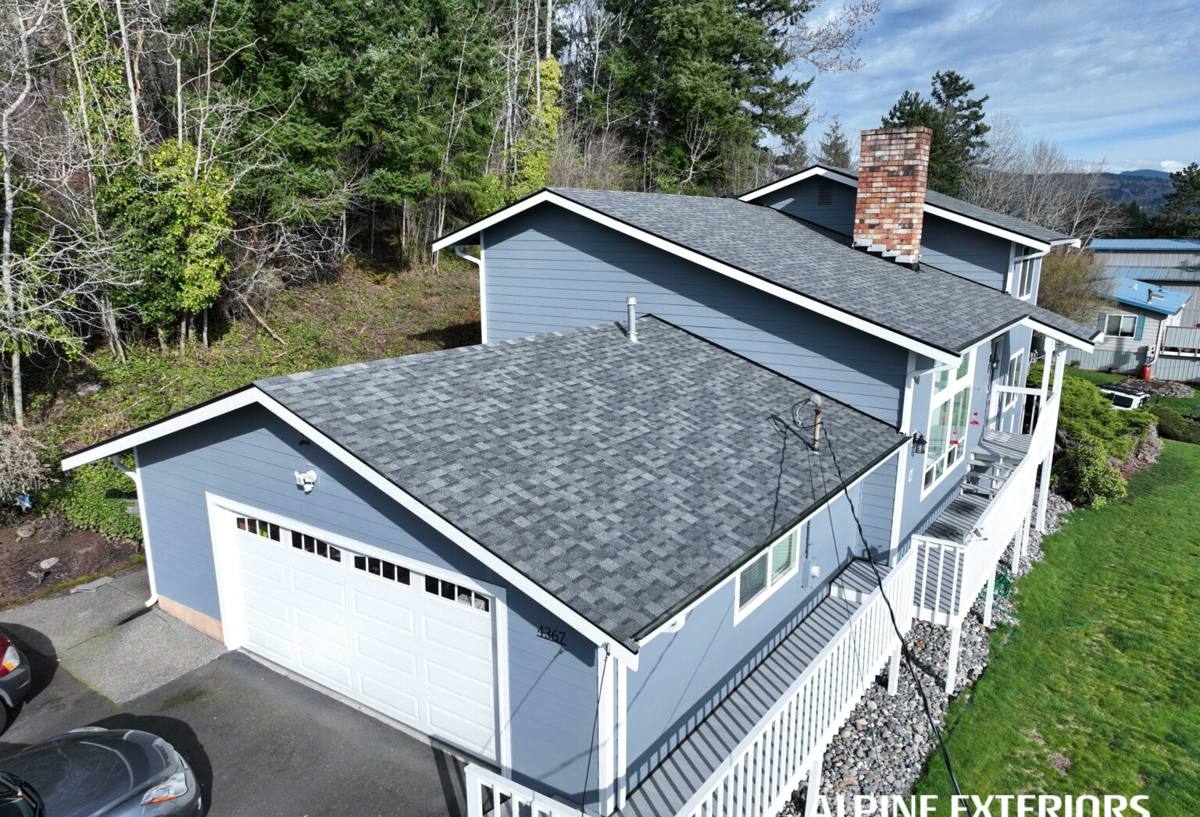
Why Point Roberts Roofs Take a Different Kind of Beating
Three things combine here that don't all show up together in most parts of Whatcom County: constant salt-laden air, wind-driven rain off the water, and a moss season that runs longer than most homeowners expect.
Salt Air and Corrosion
Being surrounded by marine water means metal components on a roof — fasteners, flashing, vents, gutter hardware — are exposed to salt air essentially year-round. Over time this accelerates corrosion in lower-grade or improperly coated metal, which is often where a "mystery leak" actually starts. A nail that's rusted through, or flashing that's pitted and no longer sealing tight, doesn't fail all at once. It fails quietly, then a storm finds the weak point.
Driving Rain and Wind Exposure
Open exposure to the Strait of Georgia and Boundary Bay means wind during a storm isn't just blowing — it's driving rain sideways and up under roof edges, ridge caps, and flashing details that were never designed to handle water moving in that direction. This is why storm damage out here often shows up as water intrusion at edges and penetrations rather than a dramatic hole in the roof. The shingles can look mostly fine from the ground while water is still getting underneath them.
A Long Moss Season
Whatcom County's damp, mild climate keeps moss growing on shaded and north-facing roof sections for much of the year, and Point Roberts is no exception. Moss holds moisture against the roofing material long after a storm has passed, which softens shingles, lifts edges, and gives wind something to grab onto in the next storm. A roof that's carrying heavy moss going into storm season is simply more vulnerable than one that's been kept clear.
What Actually Counts as Storm Damage
Not every problem after a storm is obvious. Some of the most common issues we find on Point Roberts roofs after a wind or rain event include:
- Shingles that are cracked, curled, or missing entirely, especially along ridges and edges where wind uplift is strongest
- Flashing around chimneys, skylights, and vent pipes that's been bent, separated, or worked loose
- Gutters and downspouts torn away or pulled off their fasteners, which redirects water back toward the roof edge and fascia
- Granule loss on asphalt shingles from wind and heavy rain, which shortens the life of the roofing even without visible holes
- Soft spots or discoloration on interior ceilings that show up days after the storm, once water has had time to travel along the roof deck
- Debris impact damage from tree limbs or wind-blown material, which can puncture or crack roofing without leaving an obvious hole from ground level
What a Correct Storm Repair Involves
Emergency Mitigation First
If a roof is actively leaking or there's exposed decking, the first job is stopping more water from getting in — tarping the affected area and making sure the interior is protected. This isn't the fix, it's damage control while a proper repair gets scoped.
A Full Damage Assessment, Not Just a Patch
Storm damage rarely stays contained to the spot where a leak shows up inside. A correct assessment covers the whole roof plane, including areas that look fine from the ground, because wind damage often starts at edges and ridges that aren't visible from the yard. We also check flashing, gutters, and any penetrations while we're up there, since those are the parts most likely to have been compromised in the same event.
Matching Materials and Proper Flashing Detail
A repair that doesn't match the existing roofing in profile, color, and material weight stands out and can create a weak seam where old and new meet. Just as important is getting the flashing detail right at every edge and penetration touched during the repair — this is where driving rain finds its way in on this stretch of coastline, so it's not a place to cut corners or reuse hardware that's already corroding.
Our Process, Start to Finish
- Inspection. We walk the full roof, not just the reported leak area, and document what we find with photos.
- Written scope and estimate. You get a clear explanation of what's damaged, what needs to be repaired versus replaced, and an honest cost range before any work starts.
- Insurance documentation, if needed. If you're filing a claim, we provide the photos and written findings your adjuster will want to see.
- Repair. Matching materials, correct flashing details, and fasteners suited to a marine environment rather than generic hardware.
- Final walkthrough. We check the repair area and surrounding roofing before we consider the job done.
Why Hiring a Crew That Already Works Point Roberts Matters
Point Roberts is geographically part of Whatcom County, but it's physically separated from the rest of Washington — reaching it by land means crossing into Canada and back through a border checkpoint. That's a real logistical detail, not a minor inconvenience, and it affects how storm repair actually gets done here.
A contractor who isn't set up for that trip may treat a Point Roberts job as a one-off, which shows up as delayed scheduling, trips that get pushed back, or a crew that shows up without the right materials because they didn't plan the load ahead of time. A crew that already works this area builds the border crossing into the schedule, brings what's needed on the first trip, and doesn't treat your roof as an afterthought squeezed between other jobs. After a storm, when water is already getting into your home, that difference matters.
What Storm Repairs Typically Cost
Every roof and every storm is different, so the only honest way to give you a number is with an on-site look. That said, here are the main factors that drive cost up or down on a typical storm repair:
| Factor | Lower Cost | Higher Cost |
|---|---|---|
| Extent of damage | Isolated area, few shingles or one flashing point | Multiple roof planes or widespread granule/shingle loss |
| Roof access | Simple, low-pitch, easy staging | Steep pitch, multiple stories, difficult access |
| Material match | Common shingle style still available | Discontinued or unusual roofing material to match |
| Underlying condition | Roof deck sound, damage limited to surface | Rotted decking or long-term moss/moisture damage found underneath |
| Timing | Scheduled repair, normal lead time | Emergency tarping and rush response after active leaking |
After a Storm: A Homeowner's Checklist
- Check ceilings and attic spaces for staining, sagging, or musty odor, even if you don't see an obvious leak
- Look at gutters and downspouts from the ground for anything torn loose or hanging
- Note any debris on the roof or in the yard that could indicate impact damage
- Take photos of anything you can see safely from the ground — don't get on the roof yourself after a storm
- Call for an inspection promptly; water sitting under lifted shingles or damaged flashing does more damage the longer it's left
- Keep receipts and notes if you plan to file an insurance claim
Preventing the Next Round of Damage
Storm damage repair fixes what already happened, but a few habits reduce how much damage the next storm can do. Keeping moss cleared from shaded roof sections before it takes hold matters more here than in drier parts of the state, given how long the growing season runs. Gutters kept clear so water moves off the roof instead of backing up under the edge. And a periodic check of flashing and fasteners, since salt air corrosion is gradual and easy to miss until it's already caused a leak.
If your roof took a hit in a recent storm, or you just want a professional look before the next one, we're glad to come out and give you a straightforward, no-pressure estimate. Use the form below to get started.