 Blaine Siding
 Point Roberts: A Peninsula That Takes the Full Brunt of the Marine Climate
Point Roberts sits on its own small peninsula, bordered by Boundary Bay and the Strait of Georgia on three sides and separated from the rest of Whatcom County by the Canadian border. That geography isn't just a quirk of the map — it means homes here take wind and moisture straight off open water with almost nothing to slow it down before it hits the siding. Compare that to a home a few miles inland in Blaine or Ferndale, and the difference in exposure is real: more salt-laden air, more driving rain pushed sideways by wind off the strait, and a longer moss season because surfaces stay damp longer between dry spells.
Siding on a Point Roberts home isn't decorative trim work. It's the first and most exposed line of defense against a climate that's harder on building materials than most of Whatcom County. That's the lens we bring to every siding installation out here, and it's why the product and the installation details matter more on this stretch of coastline than almost anywhere else we work.
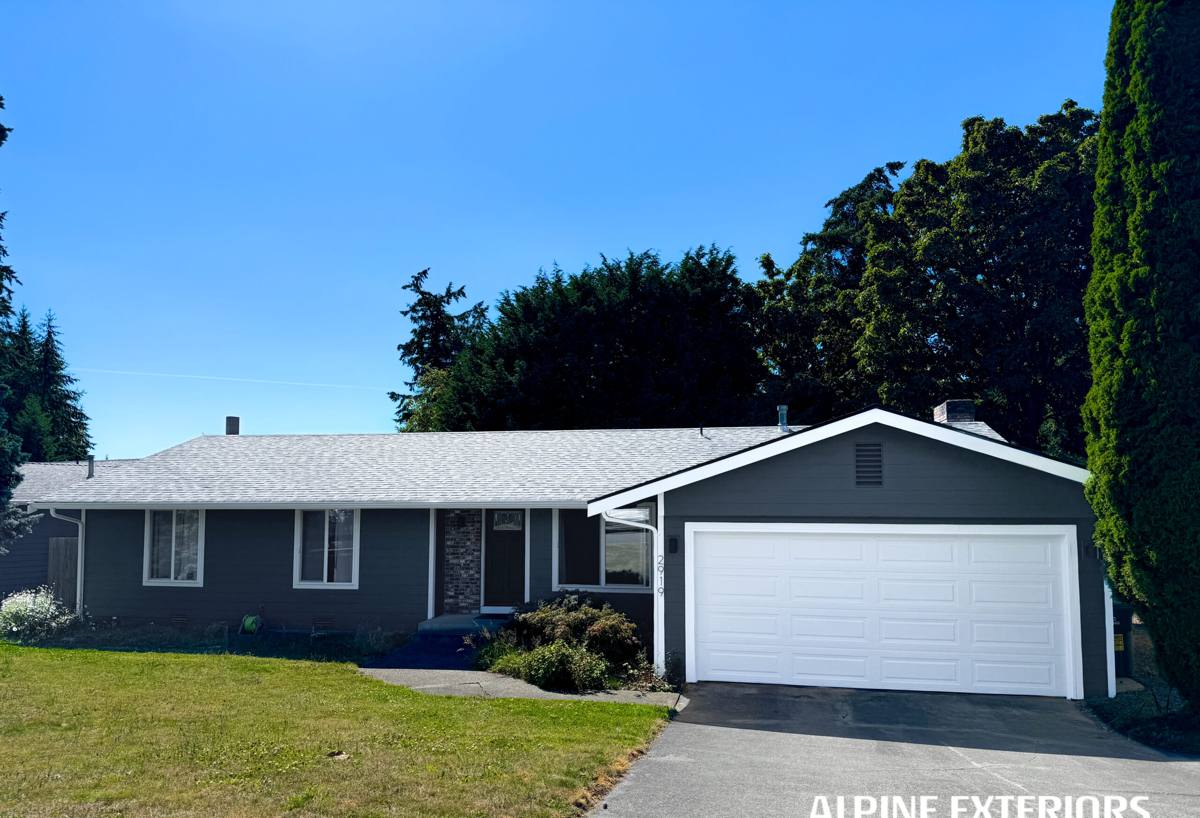
What Constant Salt Air and Moisture Actually Do to Siding
Salt air doesn't just sit on a wall — it works its way into every seam, fastener, and finish coat over time. On a home exposed the way Point Roberts homes are, that shows up in a few predictable ways:
- Fasteners and trim hardware corrode faster, especially where the wrong fastener type was used to begin with
- Paint and finish coats break down sooner, leading to chalking, fading, and peeling well ahead of schedule
- Moss and algae take hold on north-facing and shaded walls that don't get enough sun to dry out between rain events
- Untreated or improperly sealed wood-based products absorb moisture at cut edges and joints, which is where rot typically starts
- Wind-driven rain finds gaps in flashing and house wrap that would never be tested the same way on a more sheltered lot
None of this means siding "fails" overnight. It means the margin for error is smaller here. A product or installation detail that would coast along fine for twenty years in a more sheltered part of Whatcom County can show problems in half that time on a site this exposed.
Why We Install Only James Hardie Fiber Cement
We made a standing decision as a company to install James Hardie fiber cement siding exclusively — not vinyl, not LP SmartSide, not primed spruce or cedar. That's not a marketing position, it's a response to what we've seen hold up on exposed sites like Point Roberts versus what struggles.
Vinyl siding is affordable and low-maintenance in a lot of settings, but on a site with sustained salt exposure and strong UV off open water, it's prone to fading and can warp or distort where heat and wind stress it over the years. Engineered wood products like LP SmartSide perform well when the factory seal stays intact, but any cut edge, fastener hole, or joint that isn't sealed correctly becomes a moisture entry point — and that sensitivity to installation detail is a bigger risk on a high-moisture site. Cedar and primed wood siding can look excellent, but they need a repainting and recaulking cycle to stay ahead of moisture, which is an ongoing maintenance burden most homeowners underestimate until they're living it.
James Hardie fiber cement is non-combustible, dimensionally stable in wet-dry cycling, and comes with a factory-applied ColorPlus finish that's baked on rather than field-painted, which matters a great deal on a site where field-applied paint takes a beating from salt and UV. Hardie also engineers specific product lines — the HZ5 line relevant to our climate zone — for the wet, moderate Pacific Northwest rather than a one-size-fits-all national spec. Backed by a strong transferable manufacturer warranty when installed to spec, it's the product we're comfortable standing behind on a site like this.
What a Correct Siding Installation Involves Here
Fiber cement siding is only as good as the assembly behind it. On a marine-exposed site, the details most people never see are what actually determine whether the siding performs for decades or gives you problems in year eight.
The Water Management Layer
Every installation starts with a continuous weather-resistive barrier and correctly lapped, sealed flashing at every window, door, and penetration. On a site that takes as much wind-driven rain as Point Roberts, we pay close attention to flashing details at horizontal trim and butt joints — these are the spots where water finds its way behind the cladding if they're rushed.
Clearance and Fastening
Siding needs proper clearance from grade, roof lines, decks, and other transitions so water has somewhere to go instead of wicking up into the bottom edge of the panel. Fastener choice matters too — on a salt-air site, corrosion-resistant fasteners rated for the exposure aren't optional, they're the difference between trim that stays tight and trim that works loose in a few years.
Cut Edges and Joints
Any field-cut edge on fiber cement needs to be sealed per manufacturer spec before it goes up, and joints need the right sealant and gap — not caulked shut in a way that traps moisture. This is one of the most commonly rushed steps on a fiber cement job, and it's one of the first things that shows up as a problem on an exposed site.
Our Installation Process, Start to Finish
The process itself isn't complicated, but the order and care matter:
- On-site assessment of the existing siding, sheathing condition, and specific exposure on each elevation of the home
- Product line, plank width, and color selection based on that exposure and the home's design
- Removal of old siding and inspection of the sheathing underneath for hidden moisture damage before anything new goes up
- Installation of the weather-resistive barrier and flashing at every window, door, and penetration
- Installation of the Hardie siding itself, following manufacturer-specified nailing patterns, clearances, and joint treatment
- Sealing of cut edges, trim, and joints with the appropriate products for this climate
- Final walkthrough to confirm the work matches the plan before we call the job done
We don't skip the sheathing inspection step even when it slows the job down. On a site with this much moisture exposure, what's underneath the old siding tells us more about the home's real condition than anything visible from the outside.
Why a Crew That Already Works Point Roberts Matters
Point Roberts is a U.S. exclave — the only way in or out by land is through Canada. That's a fact of daily life for residents, and it's also a real logistical factor for any contractor working out here. Crews, tools, and materials all have to make that crossing, and a contractor who hasn't planned for it can turn a straightforward siding job into a scheduling headache.
Being based in Blaine, minutes from the border, we build that crossing into our scheduling rather than treating it as a surprise. That means fewer delays getting material and crew on-site, more predictable start and completion dates, and less back-and-forth for the homeowner. It also means we've seen how homes on this specific peninsula age and weather, not just how homes in Whatcom County generally hold up — that difference shows up in the details we pay closest attention to on an estimate.
Choosing the Right Product Line and Finish for This Exposure
For most Point Roberts homes, we're recommending Hardie lap siding in the HZ5 engineered line, built specifically for wet climates like ours rather than a generic national product. The factory ColorPlus finish is worth emphasizing again here: because it's cured at the factory rather than brushed on-site, it holds color and resists the chalking and fading that field-applied paint shows first on a salt-exposed wall. That matters practically, too — fewer repaint cycles means fewer times you need to schedule an exterior crew (and their equipment) back onto the peninsula.
Color and texture choices also matter on a site prone to moss and salt residue. Darker, flatter finishes can show water spotting and residue differently than lighter or textured finishes. We walk through those trade-offs with each homeowner against the specific exposure of their home rather than making a blanket recommendation.
Cost Factors for a Point Roberts Siding Project
Every home is different, but the same handful of factors drive cost on most jobs out here:
| Factor | Why It Matters |
|---|---|
| Home size and elevation count | More square footage and more distinct wall planes mean more material and labor |
| Condition of existing sheathing | Hidden moisture damage found during tear-off can require repair before new siding goes up |
| Access and site complexity | Multi-story sections, steep grades, or tight lot lines slow installation and staging |
| Trim and detail work | Corner boards, window trim, and transitions add labor beyond flat wall coverage |
| Product line and finish | Plank profile, texture, and ColorPlus color selection affect material cost |
| Delivery logistics | Scheduling material delivery across the border adds lead time to plan around, not extra cost, but it affects timeline |
What to Ask Before You Hire a Siding Contractor for Point Roberts
- Are they licensed and insured to work in Washington State, with proof available on request?
- Do they install James Hardie specifically, and can they explain the HZ5 product line and why it fits this climate?
- Do they have an established plan for getting crew, tools, and material across the border reliably?
- Can they walk you through their flashing and water management detailing before work starts, not just after?
- Do they inspect sheathing during tear-off rather than covering it up without a look?
- Do they offer a manufacturer-backed warranty tied to correct installation, not just a labor guarantee?
Maintenance and What to Expect Long-Term
Correctly installed Hardie siding is low-maintenance, not no-maintenance. On a Point Roberts home, a periodic rinse to keep moss and salt residue from building up on shaded or north-facing walls goes a long way, along with a visual check of caulking at joints and trim after major storms. Gutters and downspouts that are clear and directing water away from the foundation also protect the bottom courses of siding, which take the most splash-back exposure on any home near open water.
Because the ColorPlus finish is factory-cured, you're not on a recurring repaint schedule the way you would be with field-painted wood siding — but it's still worth a visual walk-around once or twice a year, particularly after the winter storm season, to catch anything early while it's a small fix rather than a bigger one.
If you're planning a siding project on a Point Roberts home, we're happy to walk the property, talk through what your specific exposure calls for, and put together a straightforward estimate — no pressure, no obligation. Use the form below to get started.