 Blaine Siding
 Storm Damage Roof Repair for Grandview Homes
Grandview sits close enough to the water that every roof in the area deals with a combination most inland homes never see: salt-laden wind off the Strait, driving horizontal rain during winter storms, and a moss season that runs longer than almost anywhere else in Whatcom County. When a storm rolls through, the damage it leaves behind isn't always obvious from the ground. A roof can look intact and still be letting water into the decking. We repair storm-damaged roofs throughout the Grandview area and we build every repair around what actually happens to roofing materials in this specific climate, not a generic checklist.
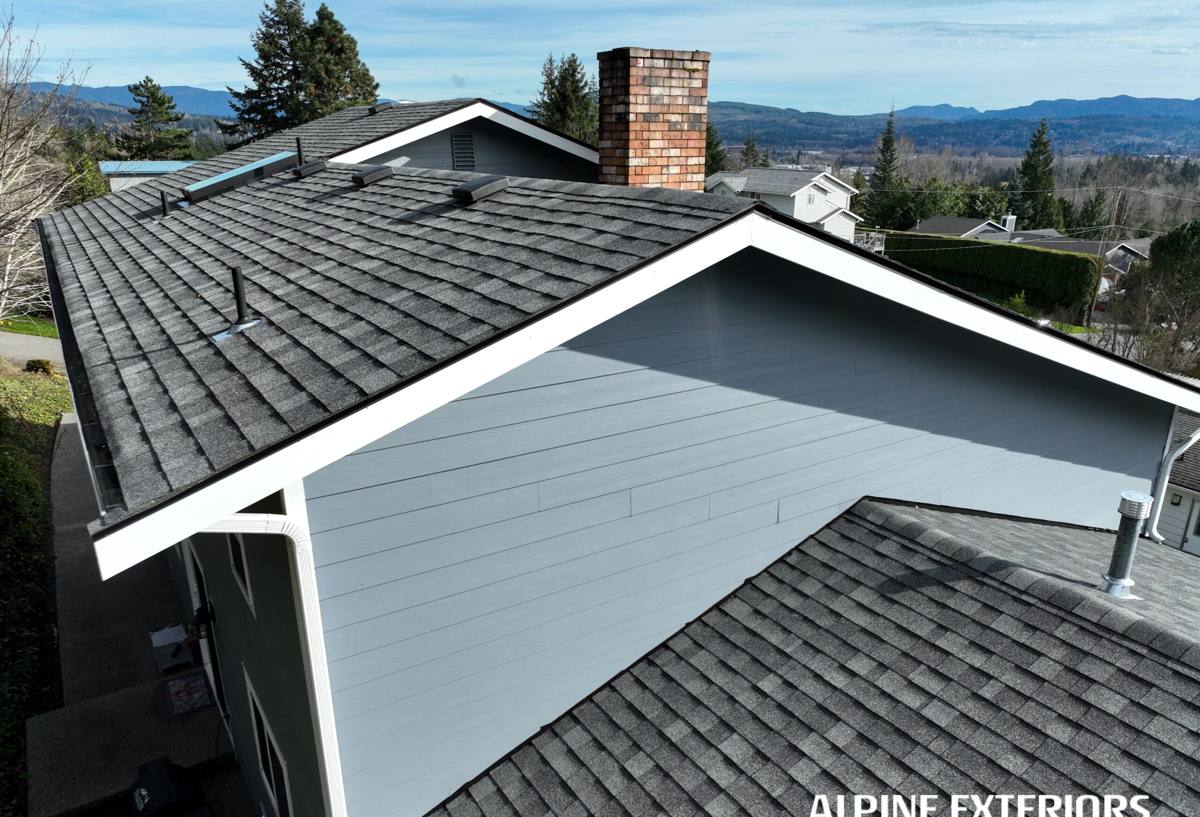
Why Grandview Roofs Take a Different Kind of Beating
Storm damage in this part of Whatcom County isn't usually one dramatic event. It's cumulative — wind pressure that lifts a shingle tab just enough to break the seal, rain that finds that gap over the following weeks, and moss that's already been working at the granules and fasteners underneath. By the time a homeowner notices a stain on the ceiling, the underlying problem has often been building for months.
Salt Air
Proximity to the water means airborne salt settles on roofing materials year-round. It's hardest on exposed metal — flashing, fasteners, vent caps, gutter hardware — accelerating corrosion well before it would happen on a similar roof further inland. A repair that reuses corroded flashing or mismatched fasteners is a repair that fails again within a season or two.
Driving Rain
Storms coming off the water tend to push rain sideways, not straight down. That matters because it drives water up under shingle tabs, into vertical seams, and around flashing laps that would shed a normal vertical rain just fine. Roofs here need underlayment, flashing laps, and fastening patterns that account for wind-driven rain, not just gravity.
A Long Moss Season
Mild temperatures and near-constant moisture mean moss can establish itself on north-facing and shaded slopes almost year-round. Moss holds water against the roofing surface, works its way under shingle edges, and adds weight — and it's often what turns a minor storm-related lift into a real leak, because it's already compromised the seal before the wind ever shows up.
What Counts as Storm Damage — and What Doesn't
Not everything that looks bad after a storm is actually storm damage, and not everything that needs repair looks dramatic. Part of an honest inspection is telling the difference.
- Wind-lifted or torn shingles — tabs cracked at the seal line, shingles missing outright, or creased shingles that will fail soon even if they're still attached
- Flashing separation — chimney, valley, or wall flashing pulled loose or corroded through, often the actual source of a leak that seems to be "somewhere near the roofline"
- Impact damage — bruising or punctures from branches, debris, or falling limbs during high wind
- Gutter and edge damage — bent or torn gutters and loosened drip edge, which redirect water back toward the fascia and soffit instead of away from the house
- Pre-existing wear mistaken for storm damage — moss-related granule loss, sun-worn shingles at the end of their service life, or old nail pops that a storm simply exposed
That last category matters for insurance purposes as much as for the repair itself. We document what's genuinely storm-related versus what was already aging, because that distinction affects both the scope of the repair and how a claim gets handled.
What a Correct Storm Repair Actually Involves
A storm repair that's done right is not just swapping out the shingles that are visibly missing. It starts underneath.
Checking the Decking First
If wind or a leak has been active long enough, the plywood or OSB decking underneath can be soft, delaminated, or stained. Nailing new shingles over compromised decking doesn't hold a seal and doesn't last. We check decking condition before any material goes back down, and any section that's degraded gets replaced, not covered.
Flashing and Underlayment, Not Just Shingles
Most repeat leaks after a "repair" trace back to flashing that was reused instead of replaced, or underlayment that was patched instead of properly lapped. Given how much salt air and wind-driven rain this area sees, we treat flashing and underlayment as part of the repair scope by default, not an upsell.
Matching Materials Correctly
A patch that doesn't match the existing roof in profile, color, or weathering sticks out and can also create a weak seam if the products aren't compatible. We match shingle type and, where reasonably possible, color and lot shading, so the repair blends in rather than becoming the obvious spot where the roof was fixed.
Our Process for Storm Repair Calls
| Step | What Happens |
|---|---|
| 1. Initial contact | We get a description of the damage and timeline — active leaks get priority scheduling |
| 2. On-site inspection | Full roof assessment including decking, flashing, and areas the homeowner may not have seen from the ground |
| 3. Temporary protection | If there's active water intrusion, we tarp or temporarily seal the affected area to stop further damage while repair materials are sourced |
| 4. Documentation | Photos and a written scope of damage, useful whether or not a claim is being filed |
| 5. Repair | Decking repair as needed, correct flashing and underlayment, and matched shingles installed to manufacturer spec |
| 6. Final walk-through | We review the completed work with the homeowner before considering the job done |
Steps 1 through 3 typically happen within a day or two of the first call, especially when there's active water getting into the house. A tarp is not a fix, but it buys time to do the repair correctly instead of rushing it.
Repair or Replace? What Actually Drives That Decision
Storm damage doesn't automatically mean a new roof, and it doesn't automatically mean a small patch either. The honest answer depends on a few factors we walk through with the homeowner directly.
| Factor | Leans Toward Repair | Leans Toward Replacement |
|---|---|---|
| Age of existing roof | Roof is under 10–12 years old | Roof is already near or past its expected service life |
| Extent of damage | Damage limited to one slope or a localized area | Damage spread across multiple slopes or the whole roof |
| Decking condition | Decking is sound underneath | Widespread soft or delaminated decking |
| Moss and granule condition | Moss limited to isolated areas, granules intact | Heavy moss coverage and significant granule loss roof-wide |
| Material availability | Matching shingles still available | Discontinued product with no close match |
We'd rather tell a homeowner a repair will hold for years than talk them into a full replacement they don't need — and we'll say so plainly if that's what the roof needs instead.
Moss, Salt Air, and Keeping a Repair From Becoming a Repeat Call
A storm repair that ignores the underlying moss and salt-air exposure in Grandview is a repair that's likely to need attention again. Part of doing this right is addressing the conditions that made the roof vulnerable in the first place — clearing moss growth, treating or replacing corroded fasteners and flashing rather than just the section that failed, and making sure gutters and drip edge are actually moving water off the roof instead of holding it against the fascia. None of that is complicated, but it's the difference between a repair that lasts and one that's back on our schedule next winter.
Why a Crew That Already Works Grandview Matters
Roofing crews that only occasionally work this stretch of Whatcom County tend to treat every job like a generic repair — standard materials, standard fastening, no particular attention to salt exposure or moss cycles. A crew that works Grandview regularly knows which slopes on homes here tend to hold moss longest, how fast unprotected metal corrodes this close to the water, and what flashing details actually hold up against wind-driven rain instead of just looking finished on installation day. That local pattern recognition is often what separates a repair that lasts five years from one that lasts fifteen.
After a Storm: What to Check Before You Call
You don't need to get on the roof yourself — and we'd rather you didn't, especially right after a storm when surfaces are wet and debris is still around. But a quick check from the ground and inside the house helps us prioritize the call.
- New or growing water stains on ceilings or upper walls
- Visible missing, torn, or curled shingles from the ground
- Debris, branches, or granules collecting in gutters or on the ground below the roofline
- Sagging or dented gutters and downspouts
- Daylight visible through the attic roof deck, if it's safely accessible
- Musty odor in upper rooms or the attic, which can indicate moisture even without a visible stain
If you see active water coming in, that's a same-priority call regardless of how minor the rest of the damage looks — active leaks get worse the longer they sit, especially with more rain in the forecast.
Get a Free, No-Pressure Estimate
If a recent storm has left you with damage, or you're just not sure whether what you're seeing needs attention, we're glad to take a look. There's no cost and no pressure to move forward — just a straight assessment of what's actually going on with your roof and what it would take to fix it right. Use the form below to get started.