 Blaine Siding
 Point Roberts Puts Real Demands on Exterior Siding
Point Roberts sits on a small peninsula that hangs off the bottom of Boundary Bay, cut off from the rest of Whatcom County by the international border. That geography means most homes here face water on more than one side, with little to break the wind before it hits a wall. The result is a mix of conditions that's harder on siding than what you'd find a few miles inland: salt-laden air off the Strait of Georgia, driving rain that comes in sideways during winter storms, and long stretches of gray, damp weather that keep north-facing walls wet for days at a time.
None of that is unusual for this part of Whatcom County, but it adds up. Siding here isn't just decorative — it's the thing standing between a house and a marine climate that doesn't let up for much of the year. Whatever product goes on the wall needs to handle moisture without swelling or rotting, hold its finish against salt air and UV, and stay sound through decades of wind-driven rain.
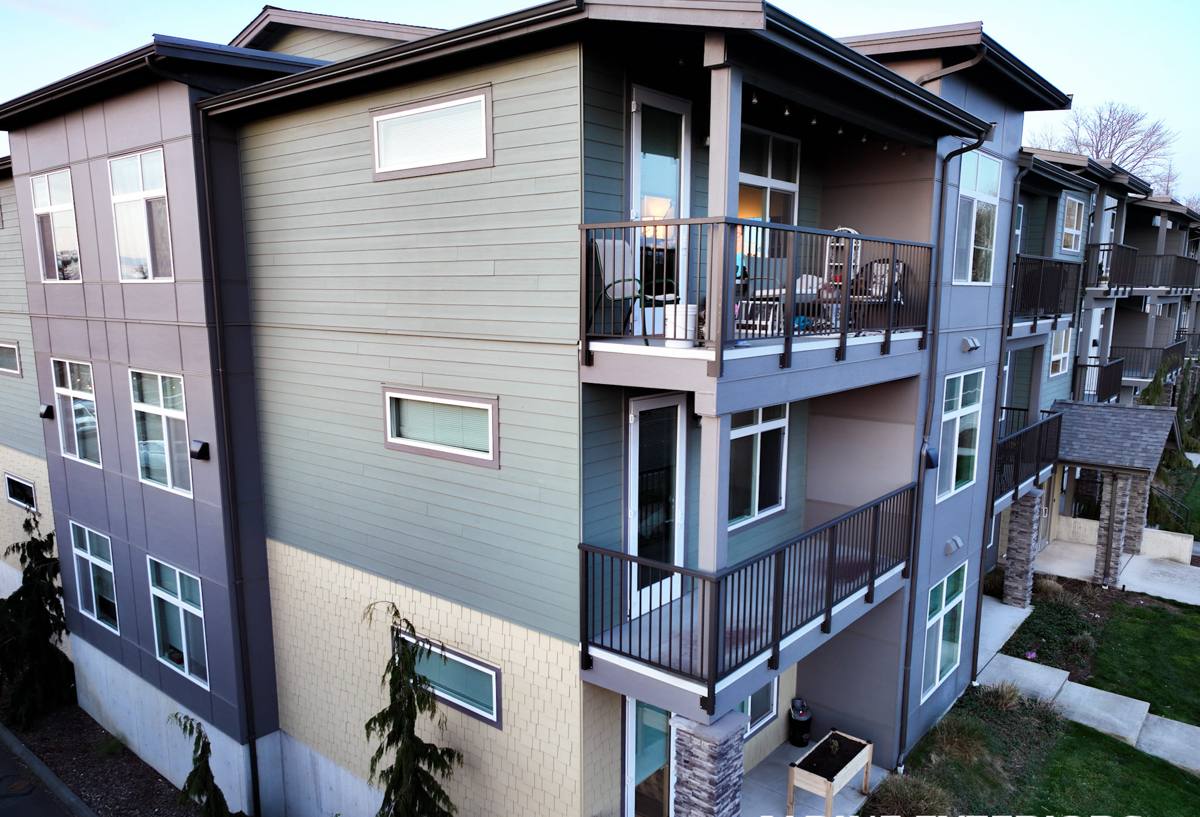
Why Fiber Cement Is the Right Call for This Environment
We install James Hardie fiber cement siding exclusively, and Point Roberts is a good example of why. Fiber cement is made from cement, sand, and cellulose fibers — it doesn't have the organic material that wood-based products need to stay dry to avoid rot, and it doesn't expand and contract with humidity the way vinyl does in temperature swings.
Moisture Stability
A properly installed Hardie board can get rained on repeatedly through a Pacific Northwest winter without absorbing enough water to warp, delaminate, or invite rot at the edges. That matters on a peninsula where the siding rarely gets a long dry stretch to fully recover between storms.
A Factory Finish That Holds Up to Salt Air
James Hardie's ColorPlus finish is baked on at the factory rather than brushed on in the field. It's formulated to resist fading and chalking from UV and salt exposure far longer than a standard field-applied paint job, which is a real advantage on a property exposed to open water on multiple sides.
Non-Combustible Core
Fiber cement won't ignite or contribute fuel to a fire the way wood-based sidings can. It's not the primary reason most Point Roberts homeowners choose it, but it's a genuine, permanent benefit of the material itself.
What a Correct Installation Actually Involves
Fiber cement performs the way it's supposed to only when it's installed to spec. In a coastal climate, a handful of details separate siding that lasts decades from siding that starts showing problems in five or six years.
| Detail | Correct Practice | Common Shortcut | Why It Matters Here |
|---|---|---|---|
| Drainage gap | Rain screen or furring strips behind the siding | Siding nailed straight to the weather barrier | Lets bulk water and wind-driven rain drain and dry instead of sitting against the wall |
| Flashing | Integrated with housewrap at every window, door, and penetration | Caulk used in place of flashing | Caulk fails long before flashing does; this is where hidden rot starts |
| Fasteners | Corrosion-resistant, per manufacturer spacing and placement | Standard fasteners, driven too tight or too far from the edge | Salt air accelerates corrosion of the wrong fastener type |
| Cut edges | Sealed with touch-up or edge sealer before installation | Left raw and painted over later | Unsealed cut edges are the fastest path for moisture into the board |
| Clearances | Proper gap above rooflines, decks, and grade | Siding run tight to grade or roofing | Standing water and splashback rot siding from the bottom up |
Every one of these is invisible once the job is finished and the wall looks clean. That's exactly why they're worth asking about before work starts, not after.
Salt Air and Fasteners: A Detail Homeowners Rarely Think About
One thing that trips up crews who don't regularly work this close to the water is fastener selection. Standard fasteners can corrode faster in salt-heavy air, which leads to rust streaking down the face of the siding and, eventually, fasteners that lose their grip. On a Point Roberts install, we choose fasteners rated for coastal exposure and follow James Hardie's placement specifications for this climate zone rather than defaulting to whatever's used on a typical inland job. It's a small line item that has an outsized effect on how the siding looks and holds up ten and twenty years out.
Moss, Algae, and Long-Term Care in a Damp Climate
Fiber cement doesn't feed mold or rot the way untreated wood does, but no exterior surface is immune to moss and algae growth in a climate this wet and shaded. Point Roberts has plenty of tree cover and long stretches of overcast, humid weather — conditions that let surface growth take hold on north-facing walls, under eaves, and anywhere gutters overflow onto the siding below.
What Actually Helps
- Keep gutters clear so water isn't sheeting down the face of the siding
- Trim back trees and shrubs that keep a wall shaded and damp
- Clean surface moss and algae with a soft wash, not a pressure washer — high-pressure water can drive into joints and seams and cause the problems it's meant to prevent
- Watch for chalky or dull color changes, which usually mean it's time for a wash rather than a repaint
A properly installed Hardie system with correct drainage behind it will shed water and dry out faster after storms, which goes a long way toward keeping moss from getting a foothold in the first place.
Working an Exclave: Why Local Experience Matters Here
Point Roberts is unusual in a way that directly affects contracting logistics: it's only reachable by land through Canada, or by water and air. That means material deliveries, crew scheduling, and equipment access all have to account for border crossings — something a crew that doesn't regularly work the peninsula may not plan for. A missed timing window or an unprepared load can turn a routine delivery into a lost day.
A crew that already works Point Roberts on a recurring basis has that logistics figured out: what to bring across in one trip, how to sequence a job so the crew isn't making unnecessary crossings, and how to work around ferry and border schedules rather than being surprised by them. That experience shows up as fewer delays and a tighter timeline, not as anything visible in the finished siding itself.
James Hardie Products We Use for This Climate
We install the James Hardie system built for climates like this — a lineup engineered for the wetter, cooler conditions found throughout the Pacific Northwest rather than a one-size-fits-all product. Depending on the home, that typically means:
- HardiePlank lap siding — the most common choice for full re-sides, available in a range of ColorPlus finishes and textures
- HardiePanel — used for a more modern, vertical look or in combination with lap siding as an accent
- HardieTrim — matched trim boards so corners, fascia, and window surrounds age at the same rate as the field siding
All of it carries James Hardie's transferable warranty when installed to spec, which matters more on a property exposed to this much weather than on a sheltered inland lot.
Cost Factors for a Point Roberts Siding Project
Every home is different, but a few factors consistently move the scope and cost of a fiber cement project on this peninsula:
| Factor | How It Affects the Project |
|---|---|
| Existing siding removal | Wood or older siding often needs full tear-off; hidden moisture damage found underneath adds repair time |
| Home size and stories | More square footage and multi-story walls mean more material, more staging, and more labor hours |
| Trim and architectural detail | Dormers, bay windows, and multiple rooflines add cutting and flashing work beyond flat wall runs |
| Wall exposure | Walls facing open water or prevailing storms may warrant extra attention to drainage and flashing detail |
| Access and staging | Site access and material logistics factor into scheduling given the peninsula's location |
Our Process for a Point Roberts Home
- On-site inspection of the current siding and wall assembly, including a check for existing moisture damage
- Review of drainage, flashing, and any problem areas specific to the home's orientation and exposure
- A written scope covering product line, color, trim details, and timeline — including logistics for material delivery
- Tear-off and prep, addressing any rot or moisture issues found before new siding goes on
- Installation per James Hardie's specifications: proper drainage gap, flashing integration, correct fasteners, sealed cut edges
- Final walkthrough covering caulking, trim, and touch-up before the job is considered complete
Signs Your Current Siding Is Already Losing the Battle
- Streaking, staining, or persistent green/black growth that comes back soon after cleaning
- Soft spots, bubbling paint, or visible warping, especially near the bottom courses or around windows
- Rust streaks running down from fastener heads
- Gaps opening up at seams, corners, or trim joints
- A noticeable jump in how often the exterior needs repainting
If any of that sounds familiar, it's worth having someone take a look before small problems turn into wall-sheathing repairs.
If you're weighing a siding project for a home in Point Roberts, we're happy to take a look and walk you through what it would actually involve — no pressure, no obligation. Use the form below to request a free estimate.