 Blaine Siding
 Building Decks for Point Roberts' Coastal Conditions
Point Roberts sits on its own small peninsula, cut off from the rest of Whatcom County by the international border and surrounded by water on three sides. A deck built here takes a different kind of beating than one built a few miles inland in Blaine. The salt-laden air coming off Boundary Bay and the Strait of Georgia, the wind-driven rain that comes with it, and a moss season that can stretch across most of the year all work on wood, hardware, and framing in ways a standard build doesn't plan for. We build decks in this area with those conditions treated as the starting point, not an afterthought added at the end of a generic spec.
This page is about one service, in one place: custom deck construction for Point Roberts homes. Not a national overview of decking trends — what actually holds up here, what a correct build looks like, and how we handle the logistics of working in a community that's geographically its own island.
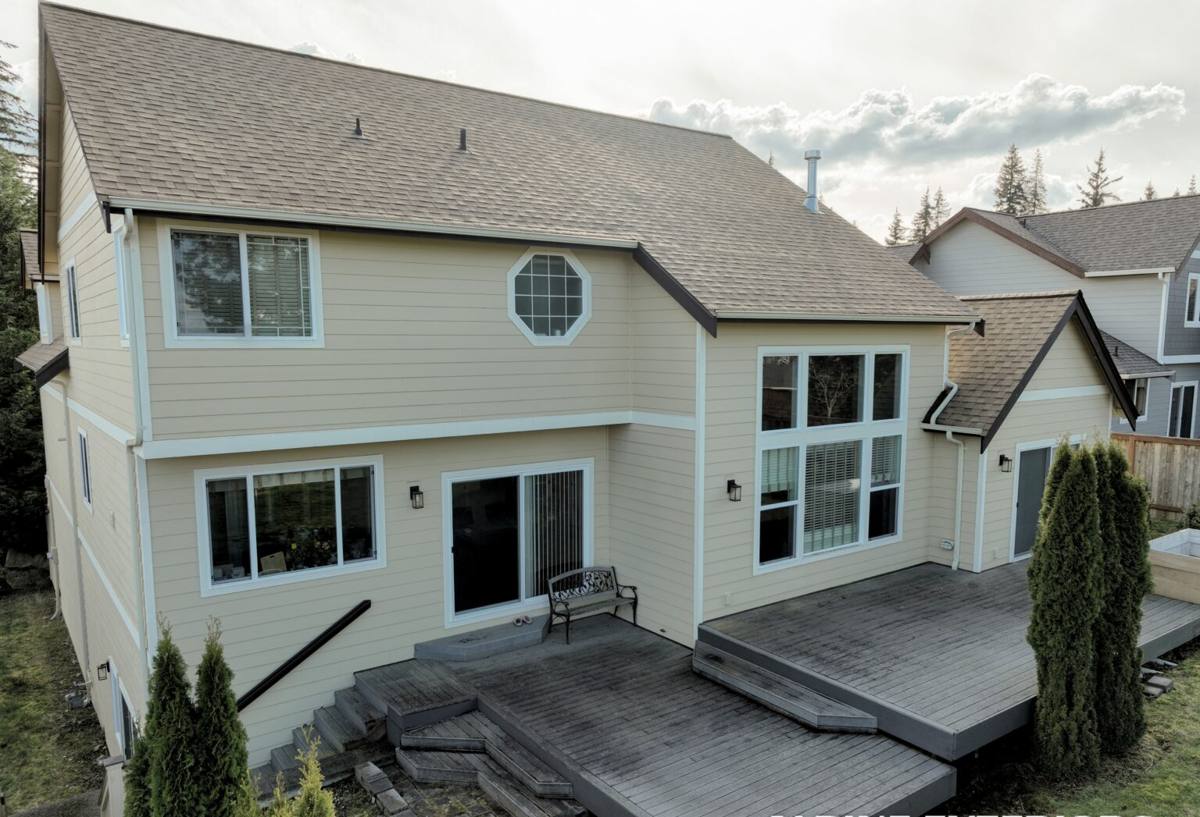
What the Local Climate Actually Does to a Deck
Every coastal Whatcom County property deals with moisture. Point Roberts gets a concentrated version of it, because there's very little land between most lots and open water, and little to break the wind before it hits a house. That matters for three specific reasons.
Salt Air and Corrosion
Airborne salt accelerates corrosion on anything metal — nails, screws, joist hangers, post bases, even the coating on some deck screws marketed as "exterior grade" but not rated for marine exposure. Once a fastener starts rusting, it weakens, stains the wood around it, and eventually fails. On a deck, that's not cosmetic — it's structural, since the whole thing is held together by hundreds of individual connections.
Driving Rain and Trapped Moisture
Wind-driven rain doesn't just fall on a deck, it gets pushed sideways and upward — into ledger board connections, under railing posts, into end grain that isn't sealed, and into any gap where flashing was skipped or done half-heartedly. Water that gets in and can't get back out is what rots framing from the inside, long before the surface boards show obvious damage.
Moss, Algae, and Prolonged Dampness
Shaded, damp surfaces in this climate grow moss and algae fast, and a deck that stays wet for days at a time after a storm is exactly that kind of surface. Beyond looking bad, moss holds moisture against the wood and makes boards slick and dangerous underfoot. Board spacing, orientation, and surrounding vegetation all affect how quickly this happens.
Choosing the Right Decking Material for This Location
There's no single "best" decking material — there's the material that matches your budget, your maintenance appetite, and how exposed your specific lot is. Here's how the common options actually perform in Point Roberts' conditions, not just in a manufacturer's brochure.
| Material | Typical Lifespan Here | Maintenance | Relative Cost | Coastal Performance Notes |
|---|---|---|---|---|
| Pressure-treated fir/pine | 10-15 years | Annual cleaning, periodic re-sealing | $ | Affordable but needs consistent upkeep; end grain and fastener holes are the weak points in salt air |
| Cedar | 15-20 years | Cleaning plus staining/sealing every 2-3 years | $$ | Naturally rot- and insect-resistant, ages well, but still needs sealing to resist moss and graying |
| Capped composite | 25-30+ years | Periodic washing, no sealing/staining | $$$ | Handles moisture and salt air with little upkeep; quality varies a lot between product lines |
| PVC/vinyl decking | 25-30+ years | Occasional washing | $$$ | Fully moisture-proof surface; performs well in wet climates but has a distinct look and feel underfoot |
Wood Decking
Real wood still makes sense for a lot of homeowners — it's less expensive up front, it can be repaired board-by-board instead of replaced as a system, and it has a look composite can't fully copy. The trade-off in this climate is honesty about maintenance: wood left unsealed for a couple of seasons will gray, absorb moisture at the fastener holes, and start growing moss faster than it would in a drier part of the state.
Composite and PVC Decking
These products cost more initially but remove most of the maintenance burden that salt air and rain create for wood. We're selective about which composite lines we install — some early-generation composite decking had real problems with moisture absorption and mold in wet climates, which is exactly why we pay attention to which manufacturers have addressed that in their newer capped and PVC formulations rather than treating all composite as interchangeable.
The Build Details That Actually Determine Whether a Deck Lasts
The decking surface gets all the attention, but the parts you don't see after the project is done are what decide whether the deck is still solid in fifteen years.
Framing and Fasteners
We use stainless steel or heavy hot-dip galvanized fasteners and hardware rated for coastal/marine exposure, not standard exterior-rated hardware that's fine fifty miles inland but starts corroding here within a few years. Joist tops get covered with a self-adhering flashing tape before decking goes down, so any water that finds its way through a fastener hole hits a waterproof barrier instead of bare, absorbent wood.
Ledger Board Flashing
Where a deck attaches to the house, the ledger board connection is the single most common source of hidden rot on any deck, anywhere — and it's worse here because of how much wind-driven rain gets pushed against that wall. Proper flashing (and, where the design calls for it, a self-supporting frame that doesn't rely on the house connection at all) keeps water from tracking behind the siding and into the band board.
Footings and Frost Depth
Footings need to go below the local frost depth and account for the drainage characteristics of the specific soil on your lot — some parts of Point Roberts drain well, others hold water longer than you'd expect for the area. We check this on site rather than assuming a standard footing depth is correct everywhere.
Our Process for a Point Roberts Deck Project
- Site visit — we look at sun exposure, wind direction, existing drainage, and how the house connects to grade before talking materials
- Design and material selection — matched to your budget, maintenance preference, and how exposed the specific lot is
- Permit preparation — structural drawings and submission through Whatcom County's process where a permit is required
- Scheduling — material delivery and crew logistics planned around Point Roberts' unique location (more on that below)
- Construction — framing, flashing, and fastener details handled to the standard above, not shortcut to save a day
- Final walkthrough — we go over care and maintenance specific to the material you chose before we consider the job done
Permits and Whatcom County Requirements
Most attached and elevated decks require a building permit through Whatcom County, with requirements around guardrail height, stair geometry, footing depth, and setback from property lines. Requirements can vary depending on the deck's height above grade and whether it's attached to the structure or freestanding. We handle the permit submission as part of the project rather than leaving it for the homeowner to sort out, and we'll tell you plainly if a particular design choice is going to run into a setback or height issue before you've committed to it.
Maintenance: Keeping a Deck Looking Good Through Moss Season
Whatever material you choose, a little regular attention goes a long way in this climate. A basic yearly routine:
- Clean the surface with a deck cleaner or diluted oxygen bleach solution rather than a high-pressure washer, which can damage wood fibers and even composite surfaces
- Clear debris and standing moss out from between boards where it traps moisture
- Check ledger board flashing and fastener heads for early rust staining or movement
- Confirm gutters and downspouts near the deck are still directing water away from framing and footings
- Trim back overhanging vegetation to improve airflow and reduce shaded, damp spots where moss takes hold fastest
- Re-seal or re-stain wood decking on the schedule appropriate for the product — don't wait until it's visibly gray
Why Hire a Crew That Already Works in Point Roberts
Point Roberts isn't like scheduling a job anywhere else in Whatcom County. It's physically separated from the rest of the mainland U.S., and the only land route in and out runs through Canada. That affects everything from how material deliveries get timed to how a crew plans a work week — a contractor who doesn't already have that worked out will either pad the bid to cover the uncertainty or avoid taking Point Roberts jobs altogether. We already know how to plan around it, which means fewer surprises in your schedule and a quote that reflects the real logistics instead of a guess.
It also means we've already seen how the local conditions treat decks that were built without them in mind — the ledger boards that rotted from a missed flashing detail, the fasteners that rusted through in half the time they should have lasted, the surfaces that turned into a moss farm because nobody accounted for the shade and dampness of the specific lot. That experience shapes how we build here, not generic advice pulled from a manual written for a drier climate.
If you're planning a new deck or replacing one that didn't hold up, we're happy to come take a look and talk through what makes sense for your home. There's no cost and no pressure to get an estimate — just a straight assessment of what your lot needs and what it'll take to get it right.