 Blaine Siding
 Point Roberts Sits in a Climate Class of Its Own
Point Roberts is a strange piece of geography — a peninsula bordered by water on three sides, cut off from the rest of Whatcom County, and reached by road through Canada. That isolation isn't just a quirk of maps. It shapes the weather that hits every home out there, and it's why siding that holds up fine in downtown Blaine can still fail early on a house a few miles away in Point Roberts.
Homes here take a steady combination of salt-laden marine air, wind-driven rain coming off the water, and long stretches of shade and dampness that keep moss and algae active most of the year. Any siding job done right in Point Roberts has to be chosen and installed with that specific exposure in mind, not treated like a generic Pacific Northwest re-side.
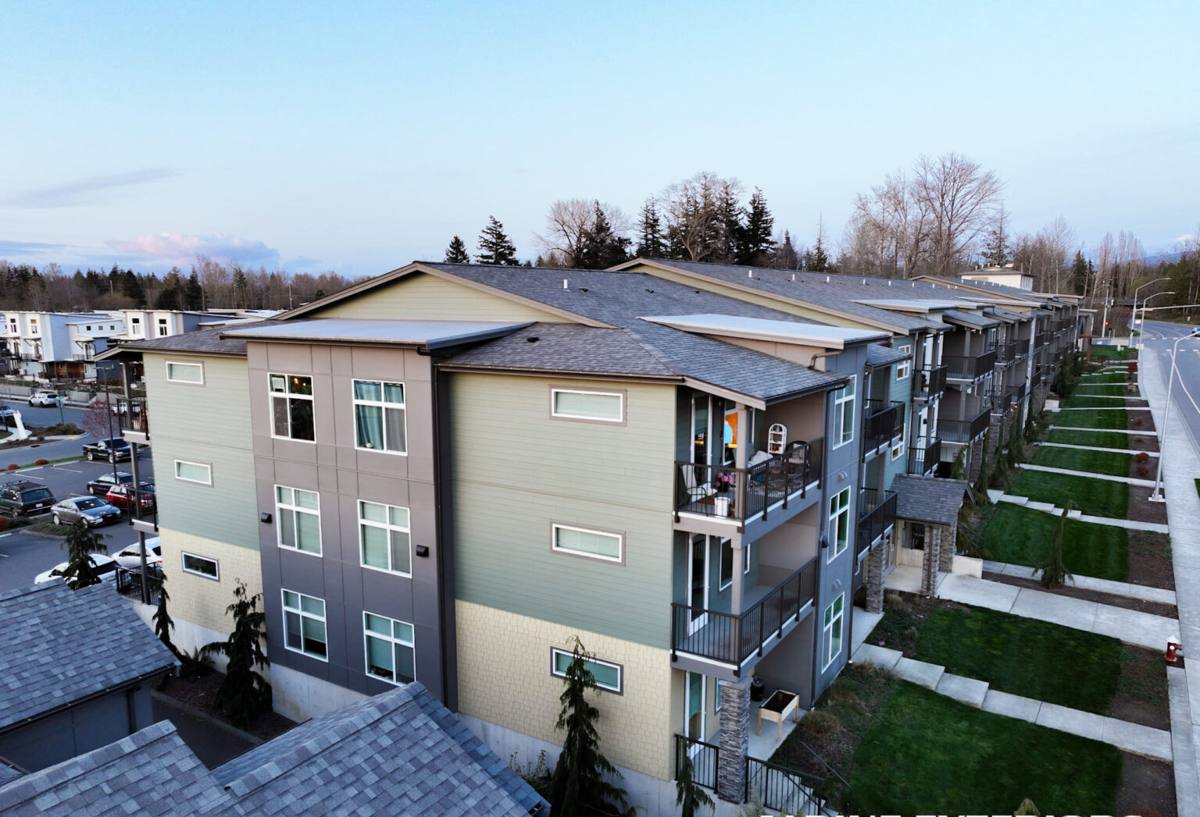
What the Local Climate Actually Does to Siding
Salt Air and Corrosion
Being surrounded by saltwater means airborne salt settles on exterior surfaces constantly, not just during storms. Over years, that salt exposure accelerates corrosion on fasteners, flashing, and any hardware that isn't rated for it, and it breaks down cheaper paint films faster than the same product would fade a few miles inland.
Wind-Driven Rain
Rain in Whatcom County rarely just falls straight down — out on the point, wind pushes it sideways into wall assemblies, especially on water-facing elevations. That means the siding system's ability to shed water at laps, seams, and penetrations matters more here than in more sheltered parts of Blaine.
The Long Moss Season
Shaded, damp exterior walls in this climate can stay wet enough to support moss and algae growth for most of the year, not just in winter. Siding that absorbs moisture or has a painted-on finish tends to show green and black staining faster, and once moss gets a foothold in lap joints or trim gaps, it holds moisture against the wall longer than it would on a bare surface.
Why We Standardized on James Hardie Fiber Cement
We install James Hardie fiber cement siding exclusively — not vinyl, not LP SmartSide, not cedar, not other fiber cement brands. In an environment like Point Roberts, that choice comes down to three practical things: the material doesn't rot or swell when it takes on moisture the way wood-based products can, it's engineered specifically for wet coastal climates through Hardie's HardieZone system (most of western Washington falls in the HZ5 zone), and its factory-applied ColorPlus finish resists fading, moisture staining, and algae growth far better than a field-applied paint job.
Fiber cement is also non-combustible, which matters less for the wildfire risk out here and more for basic long-term durability — it doesn't attract the pests or absorb the moisture that wood siding products eventually succumb to. When a product is engineered for exactly this kind of exposure, we don't see a reason to install something else and then explain to a homeowner five years later why it's underperforming.
The James Hardie Product Lines We Use in Point Roberts
Not every Hardie product is right for every wall. Part of doing this job correctly is matching the line to the elevation, the home's style, and how exposed that particular wall is to wind and rain.
| Product | Best Use | Why It Fits Here |
|---|---|---|
| HardiePlank Lap Siding | Primary wall cladding, most elevations | Traditional lap profile sheds wind-driven rain well when lapped and fastened to spec |
| HardiePanel Vertical Siding | Accent walls, gables, modern styling | Fewer horizontal laps means fewer water-catching seams on exposed faces |
| HardieShingle Siding | Gable accents, dormers | Adds texture without sacrificing the moisture performance of fiber cement |
| HardieTrim Boards | Corners, window and door surrounds, fascia | Dimensionally stable trim that won't gap or cup the way wood trim does in constant damp |
What a Correct Installation Involves
James Hardie siding performs the way it's designed to only when it's installed to the manufacturer's specifications — and in a high-exposure spot like Point Roberts, shortcuts show up faster than they would in a milder location. A correct install isn't complicated, but every detail matters.
- Correct fastener spacing and placement, driven flush (not overdriven) to avoid cracking the board
- Corrosion-resistant fasteners rated for the marine exposure, not standard interior-grade hardware
- Proper starter strip and clearance from grade, decking, and roof lines so water doesn't wick into the bottom edge
- A continuous weather-resistant barrier behind the siding, correctly lapped and sealed at every penetration
- Flashing integrated at every window, door, and roof intersection — not caulk used as a substitute for flashing
- Factory-cut ends field-sealed with the correct sealant so raw edges don't wick moisture
- Proper minimum overlap at horizontal joints to maintain the water-shedding lap
Skip any one of these and the wall assembly behind the siding is exposed to exactly the kind of moisture this climate produces in abundance.
Our Process, From Estimate to Finished Wall
- Site assessment — we walk the home, note which elevations take the worst of the wind and rain, and check the condition of the existing siding, trim, and any water damage already present
- Product and color selection — matching Hardie lines and ColorPlus finishes to the home's exposure and the owner's preferences
- Prep and tear-off — removing old siding, checking sheathing for hidden rot, and repairing anything compromised before new siding goes up
- Weather barrier and flashing — the unglamorous work that determines whether the finished siding actually stays dry behind the surface
- Installation — Hardie boards, panels, and trim installed to manufacturer spec, with attention to the fastening and lap details above
- Final inspection and walkthrough — checking seams, caulking, and trim details with the homeowner before calling the job finished
Maintenance to Expect in This Environment
One reason ColorPlus-finished Hardie siding fits Point Roberts well is how little upkeep it needs compared to field-painted materials. The factory finish is baked on and formulated to resist the fading and staining that salt air and moss cause faster here than elsewhere. That doesn't mean zero maintenance — it means simpler maintenance.
Homeowners should still plan on an occasional gentle rinse to knock off accumulated salt residue and any moss or algae getting a start in shaded areas, and a yearly look at caulking around windows, doors, and trim joints, since sealant is the one component that wears out well before the siding itself does. Keeping gutters clear and grade sloped away from the foundation also does more to protect the wall assembly than most people expect.
Cost Factors Specific to Point Roberts Projects
Every siding estimate is different, but a few things consistently move the number for homes out on the point.
| Factor | How It Affects the Job |
|---|---|
| Home size and number of stories | More square footage and taller walls mean more material and labor time |
| Existing siding removal | Tear-off and disposal of old material adds time versus installing over new sheathing |
| Exposure of each elevation | Water-facing and wind-exposed walls may need extra flashing detail and trim work |
| Trim and architectural complexity | Dormers, multiple gables, and detailed trim take more labor than simple rectangular walls |
| Hidden sheathing repair | Rot found during tear-off adds cost but is far cheaper to fix now than to side over |
We'll always price these out honestly during the estimate rather than guessing at a number over the phone — the only way to know what a given house needs is to look at it.
Why Local Experience in Point Roberts Matters
Point Roberts isn't like scheduling a job in Blaine proper. Getting crews and material to the peninsula, working around the border crossing, and understanding just how much punishment the water-facing side of a house takes compared to a sheltered inland wall — that's knowledge you only get from having done the work there before. A crew that's used to treating every Whatcom County job the same way will miss details that a crew familiar with Point Roberts' specific exposure won't.
We've built our process around installing one product system correctly rather than offering every option under the sun. On a peninsula that gets this much salt air, rain, and moss, that focus is what keeps a siding job performing the way it's supposed to for decades, not just the first few years.
If you're weighing a re-side or new siding project for a Point Roberts home, we're happy to walk the property, look at what your walls are actually dealing with, and put together a straightforward, no-pressure estimate — just fill out the form below to get started.