 Blaine Siding
 Why Point Roberts Decks Take a Different Kind of Beating
Point Roberts sits out on its own point of land, surrounded on three sides by the Strait of Georgia and the Boundary Bay waters. That location is part of what makes it a beautiful place to have a deck — and part of what makes decking on Point Roberts homes fail faster than decking almost anywhere else in Whatcom County. Salt-laden air moves off the water and settles onto every exposed surface, wind-driven rain gets pushed sideways under railings and into board seams, and the long, damp Pacific Northwest shoulder seasons keep wood surfaces wet enough, long enough, for moss and algae to take hold and stay.
None of that is unique to Point Roberts in isolation — Blaine, Birch Bay, and the rest of the county deal with versions of the same weather. What's different in Point Roberts is the concentration of it: a small peninsula with water on nearly every side, more direct salt exposure than inland Whatcom neighborhoods, and homes that are often used seasonally, meaning small maintenance problems go unnoticed for weeks or months at a time. A deck built here needs to be chosen and installed with that specific combination in mind, not treated like a generic backyard project.
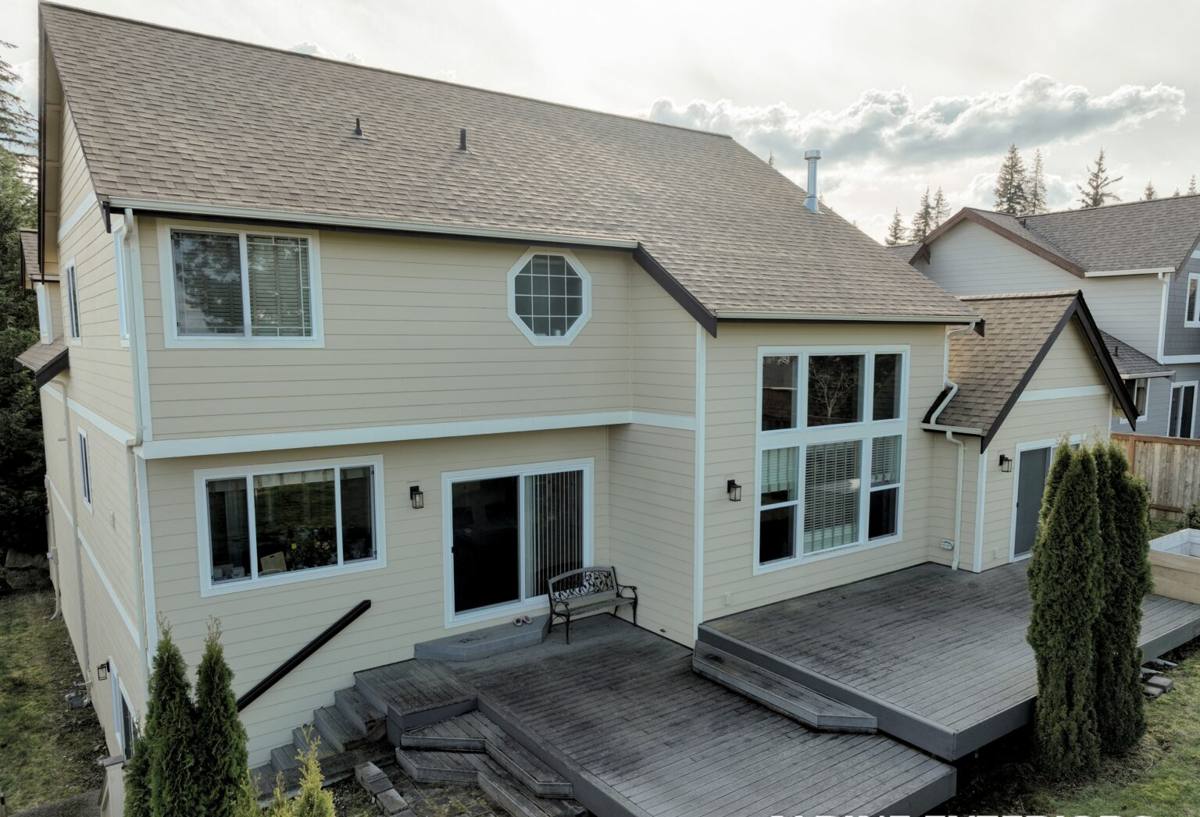
What Salt Air, Driving Rain, and Moss Actually Do to a Deck
Salt Air
Airborne salt is corrosive to metal and slowly abrasive to finishes. On a wood deck it accelerates the breakdown of stains and sealers, meaning a maintenance schedule that might work fine a few miles inland falls short here. On any deck, salt exposure makes fastener and hardware selection a real decision, not an afterthought — the wrong screws or brackets will show rust and pitting well before the decking itself shows its age.
Driving Rain
Storms coming off open water don't just fall straight down — they drive in sideways, pushing moisture into places a calm rain never reaches: under rail baseplates, into board end-cuts, behind ledger boards, and into any gap where flashing or fasteners weren't detailed correctly. A deck built for a sheltered inland yard often isn't built for that lateral push of water.
Moss and Algae Season
Whatcom County's wet season stretches long, and on a shaded or north-facing Point Roberts deck, surfaces can stay damp for days after a storm passes. That's exactly the environment moss and algae need. On wood decking, this means seasonal cleaning and re-sealing just to stay ahead of staining and slow surface degradation. On a poorly chosen composite board, it can mean a slick, dark green film that's a genuine slip hazard by late winter.
Why Composite Makes Sense for This Climate
Composite decking doesn't absorb water the way wood does, doesn't need annual staining, and won't rot, splinter, or cup from repeated wet-dry cycles. For a Point Roberts home dealing with salt air and a long damp season, that translates into fewer maintenance visits and a more predictable board over the life of the deck. It's not a maintenance-free product — nothing outdoors on this peninsula is — but it shifts the maintenance burden from "protect the wood every year or it degrades" to "rinse it periodically to keep it looking its best."
| Factor | Wood Decking | Composite Decking |
|---|---|---|
| Sealing/staining | Needed roughly every 1-2 years to prevent moisture damage | Not required — color and surface are built into the board |
| Moss/algae resistance | Low — porous surface holds moisture | Higher, especially with textured or capped boards |
| Splintering/cupping | Common as boards wet and dry repeatedly | Not a factor — boards don't absorb water the same way |
| Salt air effect | Accelerates finish breakdown and graying | Minimal effect on the board itself; hardware still needs to be salt-rated |
| Upfront cost | Lower material cost | Higher material cost, offset over time by lower upkeep |
| Typical lifespan with proper install | 15-20 years with consistent maintenance | 25-30+ years, brand and product line dependent |
We're not against wood decking as a category — it has a place, and some homeowners genuinely prefer the look and don't mind the upkeep. But for a Point Roberts home exposed to salt air on top of everything else Whatcom County weather brings, we steer most clients toward composite because it holds up to that specific combination with far less ongoing work.
What a Correct Composite Deck Installation Actually Involves
Composite boards are only as good as what's underneath them. A deck that fails early on the water side of Blaine almost always fails at the substructure or the details, not the decking material itself.
Substructure and Framing
Joists, ledger connections, and posts need to be sized and spaced correctly for the specific composite product being installed — composite boards have their own span-rating requirements that differ from dimensional lumber, and ignoring the manufacturer's spec is one of the most common causes of a bouncy or prematurely sagging deck.
Fasteners and Hardware
In a salt-air environment, hardware grade matters as much as the decking itself. Structural connectors, screws, and brackets need to be rated for corrosion resistance appropriate to coastal exposure — standard interior-grade fasteners will rust and stain the surrounding material well before the deck's structure is otherwise due for attention.
Drainage and Airflow
Water needs somewhere to go, both on top of the deck and underneath it. Proper board spacing, a slight slope away from the house, and clear ventilation beneath the frame keep moisture from pooling against ledger boards or framing members — the areas most prone to hidden rot even when the visible decking looks fine.
Flashing at the House Connection
Where a deck ties into the home, flashing has to be detailed to shed water outward, not let it track behind siding or into the rim joist. This single detail is where driving rain does the most long-term damage when it's skipped or done carelessly.
Fastening Method
Hidden fastener systems give a cleaner surface with fewer exposed screw heads for water and salt to work on, but they need to be installed to the board manufacturer's spacing and gapping tolerances — get that wrong and boards can shift, squeak, or gap unevenly as they expand and contract with temperature swings.
Choosing a Composite Product for This Environment
Not all composite boards are built the same, and the differences matter more here than they would on a sheltered inland patio.
- Capped composite — a protective outer shell wrapped around a composite core; generally the strongest choice against moisture intrusion and staining, which is why it's our default recommendation for water-exposed Point Roberts sites.
- Uncapped composite — composite material without the protective shell; more affordable but more susceptible to moisture absorption and surface fading over time.
- Board texture — a deeper wood-grain or textured finish adds slip resistance, which matters directly during moss and algae season on shaded decks.
- Color — darker boards absorb more heat and can show white salt residue more visibly; lighter and mid-tone colors often hide mineral buildup better in a coastal setting.
- Warranty structure — composite warranties vary significantly in what they cover (staining, fading, structural integrity) and for how long; we walk clients through what's actually covered before they commit, not just the years on the sticker.
Cost Factors to Expect
| Factor | How it Affects the Project |
|---|---|
| Deck size and shape | More cuts, angles, and picture-frame borders add labor time |
| Substructure condition | Replacing rotted framing or undersized posts adds cost but is non-negotiable for a safe deck |
| Board tier (capped vs. uncapped) | Capped boards cost more upfront, generally less to maintain |
| Railing system | Composite or metal rail systems vary widely in price and salt resistance |
| Height and access | Elevated decks or difficult site access add labor and equipment needs |
| Permitting | Structural work typically requires a permit; we handle this as part of the process |
Our Process for a Point Roberts Deck Project
We keep the process straightforward because homeowners on Point Roberts often aren't on-site full time, and clear communication matters more when a client can't just walk out back and check on things.
- On-site assessment — we look at the existing structure (if there is one), site drainage, sun and shade exposure, and how the deck will actually be used.
- Product selection — we walk through composite tiers, colors, and railing options suited to salt air and moss exposure, with honest tradeoffs on cost versus long-term upkeep.
- Design and quote — a clear scope covering substructure work, decking, railing, fasteners, and flashing details, with permitting handled as needed.
- Scheduling — because Point Roberts is only reachable by road through Canada, material delivery and crew scheduling are planned in advance rather than adjusted day-of, which keeps the project moving without avoidable delays.
- Installation — framing and structural work first, then decking, railing, and finish details, with attention to the drainage and flashing points that matter most in this climate.
- Final walkthrough — we go over the finished deck together, including a simple maintenance rundown specific to the product installed.
Living With a Composite Deck on the Water
Composite decking cuts down on maintenance dramatically compared to wood, but "low-maintenance" isn't "no-maintenance," especially this close to the water. A periodic rinse with a hose or soft-bristle brush keeps salt film and organic buildup from settling into the board texture. Keeping gutters and nearby drainage clear reduces the amount of standing water reaching the deck surface after storms. And an occasional check of railing hardware for corrosion — even salt-rated hardware benefits from a visual check every so often — catches small issues before they become bigger ones. For a home that sits empty for stretches at a time, we're happy to talk through a simple seasonal checklist so small problems don't turn into big ones between visits.
Why Hiring a Crew That Already Works in Point Roberts Matters
Point Roberts is geographically part of the U.S. but physically cut off from the rest of Whatcom County by land — reaching it means crossing into Canada and back. That logistics reality trips up contractors who don't already build it into their scheduling: material deliveries, crew travel time, and border timing all need to be planned around, not discovered mid-project. A crew that regularly works Point Roberts already has that logistics figured out, which means fewer delays and fewer surprises for the homeowner.
Beyond logistics, familiarity with the specific microclimate matters. A contractor who mostly builds decks in sheltered inland yards may not think twice about fastener grade, flashing details at the ledger, or board selection for heavy salt exposure — because most of their projects don't need that level of attention. A crew that's built and maintained decks on Point Roberts and the surrounding Blaine waterfront treats those details as standard practice, not extra steps.
What to Check Before You Hire
- Do they specify corrosion-resistant fasteners and hardware for coastal exposure, or use standard-grade hardware by default?
- Do they size and space the substructure to the composite manufacturer's actual span rating, not just standard lumber framing practice?
- Do they detail flashing at the house connection, or treat it as a minor step?
- Do they account for Point Roberts' border-crossing logistics in their scheduling and delivery planning?
- Can they explain the real tradeoffs between capped and uncapped composite rather than just upselling the most expensive option?
- Do they offer a clear, honest maintenance rundown for the specific product they're installing?
Get a Free, No-Pressure Estimate
If you're weighing options for a new deck or replacing an aging one on your Point Roberts property, we're happy to take a look and talk through what makes sense for your site, your budget, and how you actually use the space. There's no pressure and no obligation — just a straightforward assessment from a crew that already knows what this stretch of Whatcom County coastline does to a deck. Fill out the form below to get started.