 Blaine Siding
 Birch Point sits close enough to the water that its homes take a different kind of weather beating than houses a few miles inland in Blaine. Salt-laden air off the Strait of Georgia, wind-driven rain that finds its way into anything less than a tight seal, and a long, damp moss season that never really ends from fall through spring — all of it works on window frames, sills, and seals year after year. If you've noticed drafts near your windows, fogging between the panes, or trim that's starting to look tired, it's usually this combination of coastal exposure and time that's behind it, not just old age on its own.
This page covers what energy-efficient window replacement actually involves for a Birch Point home, what to look for in the work and the materials, and how we approach the job so it holds up to the conditions here rather than just looking good on install day.
Why Birch Point Windows Wear Differently Than Windows Inland
Whatcom County covers a lot of ground, and not all of it sees the same weather. Homes set back from the water in Blaine deal with wind and rain like anywhere else in Western Washington. Birch Point homes get that plus regular exposure to salt-carrying air, which speeds up corrosion on hardware, fasteners, and unprotected metal components. Combine that with rain that comes in sideways during a fall or winter blow, and you've got two separate stresses working on the same window at once: chemical wear from salt, and physical wear from moisture intrusion.
Moss season adds a third factor that people don't always connect to their windows. When moss and algae build up on siding, trim, and roof edges nearby, they hold moisture against the building longer than open air would. Window frames near shaded, north-facing walls or under overhangs where moss tends to collect can stay damp longer between rain events, which shows up eventually as soft wood, peeling paint, or seals that give out earlier than they should.
What This Means in Practice
None of this means Birch Point homes need exotic materials or something unusual. It means the details matter more here than they would somewhere drier and further from the coast: the quality of the flashing, the type of sealant used, how well the frame material resists corrosion, and how carefully the installer handles the water management around the opening.
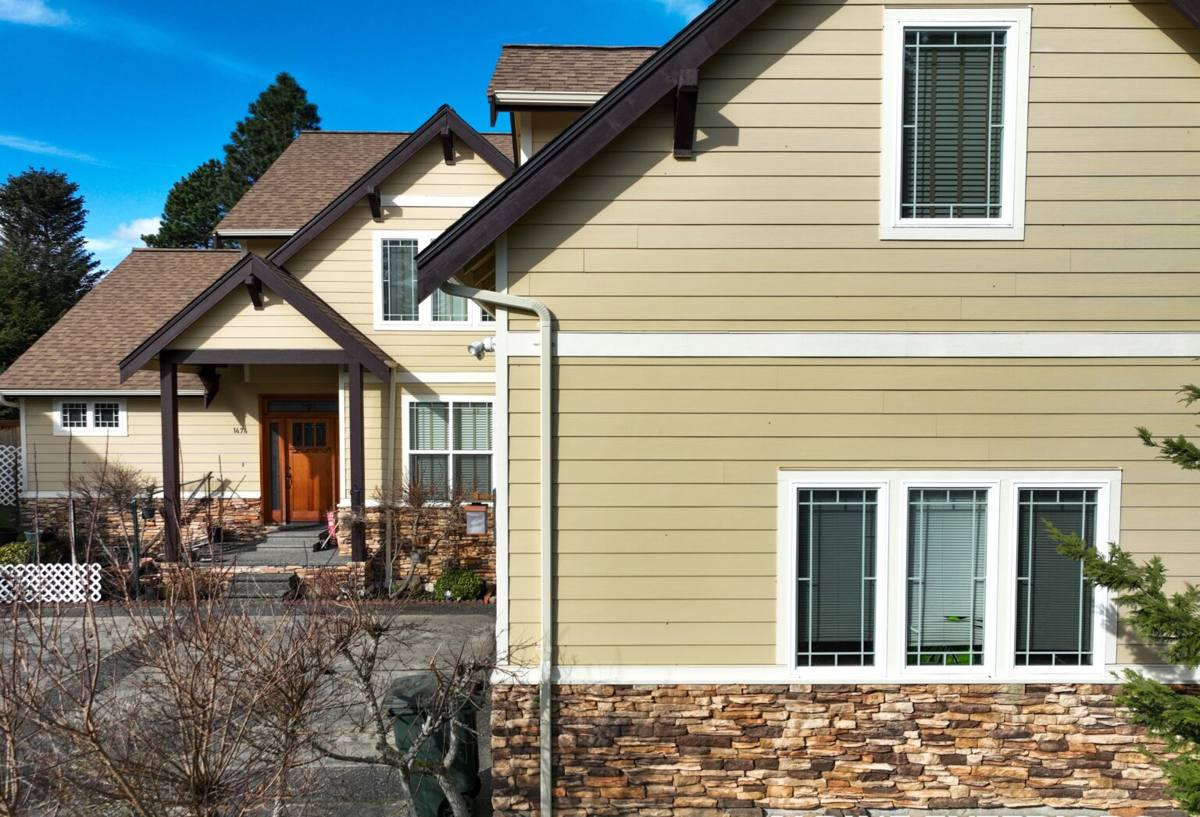
What a Correct Energy-Efficient Window Job Actually Involves
"Energy-efficient windows" gets used loosely, so it's worth being specific about what actually makes a window perform well in this climate — and what makes the installation hold up.
The Window Itself
- Insulated glass units (typically double-pane, sometimes triple-pane) with a low-E coating that reduces heat transfer
- Gas fill between panes (usually argon) that improves insulation performance over plain air
- A frame material suited to coastal exposure — vinyl and fiberglass both hold up well against salt air; we're selective about metal components and hardware finishes for the same reason
- Weatherstripping and a sash design that seals tightly against wind-driven rain, not just still-air drafts
The Installation
The window itself is maybe half the picture. The other half is how it's installed — and this is where a lot of energy loss and moisture problems actually originate, even with a good window. A correct install includes proper flashing integrated with the existing weather-resistive barrier (not just caulk over the gap), backer rod and sealant sized correctly for the joint, shimming that keeps the frame square without racking it, and insulation in the gap between the window and rough opening rather than leaving it hollow or overpacking it. Rushed or careless flashing work is one of the more common reasons a technically good window still leaks or drafts within a few years — the product isn't the problem, the installation is.
Signs Your Birch Point Home's Windows Need Attention
| What You Notice | What It Usually Means |
|---|---|
| Fogging or haze between the panes | Seal failure on an insulated glass unit — the gas fill has escaped and the insulating value is gone, even if the window still opens and closes fine |
| Drafts you can feel near the frame | Worn weatherstripping, a failing seal, or settling that's opened small gaps around the sash |
| Soft or discolored wood at the sill or trim | Ongoing moisture intrusion, often from failed exterior sealant or flashing — worth checking before it spreads into the wall framing |
| Difficulty opening, closing, or locking | Frame warping or settling, sometimes moisture-related, sometimes just age on the hardware |
| Visible corrosion on hardware or metal trim | Salt air exposure on components not rated for coastal use |
| Rooms near certain windows feel colder or draftier than the rest of the house | Localized heat loss — often fixable with better sealing and glass performance even before a full replacement is necessary |
Our Process for a Birch Point Window Project
1. On-Site Assessment
We look at each window individually rather than assuming every opening on the house needs the same fix. Some windows may just need re-sealing or hardware repair; others may have deeper issues with the frame or the flashing behind the trim that only show up on close inspection.
2. Straightforward Recommendations
We'll tell you plainly which windows are candidates for repair versus replacement, and why. If a window's glass has failed but the frame and flashing are sound, replacement of just the glass unit may be the more sensible option. If the frame itself is compromised, that's a different conversation.
3. Careful Removal and Water Management
Before a new window goes in, we check the condition of the rough opening and the weather-resistive barrier behind the old unit. This is the step that gets skipped when installs go bad, and it's the one that matters most for a house exposed to driving rain off the water.
4. Installation and Sealing
Proper flashing sequence, correct sealant application, and attention to how the new window ties into the surrounding siding and trim — done so water sheds away from the opening rather than finding a path in.
5. Final Check
We walk the finished work with you, confirm operation, and make sure the exterior finish work around the window looks right, not just functions right.
What Affects Cost
Every home and every window is a little different, but a few factors consistently drive the price of a window project up or down:
- Number of windows and their size — larger openings and specialty shapes (bays, arches) cost more than standard double-hung units
- Frame material — vinyl is typically the most budget-friendly, fiberglass costs more but offers strength and longevity advantages
- Condition of the existing opening — hidden rot or flashing failure discovered during removal adds labor that a simple swap wouldn't require
- Glass package — upgrading from standard low-E double-pane to triple-pane or specialty coatings increases material cost
- Access and height — second-story or hard-to-reach windows take more time and equipment
Most homeowners are looking at a broad range from a few hundred dollars for a single small repair or glass replacement up to several thousand for a full-house window replacement, but the honest answer is that it depends heavily on the specifics above. We give real numbers after we've actually looked at your windows, not before.
Why Local Experience with Birch Point Homes Matters
A crew that only occasionally works this close to the water can miss things that are obvious to someone who deals with it regularly — like knowing which hardware finishes hold up to salt exposure, or recognizing early moss-related moisture damage on a shaded wall before it becomes a bigger repair. We work throughout Blaine and Whatcom County, and jobs near the water in areas like Birch Point get handled with that exposure in mind from the start: material choices, sealant selection, and installation sequencing all account for the added stress of salt air and driving rain rather than treating every job the same regardless of location.
That local familiarity also means fewer surprises for you. We're not guessing at how a product performs in this environment — we've seen how different frame materials, sealants, and hardware hold up over years of Whatcom County winters, and we bring that into every recommendation.
Maintenance That Extends Window Life in a Coastal Climate
- Rinse salt residue off frames and glass periodically, especially after storms with onshore wind
- Keep moss and organic debris cleared from nearby trim, sills, and siding so moisture doesn't sit against the window longer than it needs to
- Check and re-caulk exterior sealant joints every few years, since sealant is a wear item even when everything else is sound
- Operate hardware regularly through the seasons — locks and hinges that sit unused are more prone to seizing from corrosion
- Address soft trim or peeling paint near windows promptly rather than waiting, since moisture problems compound quickly once they start
If your Birch Point home's windows are drafty, fogged, or just showing their age, we're happy to take a look and give you a straight assessment — no pressure, no upsell, just an honest read on what your windows need. Reach out using the form below to schedule a free estimate.