 Blaine Siding
 Why Semiahmoo Siding Wears Differently Than Inland Homes
Semiahmoo sits about as exposed to the weather as a home in Whatcom County can get. Properties on and around the spit face open water on multiple sides, which means wind-driven rain, salt-laden air, and near-constant humidity are part of daily life rather than occasional weather events. Add in the region's long, wet shoulder seasons and the shaded, moss-friendly tree cover common throughout this part of the county, and you have a climate that is genuinely harder on exterior siding than what homes ten or fifteen miles inland deal with.
This matters for siding replacement because the product and the installation details that work fine in a drier part of Washington are often the wrong call here. A siding replacement in Semiahmoo isn't just a cosmetic project — it's a chance to correct whatever combination of moisture intrusion, salt exposure, and organic growth has been working against the house, sometimes for decades.
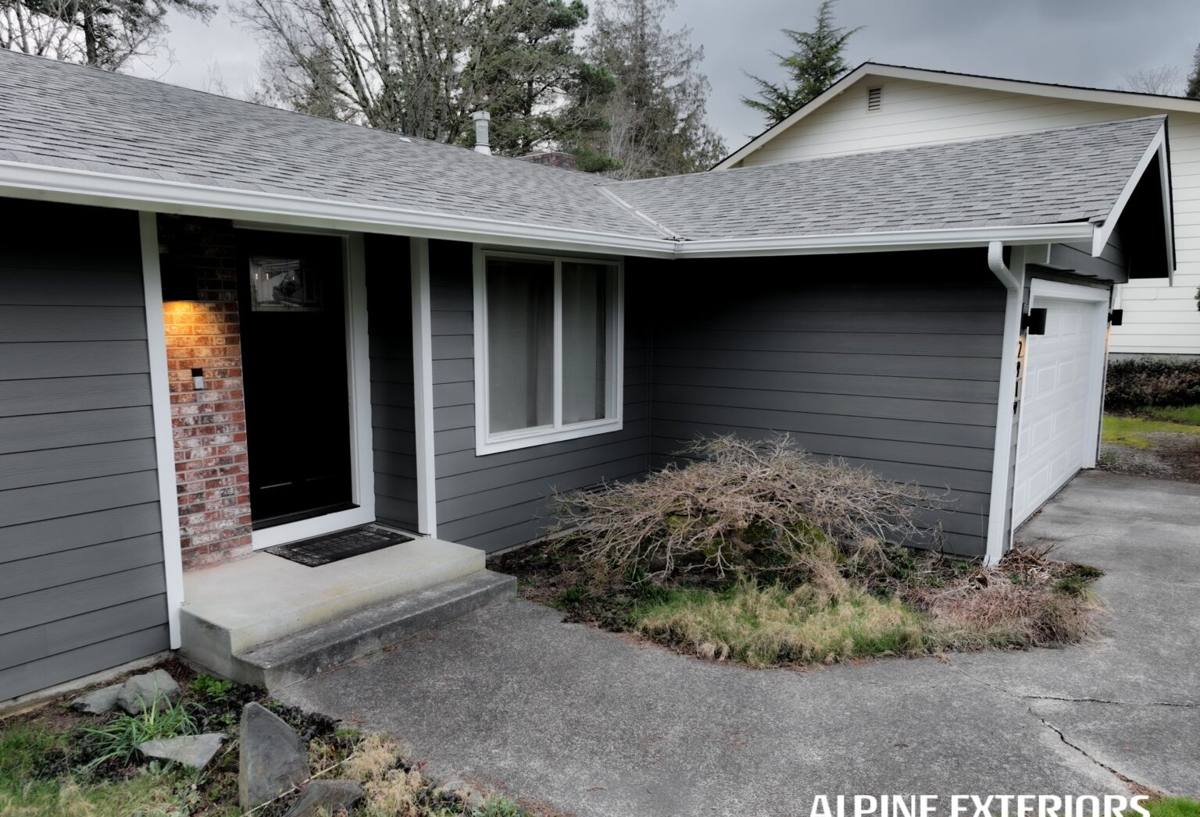
What Salt Air, Rain, and Moss Actually Do to Siding
Salt Air
Airborne salt is corrosive to metal fasteners, flashing, and trim, and it accelerates the breakdown of paint films and lower-grade siding substrates. On homes closest to the water, salt residue settles on siding surfaces even on dry days, and it doesn't wash off completely with normal rainfall. Over years, that steady low-grade exposure shows up as premature paint failure, fastener corrosion, and soft spots where moisture has found a way behind the cladding.
Driving Rain
Wind off the water doesn't just bring rain — it drives it sideways into wall assemblies, seams, and butt joints that would stay dry in a calmer setting. Siding systems that rely on paint or caulk alone to keep water out tend to fail first at these pressure points. Correct water management — proper laps, flashing, and a functioning drainage plane behind the siding — matters more here than almost anywhere else in the county.
Moss and Sustained Moisture
Shaded exposures and long stretches of damp weather let moss, algae, and mildew get a foothold on siding surfaces, especially on north-facing walls and anywhere tree cover blocks sun and airflow. Moss holds moisture against the siding surface far longer than open air would, which is exactly the condition that rots wood-based products and stresses the paint systems on lower-grade fiber cement.
Signs a Semiahmoo Home Needs Siding Replacement
Not every issue means full replacement, but these are the signs we take seriously on waterfront and near-waterfront properties:
- Soft, spongy, or crumbling siding when pressed, especially near the bottom courses or under windows
- Paint that is peeling, chalking, or failing well before the manufacturer's repaint interval
- Persistent moss or dark staining that returns within a season of cleaning
- Visible gaps, warping, or buckling at seams and butt joints
- Rust streaking from fasteners or trim, a common salt-air symptom
- Interior signs — musty smells, peeling interior paint, or soft drywall on exterior walls
- Siding that is original to a home built more than 20-25 years ago, particularly wood-based or older composite products
What a Correct Siding Replacement Involves
A siding replacement done right in this climate isn't just swapping old boards for new ones. It's a full reset of how the wall manages water. The scope we plan for on Semiahmoo homes includes:
- Full tear-off and inspection. Old siding comes off so the sheathing underneath can be checked for rot, soft spots, or prior water damage that needs to be repaired before anything new goes on.
- Weather-resistive barrier. A correctly lapped and sealed water-resistive barrier goes over the sheathing, giving the wall a second line of defense behind the siding itself.
- Flashing at every penetration. Windows, doors, hose bibs, vents, and anywhere else the wall is interrupted get proper flashing so wind-driven rain has nowhere to enter.
- Correct fastening. Fastener type, spacing, and penetration depth follow the siding manufacturer's specification — not a generalized "close enough" approach, since fastener failure is one of the most common causes of early siding problems near saltwater.
- Proper clearances. Siding is held up off decks, grade, and roof lines by the clearance the manufacturer requires, so water doesn't wick up into the bottom edge of the panel.
- Trim and caulking details. Corners, trim boards, and joints are sealed and finished in a way that sheds water rather than trapping it.
Why We Only Install James Hardie Fiber Cement
We've made a deliberate call not to install vinyl, LP SmartSide, primed spruce, cedar, or other fiber cement brands. On a site like Semiahmoo, that decision comes down to how each product actually behaves in salt air and sustained moisture, not marketing.
James Hardie fiber cement is non-combustible, doesn't rot or delaminate the way wood-based products can when moisture gets behind them, and holds paint and color far longer than bare or site-primed wood siding. Hardie's ColorPlus factory-applied finish is baked on under controlled conditions, which gives it better adhesion and fade resistance than field-applied paint — a real advantage on a home that's getting steady salt exposure and UV off open water. Hardie also builds climate-specific HZ product lines engineered for exactly this kind of wet, marine environment, and backs the product with a strong, transferable warranty that matters if the home ever changes hands.
None of this means other products are junk — vinyl is inexpensive and low-maintenance in mild climates, and wood has real curb appeal for the right buyer. But for a home taking the kind of weather Semiahmoo delivers, we'd rather stand behind one product system we trust completely than install something we know has trade-offs we can't fix with better installation technique.
Our Process for Semiahmoo Projects
Working near the water changes a few practical things about how a siding project runs, and we plan for them up front rather than discovering them mid-job:
- Weather windows. We schedule tear-off and dry-in around forecasted dry stretches so open wall sections aren't exposed to rain any longer than necessary.
- Material staging. Waterfront and spit-adjacent properties sometimes have tighter access or limited staging area, so we plan delivery and storage of materials accordingly.
- Community guidelines. If a property is part of a homeowners' association or shared community with exterior design standards, we work within whatever guidelines apply to color and material choices.
- Permitting. We handle the permitting process required for exterior work in the applicable jurisdiction before work begins.
What Affects the Cost of a Siding Replacement
Every home is different, but these are the main factors that move the price of a siding replacement up or down:
| Factor | Why It Matters |
|---|---|
| Home size and wall complexity | More square footage and more corners, gables, and dormers mean more labor and material |
| Condition of the existing wall | Rot or water damage found during tear-off requires sheathing repair before new siding goes on |
| Water and wind exposure | Homes with direct exposure to open water often warrant additional flashing and sealing detail |
| Trim and accent work | Detailed trim, board-and-batten accents, or multiple siding profiles add labor time |
| Access and staging | Tight lots, steep grades, or limited material staging area can affect labor efficiency |
| Siding profile and color | Factory-finished colors and specialty profiles vary in material cost |
We give a firm, itemized quote after seeing the home in person — not a phone estimate — because so much of the real cost depends on what tear-off reveals underneath.
Caring for New Siding in a Salt-Air Climate
Even the right product needs some basic upkeep to perform for its full service life here:
- Rinse siding periodically to remove salt residue and organic buildup, especially on walls facing the water
- Keep gutters clear so overflow doesn't run down the wall face
- Trim back vegetation that shades siding and traps moisture against it
- Inspect caulking at trim and penetrations every year or two and refresh where it's cracked or pulled away
- Address any soft spots, staining, or fastener corrosion early rather than waiting for it to spread
Why Hiring a Crew That Already Works This Area Matters
A siding crew that mainly works drier, inland neighborhoods can install a technically fine job that still underperforms once it meets Semiahmoo's combination of salt air, driving rain, and moss-heavy shade. The flashing details, fastener choices, and clearance decisions that hold up here are shaped by having actually seen how homes in this exposure fail over time — and by knowing which product system is built to handle it. A crew that already works Blaine and the surrounding waterfront isn't guessing at how the climate will treat the job; that experience is built into how we plan and execute every step.
If you're weighing a siding replacement on a Semiahmoo property, we're happy to take a look and walk you through what we're seeing — no pressure, no obligation. A free estimate gets you a clear, itemized picture of the work and the cost before you decide anything.