 Blaine Siding
 New Roof Installation for Semiahmoo Homes
Semiahmoo sits right up against the water, and that changes what a roof has to deal with compared to a house even a few miles inland. Salt-laden air moves off the bay and settles on every exposed surface. Wind-driven rain comes in sideways during winter storms instead of falling straight down. And the long stretch of damp, mild weather that defines this part of Whatcom County keeps roofs wet for days at a time, which is exactly the kind of environment moss and algae thrive in. A roof that's engineered for a drier, more sheltered part of the state won't hold up the same way out here.
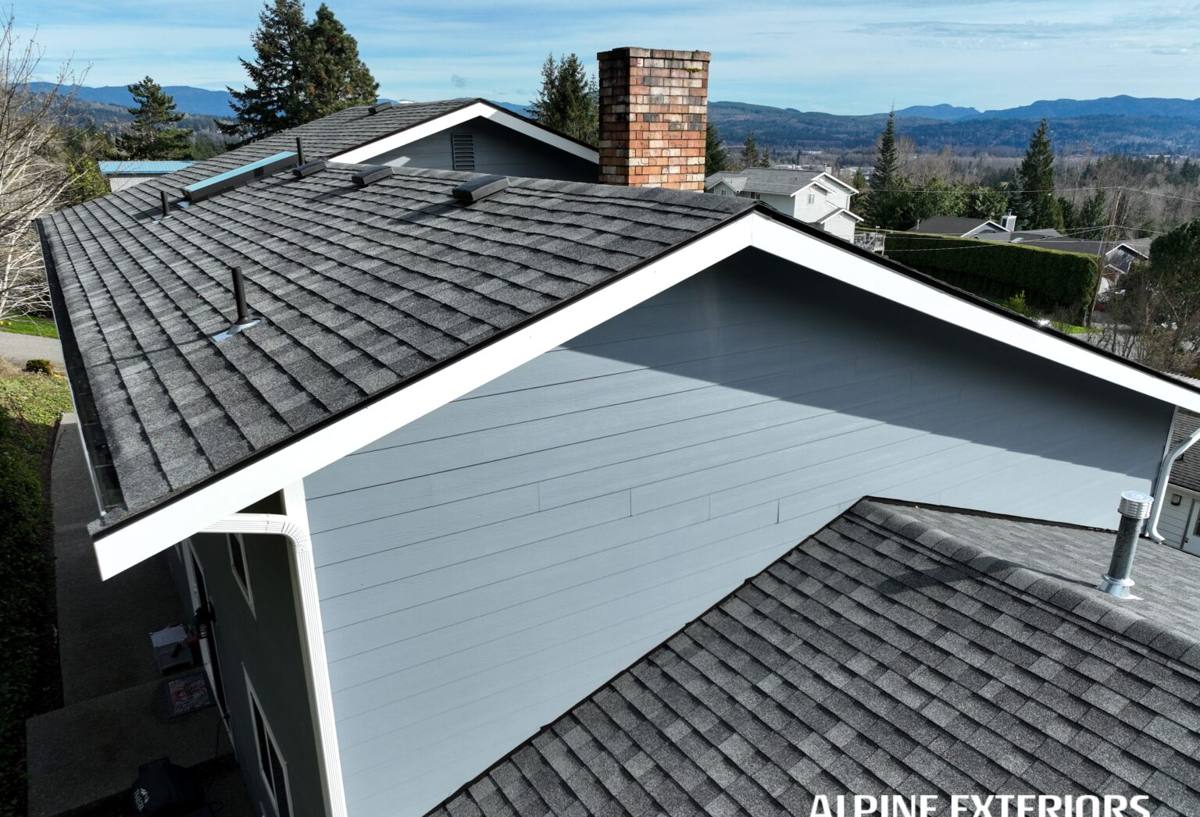
When we install a new roof in Semiahmoo, we're not just swapping old material for new. We're building a roofing system — deck, underlayment, flashing, ventilation, and covering — that's matched to a coastal, moss-prone, wind-exposed site. That's a different job than a standard reroof, and it should be treated like one.
Why Semiahmoo's Climate Is Hard on Roofs
Salt Air and Corrosion
Salt air accelerates corrosion on anything metal — flashing, fasteners, vent boots, valley metal. Standard fasteners can start rusting years before they would inland, and once a fastener corrodes, the seal around it fails long before the shingle above it wears out. This is one of the most common causes of early leaks we see on waterfront and near-waterfront homes: not the roofing material itself, but the hardware holding it together.
Driving Rain
Open exposure toward the water means wind-driven rain regularly hits roof surfaces at an angle instead of running straight off. That puts extra load on flashing details — around chimneys, skylights, dormers, and roof-to-wall transitions — because water is being pushed into gaps it wouldn't reach on a calmer site. Underlayment quality and lap direction matter more here than on a sheltered inland roof.
Moss and Sustained Moisture
Western Whatcom County has a long wet season, and Semiahmoo's mild, humid microclimate keeps roof surfaces damp longer after a rain than drier sites. That moisture, combined with shade from mature trees on many lots, is what lets moss and algae take hold. Moss doesn't just look bad — it holds water against the roofing material, lifts shingle edges, and works its way under flashing over time.
What a Correct New Roof Installation Involves
A roof that's actually built for this location goes beyond the visible shingle layer. Every part of the system needs to be chosen and installed with salt air, wind-driven rain, and moss exposure in mind.
- Corrosion-resistant fasteners and flashing suited to coastal exposure, not standard-grade hardware
- Ice-and-water shield or equivalent self-adhered membrane at eaves, valleys, and roof penetrations
- Properly lapped synthetic underlayment across the full deck, not just at high-risk areas
- Balanced intake and exhaust ventilation to keep the attic dry and reduce moss-friendly moisture buildup
- Step flashing and counter-flashing at every wall and chimney intersection, not caulk-and-hope patch jobs
- A roofing material with a track record for wind and moisture performance in coastal Pacific Northwest conditions
Skip any one of these and the roof may look fine for a season or two before the weak point shows up as a leak, premature moss growth, or lifted shingles during the next windstorm.
Choosing the Right Roofing Material
There's no single "best" roofing material for every Semiahmoo home — it depends on the roof's exposure, slope, budget, and how much upkeep the homeowner wants to do. Here's how the common options compare for this specific environment.
| Material | Wind & Rain Performance | Moss Resistance | Upkeep | Relative Cost |
|---|---|---|---|---|
| Standard asphalt shingle | Good when properly fastened and sealed | Moderate — benefits from periodic cleaning | Low to moderate | $ |
| Architectural (laminated) shingle | Very good; heavier profile resists wind uplift better | Moderate to good, depending on granule treatment | Low to moderate | $$ |
| Standing seam metal | Excellent; sheds wind-driven rain and holds up in gusts | Excellent — moss struggles to grip smooth metal | Low | $$$ |
| Cedar shake | Good if maintained; more sensitive to sustained moisture | Poor without regular treatment and cleaning | High | $$–$$$ |
For most Semiahmoo homes, we lean toward architectural shingles or standing seam metal because they handle the combination of wind and coastal moisture with the least ongoing maintenance. Cedar shake can still be the right call for the look a homeowner wants, but it comes with a real maintenance commitment in a climate this damp, and we'll say so plainly during an estimate rather than glossing over it.
Ventilation: The Part Homeowners Rarely Ask About
Attic ventilation doesn't show up in curb appeal photos, but it's one of the biggest factors in how long a roof actually lasts here. A poorly ventilated attic traps warm, moist air against the underside of the roof deck. Over a wet Whatcom County winter, that moisture works against the shingles from below at the same time salt air and rain are working against them from above — and it's also part of what keeps the roof surface damp longer, feeding moss growth. A correctly balanced system pulls fresh air in at the eaves and pushes warm, moist air out at the ridge, so the deck stays dry and the shingles perform the way they're rated to.
Our Installation Process
- On-site inspection. We check the existing roof, deck condition, flashing details, and ventilation before quoting anything, so the estimate reflects what your roof actually needs.
- Material selection. We walk through the trade-offs above based on your home's exposure, slope, and budget — no pressure toward the most expensive option.
- Tear-off and deck check. Old roofing comes off down to the deck, and we inspect for soft spots, rot, or prior water damage before anything new goes down.
- Underlayment and flashing. Self-adhered membrane at eaves and valleys, synthetic underlayment across the field, and new step and counter-flashing at every wall, chimney, and penetration.
- Ventilation correction. We install or correct intake and exhaust ventilation as part of the job, not as an afterthought.
- Roofing installation. Material goes down to manufacturer spec, with fastening patterns and exposure adjusted for wind and coastal exposure where the roof calls for it.
- Final walkthrough. We review the finished roof with you, including what routine upkeep — like moss checks — will look like going forward.
Signs Your Semiahmoo Roof May Need Full Replacement
Not every roof problem calls for a full tear-off. But a few signs, especially in combination, usually mean repair is no longer the cost-effective answer.
- Shingles that are cupping, curling, or losing granules across large sections of the roof
- Heavy moss coverage that's returned quickly after cleaning, especially near the eaves and in shaded valleys
- Soft or spongy spots on the roof deck, felt when walking it during inspection
- Rusted or failing flashing around chimneys, skylights, and vent penetrations
- Daylight visible through the roof deck from inside the attic
- Multiple past repairs in different areas within a short span of years
- The roof is at or past the expected service life for its material and hasn't been reroofed
If you're only seeing one or two isolated issues, a targeted repair may still make sense — we'll tell you that directly instead of pushing a full replacement you don't need yet.
Why a Crew That Already Works Semiahmoo Matters
Roofing crews that mostly work drier, more sheltered areas don't always account for coastal exposure by default — it's easy to use standard fasteners, standard underlayment coverage, and standard ventilation calculations and call it done. A crew that regularly works Semiahmoo and the surrounding Blaine waterfront knows to spec corrosion-resistant hardware without being asked, to pay extra attention to flashing on wind-exposed elevations, and to factor moss exposure into material and ventilation choices from the start. That local knowledge is the difference between a roof that performs for its full expected lifespan out here and one that needs early attention because it was built to a generic standard.
We also carry the licensing and insurance required to do this work in Washington, and we're used to navigating Whatcom County permitting for reroof and replacement projects, which keeps the job moving without surprises.
What's Included and What to Expect
Every new roof installation includes tear-off and deck inspection, new underlayment and flashing throughout, ventilation review and correction where needed, and manufacturer-correct installation of the roofing material you choose. Warranty coverage depends on the material and system installed — we'll go over exactly what's covered, for how long, and what maintenance (if any) is required to keep that warranty valid, before you sign anything. If your roof only needs repair rather than full replacement, we'll say so plainly rather than upselling a job you don't need.
If your Semiahmoo roof is showing its age, dealing with persistent moss, or you just want a straight answer on whether repair or replacement makes more sense, we're happy to take a look. Fill out the form below for a free, no-pressure estimate — we'll walk the roof, explain what we find, and give you options, not a sales pitch.