 Blaine Siding
 Why Cherry Point Decks Wear Out Faster Than Inland Decks
A deck built five miles inland in Whatcom County and a deck built out toward Cherry Point are not aging the same way, even if they were built the same year with the same lumber. Out here, the deck sits closer to open water, catches more wind-driven rain, and stays damp longer between dry spells. Salt carried in the air settles on metal fasteners, hardware, and railings, and it doesn't wash off completely even when it rains. Add in a moss season that can stretch from fall through spring, and you get a structure that's fighting moisture and corrosion nearly year-round instead of just during a few wet months.
None of this means a deck near Cherry Point is doomed — it means the repair work has to account for conditions a generic deck crew from somewhere drier or more sheltered might not think twice about. That's the difference between a repair that lasts a few seasons and one that actually holds.
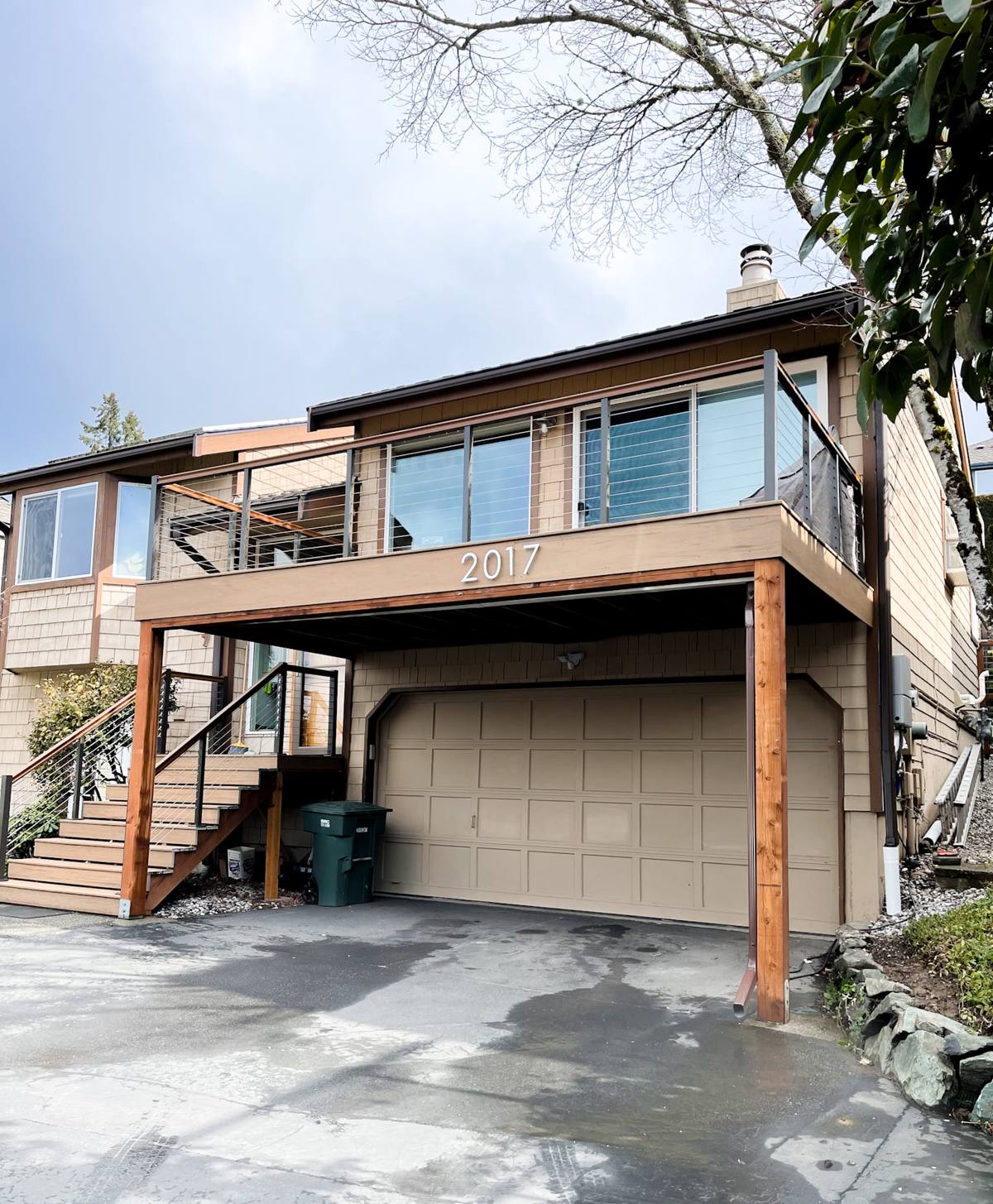
The Warning Signs: When Repair Still Makes Sense
Most decks don't fail all at once. They fail in one spot first — usually the spot that stays wet longest or takes the most direct weather. Catching problems at this stage is what keeps a repair a repair instead of turning it into a full rebuild.
- Boards that feel soft, spongy, or slightly bouncy underfoot, especially near the house or at board ends
- Rust streaks bleeding out from screw heads, joist hangers, or bolts
- Railings or stair stringers that have developed noticeable play or wobble
- A visible gap or dark staining where the deck framing meets the house (the ledger board area)
- Persistent green or black growth on boards that stays damp days after the rain stops
- Nails backing out or fastener heads that spin freely instead of biting
If you're seeing one or two of these in an isolated area, that's usually a repair. If it's showing up in multiple places across the deck at once, that's a sign the whole structure has been absorbing moisture for a while and deserves a closer look before you spend money patching individual spots.
Soft Spots vs. Structural Rot
A soft board is not automatically a dangerous board, but it is always worth checking. Surface softness from weathering can sometimes be sanded and resealed. Softness that goes deep, or that's paired with a hollow sound when tapped, usually means rot has worked into the wood fiber and that section needs to come out and be replaced, not patched over.
Where Coastal Decks Actually Fail First
Repair work only holds up if it targets the actual failure point, not just the part that looks bad. On decks in this area, a handful of spots do most of the failing.
The Ledger Board Connection
This is the board that ties the deck to the house, and it's the single most common source of hidden rot. Flashing here has to shed water away from the house framing, not just sit on top of it. When flashing is missing, cracked, or was never properly lapped under the siding, water tracks behind it every time it rains and rots the ledger and rim joist from the inside — often invisibly until the damage is advanced.
Fasteners and Hardware
Standard coated deck screws and joist hanger nails corrode faster this close to salt water. Once a fastener starts rusting, it loses grip and can also bleed rust into the surrounding wood, which speeds up decay right at that point. This is one of the most common reasons a deck that "looks fine" still has loose railings or squeaky boards.
Framing and Joists
Under-deck airflow matters more here than people expect. Skirting, stored items, or landscaping that blocks air movement under a low deck keeps the framing damp long after the surface has dried, which is exactly the kind of slow, steady moisture that rot needs.
Decking Boards Themselves
Board ends and butt joints absorb water faster than the face of a board and are usually the first place surface decking shows real damage, especially if the ends weren't sealed when the deck was built.
Repair or Rebuild? How We Decide
Not every deck with problems needs to come down. The honest answer depends on how much of the structure is still sound versus how much has been compromised, and whether the existing structure meets current safety expectations for railings and guards.
| Factor | Leans Toward Repair | Leans Toward Rebuild |
|---|---|---|
| Ledger board condition | Solid, flashing just needs correcting | Soft or rotted along its length |
| Extent of affected boards | Isolated boards or one section | Rot or damage spread across the deck |
| Railing/guard condition | Solid posts, minor hardware fixes | Loose or undersized posts, code gaps |
| Framing (joists/beams) | Sound, fasteners just need upgrading | Soft, split, or undersized for current use |
| Age of the structure | Newer build with a localized issue | Original deck decades old, multiple systems failing |
When a deck is a genuine repair candidate, we say so and scope exactly that. When it isn't, we'd rather tell you honestly than patch something that's going to need the same work again in two years.
Our Deck Repair Process
Inspection First, Quote Second
Before any number gets written down, we get under the deck and check the ledger, framing, and hardware — not just the surface. A repair quote based only on what's visible from standing on top of the deck is a guess. We probe suspect boards, check fastener condition, and look at how water has actually been moving through the structure.
Fixing the Water Path, Not Just the Symptom
If the root cause is bad or missing flashing at the ledger, that gets corrected as part of the repair — patching the wood without fixing the flashing just buys a little time before the same spot fails again.
Structural Repairs
Rotted joists, beams, or ledger sections get cut back to solid wood and sistered or replaced, never just covered over. Any hardware going back in gets matched to the exposure this deck actually sees.
Decking and Railing Work
Damaged boards are replaced board-for-board or in full runs when the damage pattern calls for it, and railing posts get re-secured to solid framing, not just tightened where they stand.
Finish and Protection
Cut ends get sealed, and depending on the material, the repaired area gets finished so it doesn't stand out or age differently than the rest of the deck.
Material Choices That Actually Hold Up in Salt Air
What goes back into a repair matters as much as the workmanship. This close to the water, we lean toward hardware and fasteners rated for corrosive or coastal exposure rather than standard-grade coated products — the upfront cost difference is small compared to redoing a repair in a few years because fasteners failed first.
| Material | Strengths Here | Trade-Offs to Know |
|---|---|---|
| Stainless steel fasteners | Best resistance to salt-air corrosion | Higher upfront cost than standard screws |
| Hot-dip galvanized hardware | Solid corrosion resistance, widely used | Coating can wear at cut edges over time |
| Pressure-treated framing lumber | Resists rot in structural members | Still needs proper flashing to perform |
| Cedar decking | Natural rot resistance, ages well visually | Needs periodic sealing to keep that resistance |
| Composite decking | Low maintenance surface, consistent wear | Framing underneath still needs real wood-grade protection |
We're upfront that composite decking doesn't make flashing or framing quality less important — the surface material can be excellent and a deck can still fail if the water management underneath it wasn't done right.
Moss, Algae, and Slip Safety During the Wet Season
Moss on a deck isn't just cosmetic — it holds moisture against the board surface and makes footing genuinely slick, which matters on stairs and near entry points. Shaded, low-airflow decks near tree cover fill in with moss faster and stay wetter longer, which is common in this part of Whatcom County given how long the damp season runs. Cleaning moss off is only a temporary fix if the conditions that grew it haven't changed; boards that stay shaded and poorly ventilated will grow it back. Part of doing a repair right is looking at whether trimming back overhanging growth or improving airflow under the deck is a reasonable, low-cost way to slow regrowth, rather than just treating the surface every season.
Why a Crew That Already Works Cherry Point Makes a Difference
A contractor who works this stretch near Blaine regularly already knows what driving rain off the water does to a ledger board, how fast standard fasteners give out in salt air, and how long moss season actually runs here. That's fewer surprises during the inspection and a repair scope that's realistic the first time, instead of a second visit once the "quick fix" doesn't hold. Local crews are also familiar with how Whatcom County handles permitting for deck work when it's needed, which depends on the scope and height of the repair — worth confirming for your specific project rather than assuming either way. Being local also means being reachable if something about the repair needs a follow-up look after the next big storm, not just a one-time visit.
Keeping Your Repaired Deck in Good Shape
A good repair buys you years, but a little seasonal attention keeps it from needing another one too soon.
- Clear leaves and debris out of gaps between boards before they trap moisture
- Rinse or brush off moss and algae before it builds up a heavy layer
- Check railings and stair fasteners for looseness once a year
- Keep the area under the deck clear so air can actually move through it
- Re-seal or re-stain wood decking on the schedule the finish actually needs, not just when it looks faded
- Walk the deck after major storms and note any new soft spots early
If your deck near Cherry Point has a soft board, a wobbly rail, or just hasn't been looked at in a while, we're happy to come take an honest look. The estimate is free, there's no pressure either way, and you'll know exactly what you're dealing with before you decide anything.