 Blaine Siding
 Fiber Cement Siding for a Property Right on the Water
Semiahmoo sits out on its own spit between Semiahmoo Bay and Drayton Harbor, and that setting puts a home's siding under more pressure than almost anywhere else in Whatcom County. This page covers one thing specifically: what it takes to install fiber cement siding correctly on a Semiahmoo property, why James Hardie is the only fiber cement system we put on these homes, and what a homeowner out here should actually expect from the job.
Fiber cement isn't a material that performs the same everywhere it's installed. On a sheltered inland lot, a mediocre install might go unnoticed for years. On an exposed waterfront property like this one, the same shortcuts show up fast — as staining, soft trim, or a joint that starts letting water in behind the cladding well before the siding itself is due for replacement. Getting it right here matters more than it does almost anywhere else we work.
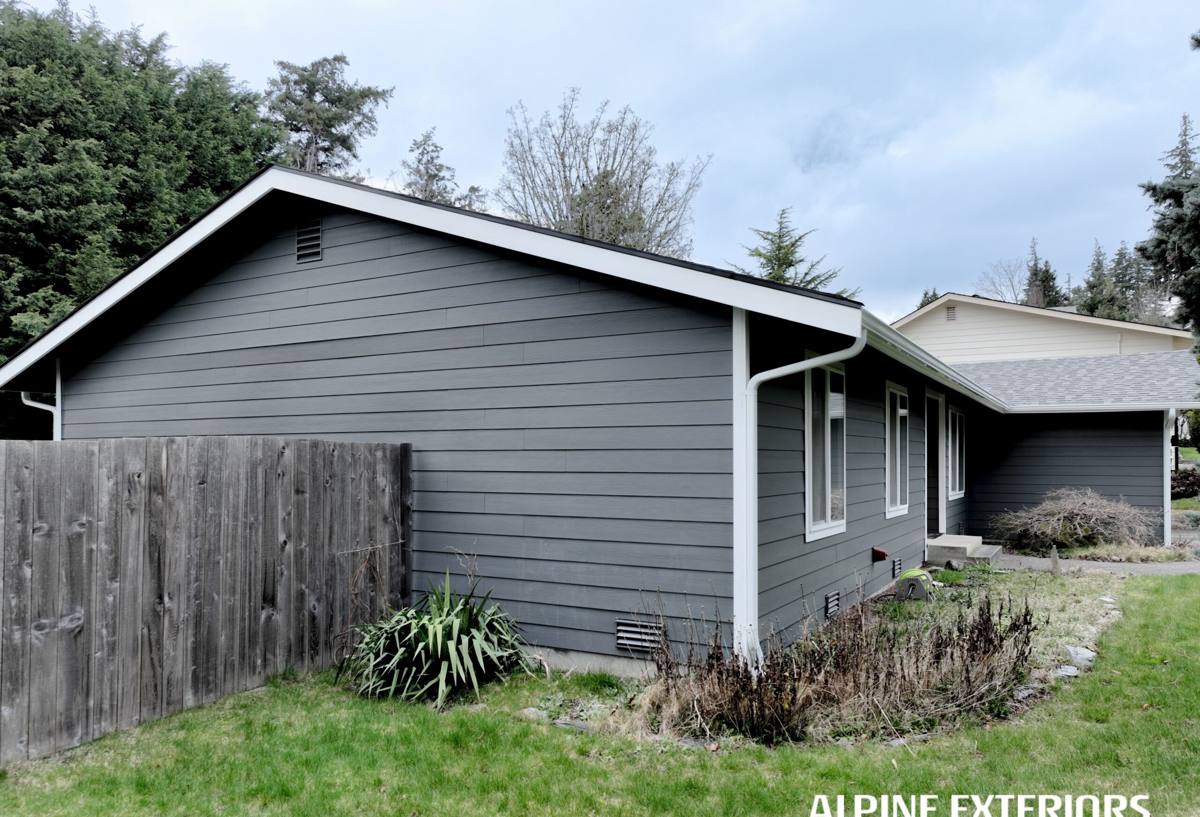
What Semiahmoo's Exposure Actually Does to a Siding Job
Salt Air From More Than One Direction
Because the spit has water on multiple sides, salt-laden air isn't a once-in-a-while event here — it's a constant, low-grade factor working on fasteners, flashing, and finish coatings year-round. Salt speeds up corrosion in lower-grade metal hardware and breaks down field-applied paint faster than it would on a drier, more sheltered lot. On a fiber cement job, that means every fastener, flashing detail, and trim piece has to be chosen with that corrosion load in mind, not just the siding panels themselves.
Wind-Driven Rain, Not Just Rainfall
With very little to break the wind, rain on the spit routinely arrives sideways rather than straight down. That changes what "watertight" actually means for a siding installation. A lap joint or panel seam that would shed water fine under calm rainfall can still take on moisture when wind is pushing that same water horizontally into the wall. The installation details that matter most on a sheltered inland home — proper laps, sealed joints, correct clearances — matter even more here, because the margin for error is smaller.
A Moss Season That Runs Most of the Year
Mild temperatures and near-constant humidity keep moss and mildew active on shaded and north-facing exterior surfaces across most of the year in this part of Whatcom County. Fiber cement itself doesn't feed moss growth the way a porous, moisture-absorbing material can, but grime and organic buildup will still collect on any siding surface over time, and a poorly detailed installation gives moisture more places to sit against the wall where growth takes hold.
What a Correct Fiber Cement Installation Involves
A Drainage Path Behind the Siding
Fiber cement siding isn't meant to be the only thing standing between a wall and the weather. Behind the panels or boards, a house needs a properly lapped weather-resistive barrier, and on exposures like Semiahmoo's, a drainage gap that lets any water that does get behind the cladding find its way back out instead of sitting against the sheathing. Skipping or shortcutting this layer is one of the most common reasons a siding job that looks fine on install day starts causing problems two or three wet seasons later.
Flashing at Every Transition
Windows, doors, roof-to-wall intersections, and any penetration through the siding are where water intrusion actually starts on most homes. Correct flashing integration at each of those points — lapped the right direction, sealed where it needs to be, left open where it needs to drain — matters more on an open, wind-exposed property than almost anything else in the installation. We treat this as the part of the job that determines whether the siding performs for decades or needs attention within a few years.
Fastening and Joint Treatment
James Hardie specifies fastener type, spacing, and placement for a reason, and those specs are what the product warranty is actually tied to. On a corrosive, salt-exposed site, using the correct corrosion-resistant fastener isn't optional — a fastener that starts rusting will eventually stain the siding and lose its holding strength. Field-cut edges and joints need to be properly sealed or capped as well, since a raw, unsealed cut edge is one of the few places fiber cement can take on moisture over time.
Choosing the Right Hardie System for a Semiahmoo Home
HardieZone HZ5
James Hardie engineers its siding by climate zone, and the HZ5 formulation is built for regions with heavy moisture exposure and freeze-thaw cycling — a close match for waterfront Whatcom County. Using the zone-correct product isn't a marketing detail; it affects how the material handles moisture cycling over the life of the siding.
ColorPlus Factory Finish
Rather than painting siding on-site after installation, Hardie bakes its ColorPlus finish onto the board in a controlled factory process. That finish holds color and adhesion far longer under sustained UV and salt exposure than field-applied paint typically does, and it carries its own finish warranty separate from the substrate warranty.
Lap Siding vs. Panel Siding
Most Semiahmoo homes end up with either a traditional horizontal lap profile or a smooth panel system, and the right choice usually comes down to the home's existing architecture and the homeowner's preference rather than performance differences — both hold up well when installed to spec. We walk through the visual and practical trade-offs of each during the estimate rather than defaulting to one option.
Why We Install Only James Hardie Fiber Cement
We don't install LP SmartSide, vinyl siding, Cemplank, Allura, primed spruce, or cedar. Each of those products has a legitimate place in the broader market. Our decision to install one system is a professional standard we settled on specifically because of what exposed, salt-air properties like this one do to lower-tier materials over time.
- Non-combustible core: fiber cement doesn't feed a fire the way wood-based products can, which matters for both safety and insurance underwriting.
- Dimensional stability: Hardie's fiber cement doesn't swell, cup, or warp the way engineered wood siding can after repeated wetting cycles.
- Climate-matched engineering: the HZ5 formulation is built for exactly this kind of moisture and freeze-thaw exposure.
- Factory finish: ColorPlus resists fading and chalking far longer than paint applied after the fact.
- A strong transferable warranty: backed by Hardie, contingent on installation following their published spec, which is exactly the standard we install to.
What Drives the Cost of a Fiber Cement Job on Semiahmoo
Every estimate is specific to the house, but a few factors consistently move the number on properties out here.
| Factor | Why It Affects the Price |
|---|---|
| Square footage and number of stories | More surface area and more difficult access both add labor time |
| Sheathing condition once old siding comes off | Rot or moisture damage found underneath needs repair before new siding goes on |
| Trim and detail complexity | Windows, corners, and rooflines with heavy trim take more time to flash and finish correctly |
| Exposure and orientation to open water | Water-facing walls often need extra flashing and drainage attention |
| Lap vs. panel profile and color selection | Product line and ColorPlus color affect material cost |
How the Job Runs
- On-site assessment: we look at the existing siding, sheathing, and how exposure varies across the different walls of the property before writing an estimate.
- Written scope and timeline: a clear scope goes to the homeowner before any work starts, so there's no ambiguity about what's included.
- Tear-off and sheathing check: once old siding is off, we inspect the sheathing underneath for rot or soft spots rather than covering it up.
- Weather barrier and flashing: the drainage plane and flashing at every window, door, and transition go in before a single piece of siding is hung.
- Installation to Hardie spec: correct fastener type and spacing, proper clearances, and sealed field-cut edges throughout.
- Final walkthrough: we go over the finished job with the homeowner and cover what maintenance actually looks like on a property this exposed.
Living With Fiber Cement Through a Long Moss Season
Fiber cement is low-maintenance compared to wood-based siding, but "low-maintenance" doesn't mean "no maintenance" on a property with this much moisture exposure. A short seasonal routine keeps it performing the way it's supposed to.
- Rinse shaded and north-facing walls periodically to keep grime and organic buildup from settling into the finish
- Check caulked joints around windows, doors, and trim once a year for cracking or separation
- Keep gutters clear so overflow doesn't run down the siding face repeatedly
- Trim back landscaping that keeps a wall section shaded and slow to dry
- Have flashing at roof-to-wall transitions checked periodically, since a flashing failure will show up in the siding below it before it shows up anywhere else
Why a Crew That Already Works Semiahmoo Matters
A contractor who regularly works this stretch of coastline already knows which walls on a spit property stay wet longest given the wind direction, where extra drainage detailing earns its keep, and which fastener grade actually holds up here instead of just on paper. Those are decisions made on the job, not from a spec sheet, and they're exactly what separates a siding job that lasts one or two wet seasons from one that lasts decades on an exposed property like this.
If you're considering fiber cement siding for a Semiahmoo home, we're glad to walk the property with you and give an honest read on what it needs. Reach out below for a free, no-pressure estimate.